I was standing in my driveway last Tuesday, coffee in hand, watching my neighbor Dave unplug his Tesla. He’d only been home for three hours, and his battery was topped off. Meanwhile, my plug-in hybrid had been tethered to the wall all night and was still “calculating” its final ten percent. It’s a gut punch. You buy a hybrid to get the best of both worlds, yet here you are, feeling like you’re charging through a cocktail straw while the guy next door has a firehose. I used to think it was just my old house or a bad cable, but the reality is much more technical—and honestly, a bit annoying. [image_placeholder_1]
Your Hybrid Is Likely Bottlenecked by Its Own Hardware
The first time I tried to “fix” this, I went out and bought the most expensive, high-amperage wall unit I could find. I figured more power equals more speed, right? Wrong. I spent a weekend upgrading my panel only to see my charging time remain exactly the same. It was a classic rookie mistake. I didn’t realize that my car’s onboard charger was the actual speed limit. Most plug-in hybrids (PHEVs) are designed with smaller onboard chargers—often capped at 3.3 kW or 6.6 kW—to save weight and cost. Even if you hook it up to a charger capable of delivering 11.5 kW, your car will politely say “no thanks” and sip at its own slow pace. This is why your level 2 charger takes twice as long as the box promised. While your neighbor’s full EV might have a massive onboard charger that can handle 48 amps, your hybrid is likely stuck in the slow lane by design. According to the U.S. Department of Energy, charging rates are fundamentally limited by the vehicle’s acceptance rate, not just the station’s output.
Is My Hybrid Actually Defective?
It’s easy to get paranoid when you see that red light or a slow-crawling percentage bar. You start wondering if you need to be troubleshooting your EV charger for a hardware failure. Most of the time, your car is perfectly fine; it’s just working within its mechanical boundaries. Have you ever sat there staring at your dashboard, wondering why the math doesn’t add up? It’s frustrating, I know. But before you call an electrician to tear out your walls, you need to know the secret to getting faster charging without a new panel. We’re going to dig into how to optimize what you have and when it actually makes sense to upgrade your home’s infrastructure to handle the load properly.
Find Out Exactly What Your Car Can Handle
Before you spend a dime on new equipment, look at your car’s spec sheet for the ‘Onboard Charger’ rating. Most people see a charger at the store labeled ’40 Amps’ and assume it will charge their car at 40 Amps. But if your hybrid is capped at 3.3 kW, that fancy charger is just an overpriced paperweight. I remember the headache of trying to force a 50-amp circuit into my garage for a first-gen Prius Prime, only to realize I was essentially trying to fill a five-gallon bucket with a firehose. The car simply won’t take it. This is why your level 2 charger takes twice as long as the box promised; the bottleneck is inside the fender, not on the wall.
Run the Numbers Before You Buy the Breaker
Your electrical panel is like a pizza. Every appliance—your AC, your oven, your dryer—takes a slice. If you try to grab a massive slice for an EV charger when the pizza is already gone, you’re going to trip the main breaker and sit in the dark. This is why your ev permit application requires a load calculation worksheet. You need to know exactly how much ‘room’ is left on your service. If you’re running a 100-amp service, adding a 50-amp charger is likely impossible without a major upgrade. However, there are ways to squeeze a level 2 charger onto a 60 amp service if you’re smart about your circuit management. 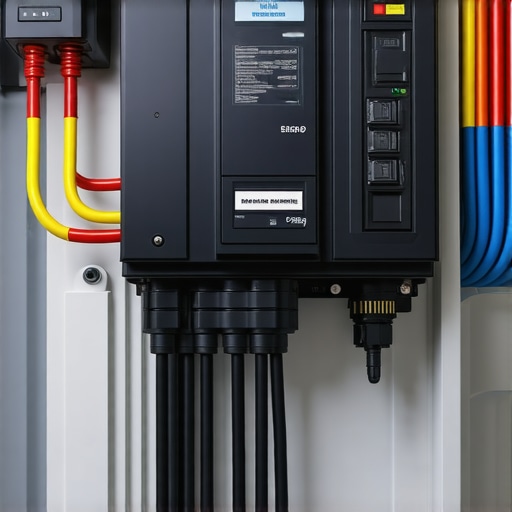
Use Load Management to Save Your Wallet
If your panel is full, don’t panic. You don’t always need to spend $3,000 on a service upgrade. You can learn how to use load shedding devices to avoid a full service upgrade. These clever gadgets act like a traffic cop for your electricity. If your dryer and your EV charger both want power at the same time, the device pauses the car’s charging until the dryer is finished. It’s a seamless way of ensuring code compliance when installing ev chargers without tearing out your main electrical hub. I once saw a DIYer try to bypass this by double-tapping a breaker—a move that nearly resulted in a garage fire. Don’t be that person. Stick to the gadgets that keep you safe and legal.
Why the 80 Percent Rule Matters
Electricity creates heat, and EV charging is a continuous load. This means you can’t run a circuit at 100% capacity for hours on end without melting something. This is why your electrician recommends a 60 amp circuit for a 48 amp charger. That 20% safety margin is the difference between a topped-off battery and a call to the fire department. If you find your charger is constantly cutting out, you might be troubleshooting your ev charger only to find the breaker is simply overheating because it’s undersized for the job.
Everyone tells you to just ‘get a 200-amp panel’ and your problems will vanish. In my experience, that’s only half the story. I’ve walked into garages with brand-new service upgrades where the charger was still failing or, worse, the breaker was discolored from heat. The nuance most people miss is that EV charging isn’t like running an oven for thirty minutes; it’s a marathon that lasts all night. When you’re upgrading your panel for better ev charging performance, you aren’t just looking for space; you’re looking for thermal resilience. Many older or even some budget-tier modern panels use busbars that aren’t quite up to the task of a continuous 48-amp draw. I’ve seen specific scenarios where the specific breaker brands that are known to overheat with evs lead to premature failure, even if the total ‘math’ on your panel says you have room. This isn’t just about capacity; it’s about the quality of the contact points.
The Torque Trap Most DIYers Miss
If I had a dollar for every loose terminal I’ve found, I could probably buy a second Tesla. This is the ultimate ‘oops’ factor. Most people tighten a screw until it ‘feels’ tight, but the National Electrical Code is very specific about using a calibrated torque wrench. Why? Because electricity causes metal to expand and contract. If that connection isn’t exactly to spec, it will eventually wiggle loose, arc, and potentially melt your charger’s internal components. It’s the primary reason why your charger needs a specific torque setting to pass inspection. According to the National Fire Protection Association (NFPA), improper terminations are a leading cause of electrical overheating in high-load residential circuits. 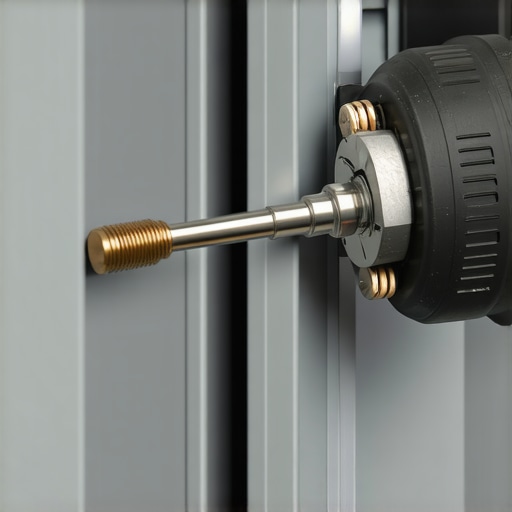
Why Does My High-End Charger Keep Tripping for No Reason?
This is the most common advanced question I get. You bought a high-quality unit, your wiring is thick, and yet the breaker clicks off every three days. Often, it’s a conflict between two ‘brains.’ Modern EV chargers have built-in ground-fault protection, and modern building codes often require a GFCI breaker in the panel for garage circuits. When you have two GFCI devices on the same line, they ‘talk’ to each other in a way that causes nuisance trips. Understanding why the gfci in your panel keeps nuisance tripping your charger is the first step in fixing a system that seems possessed. Sometimes, the solution isn’t more power, but rather the grounding trick that fixes intermittent charging errors that keep the software happy.
The Code Compliance Headache
Finally, don’t assume that because your car is charging, your house is safe. There is a massive difference between ‘it works’ and ‘it’s compliant.’ When you verify code compliance for your ev charger installation, you’re protecting your insurance policy as much as your car. Furthermore, using the specific wire gauge that prevents voltage drop over long runs is vital to prevent the wiring from becoming a radiator inside your walls. Have you ever fallen into this trap where you upgraded everything and it still didn’t work right? Let me know in the comments.If you’re still seeing that annoying red light after all those upgrades, it usually boils down to a technical detail that’s easily overlooked. In my own garage, I realized that ‘setting it and forgetting it’ is a recipe for a service call two years down the line. To keep everything running at peak efficiency, I’ve started treating my electrical panel like a high-performance engine. You need to be proactive.
The One Tool Your Electrician Hopes You Never Forget
Most homeowners assume that once a wire is under a screw, it’s there forever. But thermal cycling—the process of the wire heating up during a 6-hour charge and cooling down afterward—actually causes copper to move. This is exactly why your main lugs might be loose after a year of charging. I’ve made it a habit to own a high-quality digital torque wrench. When I first checked my wall unit, I found two terminals had backed off by almost a quarter turn. Following the specific torque wrench settings for a wall connector isn’t just about passing inspection; it’s about preventing the arcing that destroys expensive hardware.
Stop Guessing and Start Checking Your Connections
One of the best investments I ever made wasn’t a bigger battery, but a $50 infrared thermometer. Every few months, while the car is pulling its maximum load, I point it at the breaker. If you see a jump of more than 30 degrees Celsius over the ambient temperature, you have a problem. This is a pro-level way of troubleshooting your ev charger before you smell smoke. According to the NFPA 70B (Standard for Electrical Equipment Maintenance), regular thermal inspections can prevent up to 75% of electrical failures in high-load environments. If you spot a ‘hot spot,’ you’ve likely found a loose connection or a failing breaker. 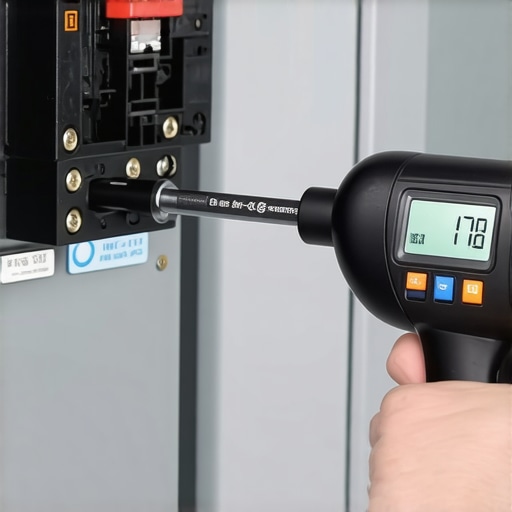
How do I maintain my charging setup over the years?
Maintenance isn’t just about the wires; it’s about the environment. If your charger is in the garage, dust and spiders are your biggest enemies. I’ve seen more than one motherboard fry because a spider web created a bridge across two high-voltage contacts. Beyond cleaning, you should periodically check the plug itself. If you notice any discoloration on the metal pins, stop immediately. You need to know why your ev plug contacts look burnt and what to do next to avoid damaging the car’s charging port. If you’re mounted outside, you should also be looking for moisture. I’ve seen people forget to reseat a gasket, and before they know it, they’re trying to spot corrosion inside your outdoor charging pedestal.
Preparing for the Two-EV Household
Looking ahead, the biggest trend isn’t just faster charging, but *more* charging. Most people who buy one plug-in hybrid find themselves buying a second EV within three years. If you’re already pushing your 100-amp or 200-amp service to the limit, you need to think about a subpanel. I’m currently planning a layout change because your garage needs a sub-panel for multiple chargers if you want to avoid a massive mess of conduit later. This allows you to scale up without constantly upgrading your panel for better ev charging performance every time a new car enters the family. It’s also the easiest way to verify code compliance for your ev charger installation when the inspector sees a clean, dedicated sub-feed. If you want to stay ahead of the curve, I highly recommend doing a ‘thermal sweep’ of your panel this weekend while your car is charging—it’s the fastest way to find a problem before it finds you.
The Hard Truth About My Failed High-Speed Dreams
When I started this journey, I thought throwing money at the problem—a bigger charger, a bigger wire—was the only answer. The lightbulb moment for me wasn’t when I saw the charging speed increase, but when I realized that efficiency is more valuable than raw speed. I’ve learned that a hybrid is a different beast entirely from a full EV; it’s a marathon runner, not a sprinter. If you try to force it to sprint, you’re just wasting energy and putting unnecessary stress on your home’s infrastructure. I spent weeks ensuring code compliance when installing ev chargers only to find that the simplest setup was often the most reliable for my daily commute. The real secret isn’t a massive power draw; it’s a stable, cool-running circuit that doesn’t keep you awake wondering about your garage electrical health.
Tools That Saved My Sanity (and My Breakers)
I don’t leave my garage’s electrical health to chance anymore. If you want to avoid the common pitfalls of a DIY install, these are my non-negotiable tools: first, a digital torque wrench is your best friend to prevent loose lugs that cause arcing. Second, keep the NFPA 70 guidelines bookmarked—it’s the bible for safe residential wiring. Third, don’t ignore the value of a professional audit. If you’re ever in doubt, upgrading your panel for better ev charging performance is a long-term investment that pays off in both home value and peace of mind. I also highly recommend keeping a log of your charging times; if you see a sudden dip, it’s time to start troubleshooting your ev charger before a small glitch becomes a dead car in the morning. [image_placeholder_5]
Take Control of Your Home’s Power Today
You’ve done the research, you’ve looked at the specs, and now it’s time to stop worrying and start driving. Transitioning to a plug-in lifestyle shouldn’t feel like a part-time job as an amateur electrician. By focusing on quality connections and understanding your car’s unique limits, you can enjoy the transition to electric without the fear of a service call. Whether you are dealing with a pesky ground fault or simply fixing the grounding fail that ruins ev permits, remember that every step toward a safer setup is a step toward a more sustainable future. You’ve got this! Have you ever found a surprising bottleneck in your own charging setup that didn’t show up in the manual? Let me know in the comments below!