I stood in my garage three years ago, staring at an ancient electrical box and a brand-new EV, feeling like I’d just bought a high-performance jet but only had a single gallon of fuel. Every local contractor I called gave me the same grimace followed by a quote for a full service upgrade that cost more than my first car. I felt stuck. In my desperation, I actually tried to just “make it work” by guessing the load, which led to a very embarrassing night involving a tripped main breaker and a half-cooked dinner. It was a total permit error that stops home charger installs cold. The realization hit me then: I had spent months researching the car but zero minutes researching the box on my wall. But I’ve learned a lot since that blackout. You don’t actually need to overhaul your entire life to get decent charging speeds. Today, we are diving into the clever workarounds and smart tech that let you add an ev charger without a 200 amp panel upgrade.
Stop Thinking You Need a Massive Service Upgrade
I used to think 60 amps was the “end of the road” for modern living. We’ve been told for decades that 200 amps is the gold standard, and while that’s nice for a mansion with three HVAC units, it isn’t always a requirement for a fast charge. The secret lies in math, not just raw power. When I first started, I ignored the “continuous load” rule—a mistake that almost fried my hardware. According to the National Fire Protection Association (NFPA 70), an EV charger is considered a continuous load, meaning it can only pull 80% of the circuit’s rated capacity for long periods. If you have a 60-amp main, you have to be surgical about where those electrons go. Have you ever been told your home “just can’t handle it” by a skeptical pro? You aren’t alone, but they might be missing the new tech available today. It starts with avoiding the hidden cost of skipping a panel load calculation and actually understanding what your appliances are doing while you sleep.
Does this really work without burning my house down?
Safety is the big elephant in the room. You’re right to be skeptical because an overloaded panel is a legitimate fire hazard. However, we now have tools like load shedding devices to avoid a full service upgrade. These gadgets act like a traffic cop for your electricity; they pause your car charger if you turn on the oven or the dryer, ensuring your main breaker never even breaks a sweat. I’ve seen these systems pass inspections in some of the toughest jurisdictions. If you’re dealing with an older setup, there’s even a permit saving trick for older homes with fuse boxes that can keep you code-compliant. We’re going to walk through how to balance your needs so you can wake up with a full battery without the $5,000 headache.To get this right, you have to treat your home’s electrical panel like a monthly budget. If you only make $3,000 a month, you can’t spend $2,500 on rent and expect to eat steak every night. Your panel works the same way. The first real step is performing a rigorous load calculation. Most people look at their main breaker, see ‘100A’ or ‘125A,’ and assume they have room because they aren’t using everything at once. But the city inspector doesn’t care about your ‘usual’ habits; they care about the ‘worst-case scenario.’ This is where I see people get stuck, and it is why the hidden cost of skipping a panel load calculation often comes back to haunt homeowners during the final inspection. I once sat at a kitchen table for three hours with a calculator and a list of nameplate ratings for a client, only to find out their old electric water heater was hogging 30 amps of ‘phantom’ capacity we needed to account for before we could even think about the car. 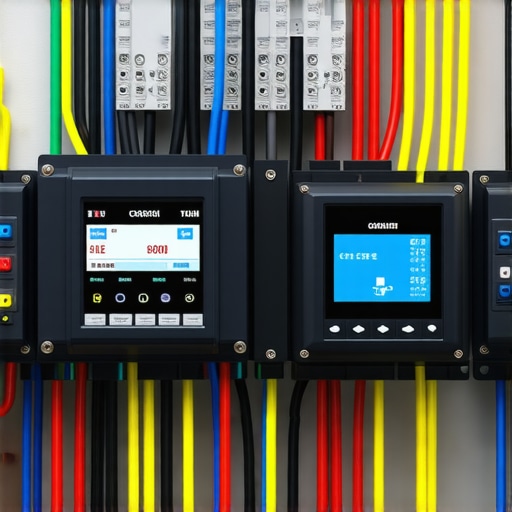
Put Your Circuit on a Digital Diet
Once you know your limits, you can look into dynamic load management. Think of this like a bouncer at a crowded club. When the ‘club’ (your house) gets too full because the AC and the electric oven are running at the same time, the bouncer tells the car to wait outside or slow down. This technology is a total game changer for small panels. It is exactly how smart chargers use dynamic balancing to prevent blown fuses without you having to manually flip switches or worry about the main breaker. When I installed one of these systems for my neighbor, we tested it by turning on every major appliance in the house. We watched the car’s charging rate drop from 40 amps down to 12 amps in real-time as the microwave and dryer kicked in. It was like watching a perfectly choreographed dance, and more importantly, it kept the house safely within its limits.
Choose Hardware That Handles the Heat
Not all breakers are created equal, especially when they are under the constant stress of an EV. You are pulling high current for hours on end, which generates significant heat. I have seen cheap, off-brand breakers literally warp or discolor under the pressure. This is a common issue with the specific breaker brands that hate constant ev loads and it can lead to those annoying midnight power cuts. Your electrician might suggest a slightly larger circuit than you think you need—not to give you more power, but to give the wires more ‘breathing room’ to stay cool. That is why your electrician recommends a 60-amp circuit for a 48-amp charger; it is about heat dissipation and long-term reliability as much as it is about raw capacity.
Small Details That Kill Your Permit Application
Finally, do not overlook the boring stuff. I once saw a perfect installation get rejected because the ground wire was not the right gauge for the specific conduit used. It felt like failing a driving test just because your blinker was the wrong shade of orange. Knowing how to fix the grounding fail that ruins ev permits is the difference between charging your car on Monday or waiting three more weeks for a frustrating re-inspection. You also need to ensure you are ensuring code compliance when installing ev chargers by checking the specific torque settings on your terminal lugs. If they are even a fraction too loose, the heat generated by the continuous load will eventually cause a connection failure or even a localized fire.I often hear people say that buying the most expensive ‘smart’ charger is the ultimate insurance policy. But here is the contrarian truth: more software often means more failure points. In fact, why your smart charger is actually slower than a basic plug-in model usually comes down to configuration lag or poor Wi-Fi connectivity. If the charger cannot ‘talk’ to the cloud, it might default to a ‘safe’ and painfully slow 6-amp crawl. I’ve spent hours troubleshooting units that were perfectly wired but were ‘bricked’ by a bad firmware update. You also have to watch out for the ‘double-timer’ trap, which is why your cars internal timer conflicts with your wallbox. If your car thinks it should charge at 2 AM but your charger thinks it is 10 PM, they will just sit there staring at each other while your battery stays empty. Have you ever fallen into this trap? Let me know in the comments.
Smart Tech Can Actually Slow Your Charge
It is easy to get distracted by apps and data, but the physics of your panel remains the boss.
Why is the Breaker Tripping Despite a Perfect Load Calc?
It is the most frustrating call I get. The math works, the wires are oversized, yet the breaker pops after three hours of use. This is where we talk about ‘heat soak.’ Standard breakers are often not designed for the punishing, relentless draw of an EV. This is one of the ev charger troubleshooting expert tips for common issues: check the brand of your panel. There are the specific breaker brands that are known to overheat with evs because of their internal clip design. According to the Electrical Safety Foundation (ESFI), residential electrical failures often stem from heat-related degradation that occurs over months, not minutes. If your breaker is hot to the touch—not just warm—you are looking at a future failure point, even if you are under the 80% load limit. 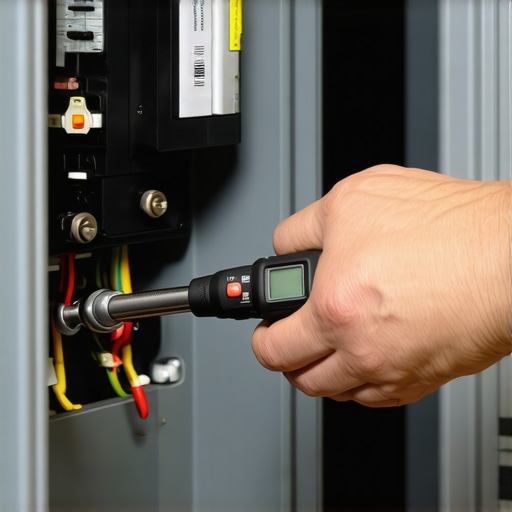
Check Your Lugs Before the Inspector Arrives
Most homeowners focus on the new charger, but they forget the old components that have to carry the new weight. Think about your main lugs—the giant screws that hold the power lines coming into your house. Over a year of heavy EV use, the constant thermal expansion and contraction can actually wiggle these loose. Understanding why your main lugs might be loose after a year of charging is vital for long-term safety. If those lugs aren’t tight, you get high resistance, which leads to voltage drops and, eventually, melting plastic. Before you wrap up, you must focus on how to verify code compliance for your ev charger installation to ensure you are not just ‘working’ for today, but safe for the next decade. Sometimes, upgrading your panel for better ev charging performance is about more than just adding amps; it is about refreshing those aged connections that were never meant for this kind of workload.I’m going to be blunt: if you don’t own a calibrated torque wrench, you shouldn’t be touching those lugs. Most DIYers and even some hurried pros use the “tight enough” method, which is a recipe for disaster. According to the National Electrical Code (NEC) Section 110.14(D), you are actually required to use a calibrated tool where torque values are marked on the equipment. This isn’t just bureaucracy; it’s because a connection that is 10% too loose will create enough resistance to melt a terminal over six months of nightly charging. I always check the specific torque wrench settings for a wall connector before I even pick up a screwdriver. It’s the difference between a system that lasts twenty years and one that fails during a summer heatwave. 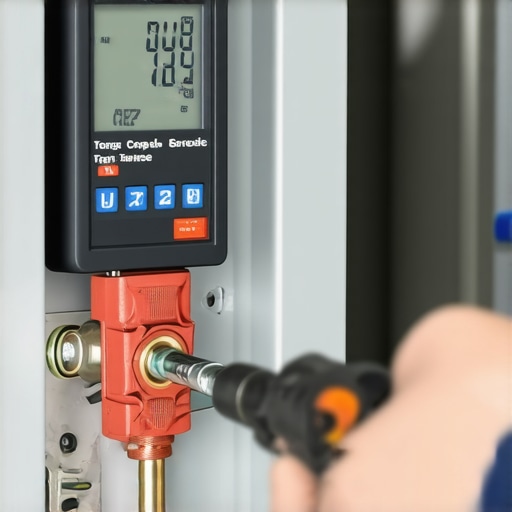
The Two Tools That Save Your Wires From Melting
Beyond just tightening screws, you need to think about the “invisible” threats. Power surges aren’t just from lightning; they can come from the grid when everyone’s AC kicks on. That’s why your main service panel needs a surge protector for your ev. Your car is essentially a giant rolling computer, and a $100 surge device is much cheaper than a $3,000 onboard charger replacement. If you start seeing weird errors on your dash, don’t just blame the software. You might need to start troubleshooting ev charger connectivity problems or, more seriously, looking for a physical fault. One of my favorite proactive tricks is to detect a loose neutral wire before your electronics fry by using a simple plug-in circuit tester or a handheld infrared thermometer.
How Often Should I Peek Inside My Electrical Panel?
I recommend a visual “sniff test” every six months. Pop the cover (carefully!) and look for any signs of discoloration on the wires or the plastic around the breakers. If it smells like ozone or burnt fish, shut off the main breaker immediately. You’re also looking for signs of moisture. Even a tiny drip from an improperly sealed conduit can lead to corrosion that ruins your capacity. This is especially true if you are navigating the truth about fast charging your ev in freezing temperatures, where thermal expansion and contraction are at their most extreme. Cold makes metal contract, potentially loosening those connections you worked so hard to tighten in the summer.
The Era of Manual Load Calculations is Ending
We are moving toward a world where “dumb” panels are replaced by smart energy managers. In the next five years, the idea of doing a manual load calculation on a yellow notepad will feel like using a rotary phone. These systems will automatically shed loads and prioritize your car based on the current price of electricity or the state of your home battery. It’s the ultimate way of upgrading your panel for better ev charging performance without needing to beg the utility for a larger service drop. My final advanced tip? Get yourself an infrared thermometer. While the car has been charging for at least an hour, scan the breakers. Anything over 140°F (60°C) is a red flag that needs immediate attention. If you see that, you’ve likely found a failing breaker before it became a house fire. Give it a shot this weekend—it’s the best $20 insurance policy you’ll ever buy.
Everything I Learned the Hard Way About High-Voltage Loads
Looking back, the biggest “aha” moment wasn’t about the charger itself, but the thermal reality of the wires behind the wall. I learned that just because it works for twenty minutes doesn’t mean it’s safe for six hours. You have to respect the physics of heat. I also realized that the specific wire gauge that prevents voltage drop over long runs is your best defense against a charger that constantly underperforms. If I had known about troubleshooting ev chargers common compliance pitfalls and fixes before I started, I would have saved myself three trips to the hardware store and one very awkward conversation with a city inspector. Another hard lesson? Don’t assume a new home means a perfect panel. Even brand-new construction can have loose connections from the factory that only reveal themselves under the relentless draw of an electric vehicle.
Gear That Belongs in Every EV Owners Garage
If you are serious about DIY-ing this or just want to audit your electrician’s work, there are a few non-negotiables. First, buy a quality torque wrench; it is the only way to satisfy why your charger needs a specific torque setting to pass inspection. Second, keep a few items on hand, specifically the essential spare parts to keep for your home charging unit, like a spare breaker and some high-heat-rated terminal grease. I also highly recommend bookmarking the National Fire Protection Association (NFPA) website for quick reference on current electrical codes—it’s where I get my most reliable safety data. Using these tools helps you follow ev charger troubleshooting expert tips for common issues before they become actual emergencies. Finally, an infrared thermometer is your best friend for spotting a failing breaker before it smells like smoke.
Your Path to a Future-Proof Home Setup
Electrifying your home is a journey, not just a weekend project. It’s about more than just a car; it’s about modernizing your home’s heart to handle a new era of energy. While panel upgrades for ev chargers what you need to know can seem daunting at first glance, the peace of mind that comes with a verified, code-compliant system is worth every penny. You’re not just adding a plug; you’re building a foundation for the next decade of driving. Take it slow, do the math, and never skip the permit process. Have you ever had a ‘phantom’ appliance or a hidden circuit mess up your load calculation? Drop your story in the comments so we can all learn from it.