I still remember the smell of ozone wafting through my garage after a particularly nasty Tuesday afternoon thunderstorm. I had just plugged in my brand-new EV, thinking I was being smart by topping off the battery before a weekend road trip. A single lightning strike three blocks away sent a spike through the grid that bypassed my standard breakers like they weren’t even there. That little pop wasn’t just noise; it was the sound of my charger’s motherboard giving up the ghost. I learned the hard way that while we worry about range anxiety, we often ignore the silent killer lurking in our own walls: transient voltage. Most people assume their home is a fortress, but without a specific type of protection, your electric vehicle is essentially a sitting duck for electrical surges. Today, I want to show you why a surge protector in your main service panel is the single most important upgrade you’re probably skipping.
Your Main Panel is the Only Thing Standing Between a Storm and Your Car
Most homeowners think their standard circuit breakers are a catch-all safety net. They aren’t. Breakers are designed to protect your home from overcurrent—basically preventing your wires from melting if you pull too much power. They are far too slow to catch a voltage spike that lasts only a fraction of a millisecond. These spikes are exactly what causes EV charger motherboards to fry during storms. I used to be one of those guys who thought a surge was something that only happened in movies or during catastrophic grid failures. I was wrong. These micro-surges happen every time your neighbor’s heavy machinery kicks on or your own HVAC system cycles. Your EV is a sensitive piece of technology—essentially a high-powered computer on wheels—and it deserves better than a decades-old service panel with no modern defense. If you are currently prepping your home’s electrical for a future EV purchase, you need to realize that the grid isn’t getting any cleaner, and your car’s internal components are only getting more delicate.
Do these protection devices actually do anything for the price?
It is a fair question to ask. You have already spent thousands on the car and the installation, so wondering if a surge protective device (SPD) is just another upsell is natural. However, the data tells a different story. According to the National Electrical Manufacturers Association (NEMA), nearly 60 to 80 percent of surges are actually generated internally within your own home. This means your refrigerator or vacuum cleaner could be slowly degrading your car’s inverter every single day. I made the classic mistake of thinking my manufacturer warranty would cover a spike. It didn’t. Most warranties specifically exclude power surges, categorized as an act of God, which leaves you holding a very expensive bill for a simple repair. You have to understand that charging your car during a storm might fry your inverter regardless of how new your house is. Have you ever had a piece of expensive tech die for no apparent reason right after the power flickered? I would love to hear your story in the comments—it helps the rest of us realize we aren’t just being paranoid. Let’s look at what actually happens inside that panel when the lights go out.When that lightning strike hit my neighborhood, the surge hit the main lugs of my panel with enough force to jump the air gap in my standard breakers. Standard breakers are mechanical switches; they need a physical movement to trip, which takes forever in “surge time.” A surge protective device (SPD), however, works like a high-speed pressure relief valve. It monitors the voltage thousands of times per second. If you are already looking into panel upgrades for EV chargers, adding an SPD is the most cost-effective insurance policy you can buy. I remember helping my brother-in-law with his cramped 1980s panel. We could not find space for the surge unit until we consolidated some lighting circuits using tandem breakers. That little hack is a key part of how to add an EV charger without a 200-amp panel upgrade, allowing you to prioritize safety devices over redundant single-pole breakers.
Put a Type 2 Protector Right at the Source
Installing a surge protector is not just about plugging a strip into a wall outlet. For an EV, you need protection at the “throat” of your electrical system. A Type 2 SPD connects directly to a double-pole breaker in your main panel. Think of it as a bouncer at the door of a club; it is much more effective to stop the troublemakers at the entrance than to try and catch them once they are already on the dance floor—or in this case, inside your car’s battery management system. When you are ensuring code compliance when installing EV chargers, check if your local jurisdiction now requires these devices by default, as many 2025 NEC updates make them mandatory for new residential services. 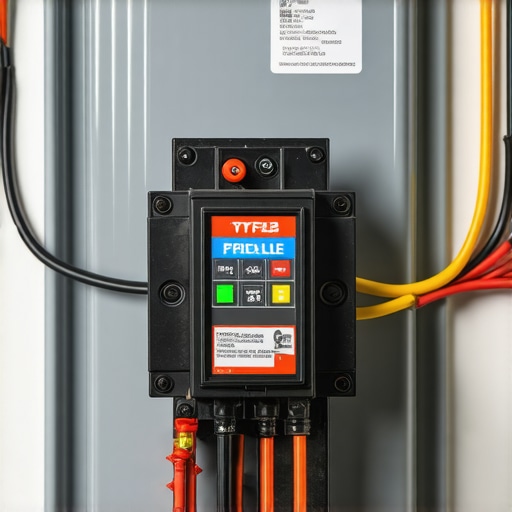
Stop Squishing Wires Into Overcrowded Panels
If your panel looks like a bird’s nest, you are asking for heat issues. One of the most common reasons for equipment failure isn’t even a surge—it’s poor airflow and “crowded” heat. I have seen DIY installs where the owner shoved the EV charger wires behind existing circuits, creating a massive thermal bottleneck. If you are struggling with space, you should look into panel upgrade strategies to meet EV charging code requirements in 2025. In my own garage, I eventually opted for a dedicated sub-panel. It kept the high-heat EV circuit away from my sensitive home electronics, which is a troubleshooting win before you even have a problem.
Tighten Your Lugs to Stop the Silent Heat
Here is a step most people skip: checking the torque settings of the main lugs and the new breaker. A loose wire creates resistance, and resistance creates heat. Over a year of charging a car at 48 amps for eight hours a night, that heat causes the metal to expand and contract. Eventually, the connection becomes loose enough to arc. I have opened panels where the main lug was so loose it was literally “singing”—a high-pitched hum that indicates a fire hazard is brewing. This is exactly why your main lugs might be loose after a year of charging. Always use a calibrated torque wrench to meet the manufacturer’s specs; it is a vital part of why your charger needs a specific torque setting to pass inspection. Don’t just “hand-tighten” and hope for the best, because that is how boards get fried even without a storm.Let’s dig deeper into the math that most contractors gloss over because they want to finish the job in two hours. The common wisdom says that if you have a 200-amp service, you can just slap an EV charger on any open breaker and call it a day. I used to believe that too, until I saw a client’s main breaker trip while they were simply roasting a turkey and charging their car. You see, the nameplate capacity of your panel is often a vanity metric. What matters is the calculated load, and this is where most DIYers—and even some general electricians—get it wrong. When you are upgrading your panel for better EV charging performance, you have to account for the ‘continuous load’ rule. National Electrical Code (NEC) Article 625 dictates that EV chargers are continuous loads, meaning they can run at full power for three hours or more. This requires a 125% over-sizing of the circuit. If your ‘pro’ didn’t mention this, they are cutting corners. This is exactly why your ev permit application requires a load calculation worksheet; it isn’t just bureaucratic red tape, it’s preventing your house from becoming a giant fuse.
The 200-Amp Myth and the Danger of Continuous Loads
Many homeowners assume their system can handle any new addition as long as there is physical space in the panel. But if your home is all-electric—heat pump, water heater, and range—that EV charger could be the straw that breaks the camel’s back. Have you ever fallen into this trap? Let me know in the comments. I’ve seen panels that passed a visual inspection but failed a load calculation the moment the dryer and charger ran together. If you are worried about your current setup, learning how to use load shedding devices to avoid a full service upgrade can be a lifesaver, but it starts with being honest about your panel’s limits.
Why Your Shiny New Outlet Might Melt Next Month
One of the biggest ‘oops’ moments I see involves the NEMA 14-50 outlet. Everyone buys the $15 version from the big-box store. Those are designed for ranges that cycle on and off. An EV pulls a steady, unrelenting 32 or 40 amps for ten hours straight. Those cheap outlets have internal spring tensions that weaken under constant thermal stress. I have seen countless ‘melted’ setups where the outlet literally fused to the plug because of high resistance. You must pick a Nema 14-50 outlet that won’t melt under pressure, which usually means spending the extra money for a Hubbell or Bryant industrial-grade unit. Skipping this is the hidden cost of skipping a panel load calculation and proper hardware selection. #IMAGE_PLACE_HOLDER_C#
Why does my high-end outlet look like it’s melting?
It usually comes down to ‘duty cycle.’ Standard residential outlets are not built for 100% duty cycle at high amperage. According to the Electrical Safety Foundation, high-power continuous loads are one of the leading causes of residential electrical fires in upgraded homes. Beyond hardware, there’s the nuance of code compliance that many miss until the inspector arrives. For example, did you know that in many jurisdictions, a 240V circuit in a garage now requires GFCI protection at the breaker if it is a plug-in unit? But here’s the kicker: many EV chargers have internal GFCI protection, and the two ‘smart’ systems can fight each other, leading to ‘nuisance tripping.’ This is a classic ev charger troubleshooting nightmare. To avoid this, I always recommend hardwiring. Hardwiring bypasses the need for a GFCI breaker in many regions and provides a much more robust connection. Plus, it’s the only way to safely reach higher speeds, which is why your electrician recommends a 60-amp circuit for a 48-amp charger. If you are ensuring code compliance when installing ev chargers, don’t just follow basic guides—check the specific thermal ratings of every component in the chain.Once the inspector signs off and the lights stay on, most people think the job is done. I certainly did, until I noticed the smell of warm plastic six months later. To keep your setup running without a hitch, you need more than just a standard toolbox; you need a strategy for long-term reliability. I’ve started carrying a handheld infrared (IR) thermometer in my garage drawer. Every few months, while the car is pulling its full load, I point that red laser at the breaker and the outlet. If I see a temperature jump of more than 30 degrees Celsius above the ambient air, I know I have a high-resistance connection forming. This simple check is one of the best ev charger troubleshooting tricks I can offer. It lets you catch a failing component before it turns into a charred mess on your wall. 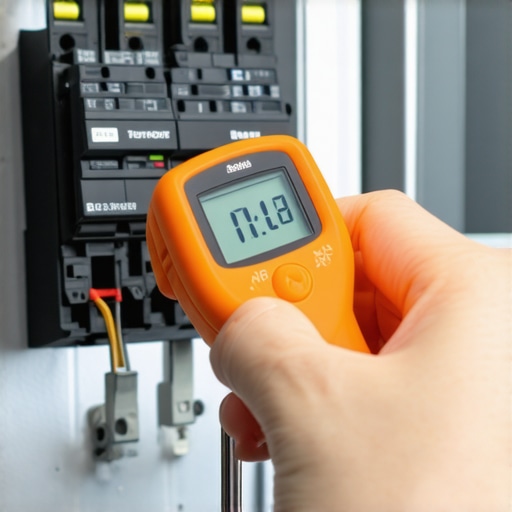
Your Smart Charger is Only as Good as Its Last Update
We often forget that these devices are essentially computers. I’ve seen chargers refuse to communicate with the car simply because the internal software was three versions behind. Learning how to update the firmware on your smart charging station is as vital as changing the oil in an old internal combustion engine. These updates often patch thermal management bugs or improve handshake protocols with new vehicle models. If you ever experience a mid-night shutdown, knowing how to reset your home charging station after a power outage can save you from waking up to an empty battery.
How do I maintain my home’s electrical health over the years?
Consistency is the key. Beyond software, you should perform a physical check-up annually. According to the NFPA 70B (Recommended Practice for Electrical Equipment Maintenance), electrical connections should be periodically inspected because the thermal expansion from daily 40-amp loads is brutal on metal. I recommend having a set of the essential spare parts to keep for your home charging unit, including a spare high-quality breaker, because if yours fails on a holiday weekend, you’ll be stuck at a public charger for hours. You should also periodically verify how to tell if your utility meter can handle the extra load as you add more electric appliances to your home.
Prepare for the Bidirectional Future
Looking ahead, the trend is moving toward V2H (Vehicle-to-Home) technology. Your car won’t just take power; it will provide it during a blackout. This shift will require even more robust upgrading your panel for better ev charging performance because the duty cycle will effectively double. I predict that within five years, a standard panel without smart load management will be considered obsolete. If you want to be ahead of the curve, my advanced tip is this: the next time you charge for over three hours, feel the temperature of the cable itself. If it feels uncomfortably hot to the touch, you likely have a voltage drop issue that’s costing you money and safety. Invest in a dedicated torque screwdriver and re-verify your connections to the exact inch-pound spec—it’s the only way to sleep soundly while your car ‘refuels’ ten feet from your bedroom.
Hard Lessons from My Melted Outlets and Fried Boards
After years of tinkering with these systems, I’ve realized that the most expensive mistakes aren’t the ones you make during the install—they are the ones you ignore afterward. First, never underestimate the power of your nose. If you smell even a hint of “hot fish” or burning ozone near your panel, shut it down immediately. That’s a loose connection arcing, and it’s often the only warning you’ll get before a fire. Second, if you aren’t using a torque wrench, you’re guessing with your home’s safety. I’ve seen 60-amp breakers fail solely because someone ‘felt’ it was tight enough. Finally, don’t let a minor glitch ruin your morning; keep the essential spare parts to keep for your home charging unit in a dedicated bin in your garage so a simple failure doesn’t leave you stranded.
Gear That Actually Saves Your Sanity
If you want to do this right, I recommend investing in a few specific items. A high-quality torque screwdriver is worth its weight in gold for keeping those lugs tight and meeting manufacturer specs. For outlets, forget the hardware store clearance bin; only industrial-grade units are built to handle the unrelenting heat of a 40-amp draw. I also suggest bookmarking your local building department’s portal to stay current on ensuring code compliance when installing ev chargers in your specific zip code. If you ever feel over your head, knowing how to find an electrician who actually understands ev codes is the best tool in your belt. Most general electricians are great with lights and outlets, but high-current EV circuits require a specialized touch.
Sleep Better While Your Car Refuels
Transitioning to an electric vehicle is one of the most exciting shifts you can make as a homeowner, but it requires a new level of electrical literacy. You aren’t just plugging in a toaster; you’re adding a massive, continuous load that tests every link in your electrical chain. By taking the time to address ev charger troubleshooting early and investing in a proper surge protector, you’re not just following the rules—you’re protecting your family and your car. Don’t let the technical jargon scare you off; once you have your system dialed in and torqued to spec, you can finally enjoy the convenience of a ‘full tank’ every morning without a second thought. Have you ever noticed your lights flickering or heard a strange clicking sound when your car starts charging? Tell me about your experience in the comments below!