It was 2 AM in mid-July when a crack of thunder literally shook the pictures off my hallway wall. Most people worry about their basement flooding or a tree limb coming through the roof, but I was different. I was smug. I’d just bought a shiny new EV, and I thought, ‘Hey, the manufacturer says it has built-in protection.’ I left it plugged in, thinking I was being efficient by grabbing those off-peak rates while the clouds dumped buckets outside. That was the mistake that causes ev charger motherboards to fry during storms, and I made it in spectacular fashion. The next morning, my charger was a $600 paperweight with a faint smell of ozone and regret. If you think your car is an island of safety, let me tell you: the electrical grid doesn’t care about your warranty. Today, we are going to look at why a standard storm can turn your expensive inverter into a doorstop and what you can actually do to stop it before the next front moves in. Have you ever walked into your garage after a storm and smelled that unmistakable ‘toasted circuit’ scent?
Your Inverter Isn’t a Lightning Rod So Stop Treating It Like One
I used to think the car’s internal fuses were like a superhero’s shield. I was wrong. A nearby lightning strike can send a massive surge through your home’s wiring that travels faster than your car’s internal relay can click shut. This surge hits the inverter—the heart of your charging system—and essentially cooks the silicon. According to the Insurance Information Institute, the average cost per lightning-related insurance claim has risen over 100% in the last decade because our homes are now packed with sensitive micro-electronics that can’t handle high-voltage spikes. This is exactly why your ev charger needs a surge protector in the panel rather than just relying on the car’s software. It’s a physical barrier against a physical problem.
Do you really need to unplug every time the wind picks up?
You might be thinking that modern tech is better than this. Surely, engineers accounted for a little rain? Well, they did, but they didn’t account for a direct or even indirect hit to the local transformer. If you are seeing 3 signs you need a whole house surge protector for your ev, like flickering lights or frequent small outages, you’re already living on borrowed time. Even if you know how to reset your home charging station after a power outage, that won’t help you if the board inside is physically scorched. We need to bridge the gap between ‘hoping for the best’ and actually hardening your home against the elements. Let’s dive into the mechanics of how these surges find your car and the specific hardware that keeps the juice where it belongs.
Stop the Surge Before It Reaches Your Garage
To truly protect your setup, you need a multi-layered defense. The most critical step is installing a dedicated Type 1 or Type 2 surge protective device (SPD) directly onto your main electrical bus. Think of this as a security guard standing at the front door of your house, kicking out any voltage spikes before they can roam the hallways. This is exactly why your ev charger needs a surge protector in the panel. Standard breakers are designed to trip when there is a sustained overcurrent, but they are often too slow to react to a millisecond-long lightning pulse that carries thousands of volts. By the time the breaker flips, the delicate silicon chips in your charger are already fried. 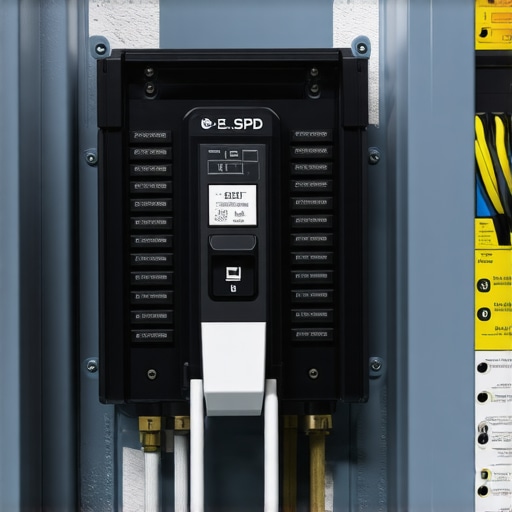
Verify Your Panel Can Handle the Continuous Load
Many homeowners think that if they have an open slot in their breaker box, they are good to go. However, EV charging is a continuous load—meaning it pulls maximum power for hours on end—which generates significant heat. This is where panel upgrades for ev chargers become a necessity rather than an option. If your panel is over twenty years old, the bus bars might be oxidized, leading to high resistance and heat buildup that can soften the plastic on your breakers. I once worked on a job where the homeowner’s charger kept cutting out, and upon opening the panel, we found the breaker had actually partially melted onto the bus bar because it wasn’t rated for that level of constant stress.
Tighten Every Connection to Factory Specs
It sounds trivial, but a loose wire is a fire hazard and a surge magnet. You must use a torque screwdriver to hit the specific torque settings that prevent panel fires during high load charging. If a terminal is even a fraction of a millimeter loose, it creates an arc. Arcing creates heat, and heat kills electronics. While you are in there, check your metallurgy. Using a mix of metals is a recipe for disaster; make sure you understand the difference between copper and aluminum for ev wiring because they expand and contract at different rates under load. If you have aluminum service wires meeting copper branch circuits without the proper transition lugs, you’re inviting a failure.
Check Your Grounding and Code Compliance
A surge protector is useless if the excess energy has nowhere to go. The energy from a strike needs a clear, low-resistance path to the earth. You should perform the simple test to see if your garage outlet is truly grounded before you trust it with a $40,000 car. If your ground rod is corroded or the wire has snapped off outside, that surge will stay in your house’s wiring, looking for the easiest path to ground—which might be through your car’s battery management system. Always take the time to how to verify code compliance for your ev charger installation. Following the National Electrical Code isn’t just about passing an inspection; it’s about ensuring that when a storm hits, the physics of your home’s wiring works in your favor, not against it. If you’re already seeing issues, don’t wait for the next cloudburst; start with ev charger troubleshooting expert tips for common issues to identify weak points in your current setup.
Let’s address the elephant in the room: many people assume that the more they spend on a ‘smart’ charger, the more resilient it is to electrical fluctuations. In my experience, the opposite is often true. A high-tech unit with a touchscreen and complex Wi-Fi connectivity has significantly more sensitive components that can fail during a voltage dip or a thermal event compared to a rugged, ‘dumb’ hardwired unit. This is often why your smart charger is actually slower than a basic plug-in model in real-world scenarios—it spends more time managing its own internal software handshakes and temperature sensors than actually delivering juice to your battery.
There’s a dangerous trap I see even seasoned DIYers fall into: the ‘spare breaker’ assumption. Just because your panel has a 200-amp main breaker doesn’t mean you automatically have 50 amps of head-room for a Level 2 charger. If you skip a proper mathematical analysis of your home’s existing draws, you face the hidden cost of skipping a panel load calculation when your main breaker starts tripping during Thanksgiving dinner. The National Electrical Code (NEC) Article 625 is very specific: EV charging is a continuous load. This means the circuit must be sized at 125% of the charger’s output. If you ignore this, you’ll soon discover the real reason your circuit breaker trips at 90 percent charge is simply thermal accumulation within the panel.
Why is your breaker getting hot enough to cook an egg?
It’s not just about the amps; it’s about the duration. Most household appliances like dryers or ovens cycle on and off, allowing the copper to cool down. An EV charger is relentless, pulling max power for six to ten hours straight. According to data from the Electrical Safety Foundation International (ESFI), residential electrical systems are increasingly being pushed to their design limits by the ‘always-on’ nature of EV infrastructure. If you notice why your breaker gets hot to the touch during charging, you aren’t just looking at a nuisance; you’re looking at a structural failure of the breaker’s internal spring tension. This is exactly where panel-upgrade-strategies-to-meet-ev-charging-code-requirements-in-2025 become vital. You need equipment designed for the marathon, not a sprint.
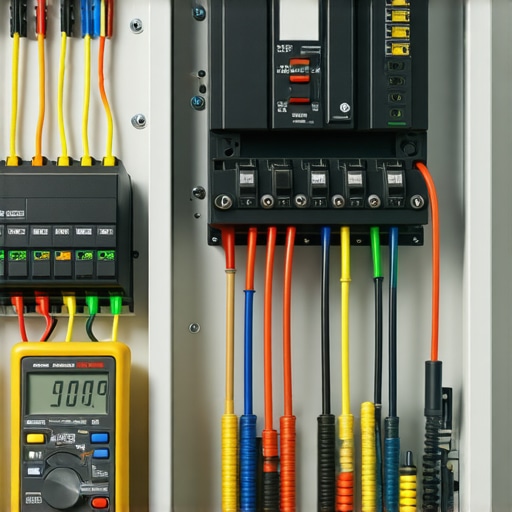
The ‘Oops’ factor I encounter most frequently involves the neutral wire. I’ve seen countless installations fail inspection because the installer assumed a 240V circuit only required two hots and a ground. However, many modern smart units require a neutral to power their internal 120V logic boards and communication modules. Always take the time to learn how to verify code compliance for your ev charger installation before you close the drywall or pay the contractor. If you’ve run into a situation where your expensive charger won’t even power on, you might need troubleshooting-ev-chargers-common-compliance-pitfalls-and-fixes to see if your wiring logic actually matches the manufacturer’s requirements. Have you ever fallen into this trap where you thought you had enough power only to have the lights flicker every time you plugged in? Let me know in the comments.
Beyond the initial install, I’ve learned the hard way that an EV charger isn’t a ‘set it and forget it’ appliance. I treat mine more like a high-performance engine that needs an occasional tune-up to prevent expensive silicon-frying events. My secret weapon is a simple handheld infrared thermometer. Every six months, while my car is pulling its full 48 amps, I pop the cover off my main panel and scan the breakers. If I see a temperature spike that doesn’t match the surrounding circuits, I know I’m looking at high resistance from a wire that’s vibrating loose over time. This is the only proactive way to truly how to spot a dying breaker before it shuts down your charging session. If you wait for the smell of smoke, the damage to your bus bar is already done.
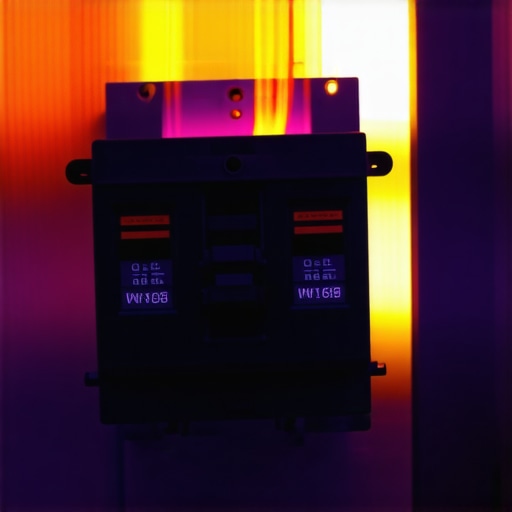
Technical precision is non-negotiable when dealing with these sustained loads. According to the IEEE 1100-2005 (The Emerald Book), which is the gold standard for powering and grounding sensitive electronic equipment, even minor repetitive voltage fluctuations can cause ‘latent failures.’ These are internal wounds in your charger’s motherboard that don’t cause an immediate shutdown but slowly degrade the components until they fail on a perfectly sunny day. I’m not just looking for a fire hazard when I inspect my panel; I’m looking for the tiny heat signatures of a future $500 repair bill. If you see discoloration on your wire insulation, stop immediately and check your torque settings.
How do I maintain my EV charging setup over time?
Maintenance isn’t just about the heavy copper wires in the wall. I make a habit of checking the charging handle for any signs of pitting or debris, which is especially vital if you’re implementing 3 maintenance tasks that keep your outdoor charger running through winter. Grit and salt can bridge the pins in your port, creating micro-arcs that melt the plastic housing. Furthermore, keep an eye on the digital side of things. If your charging sessions are becoming inconsistent, you should learn how to update the firmware on your smart charging station. Manufacturers often push silent patches that improve thermal management logic or fix troubleshooting-ev-charger-connectivity-problems that could otherwise leave you with a half-charged battery in the morning.
Looking ahead, I see our home electrical panels becoming much more than just a box of switches. We are moving rapidly toward a ‘smart-grid-interactive’ era where your car doesn’t just draw power—it serves as a backup battery for your entire home during peak hours. This bi-directional charging (V2H/V2G) is going to put even more stress on residential infrastructure, making upgrading your panel for better ev charging performance a prerequisite for the next generation of homes. If you are still limping along on a legacy 100-amp service with double-tapped breakers, the mid-2020s are going to be a very expensive wake-up call for your homeowner’s insurance policy. I highly recommend grabbing an infrared thermometer from the hardware store tonight and scanning your panel while the car is at 80% charge. If that EV breaker is significantly hotter than your main lug, you’ve got a loose connection that needs a pro—so don’t hesitate to contact us before a small heat issue becomes a full-blown panel replacement.
The One Silent Killer I Found Hiding in My Breaker Box
The most shocking thing I discovered after months of charging was that the “set it and forget it” mentality is a lie. Even if you have followed how to verify code compliance for your ev charger installation, the constant thermal expansion and contraction of heavy-gauge wire can slowly back out a terminal screw. This creates a high-resistance point that leads to the exact scenario where your charger smells like burnt plastic. My lightbulb moment was realizing that electrical maintenance is a living process. I now make it a point to check the specific torque settings that prevent panel fires during high load charging once a year. It takes ten minutes, but it prevents a thousand-dollar panel replacement. I also stopped assuming that a green light on the charger meant everything was perfect; sometimes the most dangerous failures are the ones that don’t trigger a fault code until it is too late.
The Essential Kit for Every Responsible EV Owner
If you want to move beyond guessing, you need the right gear in your garage. First, get a decent non-contact infrared thermometer; it is the single best way to see heat before it becomes a hazard. Second, invest in a calibrated torque screwdriver. You cannot “feel” 45 inch-pounds accurately, and your safety depends on that precision. Third, I always keep a digital copy of the code compliance essentials for ev charger installations in 2025 on my phone. Having the actual rules handy means you can talk to an electrician as a peer rather than a victim. These tools turn you from a passive user into a proactive home manager who is ensuring code compliance when installing ev chargers every step of the way.
Take Control of Your Home Power Today
Switching to an electric vehicle is one of the most exciting changes you can make to your home’s ecosystem, but it demands a higher level of respect for the electricity behind your walls. Don’t let a fear of the unknown stop you from upgrading your panel for better ev charging performance. When you treat your charging infrastructure with the same care as the car itself, you eliminate the anxiety of “what if” and replace it with the confidence of a job done right. You have the knowledge—now it is time to apply it. Have you checked your breaker temperatures during a peak charging session lately? Let me know what you found in the comments below.