I’ll never forget the morning I almost broke my $500 charging handle with a rubber mallet. It was 6:00 AM, the wind was howling across the driveway, and a thick layer of freezing rain had turned my car into a literal popsicle. I reached for the plug, ready to head to a crucial meeting, but it wouldn’t budge. It wasn’t just stuck; it was fused to the holster by a sheet of solid ice. In my rush to get inside the night before, I’d ignored the wet snow piling up on the connector. That morning cost me a late fee, a massive amount of stress, and a very cold hand. Most people think these units are invincible because they’re ‘outdoor rated,’ but winter has a funny way of finding the tiny weak spots in our electrical setups that we never noticed in July.
When the Ice Storm Won and My Charger Lost
We’ve all been told that our Level 2 stations are built like tanks. And while they are sturdy, they aren’t magic. If you’ve spent any time troubleshooting EV charger issues in the dark with a frozen flashlight, you know that cold weather is the ultimate stress test for electronics. I learned the hard way that simply mounting the box to the side of the garage isn’t a ‘set it and forget it’ situation. You see, why outdoor charging stations need more than just a plastic cover becomes painfully obvious when moisture seeps into the handle pins and freezes solid overnight. My mistake was simple: I assumed the seals were perfect from the factory. I didn’t realize that thermal expansion and contraction—the way metal and plastic grow and shrink as the temp swings—can loosen connections over time. According to research from the Idaho National Laboratory, cold temperatures can increase the time it takes to charge by over 25% due to battery chemistry, but if your equipment is struggling with physical blockages or loose wiring, you might not get a charge at all. Today, I’m going to share the three tasks I now do every November to ensure I never have to reach for that mallet again.
Is Winter Maintenance Actually Worth the Effort?
I get it. You’re busy, and the last thing you want to do is ‘service’ a plastic box on your wall when it’s forty degrees out. You might be wondering if these steps are just busywork for the over-cautious. They aren’t. Early in my journey as an EV owner, I neglected to check the specific torque settings on my internal terminals. When the first deep freeze hit, the metal wires contracted just enough for a connection to become slightly loose. That led to heat, a tripped breaker, and me waking up to a car with 12% battery. It’s not just about convenience; it’s about preventing equipment failure when the grid is already under stress. Have you ever walked out to find your charger dead right when you needed it most? If so, you know that sinking feeling. Let’s make sure that doesn’t happen this year. We’ll start with the part of the system that takes the most abuse: the connection point.
Keep the Connection Clean and Dry
The biggest enemy of your outdoor station isn’t actually the cold—it’s the moisture that the cold turns into ice. If your handle pins are dirty or have a bit of road salt residue on them, they attract more moisture, which leads to corrosion or freezing. Learning how to clean the pins on your charging handle safely is the single most effective way to prevent those frustrating ‘communication error’ messages that pop up when it’s five below zero. A quick inspection now saves a lot of headache in January. [image_placeholder_1]
Tighten Your Connections to Prevent Winter Failures
Once your pins are clean, it’s time to move toward the heart of the system: the electrical panel. Think of your home’s electrical panel like a heart and the EV circuit as a major artery. In the summer, everything flows easily, but winter adds a layer of resistance. Cold air causes metal to contract, and if your installer didn’t use the specific torque settings that prevent panel fires during high load charging, those lugs can loosen just enough to create a gap. That gap causes arcing, which generates heat, and suddenly your breaker is tripping in the middle of a blizzard. I remember one January morning where I found a scorched wire inside my sub-panel. I’d skipped my November check-up, and the thermal cycling of the metal had backed a screw out by half a turn. It was a terrifying reminder that high-voltage equipment requires precision. If you’re not comfortable opening the panel, this is the time to have a pro how to verify code compliance for your ev charger installation to ensure everything is still tight and seated correctly.
Why Your Main Breaker Might Hum in the Cold
If you start your car charging and hear a faint buzzing coming from the garage wall, don’t ignore it. This often happens when the demand for heat inside the house climbs at the same time the car pulls its maximum 48 amps. You need to know why your main breaker hums when the ev is plugged in because it’s usually a sign of vibration from a heavy load or a slightly loose busbar connection. During a winter load-test I did last year, I realized my space heaters and the charger were fighting for the same ‘oxygen’ on the busbar. If you find your system struggling, you might need to look into panel upgrades for ev chargers to give your home the breathing room it needs for those sub-zero nights.
Stop the Cable from Becoming a Frozen Anchor
The actual charging cable is often the most neglected part of the setup. In the summer, it’s flexible and easy to coil. In the winter, it turns into a stiff, frozen garden hose that refuses to move. If you leave your cable lying on the ground, it will get encased in ice or, worse, damaged by a snowblower. I once had a neighbor who accidentally sliced his cable with a shovel because it was buried under three inches of fresh powder. To avoid this, ensure your holster is mounted at a height where the cable remains off the ground entirely. This isn’t just about convenience; it’s a safety issue. Check the jacket of the cable for cracks. If moisture gets inside the insulation and then freezes, it expands and can split the protective layer, leading to a dead unit. 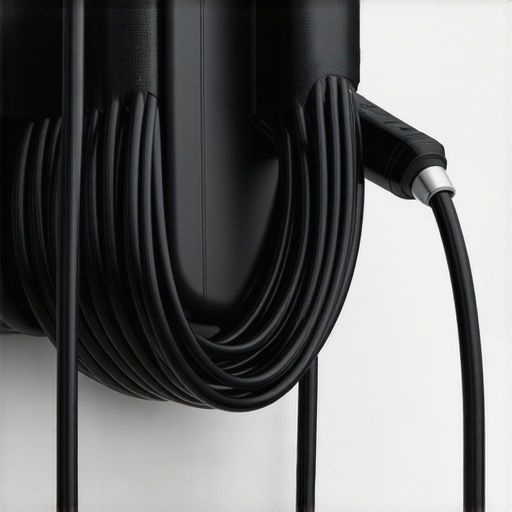
Fix the Connectivity Errors Before You’re Stranded
Nothing is more frustrating than a ‘Smart’ charger that loses its mind when the temperature drops. Cold weather can actually interfere with Wi-Fi signals if your router is far away and the signal has to penetrate frozen exterior walls. If your app stops reporting, you’re likely troubleshooting ev charger connectivity problems instead of sleeping. I’ve found that a simple Wi-Fi extender in the garage usually solves this, but you should also check for firmware updates. Manufacturers often release winter-specific patches that adjust how the charger handles initial handshakes with the car in extreme cold. Taking ten minutes to how to update your charger software without calling a technician can prevent those 2:00 AM ‘Charger Offline’ notifications that ruin your morning commute.
Is Your Breaker Running Dangerously Hot?
While the outside is freezing, the inside of your breaker box might be cooking. High-load charging for 8 hours straight creates significant thermal stress. You should keep an eye out for 3 signs your main breaker is running dangerously hot during overnight charging, such as a faint smell of ozone or plastic. If the breaker feels hot to the touch—not just warm, but painful—you have a resistance problem. This is often where ev charger troubleshooting moves from simple maintenance into necessary repairs. Ensuring your system is balanced using how to load balance your home electrical system without a full panel swap can help distribute that heat more evenly across your home’s infrastructure.
Stop Wasting Money on Panel Swaps You Don’t Actually Need
The most common myth pushed by contractors is that a full breaker box automatically requires a $3,000 panel upgrade. In my experience, most homes have plenty of raw capacity; they just have a physical space problem. I’ve seen homeowners get quoted for a massive service change when they could have simply used tandem breakers or a sub-panel. If you’re tight on space, learning how to add an ev charger to a home with a small 60 amp panel can save you thousands. The key is understanding that ‘code compliant’ is the bare minimum for safety, not a recommendation for maximum performance. You can often implement panel upgrade strategies to meet ev charging code requirements in 2025 without ripping the whole box off the wall. Have you ever fallen into the ‘mandatory upgrade’ trap? Let me know in the comments.
Can Your 100-amp Service Handle a Full Night of Charging?
This is the question that keeps savvy EV owners up at night. According to the National Fire Protection Association (NFPA), any load running for more than three hours is considered ‘continuous’ and must be calculated at 125% of its rating. This means a 40-amp charger actually requires a 50-amp circuit. If you are how to calculate if your 100-amp service can handle a daily commute, you have to look at your ‘peak concurrent load’—basically, what happens when the dryer, the oven, and the car all run at once. 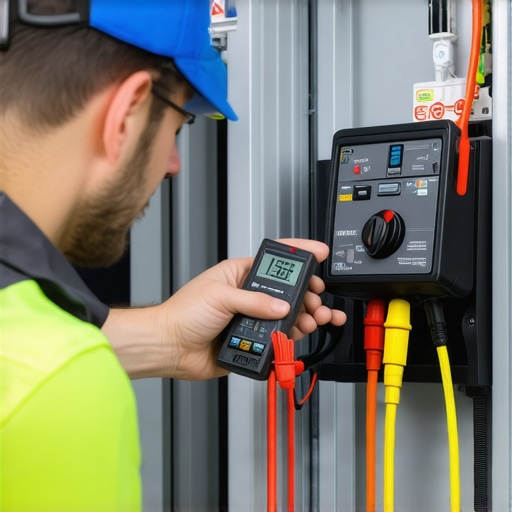
Don’t Let Cheap Wire Melt Your Investment
The biggest ‘oops’ factor I see in advanced troubleshooting isn’t the charger itself, but the wire behind the wall. People often try to save money by choosing aluminum over copper. While aluminum is legal, it has a different thermal expansion rate, which can lead to loose connections in the winter. If you don’t understand the difference between copper and aluminum wiring for high load circuits, you might end up with a melted lug. Furthermore, the common wire sizing error that causes voltage drops during charging is often the culprit behind chargers that ‘throttle’ their speed. If your voltage drops too low because the wire is too thin for the distance, the car will reduce the intake to protect the battery, leaving you with a half-empty tank in the morning. Before you finalize your setup, always how to verify code compliance for your ev charger installation to ensure you haven’t traded safety for a few bucks in savings. If your breaker keeps popping, check the specific breaker brand that keeps tripping on level 2 chargers, as some older brands are notorious for nuisance trips under high thermal stress.
If you think the job ends once the inspector signs off, you’re setting yourself up for a surprise in year three. I’ve found that the best way to avoid late-night calls to an electrician is to keep a small maintenance kit in the garage. This isn’t just about spare fuses; it’s about tools that help you see problems before they turn into smoke. For me, the most important tool is a calibrated torque screwdriver. I re-check the torque on my charger terminals every six months because the constant heating and cooling of high-current charging can cause metal to ‘creep’ or loosen. It is one of those [ev charger troubleshooting expert tips](https://brightsparkzelectric.com/ev-charger-troubleshooting-expert-tips-for-common-issues) that most homeowners overlook until they see charred plastic on their wall.
Stop Guessing and Start Measuring with an Infrared Thermometer
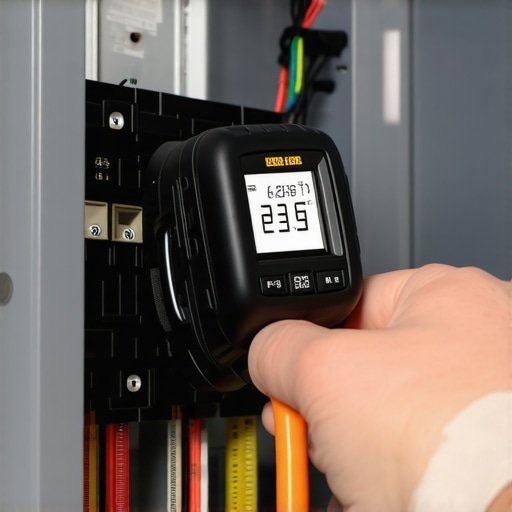
I also swear by using a non-contact infrared thermometer. It is my secret weapon for home safety. Once a month, while my car is pulling its full 48-amp load, I point it at my main breaker and the dedicated EV breaker. If I see a temperature difference of more than 15 degrees Fahrenheit between the two, I know I have a resistance issue starting. This simple five-second scan is exactly [how to spot a dying breaker before it shuts down your charging session](https://brightsparkzelectric.com/how-to-spot-a-dying-breaker-before-it-shuts-down-your-charging-session). If you are seeing high temps, you might be facing one of the [common compliance pitfalls and fixes](https://brightsparkzelectric.com/troubleshooting-ev-chargers-common-compliance-pitfalls-and-fixes) that arise from poor ventilation or undersized enclosures. According to the National Electrical Code (NEC) Article 625, EV charging is a continuous load, meaning it puts more sustained stress on your home than almost any other appliance. Don’t let that stress go unmonitored.
How do I keep my home charging system safe for years?
Long-term reliability isn’t just about the hardware; it’s about the data and environment. I track my charging sessions via my app to see if the ‘miles per hour’ of charge starts to dip. If it does, I am usually [troubleshooting a communication error between your car and charger](https://brightsparkzelectric.com/how-to-troubleshoot-a-communication-error-between-your-car-and-charger) or checking for a loose neutral wire. I also make it a point to [verify code compliance for your ev charger installation](https://brightsparkzelectric.com/how-to-verify-code-compliance-for-your-ev-charger-installation) annually. For example, some updates in the latest code cycles introduced new requirements for GFCI protection on specific outlets that weren’t standard five years ago. Staying current ensures my home remains safe and my insurance remains valid should a failure occur.
The Future of Home Energy Management
Looking ahead, the industry is moving toward ‘Smart Panels’ that manage these loads automatically. Instead of having to [load balance your home electrical system without a full panel swap](https://brightsparkzelectric.com/how-to-load-balance-your-home-electrical-system-without-a-full-panel-swap) manually, AI-driven software will dim your car’s charging speed when the clothes dryer or HVAC kicks on. This dynamic load management is already becoming the gold standard for [panel upgrade strategies to meet ev charging code requirements in 2025](https://brightsparkzelectric.com/panel-upgrade-strategies-to-meet-ev-charging-code-requirements-in-2025). According to technical experts at the Electric Vehicle Infrastructure Training Program (EVITP), the ultimate goal is bidirectional charging, where your car acts as a battery for your whole house. To be ready for that, ensure your current [panel upgrades for ev chargers](https://brightsparkzelectric.com/panel-upgrades-for-ev-chargers-what-you-need-to-know) include enough busbar capacity for two-way power flow. My advice? Grab an infrared thermometer this weekend and scan your panel while charging. It is the easiest way to sleep soundly knowing your home’s ‘heart’ is healthy.
Hard Truths I Learned While Troubleshooting in a Blizzard
After five winters of driving electric, I’ve realized that the most dangerous assumption you can make is that a ‘maintenance-free’ appliance exists. My first big mistake was thinking that because I had a professional install, I never had to look at my panel again. In reality, the high-amperage draw of an EV acts as a magnifying glass for tiny installation errors. I discovered that even if you are ensuring code compliance when installing ev chargers, physical vibrations and thermal cycling over several years can still create micro-gaps in your wiring. Another ‘lightbulb moment’ for me was realizing the benefit of a hardwired charger over a nema plug; in extreme cold, the plug-in connections are much more prone to moisture intrusion and localized heating than a sealed, hardwired junction. Finally, never underestimate the power of a simple visual check. A scorched label or a slightly discolored wire is your early warning system, and catching it in November is much better than dealing with a dead car in a January snowstorm.
The Load-Tested Gear I Keep in My Garage
You don’t need a truck full of tools, but a few specific items will save you thousands in emergency repairs. First, I recommend a calibrated torque screwdriver—specifically a Wiha or Wheeler model—to ensure your terminal screws haven’t backed out. Second, a reliable non-contact infrared thermometer is essential for how to spot a dying breaker before it shuts down your charging session without ever touching a live wire. Lastly, I keep a copy of the NEC Article 625 handy; it’s the ‘bible’ for EV installations and helps me stay informed when troubleshooting ev chargers common compliance pitfalls and fixes. These tools turn guesswork into data, allowing you to manage your home’s energy with the same precision as a master electrician.
Take Control of Your Energy Before the Next Deep Freeze
Your home’s electrical system is a dynamic environment that changes with the seasons. By taking an hour this weekend to inspect your pins, check your breaker temperatures, and verify your connections, you aren’t just doing maintenance—you’re building peace of mind. Whether you are planning future panel upgrades for ev chargers or just trying to get through the night without a tripped breaker, being proactive is the only way to ensure your EV is always ready to roll. Don’t let the first ice storm be the thing that teaches you the importance of ev charger troubleshooting. Start your inspection today and drive through the winter with total confidence. Have you ever noticed your charger acting differently once the temperature drops below freezing? Let me know your experiences in the comments below!