I remember the smell first. It wasn’t quite smoke, but that thick, ozone-heavy scent of plastic getting just a little too warm for comfort. I’d been charging my new EV for three weeks using a standard NEMA 14-50 plug I’d installed myself, thinking I was being clever and ‘future-proofing’ my garage for flexibility. But that night, as I touched the handle and felt it radiating heat, I realized I’d made a classic rookie mistake. It’s a moment most of us face: the realization that just because you can plug something in doesn’t mean you should. These machines pull a lot of power, and your standard garage outlet might not be up to the task.
Stop Treating Your EV Like a Toaster
Look, I get the appeal of the NEMA 14-50 outlet. It feels versatile. If the charger breaks, you just unplug it and get a new one, right? That’s what I told myself until I started seeing how to spot a dangerous heat build-up in your ev charging cable first-hand. The truth is, an EV isn’t a toaster or a hair dryer. It’s a continuous load that pulls massive amounts of electricity for eight hours straight. Most residential-grade outlets simply aren’t built for that kind of thermal stress night after night. If you’ve ever walked into your garage and wondered why your main breaker keeps tripping during overnight charging, you’re likely feeling the physical limits of a plug-in setup. Today, I’m going to break down why hardwiring your station is the single best upgrade you can make for your home’s safety and your own peace of mind. We’re moving past the ‘easy’ way and doing it the right way.
Is a plug-in charger actually a safety risk?
Early on, I bought a cheap, ‘heavy-duty’ outlet from a big-box store, thinking it was the same as the industrial-grade ones used in factories. It wasn’t. Within months, the tension in the socket started to fail, creating resistance. Resistance equals heat. According to the National Fire Protection Association (NFPA), high-draw appliances require specific considerations that a standard 14-50 outlet often misses, especially as the NEC now requires GFCI protection on these outlets, which can lead to annoying ‘nuisance tripping’ that leaves you with an empty battery in the morning. Have you ever woken up to find your car didn’t charge at all because the breaker popped for no apparent reason?
The Hidden Power Boost You Get From Hardwiring
When you skip the plug, you’re not just gaining safety; you’re gaining speed. Most plug-in chargers are capped at 40 amps because of the limitations of the NEMA 14-50 interface and the required 50-amp breaker. However, many modern EVs can handle 48 amps or more. To get that extra juice, you have to go hardwired. This involves checking your code compliance essentials for ev charger installations in 2025 to ensure your wiring is thick enough to handle the 60-amp breaker required for that higher output. It’s the difference between a full charge in six hours versus eight. I’ve talked to so many neighbors who feel stuck with slow charging because they didn’t want to ‘commit’ to a permanent installation. It’s time to stop compromising on your home’s most power-hungry appliance.
First, Audit Your Power Budget
Before you even buy the charging station, you need to look at your electrical panel. Think of your panel like a monthly budget. If you only have $100 and your appliances are already ‘spending’ $90, you can’t go out and buy an $80 steak. You have to know how to tell if your electrical panel can actually handle a level 2 charger before making the leap. I once helped a neighbor install a charger on an old 100-amp service without doing the math. We thought we were fine until the dryer and the AC kicked in simultaneously at 10 PM. The loud ‘thunk’ of the main breaker was a wake-up call that led us to learn how to calculate if your 100-amp service can handle a daily commute safely. If your panel is already gasping for air, you are likely looking at panel upgrades for ev chargers what you need to know before you can safely pull 48 amps.
Size Your Wires for Continuous Stress
Electricity behaves a lot like water, and your wires are the pipes. If you try to force a fire hose worth of volume through a cocktail straw, things get hot and messy very fast. For a 48-amp charge, you need a 60-amp breaker and, at minimum, 6 AWG copper wire. I’ve seen many DIYers try to reuse old dryer lines or undersized Romex they found in the garage. This is a recipe for disaster. Using the wrong gauge leads to 3-common-wire-sizing-errors-that-melt-breakers-during-long-charging-sessions. 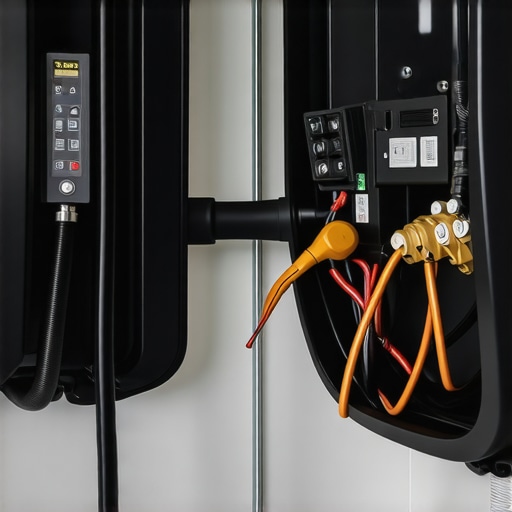
Torque It Down Like Your House Depends on It
I once finished an entire install, felt great about it, and then failed my inspection five minutes after the inspector arrived. Why? I didn’t use a torque screwdriver. I thought ‘hand tight’ was a universal measurement. It isn’t. Loose connections in a high-draw circuit cause micro-arcing, which generates massive heat without necessarily tripping the breaker immediately. That’s the forgotten torque spec that fails half of all panel inspections. You must use a calibrated tool to hit the exact inch-pounds specified by the manufacturer on the charger’s internal lugs.
Don’t Kill Your Motherboard Before Year Two
One tiny detail that trips up even seasoned electricians is the grounding and bonding. Most hardwired chargers only require two hots and a ground, but the quality of that ground is non-negotiable. If you mis-wire the ground or have a loose connection at the bus bar, you’re looking at 3-grounding-errors-that-kill-ev-charger-motherboards-before-they-are-a-year-old. I remember a friend who had to replace a $700 charging unit because a loose ground wire caused a surge that fried the communication board. It’s a painful and expensive way to learn a lesson about precision.
Verify Code Compliance Early
Finally, you have to play by the local rules. Insurance companies are notorious for finding reasons to deny claims, and an unpermitted, non-compliant EV install is their favorite ‘out.’ You should always how-to-verify-code-compliance-for-your-ev-charger-installation to ensure your conduit depth, breaker type, and labeling meet the latest standards. Skipping the permit might save you $100 today, but it could cost you your home’s equity or safety tomorrow.Let’s dig deeper into what actually happens inside that grey box on your wall. Most homeowners think that if they have a 200-amp panel, they are invincible. But here is the contrarian truth: total capacity is rarely the bottleneck—it is the local thermal density. You might have 100 amps of headroom, but if your EV breaker is sandwiched between your AC and dryer breakers, you are creating a localized ‘heat island’ that causes premature fatigue. The International Association of Electrical Inspectors (IAEI) notes that continuous loads (defined as 3 hours or more) require specific spacing and derating considerations that many DIYers overlook. Have you ever fallen into this trap? Let me know in the comments. 
Forget Amperage and Start Thinking About Thermal Density
Even if your math says you have room, you need to understand ensuring code compliance when installing ev chargers involves more than just a permit; it requires managing heat. One common ‘oops’ factor is assuming a 100% duty cycle for the entire panel life. When you pull 48 amps for 10 hours, the bus bar itself expands and contracts. If you haven’t learned how to use a 100-amp panel for ev charging without a costly upgrade, you might be tempted to just cram breakers in wherever they fit. This leads to ‘thermal creep,’ where the physical connection at the bus bar degrades over time, eventually leading to those mysterious mid-session shutdowns.
Why does my charger throttle speed when nothing else is running?
You might notice your charging rate drops from 11.5kW to 7kW even when the house is quiet and the sun is down. This is often due to the charger’s internal temperature sensors reacting to a poor connection or an undersized conduit. If you’ve made one of the 3 conduit placement mistakes that fail ev inspections every time, like running too many current-carrying conductors through a single pipe without derating, the heat has nowhere to go. The charger ‘sees’ the ambient heat rise and slows down to prevent a fire. It’s a safety feature, but it’s also a sign that your installation has a fundamental flaw.
Smart Chargers Are Not a Cure for Bad Wiring
I hear this all the time: ‘I’ll just get a smart charger that manages the load.’ While load-shaving technology is great for staying under your service limit, it’s often used as a Band-Aid for a system that’s fundamentally overtaxed. If your panel is ancient or the lugs are corroded, even the smartest software won’t save you from a mechanical failure. You need to investigate why your 2026 ev charger lags 3 fast fixes for power drops to see if the issue is digital or physical. Usually, it’s the latter. True reliability comes from a rock-solid physical foundation—thick wire, properly torqued lugs, and plenty of breathing room in the panel. Finally, don’t ignore the grounding electrode system; a standard ground rod might pass a basic continuity test, but for an EVSE, you want a low-impedance path to protect the sensitive motherboards from utility surges.The grounding is just the start of the journey toward a reliable home fueling station. Once you have performed the 3 tests to make sure your ground rod passes the ev permit inspection, the real work of long-term system health begins. I keep a dedicated kit for my charging station, and it’s not just about pliers and wire strippers.
The gear that separates pros from weekend warriors
To truly stay on top of your system, you need an infrared thermometer. I’m not talking about a kitchen tool for checking steaks, but a decent entry-level thermal imager or a precision IR gun. Once a month, while the car is pulling its full 48-amp load, I open my garage panel—very carefully—and scan the EV breaker. If I see a temp reading that is 20 or 30 degrees higher than the surrounding breakers, I know I have a loose connection or a failing lug. This is how I catch issues before they turn into why your 2026 ev charger fails under load and potentially save my house from a fire. 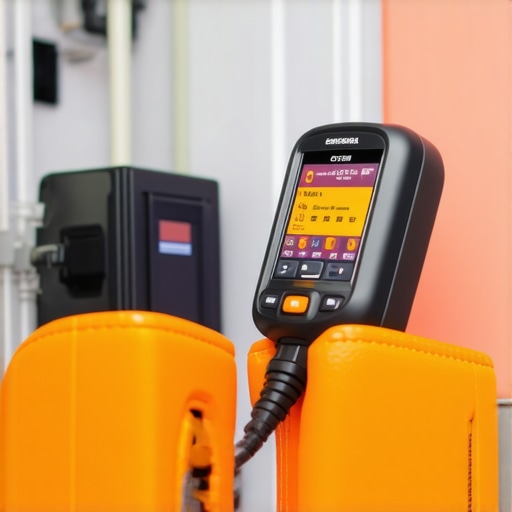
How do I maintain my home charging station over time?
Maintenance isn’t a one-and-done event; it’s a seasonal rhythm. Every six months, I power down the breaker and check the charging handle itself for any signs of wear. Look for soot, pitting, or green oxidation on the metal pins. If you find any debris, a quick blast of specialized electronic contact cleaner—never use WD-40—can save your car’s port from expensive arcing damage. If the software starts acting up or the LEDs change color, I go through ev charger troubleshooting expert tips for common issues to see if a firmware update is hanging. Sometimes, you can even fix your 2026 ev charger ground fault without a service call just by resetting the GFCI logic through the manufacturer’s smartphone app.
Why your infrared thermometer is your best friend
Heat is the ultimate enemy of electrical longevity. According to the IEEE 1100-2005 standard, also known as the ‘Emerald Book,’ maintaining low-impedance paths and monitoring thermal signatures is critical for equipment that utilizes sensitive power electronics like an EVSE. If you see your charging cable getting stiff over time or the insulation feeling brittle, that’s a sign of internal copper fatigue from repeated thermal cycling. I’ve seen homeowners ignore a slightly warm handle until it literally fused to their car’s charging port during a heatwave. Don’t be that person. Use the tools to see what your eyes cannot.
Looking ahead to the bi-directional future
We are moving toward a world where your car isn’t just a sink for power, but a source for your entire life. Vehicle-to-Home (V2H) technology is going to put even more stress on your home’s infrastructure than we see today. When your car starts powering your house during a utility blackout, those wires are going to be working double shifts. That’s why upgrading your panel for better ev charging performance now is really about future-proofing for the mid-2030s. We aren’t just installing chargers anymore; we’re building residential microgrids. My best advice? Grab a torque screwdriver and verify your lug connections one last time this weekend—it is the cheapest insurance policy you will ever buy.
Hard Lessons from 500 Hours of Garage Charging
Over the years, I have realized that the ‘finish line’ of an install is actually just the starting point of a decade-long relationship with your home’s electrical system. One of the biggest shifts in my thinking came when I stopped viewing my charger as a gadget and started seeing it as a critical utility, much like a furnace or a water heater. First, never underestimate the power of documentation. I spent a frantic hour once trying to locate a specific circuit because I had neglected to clearly label my panel after a complex install. Beyond labeling, I’ve learned that the physical layout matters just as much as the electrical theory. If you aren’t careful, you can fall victim to 3 grounding mistakes that will instantly fail your home ev inspection, which often stems from rushed cable management. I also discovered that ‘future-proofing’ isn’t just about high amperage; it’s about accessibility. Using THHN wire in a slightly oversized conduit makes it infinitely easier to swap cables if technology changes in five years. Finally, pay attention to the silent signs of failure. If you find why your ev charger stops mid-session without throwing a code, it is usually a sign that your hardware is protecting itself from a physical install flaw you missed during the initial rush.
Gear That Actually Makes a Difference
If you are serious about maintaining a safe system, your toolbox needs to evolve beyond basic pliers. I personally swear by three specific resources that have saved me thousands in potential repairs. First, a calibrated torque screwdriver is non-negotiable. Using ‘hand-tight’ measurements is exactly how you end up dealing with the forgotten torque spec that fails half of all panel inspections. Second, I keep a bookmark for NFPA and local code updates. Staying current on code compliance essentials for ev charger installations in 2025 ensures that your home stays insurable and safe. Third, I highly recommend a thermal imaging attachment for your smartphone. It allows you to ‘see’ heat building up in a breaker before you can ever smell it or trip the circuit. Lastly, keep a reliable guide for ev charger troubleshooting expert tips for common issues on your phone; when the car won’t charge at 2 AM, you’ll be glad you have an expert’s logic to follow rather than guessing in the dark.
The Peace of Mind That Comes with a Solid Install
Stepping into your garage and seeing that steady green light shouldn’t be a source of anxiety. When you take the time to move past the ‘easy’ plug-in methods and commit to a high-quality hardwired setup, you are doing more than just speeding up your morning commute. You are securing your home against the thermal stresses of the modern era. By focusing on upgrading your panel for better ev charging performance today, you are preparing your household for a future where the garage is the literal engine room of your life. It takes patience and a bit of precision, but the reliability of a well-installed EV charger is a luxury you’ll appreciate every single morning. Have you run into any unexpected code hurdles or ‘ghost’ errors while setting up your home station? Let me know in the comments below!