I remember standing in my dim garage three years ago, staring at my 100-amp electrical panel like it was a ticking time bomb. I had just signed the papers for a shiny new electric vehicle, but every forum I read told me I was doomed. ‘You need 200 amps or your house will go dark,’ they said. The local electrician quoted me five thousand dollars for a full service upgrade before he even stepped out of his van. It felt like a gut punch. I just wanted to get to work and back without a tailpipe, not remodel my entire utility closet. That night, I made a massive mistake: I tried to wing it. I plugged in a Level 2 charger without doing the math, and the first time my central air kicked on while the car was charging, the whole house went silent. I had tripped the main breaker. It was embarrassing, it was hot, and it was completely avoidable. Today, I want to help you avoid that same ‘dark house’ moment. We are going to walk through the exact steps to see if your current service can handle your daily drive.
The 100-Amp Myth That Almost Cost Me Five Grand
Many people will tell you that a 100-amp panel is ancient history in the age of EVs. They are wrong. Most of us don’t actually use nearly as much power as we think we do. The secret lies in your load calculation, not just the number on the main breaker. When I finally sat down and checked if my panel could actually handle a Level 2 charger, I realized I had plenty of headroom; I just had to be smart about when and how I drew that power. You don’t always need a massive upgrade to make your daily commute work.
Do I really need to spend thousands on an upgrade?
It is the question that keeps every new EV owner up at night. The skepticism is healthy because the industry is geared toward selling you the biggest, most expensive solution. But here is a surprising fact: According to data from the U.S. Department of Transportation, the average American drives about 37 miles per day. To replenish that 37 miles, you don’t need a massive 50-amp circuit that sucks up half your panel’s capacity. You might be able to use a 100-amp panel for charging by simply right-sizing your equipment. If you skip the one calculation homeowners forget, you are basically guessing with your home’s safety. I learned the hard way that a little bit of math saves a lot of money. Have you ever felt like your electrical panel was the only thing standing between you and your EV dreams? Let’s get into the weeds and find your real numbers so you can charge with confidence.
How to Count Your Amps Without a Degree in Engineering
To figure out if your panel is actually full, think of your home’s electrical capacity like a multi-lane highway. You don’t need a lane for every car you own; you just need enough lanes for the cars driving at the same time. Most homeowners fail their inspections because they guess their capacity instead of doing a formal load calc. If you skip the one calculation homeowners forget, you are flying blind. You need to list your ‘fixed’ loads—things that stay on like the fridge, water heater, and HVAC—and see what is left for the car. I once helped a neighbor who was convinced he needed a total upgrade, but after we sat down with a calculator, we realized his ‘peak’ usage only hit 65 amps even with the dryer running. By choosing a 16-amp or 24-amp charger instead of a 40-amp beast, he was able to use a 100-amp panel for charging safely and legally.
The 80 Percent Rule You Can’t Ignore
In the electrical world, an EV charger is considered a ‘continuous load.’ This means it runs at full power for hours at a time. Because of this, you can only use 80% of a circuit’s rated capacity. If you put a 40-amp charger on a 40-amp breaker, that breaker is going to get hot, and eventually, it’s going to trip or melt. This is a primary reason why your main breaker runs hot during Level 2 charging. Always match your charger’s output to 80% of the breaker size. If you have a 50-amp breaker, your charger should be set to 40 amps. If you have a 20-amp breaker, stay at 16 amps.
Don’t Let Your Wiring Turn Into a Space Heater
I learned the hard way that ‘tight enough’ isn’t a measurement. A few years back, I rushed an install and tightened the breaker lugs by feel. Two weeks later, I smelled something like ozone and burnt plastic in the garage. When I opened the panel, the insulation on the wire was bubbling. I had missed the forgotten torque spec that fails half of all panel inspections. Every breaker has a specific inch-pound rating printed on its side. If you don’t use a torque wrench, the connection will expand and contract as it heats up, eventually loosening and creating a fire hazard. 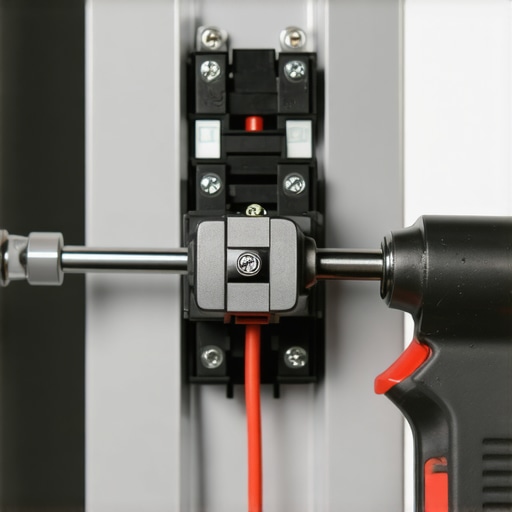
Why Your Torque Wrench is Your Best Friend
Beyond just safety, a loose connection causes voltage drops that make your charging session take forever. You might notice your car reporting ‘reduced charging speed.’ This is often the car’s way of protecting itself from the heat generated by a bad connection at the panel. You should also keep an eye out for 3 common wire sizing errors that melt breakers during long charging sessions. Using wire that is too thin for the run length creates resistance, and resistance is just another word for heat.
Clear the Path to Pass Your Inspection
Inspectors don’t just look at the wires; they look at the space around them. One of the most frustrating ways to fail is the working space violation that fails more ev panel inspections than anything else. You need a clear 30-inch wide by 36-inch deep workspace in front of that panel. If you’ve built shelves or stacked tires in front of your service equipment, you’re looking at an automatic ‘Red Tag.’ You must also ensure you pass your 2026 panel audit by checking that your grounding system is up to current standards. A weak ground won’t just fail an audit; it can lead to situations where you need to how to spot a dangerous heat build-up in your ev charging cable before it damages the car’s sensitive onboard charger.Beyond the basic math of your load calculation, there is a hidden world of electrical physics that most ‘weekend warrior’ installers completely ignore. While everyone is obsessed with getting the fastest charge possible, usually by cramming a 48-amp charger onto a 60-amp breaker, I have found that pushing your system to the absolute limit is often the least efficient way to power your car. The secret nuance that pros know? Thermal stability is more important than raw amperage. When you run a circuit at its maximum rated continuous load for eight hours straight, you generate a massive amount of cumulative heat that does not just affect the breaker; it affects the resistance of the entire busbar. If you notice that your 2026 EV charger lags during peak hours, it might not be your utility company throttling you. It is likely the heat-induced resistance in your panel. A study from the National Fire Protection Association (NFPA) highlights that nearly 50,000 home fires annually involve electrical failure or malfunction, often exacerbated by sustained high-draw appliances. This is why I often recommend ‘under-clocking’ your charger. By dropping a 40-amp charger to 32 amps, you reduce the heat output significantly, which keeps the equipment in its ‘sweet spot’ and actually prevents the car from thermal-throttling its own intake.
Why does my car charge slower even when the panel is cold?
The answer usually lies in electrical ‘noise’ or harmonic distortion. Modern EVs use sophisticated switching power supplies that can send feedback into your home’s electrical system. This ‘dirty’ power can interfere with the charger’s communication protocol, and it is a big reason new 2026 codes require a dedicated harmonic filter for specific high-performance installations. If you skip this, you might find your smart charger resetting for no apparent reason or failing to sync with your car’s app. 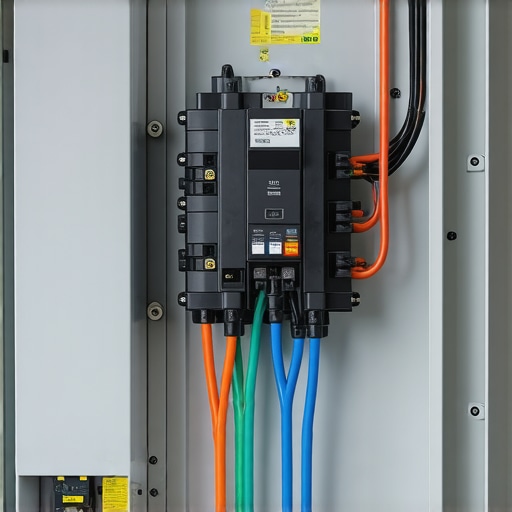 I have seen too many homeowners make the tiny neutral wire mistake that shuts down new circuits. Even if your charger only requires two hots and a ground, failing to properly balance or terminate wires in the junction box can lead to induction issues that trip sensitive breakers elsewhere in the house. When you are ensuring code compliance, you have to look at how the EV circuit interacts with the rest of your home’s ecosystem. If your setup trips the breaker only on hot afternoons, you are dealing with ambient temperature variables that your initial load calc did not account for. These are the panel upgrade strategies that separate a safe, long-term installation from a temporary fix that will fail prematurely. Have you ever fallen into this trap of chasing the highest speed only to have your hardware overheat? Let me know in the comments.Once the initial excitement of seeing that ‘Charging’ status on your phone wears off, you enter the ‘maintenance phase’ of EV ownership. This is where most people get lazy, and it’s where the real risks start to creep back in. I’ve seen setups that were perfectly compliant on day one turn into fire hazards by year three because of vibration and thermal cycling. The dirty secret of high-voltage systems is that they are dynamic, not static. To stay ahead of the game, I personally swear by a handheld thermal imager—even a cheap one that plugs into your smartphone. Once a month, while the car is pulling its full load, I scan the breaker and the charging handle. If you see a ‘hot spot’ that is significantly brighter than the rest of the busbar, you are looking at a looming failure. Learning how to spot a dangerous heat build-up in your ev charging cable early can save you from a $600 replacement cost or, worse, a melted port on your car.
The One Tool That Actually Prevents House Fires
If you don’t want to buy a thermal camera, at least buy a decent torque wrench. I mentioned it earlier, but I cannot stress enough how often lugs loosen over time due to the ‘creep’ of copper and aluminum under heat. According to the IEEE 3007.2 Standard for Maintenance of Industrial and Commercial Power Systems, electrical connections should be inspected and re-torqued periodically to account for this thermal expansion. Most homeowners assume ‘once and done’ is the rule, but a quick check every year ensures you ensuring code compliance remains a reality and not just a memory of your first inspection. This is especially true if you had to upgrading your panel for better ev charging performance recently; new breakers often need a ‘settling’ period. 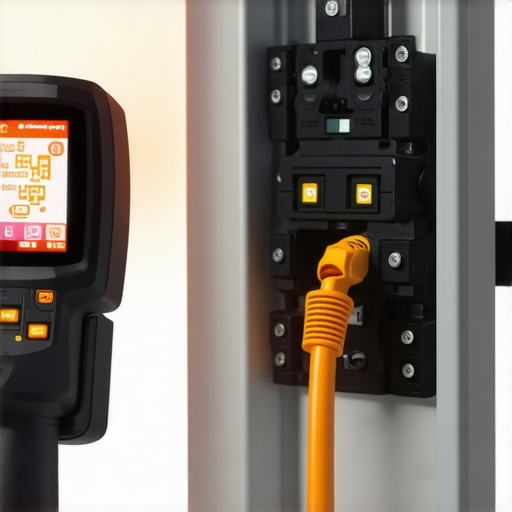
How can I keep my charger running like new for a decade?
Maintenance isn’t just about the wires; it is about the environment. I’ve found that dust and cobwebs in a garage panel act like kindling. Every spring, I kill the main power and use a can of compressed air to blow out the panel. You should also regularly verify code compliance for your ev charger installation by making sure no one has stacked boxes or flammable liquids within that 30-inch ‘clear zone’ we talked about. If you notice the car is taking longer to start a session, don’t ignore it. You might need to stop 2026 charging sags by cleaning the contact pins on your charging handle with a dedicated electronic cleaner.
The Future of Home Charging is Smarter Not Bigger
Looking ahead, the trend is moving away from ‘dumb’ breakers toward AI-driven load management. By 2026, I expect most new installs will bypass the traditional load calc entirely in favor of real-time monitoring. This will allow you to use a 100-amp panel for charging even more efficiently because the house will ‘talk’ to the car, shifting power instantly when the oven or dryer kicks on. For now, your best bet is to stay vigilant. My challenge to you: Tonight, go out to your garage while the car is charging and put your hand (carefully!) on the charging handle. If it feels uncomfortably hot, it’s time to stop guessing and start troubleshooting.
Lessons I Paid For in Burnt Breakers and Blown Budgets
Looking back at my own journey, the most expensive mistakes weren’t the equipment I bought, but the assumptions I made. First, I learned that charging at the maximum speed possible is often a vanity metric that adds unnecessary stress to your home’s infrastructure. If you can recover your daily commute in six hours at 16 amps, there is no logical reason to strain your panel at 40 amps. Second, I realized that heat is a much more reliable indicator of system health than a green light on your dashboard. If your breaker feels hot to the touch, your system is crying for help. Third, I discovered that local inspectors are actually your best allies; they aren’t there to nitpick your shelf placement, but to ensure you don’t wake up to a garage fire. Finally, grounding isn’t just a safety requirement; it’s the literal foundation of your car’s digital brain. I’ve seen how 3 grounding mistakes can ruin an otherwise perfect setup and lead to ghost errors in your charging logs.
The Small Investments That Saved My Sanity
If I were starting over today, I wouldn’t spend $5,000 on a panel upgrade immediately. Instead, I would invest $200 in a specific toolkit to keep my existing 100-amp service humming. My first recommendation is a high-quality digital torque wrench. Most homeowners fail inspections because of the forgotten torque spec that fails half of all panel inspections, and a dedicated tool eliminates the guesswork. Next, get a basic thermal camera attachment for your phone. It turns invisible heat into a clear picture, allowing you to see why your main breaker runs hot during Level 2 charging before it trips. Lastly, keep a copy of the current NFPA 70 National Electrical Code handbook nearby. Having the actual rules on hand prevents ‘electrician inflation’ where contractors try to sell you more than the law requires. #IMAGE_PLACEHOLDER_E#
Take Charge of Your Home’s Future Energy
Moving to an electric vehicle is one of the most rewarding transitions you can make, but it requires a shift in how you respect your home’s utility closet. You don’t need a massive industrial service to enjoy the benefits of an EV; you just need a disciplined approach to power management and a commitment to ensuring code compliance at every step. If you’re still feeling unsure about your capacity, exploring various panel upgrade strategies can give you a roadmap for growth without the immediate five-figure price tag. Don’t wait until you experience why your 2026 ev charger fails under load to start paying attention to the details. Your electrical panel is the heart of your home; treat it with a little bit of math and a lot of respect, and it will power your commute for decades to come. Have you ever found a surprising ‘hot spot’ or a loose wire in your electrical system? Let me know in the comments below.