I’ll never forget the rainy Tuesday night I stood in my garage, staring at a pulsing red ring on my wall connector. I’d just plugged in my car, expecting a full charge by morning, but the app gave me the digital equivalent of a cold shoulder. It told me a firmware update was required. My first instinct? Total panic. I reached for my phone to call a technician, already dreading the $200 “diagnostic fee” just to have someone push a button. But then I stopped. Why should I pay a pro for something that is essentially a glorified app update? We have entered an era where our fueling stations are basically iPads with high-voltage cables, and honestly, you do not need a master’s degree in electrical engineering to keep them running smoothly. Today, I am going to show you how to take control of your hardware.
Stop Letting Software Glitches Steal Your Range
The reality is that these smart chargers are prone to the same bugs as your smartphone. You spent a fortune on the initial setup, perhaps even [upgrading your panel for better EV charging performance](https://brightsparkzelectric.com/upgrading-your-panel-for-better-ev-charging-performance), so it feels like a slap in the face when the software acts up. I’ll admit, early on, I made the classic rookie mistake: I tried to force a firmware push while my home Wi-Fi was hovering at one miserable bar in the garage. I ended up with a “zombie” charger that wouldn’t talk to anything for three days. It was embarrassing, and it was entirely avoidable. Most people assume a red light means a hardware failure, but often, it is just [the reason your smart charger app keeps losing connection](https://brightsparkzelectric.com/the-reason-your-smart-charger-app-keeps-losing-connection) during a critical handshake.
Can you actually break the charger by doing this yourself?
It is a fair question. The fear of “bricking” a $600 device is real. However, manufacturers have built-in fail-safes that make it nearly impossible to cause permanent damage. According to data from the Alternative Fuels Data Center, a significant percentage of home charging failures are attributed to software-driven communication errors rather than physical component breakdowns. Keeping your firmware current ensures that your charger stays compatible with the latest vehicle software updates. If you are currently [troubleshooting EV charger connectivity problems](https://brightsparkzelectric.com/troubleshooting-ev-charger-connectivity-problems), the software is the first place you should look, not the last. Have you ever been stranded with a “dead” charger that just needed a simple reboot? I want to hear about your most frustrating “red light” moment. Before you reach for the phone to call a pro, let’s look at the simple steps to [fix your 2026 EV charger ground fault without a service call](https://brightsparkzelectric.com/fix-your-2026-ev-charger-ground-fault-without-a-service-call) and get that firmware locked in.If your charger is behaving like a brick, the first thing you need to fix isn’t the code, it’s the signal. Think of your Wi-Fi as a literal pipe of water. If that pipe is pinched by three concrete walls and a metal tool chest, the firmware ‘water’ just won’t flow. I’ve seen countless owners struggle with the reason your smart charger app keeps losing connection simply because they didn’t realize their garage was effectively a Faraday cage. If you can’t move the router, a dedicated mesh node in the garage is your best friend.
Flip the Breaker the Right Way
When the app freezes mid-load, a soft reset via the phone rarely works. You need to perform what I call the ‘Deep Sleep’ cycle. This isn’t just flipping the switch off and on. You need to cut the power at the main panel and wait at least three full minutes. This allows the capacitors on the motherboard to fully discharge, clearing out any corrupted temporary data that might be blocking the new software install. I once spent two hours trying to ‘re-pair’ my Bluetooth before realizing that a simple five-minute power kill was all it took to clear the internal cache. While you’re at the panel, check if your setup meets pass your 2026 panel audit 4 new rules for ev wiring to ensure your hardware is receiving clean, consistent power. 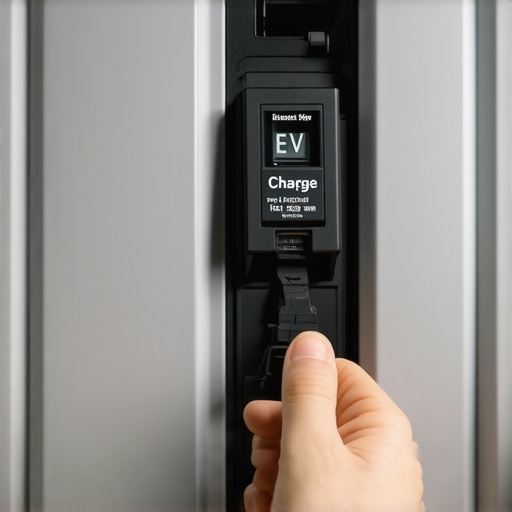
How to Spot Loose Neutral Wires Before the Update Fails
A firmware update is an intensive process for the charger’s internal processor. It draws a specific, steady amount of current that can highlight physical weaknesses in your installation. If your lights flicker when you plug in, you’re looking at a voltage sag. I remember a neighbor who couldn’t get his wall connector to finish an update for a month; we finally opened his panel and found a neutral wire so loose it was practically vibrating against the bus bar. This kind of tiny neutral wire mistake that shuts down new ev charging circuits is often the silent killer of software stability. When the hardware isn’t physically sound, the software is the first thing to fail.
Stop the 2 AM Power Sags
Don’t assume your home’s grid is steady just because your TV stays on. EV chargers are sensitive. If you find why your 2026 ev charger lags 3 fast fixes for power drops is a recurring theme in your life, you might need to look at stop 2026 charging sags 3 ways to stabilize your ev circuit. During an update, any dip in voltage can cause the charger to ‘checksum’ the data incorrectly, leading to a failed installation. I once had to wait until 2 AM to run a critical update because my neighborhood’s local transformer was so overloaded during the evening that the charger kept rejecting the firmware file due to brownout conditions. It wasn’t a manufacturer defect—it was simply the ‘dirty’ power coming from the street. Check your app’s voltage logs; if you see a drop of more than 5% when the update starts, your house’s electrical health is the bottleneck.Let’s dig deeper into the actual hardware because there is a massive misconception that ‘enough amps’ equals ‘safe charging.’ Everyone tells you that if you have a 200-amp service, you are essentially bulletproof. In my experience, that is one of the most dangerous myths in the EV community. Capacity is just one part of the equation; the other part is thermal endurance. I have walked into garages where the owner was proud of their [how to tell if your electrical panel can actually handle a level 2 charger](https://brightsparkzelectric.com/how-to-tell-if-your-electrical-panel-can-actually-handle-a-level-2-charger) assessment, only to find the bus bars literally discolored from heat. A study by the Electrical Safety Foundation International (ESFI) confirms that continuous high-draw loads—like charging an EV for eight hours straight—stress a home’s electrical infrastructure in ways a microwave or AC unit never will. If you do not account for how your equipment handles that heat, you’re in for a surprise when you find [why your main breaker runs hot during level 2 charging](https://brightsparkzelectric.com/why-main-breaker-runs-hot-during-level-2-charging) in the middle of a summer night.
The Invisible Space Requirements That Kill Permits
One of the most common ‘oops’ factors I see involves the physical location of the hardware. You might think that mounting your charger in that narrow gap between the water heater and the workbench is a space-saving genius move. It isn’t. In fact, it is a guaranteed way to fail your inspection. I have seen homeowners spend thousands on a setup only to be told to tear it out because they ignored [the working space violation that fails more ev panel inspections than anything else](https://brightsparkzelectric.com/the-working-space-violation-that-fails-more-ev-panel-inspections-than-anything-else). Inspectors in 2026 are looking for a clear ‘envelope’ of space around your electrical equipment. If they can’t stand comfortably in front of it with both arms extended, you are looking at a costly relocation. 
Why is your charger suddenly demanding a harmonic filter?
If you are reading the fine print on the newest Level 2 units, you might notice a requirement for ‘cleaner’ power. As our grids get more crowded, electrical noise is becoming a legitimate problem for smart chargers. This is why [why new 2026 ev codes require a dedicated harmonic filter](https://brightsparkzelectric.com/why-new-2026-ev-codes-require-a-dedicated-harmonic-filter) is becoming a hot topic among pro installers. Without these filters, high-frequency distortion from your neighbor’s solar inverter or even your own variable-speed pool pump can confuse your charger’s sensors, leading to those mysterious mid-session shutdowns. It is a level of [ev charger troubleshooting expert tips for common issues](https://brightsparkzelectric.com/ev-charger-troubleshooting-expert-tips-for-common-issues) that most DIY guides completely ignore. We aren’t just plugging in a toaster anymore; we are integrating a high-performance computer into a high-voltage grid. Have you ever fallen into the trap of assuming your panel was ‘fine’ just because it was new? Let me know in the comments if you’ve faced an inspector who was stickler for these new space rules.
Stop the silent burnout with a yearly torque check
I’ve seen it a dozen times: a perfectly good charger starts throwing ‘ground fault’ errors or simple connectivity drops because the thermal expansion of the copper wire literally backed the screw out of the breaker terminal over a year of use. You need a 1/4-inch drive torque wrench—and not just any cheap one from the discount bin. I use a CDI or Wera calibrated specifically for those inch-pound requirements. If you aren’t hitting the forgotten torque spec that fails half of all panel inspections, you’re basically inviting a high-resistance point that leads to melted plastic. The NFPA 70B (Standard for Electrical Equipment Maintenance) now emphasizes that electrical connections in high-load environments, like EV circuits, benefit significantly from periodic infrared thermography and physical inspection. I can tell you from experience, a loose lug is a ticking time bomb for your charger’s motherboard.
How do I keep my charging circuit healthy for the next decade?
I also swear by my FLIR thermal camera attachment for my smartphone. It’s the easiest way to see how to spot a dangerous heat build-up in your ev charging cable before you can actually smell the ozone. If your breaker is glowing bright purple or white on the screen while the rest of the panel is a cool blue, you’ve got a resistance problem that software updates won’t fix. Maintaining your system isn’t just about the wires; it’s about staying legal as the rules shift under your feet. If you’re wondering how to verify code compliance for your ev charger installation, you need to check your local jurisdiction’s 2026 amendments. Often, a small change in grounding requirements can make your old setup technically obsolete. If you’re already seeing issues, don’t wait for a failure—check troubleshooting ev chargers common compliance pitfalls and fixes to see if a simple tweak keeps you in the clear. 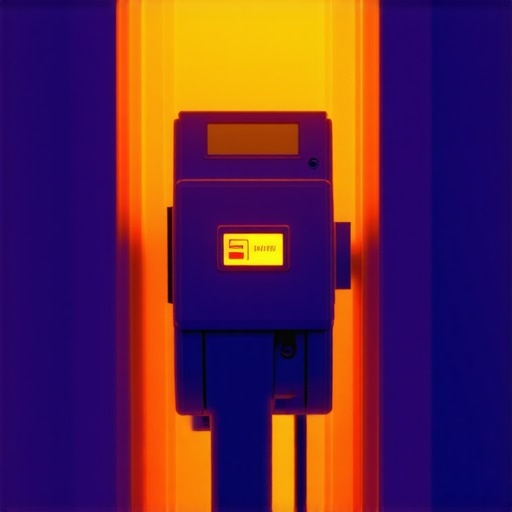
Your garage is about to become a miniature power plant
Looking ahead, the ‘one charger per house’ model is rapidly evolving. We are moving toward bi-directional charging, or Vehicle-to-Home (V2H) technology, where your car acts as a giant battery backup during a blackout. This shift is why panel upgrade strategies to meet ev charging code requirements in 2025 focus so heavily on power headroom and smart management. We are transitioning from simple ‘plug and play’ to sophisticated energy management systems. When you are ensuring code compliance when installing ev chargers, you aren’t just looking at today’s car; you are building the foundation for a home that can trade power with the grid. I strongly recommend you grab a basic thermal camera—even a budget-friendly model—and scan your panel during a full 48-amp charge tonight. It is the ultimate reality check for your home’s electrical health and will show you exactly where your next maintenance priority lies.
Lessons Bought with a Multimeter and Many Cold Mornings
Over the years, I’ve realized that the biggest hurdle isn’t the technology—it’s our assumption that electricity is ‘set it and forget it.’ One major lightbulb moment was learning that just because a panel is rated for high amperage doesn’t mean it’s ready for the marathon of EV charging. I’ve seen many owners struggle because they didn’t know how to calculate if your 100-amp service can handle a daily commute, leading to tripped breakers and missed charges. Another hard lesson? Software can’t fix a physical flaw. I once spent four hours debugging a ‘connectivity’ issue only to find a loose grounding rod. Avoid these 3 grounding mistakes that will instantly fail your home ev inspection and you’ll save yourself a world of hurt. Finally, remember that components wear out; I’ve identified the specific breaker brand that keeps tripping on level 2 chargers simply through trial and error—some hardware just isn’t built for constant, high-heat loads.
The Toolkit That Saves My Sanity and My Wallet
I don’t leave my charging health to chance, and you shouldn’t either. First, get a decent infrared thermometer or a smartphone thermal attachment; it’s the only way to see heat before it becomes a fire. Second, a calibrated torque wrench is non-negotiable for anyone touching their own panel to avoid arcing. I also highly recommend bookmarking your local building department’s digital portal. Keeping a copy of your permit paperwork and staying ahead of code compliance essentials for ev charger installations in 2025 is the best ‘tool’ for long-term home value and safety.
Taking the Reins of Your Home Energy Future
Transitioning to an electric vehicle is more than just a car upgrade; it’s a lifestyle shift that turns your garage into a high-tech power hub. By mastering basic EV charger troubleshooting and keeping a close eye on your home’s electrical vitals, you aren’t just a consumer—you’re a smart grid manager. Don’t let a red light or a software glitch intimidate you. You have the knowledge and the tools to keep your ride fueled and your home safe. Have you ever discovered a loose wire or a hot breaker during a routine check? Let me know in the comments below!