I remember the smell first. It wasn’t quite smoke, just that heavy, acrid scent of hot plastic that makes every homeowner’s stomach do a slow somersault. It was about 11 PM, and I had just plugged in my car for its nightly session. As I reached into the panel to grab a stray tool, I felt a literal wall of heat radiating from the 50-amp breaker. I brushed my fingers against the casing and pulled back instantly. It wasn’t just warm; it was scorching. My mind immediately jumped to the worst-case scenario, assuming I needed an emergency panel upgrade for better charging performance before the whole house went up in sparks. I had made a classic mistake: I assumed that because EV charging is high-power, ‘hot’ was just part of the price you pay. It isn’t. Today, I’m going to walk you through exactly what I found so you can stop guessing and start troubleshooting your EV charger issues with confidence.
Don’t Panic But Definitely Don’t Ignore the Heat
It is incredibly tempting to walk away and hope the breaker cools down on its own. For the first few nights, I actually did that. That was my biggest early mistake—treating a high-load electrical circuit like a laptop charger that gets a little toasty. When you are pulling heavy current for eight hours straight, heat is the enemy of safety. I eventually learned that while a 10-degree rise over ambient temperature is normal, anything that hurts to touch is a cry for help. According to the National Fire Protection Association (NFPA), nearly 50,000 home fires each year involve electrical failure, and many of those start at the panel. In my case, I hadn’t checked the specific torque settings for the wire lugs. A loose connection creates resistance, resistance creates heat, and heat eventually melts your investment. Whether you are worried about copper vs aluminum wiring or simply a bad component, the goal today is to find the culprit before it finds your smoke detector.
Is a Little Heat Actually a Major Risk?
You might be skeptical. After all, if the breaker hasn’t tripped, it’s doing its job, right? Not necessarily. A breaker can be failing internally or suffering from a poor connection while still allowing power to flow. Have you ever walked into your garage and felt that weird, nervous energy when you realized a component was running way hotter than it should? If you’ve felt that, you’re already ahead of the curve. Identifying a dying breaker before it shuts you down is the difference between a $30 part and a $3,000 emergency repair. We’ll look at the signs your main breaker is running dangerously hot and how to tell if it’s time to call in the pros or just grab a torque wrench.
Grab a Torque Wrench Instead of Your Phone
When my panel started radiating heat like a space heater, my first instinct was to check the charger app for error codes. That was a waste of time. When you’re dealing with physical heat at the breaker, the problem is almost always mechanical, not digital. To start troubleshooting your EV charger correctly, you need to turn off the main power and get a good look at the guts of the panel. I once spent two hours hunting for a software bug in a charger’s app, only to realize the homeowner had used 8-gauge wire for a 48-amp load. The insulation hadn’t melted yet, but the wire was so hot it was actually bowing out of its conduit. It was a terrifying reminder that physics beats software every time. Before you do anything else, you must verify code compliance for your EV charger installation by checking that your breaker and wire sizes actually match.
Spotting the Silent Killer: Arcing and Loose Lugs
The number one cause of a hot breaker isn’t a faulty car; it’s a loose screw. Electrical current is like water under high pressure; if there’s a gap in the pipe, it’s going to spray and cause a mess. In an electrical panel, that ‘spray’ is arcing. I’ve seen lugs that looked tight to the naked eye but were actually a quarter-turn loose. That tiny gap creates massive resistance. You need to use specific torque settings—usually marked right on the side of the breaker—to ensure the connection is gas-tight. If you just ‘hand-tighten’ it until it feels ‘good enough,’ you’re inviting a fire. Look closely at the wire where it enters the breaker. If you see any browning, bubbling, or a rainbow-like discoloration on the copper, that wire is compromised. 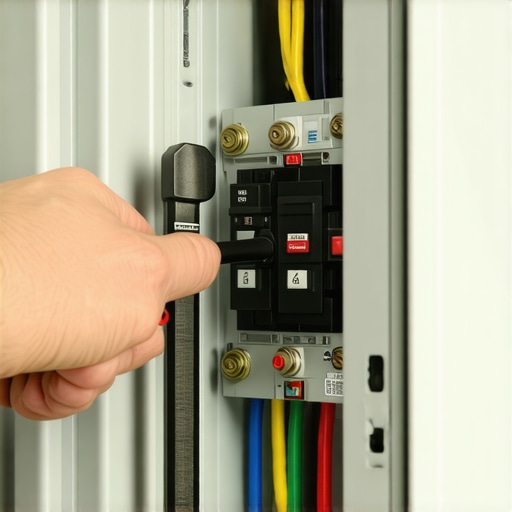
The 60-Amp Circuit Math That Keeps Your House Standing
If your connections are tight but the heat persists, we have to look at the load. Many people try to push 48 amps of continuous charging through a 50-amp breaker, forgetting the 80% rule required by the NEC. For a continuous load like an EV, you should only pull 40 amps through a 50-amp breaker. If you want that full 48-amp speed, you absolutely must use the exact gauge of wire you need for a 60-amp circuit. Using the wrong size causes the wire itself to act as a heating element. I’ve also seen DIYers mix metals, which is a recipe for disaster. If you aren’t sure about copper vs aluminum wiring for high-load circuits, stop immediately. Aluminum expands and contracts at different rates than the steel lugs in most breakers, which leads to the connection loosening over time—even if it was perfect on day one.
Listen for the Warning Signs
Sometimes the heat isn’t the first symptom. If your main breaker hums when the EV is plugged in, that vibration is often a sign of a failing internal spring or a heavy harmonic load that the panel isn’t rated for. This is common when you’re trying to upgrade your garage sub-panel for dual charging stations without accounting for the total draw. A humming breaker is a vibrating breaker, and vibration eventually leads to—you guessed it—heat. Check the busbar (the metal rail the breaker clips onto) for any signs of pitting or ‘stinging.’ If the busbar is damaged, simply replacing the breaker won’t fix the problem; the new breaker will just fail exactly like the old one did.One of the biggest lies I hear in the EV community is that if your panel is physically ‘full,’ you are automatically stuck with a $4,000 bill for a service upgrade. It sounds logical, right? No more slots, no more power. But in my experience, homeowners often jump to panel upgrades for EV chargers before exploring smarter, cheaper alternatives. I’ve seen people spend a fortune when they could have simply looked at how to load balance your home electrical system without a full panel swap. Load management devices can pause your car’s charging for thirty seconds when the dryer kicks on, keeping your total draw within safe limits while saving you the cost of a new main breaker. 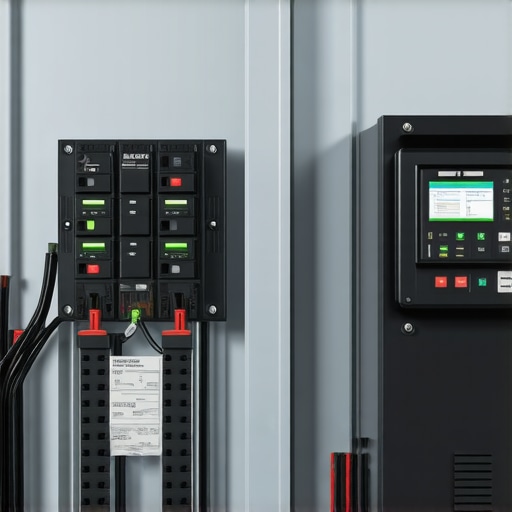
Can Your 100-Amp Service Survive the Dual-Charger Era?
Many advanced users ask if they can squeeze two cars onto a 100-amp service. The answer is ‘yes,’ but only if you stop thinking about peak capacity and start thinking about timing. According to research from the Pacific Northwest National Laboratory, the timing of EV loads is more critical than the total capacity of the home panel when managed correctly. If you are ensuring code compliance when installing EV chargers, you have to account for the fact that these are continuous loads. This means they run at full tilt for hours, unlike an oven or a microwave. If you ignore the 80% rule—drawing more than 80% of the breaker’s rated capacity—you aren’t just breaking code; you are literally cooking the busbars from the inside out.
The Double-Tap Disaster Most DIYers Ignore
Here is the ‘oops’ factor that kills more panels than anything else: the double-tapped breaker. I’ve walked into garages where a DIYer thought they were being clever by shoving two wires into a single breaker lug to ‘save space.’ This is a massive fire risk because the lug is rarely designed to provide equal pressure to both wires. One stays loose, starts arcing, and suddenly you’re troubleshooting EV charger issues while smelling smoke. You must why you should check your panel for double-tapped breakers before you even think about plugging in. Even if it looks fine today, the thermal expansion from high-current charging will eventually wiggle those wires loose.
Why Your New Panel Might Still Fail Inspection
Finally, don’t assume that a brand-new panel means you’re in the clear. I once saw a perfect installation fail because of the common wire sizing error that causes voltage drops during charging. If your run from the panel to the garage is over 50 feet, you might need to bump up the wire gauge to prevent voltage sag. If the voltage drops too low, the charger struggles, the heat rises, and your efficiency tanks. It’s all about panel-upgrade-strategies-to-meet-ev-charging-code-requirements-in-2025—thinking two steps ahead of the current inspector. Have you ever fallen into the ‘full panel’ trap or had an inspector catch something you totally missed? Let me know in the comments.But fixing the immediate problem is only half the battle. If you want to avoid that 11 PM panic for the next ten years, you need a proactive system. For me, that meant investing in a tool I previously thought was just for industrial electricians: a compact thermal imaging camera. Instead of guessing if a breaker is toasty, I can actually see the heat signature in real-time. It turns out that seeing is believing—and in electrical work, seeing is also surviving. I now make it a habit to scan my panel every six months while the car is pulling its full load. If I see a glowing white spot on a lug, I know exactly where to put my torque wrench before the insulation starts to char. It’s a level of precision that standard troubleshooting your EV charger often misses until it’s already too late.
Stop Guessing and Use a Thermal Camera Instead
I’ve found that even a budget-friendly thermal attachment for a smartphone can reveal loose connections that look perfect to the naked eye. According to the Fluke Corporation’s technical guide on electrical thermography, early detection of high-resistance connections can prevent up to 75% of potential electrical failures. When I first scanned my setup, I found that my neutral wire was running 15 degrees hotter than the hot legs. A quick quarter-turn with a torque wrench fixed it, but without that visual data, I would have been flying blind. If you are serious about DIY maintenance, this is the one tool that pays for itself by preventing a full-scale panel upgrade for EV chargers caused by heat damage. 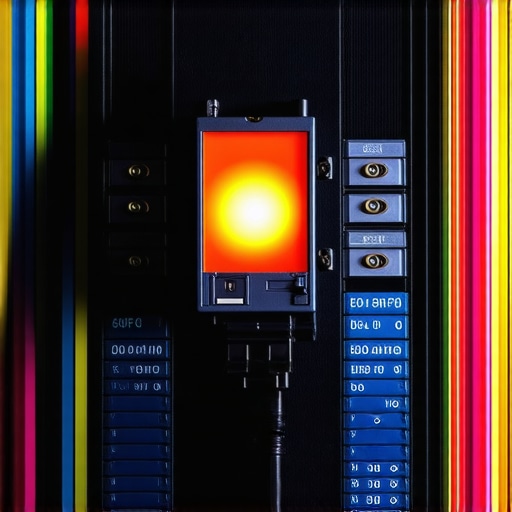
How do I maintain my home charging setup over time?
Keeping your system running smoothly isn’t just about the wires; it is also about the software and the environment. I recommend a simple three-step seasonal routine. First, check for debris or spiders in the charging port—you’d be surprised how much gunk can accumulate. Second, perform the maintenance tasks that keep your outdoor charger running through winter, such as checking the gasket seals on your conduit. Third, keep your firmware up to date. You can usually update your charger software without calling a technician via the manufacturer’s app. This often solves those annoying troubleshooting EV charger connectivity problems that pop up after a car’s OS update.
The Future of Home Power is Brains, Not Just Brawn
Looking ahead, the days of just ‘adding a bigger box’ are coming to an end. We are moving toward a future of smart, solid-state panels that manage loads at the circuit level. I’m already seeing panel-upgrade-strategies-to-meet-ev-charging-code-requirements-in-2025 that focus more on digital load shedding than physical copper capacity. These systems will eventually make the 11 PM hot-breaker scare a thing of the past. If you’re currently dealing with a hot breaker, I challenge you to do more than just swap the part. Buy a thermal camera or hire someone with one to do a full-load scan. It is the single best way to ensure your home stays as safe as it is modern.
What I Discovered While Staring at My Electrical Panel at Midnight
Looking back at that night my breaker felt like a hot stove, the biggest lesson wasn’t just about fixing a part. It was about realizing that electrical systems are living, breathing things that react to the massive stress of EV charging. I learned that your charger’s app is great for scheduling, but it’s completely blind to a loose lug or a melting busbar. You have to be the eyes and ears of your home. Another ‘lightbulb moment’ was understanding that ‘code compliant’ isn’t just a hurdle for inspectors; it’s a blueprint for not burning your house down. If you’ve been skipping the verification of code compliance for your EV charger installation, you’re essentially gambling with your equity.
- Breakers can ‘cook’ silently for months before they actually fail or trip.
- The torque settings on your lugs are more important than the brand of the charger.
- Thermal expansion is real; what was tight in July might be loose by January.
Gear That Changed the Way I Maintain My Setup
If you want to move beyond basic troubleshooting for your EV charger, you need a few specific tools in your garage. First, get a decent torque wrench; ‘hand-tight’ is the enemy of a safe panel. Second, I cannot recommend a basic thermal imaging camera enough. It turns an invisible threat into a bright purple warning sign. Lastly, stay updated on the latest code compliance essentials for EV charger installations in 2025. The standards are changing fast because the technology is changing fast, and staying informed is your best defense against future repairs. #IMAGE_PLACEHOLDER_E#
Building a System That Lasts Longer Than Your Car
Your EV is a high-tech marvel, and it deserves a power supply that is just as reliable. Don’t wait for a smell or a buzz to tell you something is wrong. By staying proactive and looking into panel upgrade strategies to meet EV charging code requirements in 2025, you aren’t just maintaining a car; you’re future-proofing your home. You have the power to make your charging sessions boring, predictable, and—most importantly—safe. Have you ever checked the temperature of your breaker during a long charging session? Let me know what you found in the comments below!