I remember the look on my neighbor’s face when I accidentally killed the power to the entire garage row just because I wanted to top off my new Model 3. It was late, I was tired, and I figured that one little communal outlet wouldn’t mind a few hours of juice. Boy, was I wrong. I learned the hard way that shared wiring in multi-unit buildings is a delicate house of cards, and adding a high-draw vehicle is like blowing on it with a leaf blower. If you have been struggling to get a consistent charge without getting nasty emails from the HOA, I have been in your shoes. Today, I am going to show you how to navigate the technical and social minefield of condo charging so you can finally stop hunting for public chargers.
The Shared Circuit Trap No One Warns You About
Most condo garages were wired decades ago for nothing more than a few lightbulbs and maybe an occasional vacuum cleaner. When you plug in, you aren’t just using your own electricity; you are often tapping into a daisy-chained system that was never meant for sustained high-amperage loads. Early in my journey, I made the classic mistake of thinking a heavy-duty extension cord would solve my distance issues. It did not. In fact, the safety reason why you should never use an extension cord for your ev became painfully obvious when the plug started to melt. Shared wiring creates massive voltage drops, which can confuse your car’s onboard computer and even lead to the hidden danger of loose neutral wires in your electrical panel, potentially risking a fire in a building you share with dozens of other families.
Is Shared Wiring Actually Safe for Daily Charging?
The short answer is: rarely. According to the Electrical Safety Foundation International (ESFI), nearly 51,000 home fires are caused by electrical failures each year, and adding the massive load of an EV to an unverified shared circuit is asking for trouble. This is why you need to know the specific permits required for multi-unit dwelling chargers before you even think about hiring an electrician. You have to balance the load, or you will find yourself dealing with angry neighbors and a car that is only half-charged by morning. Have you ever had your HOA block an installation because they didn’t understand the tech?
Finding a Path to Reliable Power
Getting your own dedicated line is the gold standard, but it is not always easy. You might need to look into how to get your landlord to approve a level 2 installation or talk to the board about managed systems. It is a headache, sure, but it beats the constant anxiety of a tripped breaker at 2 AM. We are going to dive into the specific steps to make your garage EV-ready without starting a war with the board or the building manager.The first thing you have to do—and I mean before you even pick out a color for your charger—is a professional load calculation. Think of your electrical panel like a pizza. If you have already got the AC, the oven, and the dryer taking up six slices, you cannot try to fit a whole new pepperoni pie into the remaining two without something overflowing. You need to know how to calculate if your 100 amp service can handle a daily commute because EVs are considered ‘continuous loads.’ This means they pull full power for hours on end, unlike a toaster or a vacuum. I once ignored this and tried to help a buddy ‘just swap a breaker’ in his old 100-amp box. We didn’t even get to the second hour of charging before the main breaker started buzzing like a disturbed hornet’s nest. That buzz is the sound of heat, and heat is what leads to catastrophic failure.
Hardwired Connections Are the Only Real Choice
While the convenience of a plug-in unit is tempting, the benefit of a hardwired charger over a nema plug is massive in a shared garage environment. Every plug creates an extra point of failure, especially when subjected to the high heat of a 40-amp draw for eight hours straight. In my early days, I saw a NEMA 14-50 outlet literally char the drywall because the internal connections weren’t tight enough. Hardwiring eliminates that socket entirely. It also allows an electrician to ensure the specific torque settings that prevent panel fires during high load charging are applied directly to the wire-to-terminal connection. It is safer, more durable, and usually what an inspector wants to see in a multi-unit dwelling. 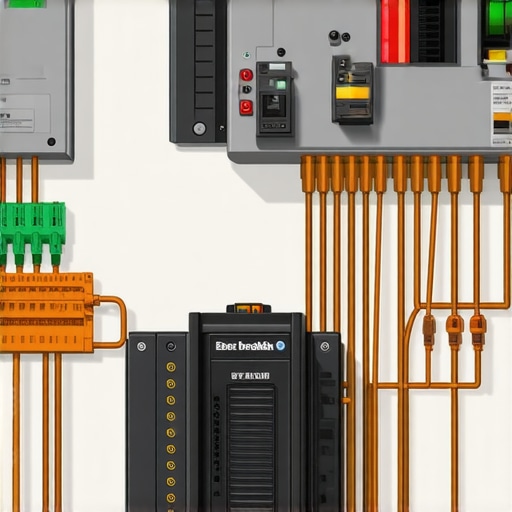
How to Balance the Load Without a Full Panel Swap
If your building manager tells you the system is ‘at capacity,’ do not take that as a final rejection. You can often navigate this hurdle by learning how to load balance your home electrical system without a full panel swap. Modern smart chargers can now communicate with a sensor on your main service line. If the building’s power usage spikes—say, everyone gets home at 6 PM and cranks the AC—the charger automatically dials back the juice to your car. It is essentially a traffic light for electricity; it keeps the flow moving without causing a pile-up. This is a crucial strategy for ensuring code compliance when installing ev chargers because it proves to the city that your vehicle will never push the building’s transformer past its limit.
Label Everything to Avoid a Run-In with the Fire Marshal
Do not underestimate the power of a clear label. You must provide the specific circuit labels required by the electrical inspector to ensure your work is not flagged during a routine building check. A messy, unmapped panel is a giant red flag for HOA boards. I remember a neighbor who did a ‘stealth’ install with a friend. He didn’t label the new breaker and used a wire gauge that looked suspicious. When the building had its annual fire safety inspection, the inspector spotted the mystery wire, traced it back to his parking spot, and the board slapped him with a $1,000 fine and an immediate ‘cease and desist’ order on charging. Taking ten minutes to study troubleshooting ev chargers common compliance pitfalls and fixes before the inspector arrives can save you months of legal back-and-forth with the condo association.
Everyone will tell you that if your panel is full, you are stuck with a massive bill for a service upgrade. I am here to tell you that’s a myth that keeps far too many people from switching to EVs. In my experience, a ‘full’ panel is often just a poorly managed one. While upgrading your panel for better ev charging performance is a solid long-term move, it isn’t always the mandatory first step people claim it is. The Electric Power Research Institute (EPRI) has shown that most residential panels have significant ‘dormant’ capacity because we rarely run every major appliance simultaneously. Instead of a $3,000 panel swap, you can often utilize smart load-shedding devices. This is one of those panel upgrade strategies to meet ev charging code requirements in 2025 that keeps your existing infrastructure safe without tearing out the guts of your utility closet.
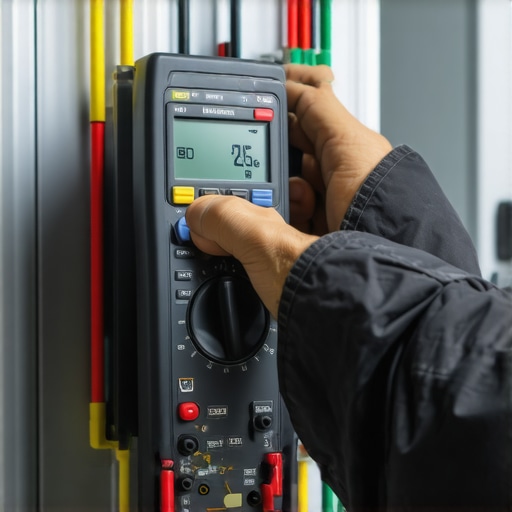
Stop wasting money on panel upgrades you don’t actually need
Most homeowners fall into the trap of thinking that more raw amperage is the only answer to their charging woes. The reality is that the National Electrical Code (NEC) allows for ‘load management’ as a fully legal alternative to physical hardware upgrades. I’ve seen HOA boards reject installations because they fear the building’s transformer will blow, but if you show them a system that physically cannot exceed a set limit, their legal resistance usually melts away. However, you must be meticulous about how to verify code compliance for your ev charger installation. If you skip the ‘automatic’ part of the load management, you are back to being a liability. I once saw a DIY enthusiast try to ‘manually’ load balance by promising only to charge after midnight; that lasted exactly until his family decided to run the dryer and the dishwasher at the same time, plunging the whole unit into darkness.
Why does my charger keep tripping when the car isn’t even plugged in?
This is the most common ‘advanced’ headache that drives new EV owners crazy. You spend thousands on a professional installation, and then the breaker trips on a Tuesday afternoon while your car is at the office. You need to understand why your ev charger trips the gfci even when not in use. Many modern chargers have their own sensitive ground-fault protection logic built-in. If your local code required a GFCI breaker in the main panel as well, these two systems can effectively ‘fight’ each other. They detect each other’s monitoring signals as a fault, leading to ‘nuisance tripping.’ Fixing this usually requires a specific type of breaker or a hardware reconfiguration that an average handyman simply won’t know. Don’t just keep flipping the switch; check ev charger troubleshooting expert tips for common issues to see if you have a hardware conflict rather than a genuine short circuit.
The biggest ‘oops’ factor I see with DIY or budget installs is a disregard for thermal dynamics. Because EVs represent a continuous load, the physical connections undergo massive stress. I have inspected several garages where the common wire sizing error that causes voltage drops during charging led to wires that were hot enough to melt plastic even before the breaker tripped. If you don’t see your installer using a torque screwdriver to hit the exact inch-pounds specified on the breaker, they are guessing with your safety. Have you ever fallen into this trap? Let me know in the comments.
I used to think that once the inspector signed off and my car started pulling 48 amps, my job was finished. I quickly learned that an EV charger is more like a water heater or an HVAC system than a simple toaster; it requires a bit of long-term attention to keep it from degrading. If you have been noticing your charging speeds drop or your handle getting uncomfortably warm, you are likely skipping the basic upkeep. The physical connection between your car and the charger is a high-wear environment. Dust, humidity, and simple oxidation can increase resistance in the pins, which leads to heat. I make it a habit to check how to clean the pins on your charging handle safely at least twice a year. It sounds like overkill until you realize that a tiny bit of corrosion can eventually melt a $500 charging cable.
Keep Your Charging Speed from Tanking Over Time
Software is the silent partner in your charging setup, and it is often where things go sideways without you noticing. I have seen chargers ‘brick’ themselves during a building-wide Wi-Fi outage simply because the firmware couldn’t ping the home server. Learning how to update your charger software without calling a technician is a skill that will save you hundreds in service calls. Most manufacturers push updates that improve thermal management and communication protocols with newer car models. If your car and charger aren’t ‘talking’ correctly, the car might default to a lower safety amperage, leaving you with a half-empty battery when you head to work. If you are mounting your unit in a shared garage that gets cold, you should also look into 3 maintenance tasks that keep your outdoor charger running through winter, as freezing temperatures can make cables brittle and connectors prone to cracking.
How do I keep my electrical panel safe for the next five years?
The most important tool in my kit isn’t a screwdriver—it is a non-contact infrared thermometer. According to the NFPA 70B (Standard for Electrical Equipment Maintenance), thermal abnormalities are the primary indicator of impending electrical failure. Once every few months, while my car is halfway through a heavy charging cycle, I pop the cover off my panel and scan the EV breaker. If I see a temperature reading significantly higher than the other breakers, I know a connection has vibrated loose. This is when I revisit the specific torque settings that prevent panel fires during high load charging. Metal expands and contracts with every heat cycle, and over a year of daily charging, those screws can back out just enough to create a dangerous arc. 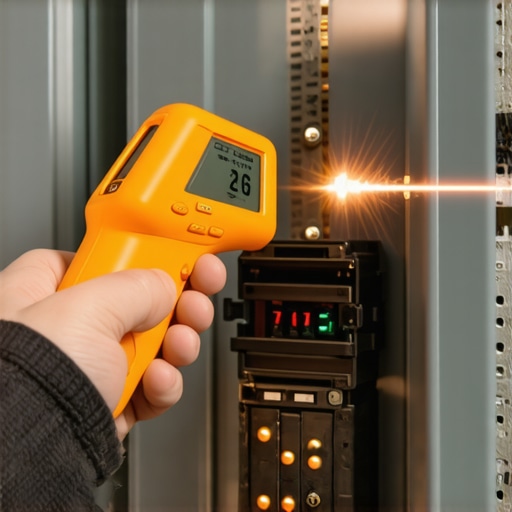
The Future of Your Home Grid
We are rapidly moving toward a world of bidirectional charging, where your car won’t just take power—it will give it back to the building during a blackout. This makes your initial installation quality even more vital. If your wiring is marginal now, it will never handle the stress of two-way power flow. I suggest you take ten minutes tonight and use an infrared thermometer to scan your breaker while the car is charging; if it reads over 140°F, call an electrician immediately. Staying ahead of the heat is the difference between a reliable morning commute and a frantic call to the fire department. If you are already seeing weird behavior, dive into ev charger troubleshooting expert tips for common issues before the hardware sustains permanent damage.
Hard Truths from the Condo Charging Trenches
Reflecting on my journey, the biggest surprise wasn’t the electrical load—it was the social politics. I quickly learned that an HOA board is far more likely to say yes if you present a professional plan that prioritizes safety over speed. One lightbulb moment for me was realizing that most people don’t actually need a massive 48-amp draw; a steady 16 or 24 amps is often enough for a daily commute and fits much better within existing building limits. Another lesson? Never assume the building’s handyman understands modern ev charger troubleshooting expert tips for common issues. Always bring in a specialist who knows the specific codes for multi-family dwellings.
Tools That Saved My Sanity and My Deposit
If you want to do this right, you need more than just a screwdriver. I swear by my non-contact infrared thermometer to check for hot spots during long charging sessions. I also highly recommend keeping a digital copy of the NFPA 70 guidelines on your phone; it’s the ultimate shield when a manager tries to tell you your setup is illegal. For those in shared spaces, finding how to set up a billing system for your shared apartment charger is a total game-changer for keeping peace with the neighbors. Finally, don’t sleep on smart load-management software—it’s the only reason I didn’t have to pay for a massive service upgrade.
Powering Your New Electric Life
Navigating the world of condo charging can feel like a part-time job, but the freedom of waking up to a full battery is worth every permit application and board meeting. By focusing on how to verify code compliance for your ev charger installation, you aren’t just protecting your car; you’re ensuring the safety of everyone in your building. Whether you are currently upgrading your panel for better ev charging performance or just trying to get your first plug installed, stay persistent. The future of transportation is parked in your garage, and you have the tools to make it work. Have you run into any major roadblocks with your HOA or building manager during your installation? Let me know in the comments below!