I remember standing in my dark garage at 2 AM, staring at the little ‘off’ flag on my breaker with a lukewarm soda in my hand. My car wasn’t even plugged in. It was just sitting there, yet the GFCI had decided to call it quits for the night. Again. It’s maddening, isn’t it? You spend good money on a Level 2 setup, follow all the code compliance essentials, and yet the system acts like it’s haunted. I’ve been right where you are, feeling that mix of confusion and pure annoyance. Early on, I made the mistake of thinking my expensive charging cable was the culprit—I actually bought a second one just to test it—but the issue was far more subtle and had everything to do with how the charger and the breaker talk to each other. Today, I’m going to pull back the curtain on why this ‘ghost tripping’ happens and how you can actually stop it. Have you ever walked out to your car only to realize it didn’t charge a single mile because of a rogue trip? It’s the worst way to start a Monday.
Why Your Breaker Quits When It Is Not Even Working
It feels counterintuitive. If no electricity is flowing into the car, how can there be a ground fault? The reality is that your smart charger is never truly ‘off.’ It’s constantly monitoring its own health and waiting for a handshake from your vehicle. During this idle time, tiny amounts of electrical noise or ‘leakage current’ can occur. If you have a specific breaker brand that’s known for being a bit too sensitive, that tiny bit of noise is enough to trigger a full shutdown. According to the National Electrical Code (NEC) Article 625.54, all 125-volt through 250-volt receptacles for EV charging require GFCI protection, but this often leads to ‘double protection’ issues where the charger’s internal safety tech and the breaker’s tech start a conflict. If you’re struggling with expert tips for common issues, you’ll find that moisture or even electromagnetic interference from other appliances is often the silent partner in these ghost trips.
Is this just a design flaw that we have to live with?
I used to think that maybe I just got a ‘lemon’ of a charger. But after digging into the most common DIY mistakes, I realized that environmental factors like humidity or even the way the conduit was run can influence these nuisance trips. It’s not necessarily a flaw, but rather a hyper-sensitivity designed to keep you safe—even if it’s over-performing. As noted by the Electrical Safety Foundation International (ESFI), nuisance tripping is one of the top complaints from homeowners with modern safety equipment. We need to look at how your specific home electrical environment interacts with the charger’s idle state. Don’t worry; we are going to fix this without needing a master’s degree in electrical engineering.
Check your ground before you blame the charger
The first thing I tell anyone with a ghost-tripping issue is to look at the ground wire. Think of the ground as the safety valve for a pressure cooker. If it’s even slightly loose, the ‘pressure’ (electrical noise) has nowhere to go, so it pushes back into the circuit. I once spent a humid Saturday afternoon chasing a trip that only happened when my wife used the hairdryer in the master bath. It made zero sense until I realized the ground path was shared in a way that caused just enough interference to spook the EV breaker. You must ensure you know how to ground your ev charger according to the latest standards. A poor ground isn’t just a safety hazard; it’s a communication killer for smart chargers.
The hidden danger of the loose screw
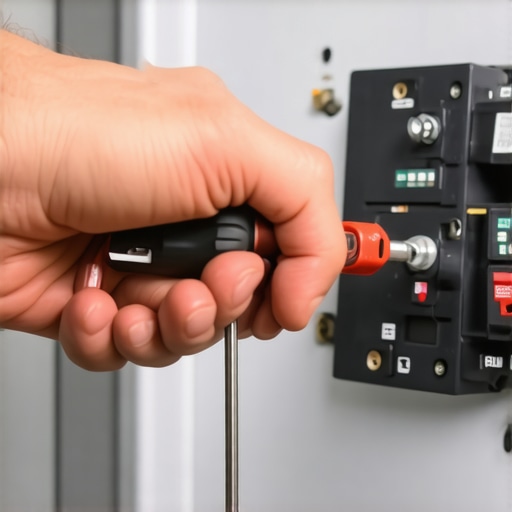
Electricity creates heat, and heat causes metal to expand and contract. Over time, those screws holding your wires in the panel can wiggle loose. I’ve seen brand-new installs fail because the installer didn’t use a torque screwdriver. It sounds like overkill, but the specific torque settings that prevent panel fires during high-load charging are there for a reason. If a connection is loose, it creates resistance, which creates heat, which then causes the breaker to trip as a ‘thermal’ fault rather than a ‘ground’ fault. During my own troubleshoot, I found the hidden danger of loose neutral wires in your electrical panel was actually the culprit. One quarter-turn of a screwdriver, and the ghost was gone.
Kill the nuisance by going hardwired
If you are using a NEMA 14-50 plug and a GFCI breaker, you are essentially asking two different ‘security guards’ to watch the same door. They end up tripping over each other. The breaker is looking for a leak, and the charger’s internal computer is doing the exact same thing. This is the #1 cause of nuisance trips. When you move to a hardwired setup, you can often use a standard non-GFCI breaker (depending on your local jurisdiction’s interpretation of the 2023 NEC), which eliminates the conflict entirely. I finally bit the bullet and hardwired my unit last year, and I haven’t had a single trip since. There is a massive benefit of a hardwired charger over a Nema plug that goes beyond just speed; it’s about reliability.
Does your panel have the ‘room’ to breathe?
Sometimes the issue isn’t the charger at all, but a panel that’s screaming for help. If your main breaker is humming or your lights flicker, you’re dealing with voltage sag. This drop in power can cause the charger to reboot or fault out. You might be at the limit of what your 100-amp or 150-amp service can handle. I suggest upgrading your panel for better ev charging performance if you’re seeing consistent issues across multiple appliances. If you find that you have the specific breaker brand that keeps tripping on level 2 chargers, it might simply be a hardware incompatibility that requires a more robust electrical backbone. Use these troubleshooting ev chargers common compliance pitfalls and fixes to audit your current setup before you start replacing expensive components. Consistency in your power delivery is the only way to keep the ‘ghosts’ out of your garage for good.
The consensus among most contractors is that if you have a 100-amp panel, you’re toast. They’ll tell you that you need to shell out five grand for a service upgrade before you even think about a Level 2 charger. But here is the contrarian truth: you often don’t need a bigger panel; you need a smarter one. What many people get wrong is the math. Instead of looking at peak demand, they look at nameplate ratings. By learning how to calculate if your 100-amp service can handle a daily commute, you might find you have plenty of overhead, especially if you schedule your car to charge when the dryer and AC are dormant.
The panel upgrade myth that costs homeowners thousands
Everyone says a full swap is the gold standard, but in my experience, load management works better for most suburban homes. There are fantastic how to load balance your home electrical system without a full panel swap strategies that use smart sensors to pause your car’s charging if the electric range kicks on. This isn’t just a workaround; it’s a sophisticated engineering solution. According to a study by the Electric Power Research Institute (EPRI), residential load management can effectively defer or eliminate the need for costly grid-side service upgrades while maintaining 100% vehicle readiness. If you jump straight to a full upgrade without considering these panel upgrade strategies to meet ev charging code requirements in 2025, you’re essentially paying for a ten-lane highway when you only ever have three cars on the road.
Why your ‘Heavy Duty’ wire might still be failing you
Here is a trap I see even the ‘handy’ DIYers fall into: the 6-gauge copper myth. People assume that because the wire is thick, they’re safe. However, on a long run from a basement panel to a detached garage, you can suffer from significant voltage drop. This is the common wire sizing error that causes voltage drops during charging. When the voltage dips, the amperage stays high, heating up your connections and eventually causing a trip—or worse. I’ve walked into garages where the smell of melting plastic was faint but present because the homeowner used a wire rated for the ‘load’ but not the ‘distance.’ Always how to verify code compliance for your ev charger installation by checking the voltage at the terminals while the car is pulling its full 48 amps. If you see a drop of more than 3%, you have a potential fire hazard on your hands.
Does your local inspector actually care about the label on the door?
You might think that as long as the charger works, the inspection is just a formality. But advanced installers know that the smallest details—like the specific circuit labels required by the electrical inspector—are what usually fail a project. An unlabeled or mislabeled EV circuit is a safety violation that can haunt you during a home sale or an insurance claim. When I talk about circuit labels, I’m not just talking about Sharpie on tape; inspectors want permanent, legible tags that indicate the circuit’s purpose and continuous load capacity. This is a key part of ensuring code compliance when installing ev chargers. More importantly, keep an eye on your hardware during the first few weeks. Look for 3 signs your main breaker is running dangerously hot during overnight charging. If the plastic looks slightly discolored, you have a high-resistance connection that needs immediate professional attention. Have you ever fallen into this ‘bigger is always better’ trap, or did you find a more creative way to power your ride? Let me know in the comments.
Keep the juice flowing with a quick checkup
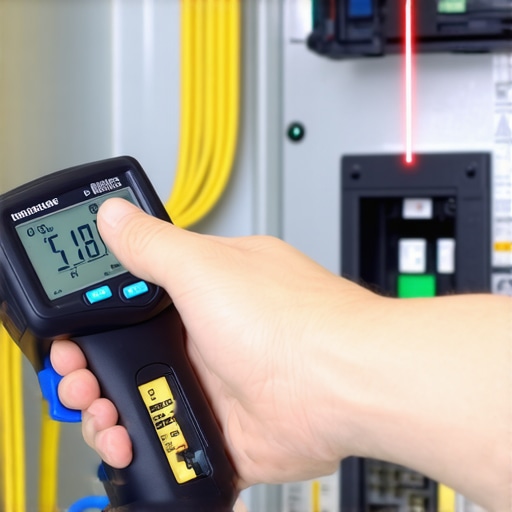
I’ve seen too many people treat their EVSE like a toaster—plug it in and forget it exists until it stops making toast. But remember, you’re pushing 40 to 48 amps through your home’s veins for hours on end. This isn’t a low-impact appliance. To keep things stable, I personally perform a ‘thermal audit’ every six months. I use a simple infrared thermometer—nothing fancy, just a basic handheld unit—to scan the breaker while the car is pulling its peak load. If I see a temperature spike over 140°F (60°C) at the wire terminal, I know I’ve got a loose connection or a breaker that’s starting to fatigue. You need to know how to spot a dying breaker before it shuts down your charging session before it becomes a literal fire hazard. Even the experts agree; Mike Holt, a leading authority on the National Electrical Code (NEC), frequently emphasizes that heat is the primary enemy of electrical longevity, stating that ‘proper torque and thermal monitoring are non-negotiable for high-continuous load circuits.’ When you are ensuring code compliance when installing ev chargers, you’re really just setting a safety baseline; routine maintenance is what keeps that baseline from crumbling.
Stop guessing and start measuring with a thermal gun
The reason I recommend a thermal gun over just ‘looking for smoke’ is that heat damage is cumulative. By the time you smell plastic melting, the damage to the busbar might already require a full panel replacement. Using an infrared tool allows you to see the heat signature of the wires expanding under load. It’s an essential part of how to verify code compliance for your ev charger installation even months after the inspector has left. I’ve caught two loose neutral wires this way that would have eventually caused a major equipment failure. If you find a hot spot, don’t just tighten it blindly; turn off the power and check for any signs of discoloration on the copper itself.
How do I maintain my home charging setup over the years?
Beyond the panel, you have to look at the interface itself. Dust, spiderwebs, and oxidation are the silent killers of charging speeds. I make it a habit to check the handle pins for any signs of blackening or pitting. If they look dull, I follow the steps on how to clean the pins on your charging handle safely using a dedicated contact cleaner. If you live in a colder climate, you also need to worry about the cable’s flexibility and the seal on your outdoor enclosure. I’ve found that 3 maintenance tasks that keep your outdoor charger running through winter can save you from a frozen, useless handle on a February morning. We are also entering an era where your charger isn’t just a cable; it’s a smart device. I’ve had my app fail to start a session twice this year, and both times it was a firmware mismatch. Knowing how to update your charger software without calling a technician is becoming a vital skill for every EV owner. If the app is spinning, you’re likely dealing with troubleshooting ev charger connectivity problems rather than a hardware failure. Looking ahead, the trend is moving toward bi-directional charging (V2G), where your car powers your house during a blackout. This means your maintenance routine will eventually include testing your home’s transfer switch as well. For now, grab a thermal gun and scan your panel while the car is charging tonight—it’s the single best way to catch a problem before it catches fire.
What I Finally Learned After My Third 2 AM Power Outage
I used to think that electrical work was binary—it either worked or it didn’t. But EV charging taught me that there is a massive ‘gray zone’ where things work 99% of the time, only to fail when you are fast asleep. The hardest lesson I learned is that silence in your electrical panel doesn’t always mean safety. I discovered that thermal fatigue is real; a breaker that is constantly running at its limit will eventually lose its internal tension. This is why ensuring code compliance when installing ev chargers is not just a legal hoop to jump through—it is a performance requirement. I also realized that while DIY is great for painting a room, high-load circuits require a level of precision that most of us overlook. For example, hitting the specific torque settings that prevent panel fires during high-load charging changed everything for my setup; it stopped the micro-vibrations that were causing my intermittent trips.
The Tools That Saved My Garage From Potential Disasters
If you want to stop guessing and start knowing, you need a few specialized items in your kit. First, an infrared thermal gun is non-negotiable. I use it to scan my breakers every few months to catch heat signatures before they turn into smoke. If you see a spike, it may be time to consider upgrading your panel for better ev charging performance. Second, I highly recommend checking your local utility portal for 7 utility rebates that pay for your charger installation costs; these often include free hardware or credits for professional inspections that can verify your work. Finally, keep a copy of the latest NEC guidelines handy so you know exactly how to verify code compliance for your ev charger installation without having to wait for an inspector to find a mistake for you.
#IMAGE_PLACEHOLDER_E#
Take Control of Your Charging Experience Once and For All
You don’t have to live with the anxiety of wondering if your car will be ready for your morning commute. By shifting your mindset from ‘plug and play’ to ‘monitor and maintain,’ you turn a potentially hazardous situation into a reliable, high-tech convenience. Your home’s electrical system is a living thing that changes with the seasons and the load you put on it. Stay proactive with your troubleshooting, keep your connections tight, and never settle for a setup that ‘just works’—aim for a setup that is built to last. Have you ever dealt with a breaker that only trips when you aren’t looking? Let me know your ghost stories in the comments below.