It was 2:15 AM when the sudden silence of my garage power cut woke me up. I checked my phone, and there it was—the dreaded notification: ‘Charging Interrupted.’ My car was sitting right at 91%. For weeks, I thought I had a lemon of a battery or a faulty charging cable, but the truth was much more ‘electrifying’ than that. I spent hours troubleshooting my EV charger only to realize I was making the same rookie mistake many of my neighbors do. I was pushing my home’s electrical system to its absolute thermal limit without even knowing it. Today, I’m going to pull back the curtain on why your breaker acts like a nervous watchdog right when you’re almost topped off, and we’ll look at the simple adjustments that will finally let you sleep through the night.
Heat is the Invisible Enemy at the End of the Charge Cycle
Most people assume that charging an EV is like filling a gas tank—constant and steady. But it’s actually a marathon. By the time your car hits that 90% mark, your breaker has been under a heavy load for hours. This is where I messed up early on; I didn’t respect the ‘Continuous Load’ rule. According to the National Electrical Code (NEC), an EV charger is considered a continuous load, meaning it shouldn’t pull more than 80% of the breaker’s rated capacity. If you have a 40-amp charger on a 40-amp breaker, it’s not a matter of if it will trip, but when. You might notice your breaker gets hot to the touch during these long sessions. That heat builds up in the metal components of the breaker, and right as the car is finishing those last few percentages, the thermal expansion triggers the trip.
Is your electrical panel actually safe?
It’s a scary thought, right? You worry that your house might be at risk because of a simple charging habit. When I first saw my breaker pop, I was convinced I needed a massive panel upgrade for better performance. While sometimes that is the case, often it’s about the hardware itself. I learned the hard way that certain breaker brands trip more often on Level 2 chargers because they aren’t designed for the high-ambient heat of a closed garage. Have you ever walked into your garage and felt that wall of heat hitting your face while the car is plugged in? That’s the environment your breaker is trying to survive in. If you’ve been dealing with this, you aren’t alone—I’ve been in those exact same pajamas, resetting that switch in the dark. Does your charger cut out at the same time every night, or does it seem completely random to you? Let’s dive into the physics of why that last 10% is the hardest on your home’s wiring.To fix this, the first thing you need to do is look at your settings. If you’re pushing the absolute limit of your circuit, you’re asking for trouble. Most modern vehicles and chargers allow you to adjust the current draw. I found that by dropping my charging rate from 40 amps to 32 amps on my 50-amp circuit, the breaker temperature dropped significantly. You might think this slows you down, but why your EV battery health depends on your home charger settings is actually a deeper conversation about longevity and safety. It’s better to charge steadily at 80% capacity than to have the power cut out entirely at 2 AM.
Lower the Charging Speed to Save Your Sleep
Using your smartphone isn’t just for checking your range; it’s your first line of defense. When you learn how to use an app to schedule charging and save on your bill, you should also look for a ‘Current Limit’ or ‘Amperage’ setting. If your breaker keeps tripping during that final stretch, try knocking the amperage down by 10 or 20 percent. This reduces the thermal stress on the breaker’s internal bi-metal strip, which is exactly what triggers that safety ‘click’ when things get too hot.
Get the Torque Right or Risk a Fire
This is where I almost lost my house. I thought I was being helpful by tightening the screws on my breaker with a standard flathead screwdriver. I cranked it as hard as I could, assuming tighter meant more secure. Big mistake. A few weeks later, I noticed the plastic around the wire was starting to discolor and smell like ozone. I eventually learned about the specific torque settings that prevent panel fires during high load charging. If the connection is too loose, it creates resistance. If it’s too tight, you can actually deform the copper wire or the lug, which also creates resistance. Both scenarios lead to one thing: heat. 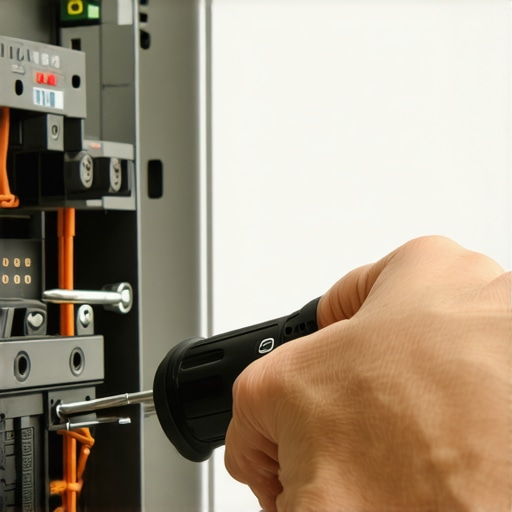
The Exact Tool You Need to Stop the Heat
You need a calibrated torque screwdriver. Every breaker has a specific inch-pound rating printed right on the side of it. When I finally used the right tool, I realized I had been over-tightening my connections by nearly double the recommended limit. Once I set them to the manufacturer’s spec, the humming noise stopped, and my ‘hot breaker’ issue vanished. While you’re in there, you should also learn how to spot a dying breaker before it shuts down your charging session. Look for any signs of pitting on the busbar or soot marks. If the breaker has tripped more than a few times, the internal mechanism might be weakened, making it more ‘sensitive’ to heat than it was when it was new.
Verify Your Wire Gauge is Up to the Task
Sometimes the problem isn’t the breaker at all; it’s the ‘pipes’ carrying the electricity. If your installer used wire that is just barely thick enough, the wire itself acts like a heating element. I’ve seen DIY jobs where people used 8-gauge wire for a 50-amp circuit over a long distance, causing a massive voltage drop and excessive heat. You need to know the exact gauge of wire you need for a 60-amp circuit to ensure you aren’t creating a radiator inside your walls. Before you assume you need a whole panel upgrade for better performance, double-check that your existing wiring is actually rated for the continuous load you’re pulling. Finally, always take the time to verify code compliance for your EV charger installation. Code exists because people’s houses used to burn down from exactly these types of thermal failures.
Let’s dig deeper into a myth I hear every single week: the idea that a small electrical service is an automatic dealbreaker for fast charging. Most ‘pros’ will tell you that if you have a 100-amp panel, you’re stuck with a slow Level 1 charger unless you spend thousands on a service upgrade. I’ve found that’s simply not true anymore. By learning how to load balance your home electrical system without a full panel swap, you can prioritize your car’s needs during the night while keeping the dryer and AC from overloading the main. It’s about being smart with your current, not just buying a bigger ‘bucket’ of electricity. I’ve seen 100-amp systems run a Level 2 charger perfectly for years once the homeowner stopped trying to charge the car and run the electric oven at the same time.
However, there is a trap that even seasoned DIYers fall into: ignoring the ‘nuisance trip.’ You might find that your ev charger trips the gfci even when not in use. This often happens because the charger’s own internal ground-fault protection is ‘conflicting’ with the breaker’s protection, creating a feedback loop. It’s a classic case of too much safety hardware working against each other. If you don’t understand the nuances of code compliance essentials for ev charger installations in 2025, you might end up replacing perfectly good parts when the solution is actually in the wiring configuration. Many people assume they have a hardware failure when they actually have a ‘leakage current’ issue that is easily solvable with better grounding.
Can Your 100-Amp Service Actually Handle a Daily Commute?
Many homeowners worry they’ll blow the main fuse if they plug in at night. According to the Electrical Safety Foundation International (ESFI), residential electrical fires often stem from sustained high-wattage loads on aging infrastructure, but not necessarily from the total capacity—it’s about the integrity of the connections. You should learn how to calculate if your 100-amp service can handle a daily commute by looking at your peak usage hours. If your panel is older, you might face the hidden danger of loose neutral wires in your electrical panel, which can cause erratic voltage swings. These swings can fry your car’s sensitive onboard computer long before the breaker ever trips.
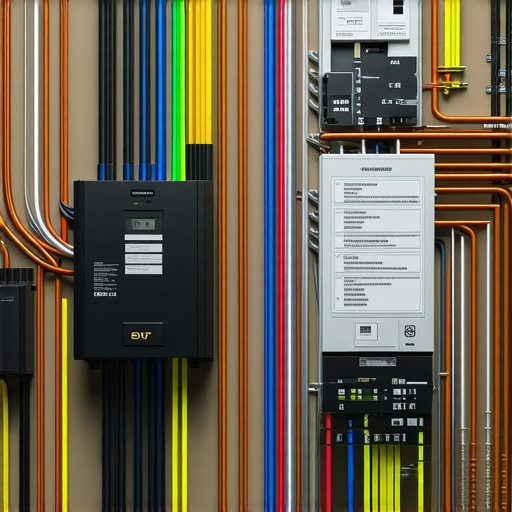
There is also the ‘Thermal Memory’ factor that most people ignore. Every time your breaker trips, it isn’t just resetting; it’s actually degrading. The bi-metal strip inside that detects heat starts to lose its original tension and structural integrity. Eventually, it will trip at much lower temperatures than it was designed for, leading you to believe you have a massive electrical fault when you really just have a ‘tired’ breaker. This is why I always recommend how to spot a dying breaker before it shuts down your charging session. If you see discoloration on the plastic casing or smell a faint ‘metallic’ scent, that breaker is compromised and needs replacement.
I’ve seen people lose thousands in repairs because they ignored a humming sound or a slight flicker in their LED lights while the car was plugged in. These aren’t just quirks; they are the electrical system’s way of screaming for help. Have you ever fallen into the trap of thinking a ‘quick reset’ solved the underlying problem? Let me know in the comments. If you’re still seeing issues, it might be time to look at panel upgrade strategies to meet ev charging code requirements in 2025 before your next overnight session.
Stop Guessing and Start Measuring with Infrared
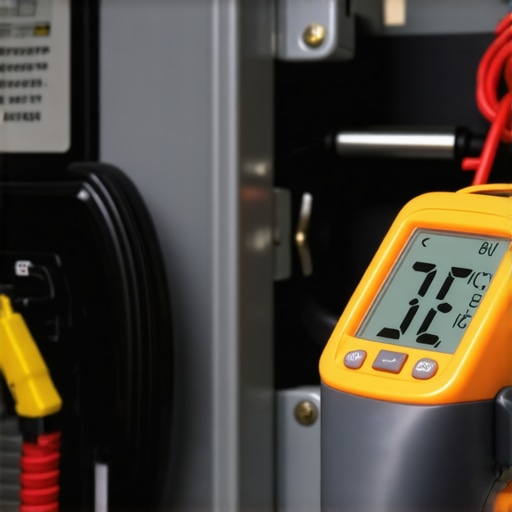
I realized early on that my eyes weren’t enough to catch a disaster in the making. Now, I keep a cheap infrared thermometer in my toolbox. About once a month, I’ll open the panel door thirty minutes into a charging session and scan the breaker and the main lugs. If you see a specific breaker running 20 or 30 degrees hotter than its neighbors, that is a physical warning sign of resistance. It’s a much safer way of troubleshooting my EV charger than waiting for the smell of melting plastic. The experts at the International Association of Electrical Inspectors (IAEI) emphasize that terminal temperature is the single biggest predictor of failure in high-draw residential circuits. If you catch it early, you might just need to re-torque a screw rather than replacing a scorched busbar.
How do I keep my home charger running like new for years?
Maintenance isn’t just about the panel; it’s about the hardware you touch every day. I’ve seen people let their handles sit in a puddle of snow or mud, wondering why they start getting communication errors. You need to perform maintenance tasks that keep your outdoor charger running through winter, like checking the gasket seals on your unit. I also make it a habit to clean the pins on your charging handle safely using a bit of compressed air to blow out dust and debris. If those pins get gunked up, they create resistance, which leads to heat, which leads to your car slowing down the charge to protect itself. Also, don’t ignore the digital side—learning how to update your charger software without calling a technician can fix ‘ghost’ bugs that cause your app to disconnect or your schedule to fail.
Plan for the Multi-EV Future Today
Eventually, your spouse or your teenager is going to get an EV too. This is where most homeowners panic. They think two cars means double the electrical service, but with the latest NEC 625.42 code updates, we can now use energy management systems to ‘share’ a single circuit. You need to understand why a 100-amp service isnt always enough for two evs if you try to run them both at full tilt, but with smart load balancing, you can avoid a $5,000 utility upgrade. I’m already looking at how to install a second ev charger for a multi car household using a hardwired ‘master-slave’ configuration. Looking forward, the trend is moving toward V2H (Vehicle-to-Home), where your car actually powers your house during a blackout. To get ready for that, you must avoid the forgotten inspection step that voids your charger warranty today, ensuring your grounding is perfect for bidirectional flow. Within five years, I expect most home chargers to act as mini-substations. This is why ensuring code compliance when installing ev chargers is so critical now; you are building the foundation for a smart grid in your own garage. Try this today: Grab a non-contact thermometer and scan your panel thirty minutes into your next charge. If any component is over 140°F, stop the charge and check your torque settings before your next session.
What My Melted Terminal Block Taught Me About Pride
Looking back, my biggest mistake wasn’t a lack of tools; it was a lack of respect for how much power 40 amps truly is. I learned that electrical fatigue is real—a breaker that works today might be micro-vibrating itself to death because of a loose lug. This is why troubleshooting ev charger connectivity problems often starts with a physical inspection of the copper, not just the software. I also realized that the peace of mind from knowing your house won’t burn down is worth much more than the $200 you save on a DIY job gone wrong. My lightbulb moment came when I saw how the most common diy mistakes in home charger installations are usually small things like using the wrong insulation or skipping a simple load test.
The Hardware I Keep in My Garage Toolbox
If you want to be proactive, you need more than just a standard screwdriver. I personally swear by a digital torque wrench specifically for electrical work; it’s the only way to meet those manufacturer specs I mentioned earlier. I also recommend keeping a copy of the code compliance essentials for ev charger installations in 2025 nearby—the rules change fast, and staying ahead means your insurance company can’t argue with you later. Lastly, if you’re noticing odd behavior, don’t ignore 3 signs your main breaker is running dangerously hot during overnight charging. A simple handheld infrared thermometer is your best friend for catching a loose connection before it becomes a fire hazard. #IMAGE_PLACEHOLDER_E#
Put an End to Your Charging Anxiety
Electrical work can feel intimidating, but you’ve already taken the first step by learning how these systems actually behave under stress. By ensuring code compliance when installing ev chargers, you aren’t just following rules; you’re building a fortress of safety for your family and your vehicle. Don’t let a fear of the unknown stop you from enjoying the convenience of an EV. With the right settings and a bit of maintenance, your garage will be the safest ‘gas station’ you’ve ever owned. Have you ever walked into your garage and smelled that faint, metallic scent of a hot breaker? Let me know your experience in the comments below!