I was standing in my garage, soaking in that new-car scent of my Model 3, and holding a shiny new charger like it was a trophy. I figured a few wires and a trip to the permit office would be a weekend breeze. I was dead wrong. The clerk at the desk didn’t care about my excitement; she just wanted to see my load calculation worksheet. I stared at her like she’d asked for the launch codes to a satellite. I’d spent hours researching the best chargers, but I completely ignored the math behind my home’s heartbeat.
Your Main Breaker Isn’t Just a Suggestion
Most of us think that if we have an open slot in the panel, we’re good to go. I certainly did. But that’s the permit error that stops home charger installs in their tracks. The city wants to know if your house will literally melt its service lines when you’re running the dryer, the AC, and your new 48-amp charger all at once. It’s about ensuring code compliance when installing ev chargers so you don’t end up with a very expensive, very charred wall.
Is This Worksheet Just Red Tape to Take My Money?
I get the skepticism. It feels like one more hoop to jump through. But here’s the reality: according to the National Electrical Code (NEC) Article 220, calculating the demand factor is the only way to prove your system won’t overheat. I learned the hard way that the hidden cost of skipping a panel load calculation isn’t just the fine—it’s the risk of your main breaker tripping in the middle of a summer night because your charger pulled too much juice.
The 100 Amp Trap Most Homeowners Fall Into
I used to think why a 100-amp service isn’t always enough for two evs was just a myth pushed by electricians looking for a payday. Then I actually did the math. My stove, my old AC unit, and my water heater already claimed about 70% of my capacity during peak times. Adding a high-speed charger without checking the numbers is like trying to pour a gallon of water into a pint glass. You need to how to verify code compliance for your ev charger installation before you buy the hardware. Have you ever had a permit application kicked back for a missing document you’d never even heard of? Because it happened to me, and it’s a headache we’re going to solve together today.The load calculation isn’t just a list of appliances; it’s a snapshot of your home’s peak stress. I started my journey by walking around with a clipboard, looking at the labels on my HVAC unit, my electric range, and that old dryer that sounds like a jet engine. This is where you find the “Nameplate Rating.” If you don’t do this, you’re just guessing, and the hidden cost of skipping a panel load calculation usually shows up as a melted breaker or a failed inspection. I remember my first attempt. I added everything up literally and the number was terrifying. I thought I needed a 400-amp service for a three-bedroom house. But the National Electrical Code allows for “demand factors.” Basically, the code recognizes you probably aren’t roasting a turkey, drying three loads of towels, and blasting the AC all at the same time. You need to learn how to load test your house before adding a second charger to see what your real-world usage looks like.
How to Do the Math Without an Engineering Degree
To get that permit signed, you need a worksheet that follows the “Optional” method from Article 220. This is usually easier for homeowners. You take the square footage of your home, add the small appliance circuits, and then list the fixed appliances.
Hunt Down Your Nameplates
Every major appliance has a sticker or metal plate. You’re looking for the Volt-Amps (VA) or Watts. If it only lists Amps, multiply that by the Voltage to get the Watts. I spent forty minutes behind my refrigerator with a flashlight just to find a sticker that was covered in dust. It felt tedious, but upgrading your panel for better ev charging performance starts with knowing exactly what you’re working with. 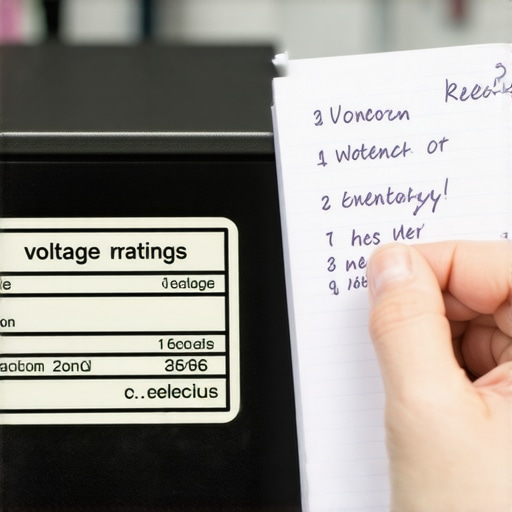
Apply the 80 Percent Rule
For a continuous load like an EV charger, you can only use 80% of the circuit’s capacity. If you want a 40-amp charge, you need a 50-amp breaker. This is a non-negotiable safety buffer. If you push a breaker to its limit for hours, it gets hot. I’ve seen breakers that were literally “cooking” because someone ignored this. You can see why your breaker gets hot to the touch during charging if this math is ignored.
Make Room Without Tearing Out the Walls
If your calculation shows you’re over the limit, don’t panic. You don’t always have to call the utility company to dig up your yard.
Use Load Shedding to Save Your Wallet
This was the game-changer for me. There are devices called “Energy Management Systems” or load shedders. They monitor your total home power and automatically throttle or pause your EV charger if the dryer or AC kicks on. It’s the best way how to add an ev charger without a 200-amp panel upgrade. I installed one for a neighbor who only had 100-amp service, and it saved them $3,500 in utility fees. You can effectively how to use load shedding devices to avoid a full service upgrade by letting the hardware handle the math in real-time.
Consider a Sub-panel for Better Organization
If your main panel is a rat’s nest of wires, a sub-panel can give you the physical space you need. Just remember that why your subpanel needs a separate ground bar for ev circuits is a critical code requirement. When I put in my sub-panel, I forgot to buy the extra ground bar and had to make a second trip to the hardware store in the middle of a rainstorm. Don’t be like me; check your hardware list twice.Everyone tells you that if you want a fast charge, you have to rip out your old 100-amp service and pay the utility company thousands for a massive service upgrade. Honestly? In my experience, that’s often overkill. While panel upgrade strategies to meet ev charging code requirements in 2025 focus heavily on capacity, the industry is shifting toward intelligence over raw size. I’ve seen homeowners drop five figures on a 400-amp service when a simple $500 load-management device would have sufficed. A study by the Electric Power Research Institute (EPRI) indicates that managed charging is often more grid-friendly and cost-effective than physical infrastructure upgrades.
The GFCI Trap That No One Talks About
One of the most frustrating ‘oops’ factors I encounter involves nuisance tripping. Most modern Level 2 chargers have sensitive Ground Fault Circuit Interrupter (GFCI) protection built directly into the unit. If your local inspector insists on a GFCI breaker in the panel as well, you end up with two ‘brains’ trying to monitor the same circuit. They often conflict, leading to why the gfci in your panel keeps nuisance tripping your charger at 3:00 AM. It’s a classic case of too much safety equipment causing a system failure. When this happens, you aren’t just dealing with a dead battery in the morning; you’re dealing with troubleshooting ev chargers common compliance pitfalls and fixes that might require a specialized electrician to resolve without violating code. 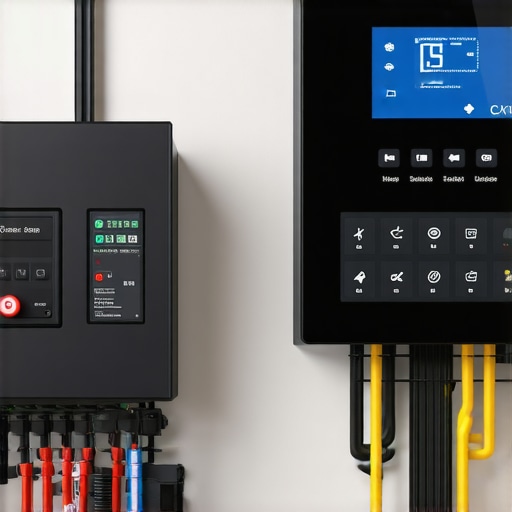
Why is my car charging slower when the garage gets hot?
This is the nuance that separates the pros from the DIYers. Thermal throttling is real. If you used the wrong wire gauge or if your panel is in a sun-baked garage, the resistance builds up. I’ve seen chargers drop from 48 amps to 24 amps because the internal sensors detected the terminals were reaching 122°F. This is usually why your charging speed drops when the sun hits the unit. To avoid this, you need to ensure proper ventilation and potentially up-size your conductors beyond the minimum code requirement to reduce heat. It’s also worth checking ev charger troubleshooting expert tips for common issues if your software starts throwing ‘reduced power’ alerts. Another common mistake is neglecting surge protection. I once saw a client lose a $700 motherboard because of a nearby lightning strike; the mistake that causes ev charger motherboards to fry during storms is almost always skipping the SPD (Surge Protective Device) in the main panel. Have you ever fallen into the ‘more power is always better’ trap or had a charger fail for a reason you never expected? Let me know in the comments.I used to think my job was done once the permit was signed and the car was humming. But your electrical panel is a living thing. One tool I swear by now is a calibrated torque wrench. According to the National Electrical Code (NEC) Section 110.14(D), you must use a torque tool if the manufacturer specifies a value. If that breaker terminal is even slightly loose, it creates resistance, which creates heat. This is exactly the reason your ev charger smells like burnt plastic even if the math was right. You’re literally cooking your equipment because of a half-turn of a screw. Software is the second half of the battle. People treat their chargers like a toaster—plug and forget. But smart units are more like computers. I’ve solved dozens of ‘broken’ chargers just by figuring out how to update the firmware on your smart charging station. These updates fix connectivity bugs and refine how the unit handles grid fluctuations. It is also why you should know how to reset your home charging station after a power outage without calling for help. 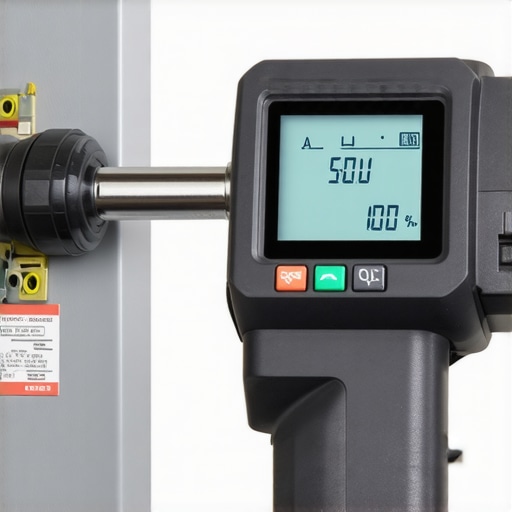
How do I maintain my home charging station over time?
It is simpler than you think but easy to ignore. Every six months, I do a ‘cold check.’ I visually inspect the cable for cracks and look for any discoloration on the plug. If you’re charging outdoors, you need to follow 3 maintenance tasks that keep your outdoor charger running through winter to prevent ice from jamming the locking mechanism. I also keep a kit of the essential spare parts to keep for your home charging unit, specifically an extra holster and a cable hanger, because physical wear and tear is the leading cause of charger failure long before the electronics give out. Scaling up to two EVs is the next frontier. If you’re planning for a second car, do not just add another breaker. Learn how to balance multiple evs on a single home circuit using power sharing. This allows two chargers to talk to each other and split the available 50 amps. In the near future, we will move toward the ISO 15118 standard for bi-directional charging, where your car powers your house during a blackout. For now, focus on the basics: ensure why your ev charger needs a surge protector in the panel and remember that why your ev battery health depends on your home charger settings. Do not let your car sit at 100% in a hot garage every single night. Go check your charger app right now and see if there is a pending firmware update—it is the easiest way to prevent a morning headache.
Three Hard Truths the Salesman Forgot to Mention
After navigating the maze of permits and melted components, I realized that the best tool isn’t a screwdriver—it’s patience. First, remember that your local inspector is actually on your side. They are the final line of defense against an electrical fire. Second, always over-document your process; taking photos of your open panel before and after the install will save you hours of explaining to the city clerk. Lastly, don’t ignore the small stuff. I’ve seen troubleshooting ev charger connectivity problems become a week-long headache simply because the Wi-Fi signal couldn’t penetrate the heavy-duty electrical cabinet. Sometimes the solution isn’t a new breaker, but a simple Wi-Fi extender.
My Shortcut List for the Serious DIYer
If you’re serious about doing this right, don’t just wing it. I always keep a copy of the NFPA 70 (NEC) nearby, but for real-world application, I rely on a few specific sources. Check your local utility’s “EV Readiness” page; understanding why your local utility might pay for your panel upgrade is a discovery that could save you thousands in upfront costs. For the physical install, a high-quality torque screwdriver is non-negotiable for meeting manufacturer specs. If you feel overwhelmed, knowing how to find an electrician who actually understands ev codes is the best investment you can make to ensure your home stays safe and your charger warranty remains valid. #IMAGE_PLACEHOLDER_E#
Building a Garage That’s Ready for Anything
Installing a charger is more than just adding another appliance; it’s about future-proofing your daily life. By focusing on code compliance essentials for ev charger installations in 2025, you aren’t just following bureaucratic rules—you’re building a reliable system that will power your adventures for the next decade. Don’t let the technical jargon scare you away from the transition to electric. Whether you’re currently troubleshooting ev chargers common compliance pitfalls and fixes or planning a massive panel upgrades for ev chargers what you need to know, you’ve now got the foundation to handle it like a pro. Your car is ready to go; now make sure your home is too. What was the most confusing part of your permit application or load calculation? Let’s talk about it in the comments below!