It was a Tuesday morning, 6:15 AM, and I was already running late for a flight. I grabbed my lukewarm coffee, hit the garage door opener, and expected to see that familiar green pulse on my charging port. Instead? Darkness. The car was sitting at a miserable 18% charge, and my electrical panel was mocking me with a tripped breaker toggle. This wasn’t the first time, and I knew exactly what happened: the GFCI in my panel had decided to ‘protect’ me from a problem that didn’t exist. If you have spent more time resetting your breaker than actually driving your car, you are in the right place. Today, we are going to dive into the technical tug-of-war between your safety equipment and your charger so you can finally get a full night of charging without the midnight clicks.
Why Your Garage Breaker Keeps Quitting on You
I’ll be the first to admit that when I started out, I thought more protection was always better. I figured if the code required a GFCI breaker in the panel, and my charger had built-in protection, I was twice as safe. I was wrong. I was actually creating a ‘nuisance tripping’ loop. You see, most modern EVSEs have very sensitive ground-fault detection built right into the unit. When you pair that with a GFCI breaker in your main panel, they start ‘talking’ to each other in a way that leads to a shutdown. If you are dealing with why your EV charger trips the GFCI even when not in use, it is often because of these tiny monitoring signals being misinterpreted by the breaker.
Is a GFCI breaker really worth the constant headache?
You might be tempted to just swap that breaker for a standard one and call it a day, but we have to talk about ensuring code compliance when installing EV chargers. According to the National Fire Protection Association (NEC 2020/2023), nearly all 240V outlets in residential garages now require GFCI protection. This creates a massive conflict for plug-in chargers. When I first did my own install, I skipped the load calculation and just threw in the highest-rated breaker I could find, which is exactly how I ended up with expert tips for common issues being my most-searched phrase for a month.
The Frustrating Conflict of Double Protection
The real kicker is that your charger performs a ‘self-test’ every time it starts up. It sends a tiny bit of current to ground to make sure the safety systems are working. Your panel’s GFCI breaker sees that ‘leak’ and does exactly what it was designed to do: it cuts the power. It is a classic case of two smart devices being too smart for their own good. Have you ever walked out to your garage only to find that dreaded red light? I want to hear about it—was it a one-time fluke or a nightly battle for you? Before you go out and buy a new unit or try to fix a check charger warning on your dashboard, we need to look at the specific wiring and breaker types that actually play nice with electric vehicles.
Hardwire Your Way Out of Nuisance Tripping
I remember helping a neighbor who bought a high-end NEMA 14-50 outlet, thinking he was set for life. He used a cheap ten-dollar receptacle from a big-box store, and within two months, the plastic was literally bubbling. When we opened the box, the smell of ozone was overwhelming. I showed him how to pick a NEMA 14-50 outlet that won’t melt under pressure, but the real solution was to ditch the plug entirely. If you hardwire your charger, you often bypass the NEC requirement for a GFCI breaker at the panel because the charger’s internal ground-fault protection takes over as the primary safety mechanism. This single move eliminates the ‘double protection’ conflict that causes most mid-charge shutdowns. It turns a temperamental garage setup into a rock-solid appliance. 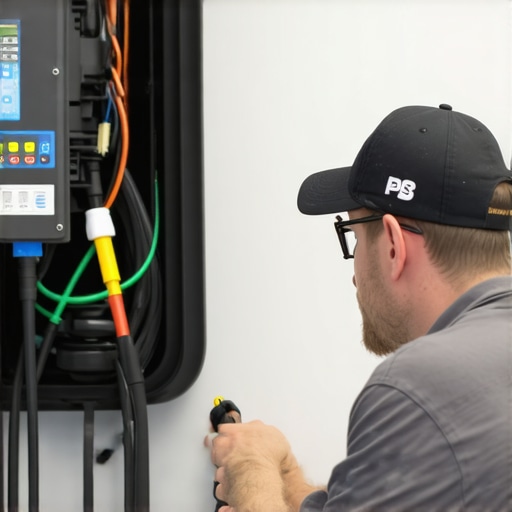
The Technical Details That Stop Fires Before They Start
You cannot just pull any wire through the wall and expect it to handle 48 amps for ten hours straight. Heat is the enemy of your electrical system. I once saw an install where the homeowner used undersized aluminum wire because it was cheaper; the lugs in his panel were practically glowing after just one charging session. You need to verify the exact wire gauge you need for a 50 amp EV circuit to ensure the resistance doesn’t create a fire hazard. Beyond the wire itself, you must use a torque screwdriver. Most people hand-tighten until it feels ‘snug,’ but the specific torque settings that prevent panel fires during high load charging are non-negotiable. If those connections are even slightly loose, the constant thermal expansion and contraction will eventually wiggle the wire free, leading to an arc flash.
Stop Overloading Your Main Panel
Before you bump your charging speed to the max, you have to know what your house can actually handle. I’ve walked into dozens of homes where the owner added a hot tub, a new AC, and then an EV charger without a second thought, only to have the main breaker trip when the dryer starts. This is the hidden cost of skipping a panel load calculation. If your 200-amp service is already near its limit, you don’t necessarily need a multi-thousand-dollar service upgrade. You can look into how to use load shedding devices to avoid a full service upgrade. These ‘smart’ controllers monitor your total home usage and temporarily throttle or pause your car’s charging if you turn on the oven or the electric water heater. It’s a move that saves your panel and your wallet simultaneously.
Guard Against Grid Surges and Storms
Your EV is essentially a giant, expensive computer on wheels. While you’re focusing on the breaker, don’t ignore the quality of the power coming in. I learned this the hard way when a nearby lightning strike fried the motherboard of my first smart station. Now, I always explain why your EV charger needs a surge protector in the panel. A Type 1 or Type 2 surge protective device (SPD) acts as a lightning rod for your electronics, shunting excess voltage to the ground before it reaches the sensitive car-to-charger communication pins. If you’ve ever dealt with expert tips for common issues, you know that preventing a fried circuit board is a lot easier than replacing one.
The Myth of the Mandatory 200-Amp Upgrade
Most electricians will walk into your garage, glance at a 100-amp panel, and immediately quote you five thousand dollars for a full service upgrade. They tell you it is impossible to run a Level 2 charger on your current setup. In my experience, that is often an expensive oversimplification. While a bigger panel is nice, it is not the only way to play by the rules. You can often find a smarter path by learning how to add an ev charger without a 200-amp panel upgrade. By using energy management systems, you can stay within code while keeping your current service. Have you ever been told you needed a massive upgrade when you were just looking for a simple plug? Let me know in the comments because I suspect many of you are being oversold on hardware you don’t actually need.
Why Does Your Breaker Trip When the Car is Almost Full?
It is one of the most frustrating common compliance pitfalls and fixes I encounter: the charger runs fine for three hours, then clicks off right at the finish line. Most people assume the charger is broken, but the culprit is usually the ‘continuous load’ rule. Under the National Electrical Code, an EV charger is considered a continuous load, meaning it can pull maximum current for three hours or more. Because of this, you have to derate your breaker by 20%. If you try to pull 40 amps through a 40-amp breaker, it will eventually overheat and trip. This is the real reason your circuit breaker trips at 90 percent charge; the thermal elements inside the breaker simply reach their limit after hours of sustained heat. 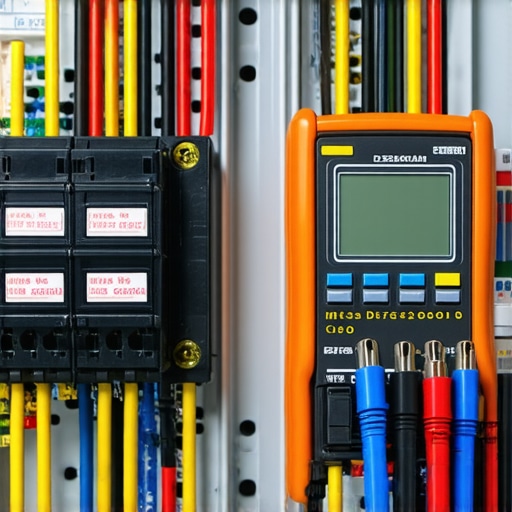
The ‘Oops’ Factor of the Missing Neutral Wire
I once spent four hours helping a friend troubleshoot a premium smart charger that refused to boot up. He was adamant that because it was a 240V circuit, he only needed two hots and a ground. He was technically right for the motor, but dead wrong for the electronics. Many modern stations use the neutral wire to power their internal Wi-Fi cards and logic boards. If you skip it, you are looking at a dead unit. Understanding why your new charger requires a neutral wire even for 240v is essential before you start pulling Romex through your studs. According to the Electrical Safety Foundation International (ESFI), improper wiring of high-draw appliances remains a leading cause of residential electrical fires, making these small technical details a matter of life and death, not just convenience.
Is Your Cheap Breaker Choice Costing You Speed?
Not all breakers are created equal, even if they have the same number stamped on the handle. If you go to a big-box store and grab the cheapest option, you might be getting a component with a lower interrupt rating or poorer thermal management. There is a massive functional gap in the difference between a 40 and a 400 dollar circuit breaker when it comes to handling the heat of a nightly 10-hour charging session. Before you sign off on your project, you must how to verify code compliance for your ev charger installation to ensure that every lug, wire, and breaker is rated for the specific thermal stresses of electric vehicle charging. Don’t let a ten-dollar part be the weak link that melts your entire investment.
I used to think I could ‘eye-ball’ a secure connection. Then I bought a dedicated torque screwdriver and realized how far off my ‘hand-tight’ estimate actually was. If you want your home charging setup to last a decade instead of a season, you have to transition from a ‘set it and forget it’ mindset to one of proactive maintenance. Even the most perfectly installed system faces the reality of thermal cycling—the constant expansion and contraction of wires as they heat up to 120 degrees and cool back down every single night. This is where how to spot a dying breaker before it shuts down your charging session becomes a critical skill for any EV owner.
Stop Guessing and Start Measuring Your Connections
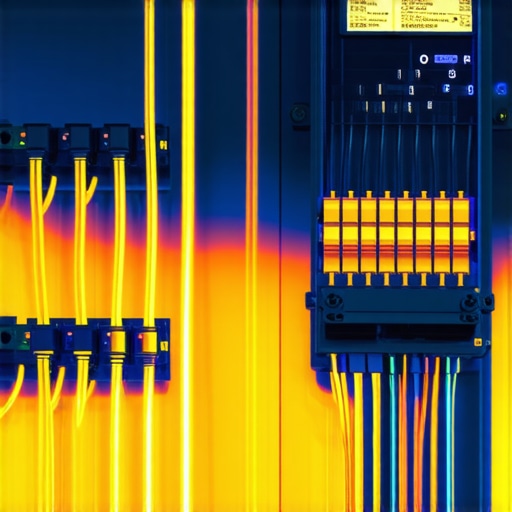
Every six months, I pull the cover off my panel and use a simple handheld thermal camera. It might sound like overkill, but seeing a bright yellow ‘hot spot’ on a lug before it turns into a melted mess has saved me thousands in repairs. According to the International Association of Electrical Inspectors (IAEI), improper terminal torque is responsible for a staggering majority of electrical failures in high-draw circuits. If you didn’t use a calibrated tool during the install, you are essentially waiting for a loose wire to start an arc. Beyond the hardware, don’t forget the ‘brain’ of your unit. I regularly check how to update the firmware on your smart charging station to ensure that communication protocols with the car stay crisp, preventing those annoying troubleshooting ev charger connectivity problems that seem to pop up after every vehicle OS update.
How do I maintain my home charging setup over time?
Physical maintenance is simpler than you’d think but often ignored until something breaks. I make it a habit to inspect the actual charging handle pins for any signs of pitting or discoloration, which usually indicates a poor connection. Applying a tiny bit of non-conductive dielectric grease can help, but knowing how to stop your charger handle from sticking in the port is mostly about keeping the mechanical latches clean and debris-free. If your unit is mounted outside, you need to be even more vigilant. Following 3 maintenance tasks that keep your outdoor charger running through winter—like checking the seal on your conduit and ensuring the holster isn’t collecting ice—will prevent water ingress from frying your motherboard during a spring thaw.
Prepare Your Panel for the Bidirectional Wave
The trend I am seeing in the industry is a shift toward V2H (Vehicle-to-Home) technology. Within the next three to five years, your car won’t just be a consumer of power; it will be your home’s backup battery. This means your electrical system is about to work twice as hard. If your current setup is just barely passing inspection, it will fail under the stress of bidirectional flow. I am already advising people to look into upgrading your panel for better ev charging performance now, rather than waiting for the tech to hit the mainstream. Staying ahead of code compliance essentials for ev charger installations in 2025 ensures that when you trade in your current car for one that can power your fridge during an outage, your garage is already ready for the load. My advanced tip for you: Go out to your garage tonight after the car has been charging for two hours. Carefully touch the charging cable. If it feels hot—not just warm, but hot to the point of discomfort—you likely have a resistance issue in your wiring that needs immediate attention before it degrades further.
I used to think I could ‘eye-ball’ a secure connection. Then I bought a dedicated torque screwdriver and realized how far off my ‘hand-tight’ estimate actually was. If you want your home charging setup to last a decade instead of a season, you have to transition from a ‘set it and forget it’ mindset to one of proactive maintenance. Even the most perfectly installed system faces the reality of thermal cycling—the constant expansion and contraction of wires as they heat up to 120 degrees and cool back down every single night. This is where how to spot a dying breaker before it shuts down your charging session becomes a critical skill for any EV owner.
Lessons My Melted Receptacle Taught Me About EV Safety
Reflecting on years of DIY installs and professional repairs, I’ve realized that the small things are usually what cause the big failures. Here are the lightbulb moments that changed how I approach every garage project:
- The ‘Good Enough’ Trap: I once thought standard Romex was fine for a 40-amp continuous load until I saw how brittle the jacket became after a summer of charging. Always verify your electrician actually used copper wire for the install because aluminum requires much more careful termination to avoid oxidation.
- Software vs. Hardware: Sometimes the problem isn’t the wire; it is the logic. If you hear why your ev charger is making a clicking sound but not charging, it is often a communication handshake failure, not a physical short.
- Inspectors Are Your Friends: I used to fear the city inspector until I realized their checklist is exactly what keeps my house from burning down. Many people fail because they don’t know why the city inspector failed your garage wiring, usually due to simple labeling or height issues.
Tools That Make Your Panel Compliance Proof
To keep your system running without the dreaded midnight click, you need more than just a standard toolbox. I personally swear by these resources to keep my setup within the rules of ensuring code compliance when installing EV chargers. First, a high-quality digital torque screwdriver is non-negotiable for tightening breaker lugs. Second, I recommend the NFPA 70 Handbook—it’s the ‘cheat sheet’ for the National Electrical Code that explains the why behind the rules. Lastly, if the technical side feels overwhelming, knowing how to find an electrician who actually understands EV codes is the best investment you can make. Generic handymen often miss the ‘continuous load’ requirements that are specific to high-powered vehicle charging.
#IMAGE_PLACE_HOLDER_E#
Build a Garage That Powers Your Life
Stepping into the world of electric vehicles is about more than just a new car; it’s about modernizing your home’s most critical infrastructure. By focusing on panel upgrade strategies to meet EV charging code requirements in 2025, you aren’t just fixing today’s problem—you are preparing for a future where your car might power your entire home during a storm. Don’t let the technical jargon or a few tripped breakers discourage you. Once you align your hardware with the code, your charging becomes as invisible and reliable as the lights in your living room. Have you ever had a professional installation fail an inspection, or did you manage to get it right the first time? Let me know your experience in the comments below!