I was standing in the electrical aisle of a home improvement store, sweating over a decision that felt like a total shakedown. In my left hand was a standard 50-amp breaker that cost less than a decent dinner—about $40. In my right, a specialized GFCI/AFCI combo unit that looked nearly identical but was priced at a staggering $420. I remember thinking, ‘It’s just a piece of plastic and a copper leaf. There is no way this is worth ten times the price.’ So, I went with the cheap one. That was my first big mistake. A few months later, while my EV was pulling full power overnight, I found out exactly why your breaker gets hot to the touch during charging and eventually fails when it isn’t up to the task. Today, I want to help you avoid that same ‘budget’ trap that nearly cost me a new electrical panel. We are going to dive into the engineering, the safety standards, and the cold hard reality of why that price gap exists for your EV setup.
The Price Tag That Makes Every Homeowner Cringe
When you are looking at a panel upgrade for an EV charger, the sticker shock is real. You’ve already spent thousands on the car and a few hundred on the charger itself. Then your electrician tells you the breaker alone is $400. It feels like a hidden tax. But here is the thing: a standard $40 breaker is designed for ‘intermittent’ loads. Think of your oven or your clothes dryer. They cycle on and off. An EV charger is a continuous load, running at maximum capacity for eight, ten, or twelve hours straight. This constant heat puts a massive strain on the internal components. I learned the hard way that cutting corners here isn’t just a minor risk; it’s a recipe for a 3 AM emergency call. According to the National Fire Protection Association, electrical distribution equipment is a leading cause of home fires, and using underrated components under high-load conditions is a major contributor to those statistics. Have you ever faced a sudden price hike during an installation and wondered if you were being taken for a ride?
Is a Pricey Breaker Actually Better or Just a Scam?
The skepticism is healthy. If you aren’t an electrician, it’s hard to see the value in something tucked away behind a grey metal door. You might wonder if the high price is just a way for manufacturers to capitalize on the EV boom. It isn’t. The difference lies in the sensitivity and the safety features. A $400 breaker often includes sophisticated Ground Fault Circuit Interrupter (GFCI) technology that can detect tiny leaks of current—leaks that could potentially shock you or damage your car’s sensitive battery management system. Ensuring code compliance when installing EV chargers usually requires these specific breakers because they provide a layer of protection that a standard thermal breaker simply can’t offer. If you’ve ever noticed that your EV charger trips the GFCI, you are seeing that protection in action. I once thought why your charging station needs a dedicated circuit breaker was just a suggestion, but after seeing a standard breaker char a busbar, I’m a believer in the high-end stuff.Before you even touch a screwdriver, you have to do the math. Think of your electrical panel like a dinner table; you can’t keep inviting guests without adding more chairs. I once ignored this and tried to run a Level 2 charger alongside a central AC unit on an old 100-amp service. Every time the car started drawing power, the house lights dimmed like a scene from a horror movie, and I eventually learned how to stop your garage lights from flickering when the car starts charging the hard way. To avoid this, you need to learn how to calculate if your 100-amp service can handle a daily commute. If the numbers don’t add up, you’ll need upgrading your panel for better ev charging performance to prevent your main breaker from tripping at midnight.
Calculate the Load or Burn the Breaker
Many homeowners assume that because they have an empty slot in their panel, they have room for a charger. This is a dangerous myth. You have to look at the total house load. If you add a 50-amp charger to a 100-amp panel that already powers an electric range and an oven, you are begging for a main breaker failure. I’ve seen main lugs literally melt because they were under-torqued and over-taxed. Perform a load calculation by listing every major appliance and its wattage. This isn’t just about passing a test; it’s about making sure your home doesn’t become a statistic. 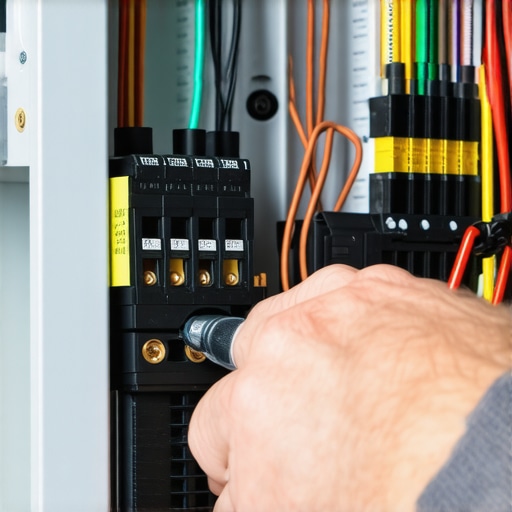
Get the Right Wire or Expect a Meltdown
I’ve seen DIYers try to save $50 by using undersized wire or opting for aluminum when they should have stuck with copper. For a high-load, continuous draw like an EV, heat is the enemy. You must understand the difference between copper and aluminum for ev wiring because the way they expand and contract under load is completely different. If you are aiming for a 48-amp charge rate, you’ll likely need a 60-amp circuit. Don’t guess the thickness—check the exact gauge of wire you need for a 60-amp circuit to ensure you aren’t creating a bottleneck that leads to a fire. Even the insulation type matters; THHN wire in a conduit handles heat much differently than Romex buried in a wall.
The Secret is in the Torque Wrench
Most people think ‘tight is tight,’ but in the world of high-voltage charging, that’s a dangerous lie. If a terminal is too loose, it creates resistance, which creates heat. If it’s too tight, you can crush the wire and create a hot spot. I learned this when I found a scorched terminal during a routine check on my own setup years ago. Now, I never close a panel without verifying the specific torque settings that prevent panel fires during high load charging. The manufacturer of the breaker will have a specific inch-pound rating listed right on the side. Use a calibrated torque wrench, not a standard screwdriver, to hit those numbers exactly.
Is a Full Panel Swap Always Necessary?
Sometimes you don’t need to rip out the whole box. If your main panel is cramped but the service can handle the load, look into how to upgrade your garage sub-panel for dual charging stations. It’s often cheaper and easier than a full-service upgrade. However, if you run into problems during the install, ev charger troubleshooting expert tips for common issues can help you identify if the problem is the charger, the car, or the wiring before you spend another dime on parts you might not need. To stay on the right side of the law, make sure how to verify code compliance for your ev charger installation is your primary checklist.
While checking off the boxes on a DIY list might feel productive, the nuances of electrical code are where the real safety lies. Most people look at code as a hurdle to jump over, but it’s actually a shield against disaster. In my years of working with these systems, I’ve realized that what people think is ‘fine’ usually ends up being a fire hazard waiting to happen. Let’s dig deeper into the subtle errors that even the most meticulous homeowners miss. Have you ever fallen into this trap? Let me know in the comments.
Hardwiring beats the plug-in convenience every time
Everyone tells you that a plug-in NEMA 14-50 outlet is the way to go because it’s versatile and easy to swap if the charger fails. I completely disagree. In my experience, for a 48-amp continuous draw, that outlet is your weakest link. Most residential-grade 14-50 receptacles are designed for ovens that cycle on and off, not for the grueling thermal stress of an EV. I’ve seen cheap $15 outlets melt into a puddle because they couldn’t handle the heat expansion of the wires. That’s why the benefit of a hardwired charger over a nema plug isn’t just about speed—it’s about eliminating a massive failure point in your garage. Hardwiring creates a direct, secure connection that doesn’t rely on the tension of a metal blade inside a plastic socket. #IMAGE_PLACE_HOLDER_C#
Why do two safety features create one giant headache?
Here is the ‘oops’ factor that drives people crazy: the phantom trip. The NEC 2020 and 2023 codes often require a GFCI breaker for any EV outlet. However, almost every Level 2 charger has its own internal GFCI protection. When you ‘double-stack’ these safety measures, they can actually interfere with each other, leading to your car not being charged in the morning. This is a classic case of troubleshooting ev chargers common compliance pitfalls and fixes that leaves homeowners scratching their heads. You think the breaker is bad, but it’s actually just two computers fighting over the same current leak. If you find yourself in this loop, you need ev charger troubleshooting expert tips for common issues to determine if your hardware is truly compatible with your local jurisdiction’s code requirements.
The permit trap that voids your home insurance
A common myth is that if you aren’t changing the main panel, you don’t need a permit. This is a dangerous gamble. According to data from the Electrical Safety Foundation International (ESFI), nearly half of all home electrical fires involve electrical distribution equipment being pushed beyond its limits. If a fire starts and the fire marshal finds an unpermitted 50-amp circuit for your Tesla, your insurance company might deny the claim entirely. To avoid this, you should always follow code compliance essentials for ev charger installations in 2025 which mandates professional oversight. If your system is already maxed out, you should look into panel upgrade strategies to meet ev charging code requirements in 2025 before adding any more load. Don’t risk your home to save a few hundred bucks on a permit fee. If you’re unsure where to start, feel free to contact us for professional guidance on making your setup safe and legal.
Software is the one thing most homeowners ignore until the morning they find their car has zero range. I’ve learned that a ‘dumb’ charger might be simpler, but a smart charger requires a bit of digital hygiene. If your charger has Wi-Fi, you’re essentially maintaining a small computer on the side of your house. I’ve seen dozens of cases where troubleshooting ev charger connectivity problems boils down to a router update that blocked the charger’s IP address. You should make it a habit to learn how to update your charger software without calling a technician to ensure your load management features and safety protocols stay current. It’s not just about flashy apps; it’s about the manufacturer pushing patches that prevent communication errors with your car’s BMS.
How do I keep my EV station running smoothly over the long haul?
Maintenance isn’t a ‘set it and forget it’ situation. Every six months, I pull my charging handle out and check the pins. Dust, spider webs, and oxidation are silent killers for high-voltage connections. If you see even a hint of carbon buildup or ‘arcing’ marks, you need to know how to clean the pins on your charging handle safely before that resistance generates enough heat to melt your car’s port. Furthermore, seasonal changes can wreak havoc on outdoor units. I always recommend 3 maintenance tasks that keep your outdoor charger running through winter, specifically checking the seal on your conduit for moisture intrusion. I personally use a thermal imaging camera—even a cheap mobile attachment—to scan my panel while the car is charging. If I see a breaker glowing brighter than the rest, I know how to spot a dying breaker before it shuts down your charging session and can replace it on my own terms, not at 10 PM on a Sunday.
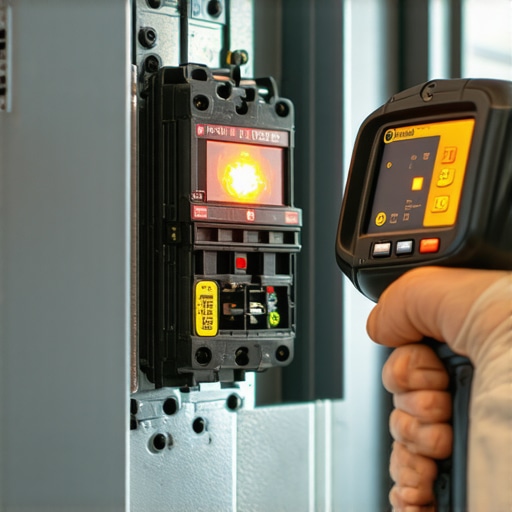
As we look toward the next five years, the trend is shifting from just ‘drawing power’ to ‘managing’ it. We are entering the era of bidirectional charging, or V2H (Vehicle-to-Home). According to the IEEE 1547 standard for interconnecting distributed energy resources, your car will eventually act as a backup battery for your entire house. This means your current panel setup needs to be robust. If you’re currently at capacity, you should look into how to load balance your home electrical system without a full panel swap. Using smart energy managers can shift your dryer load or AC load to prioritize the car, or vice versa, without tripping the main. This kind of ‘smart scaling’ is how we avoid $5,000 service upgrades while still embracing new tech. I highly recommend you grab a thermal leak detector or an infrared thermometer this weekend and check your breaker temperatures while charging; it’s the single most effective way to catch a loose wire before it becomes a fire.
Hard Lessons from My Own Smoldering Busbar
Looking back at my early days of EV ownership, I realized that I treated the electrical panel like a simple LEGO set rather than a high-precision machine. The most profound shift in my mindset happened when I saw a standard breaker fail—not because it was broken, but because it was never meant for the marathon of a 10-hour charging session. Continuous load management is the invisible wall many DIYers hit. Here are the lightbulb moments that changed how I approach every installation:
- Heat is a lagging indicator: By the time you smell plastic, the damage to your busbar is often irreversible. I learned to spot a dying breaker before it shuts down your charging session by checking for discolorations early.
- The Torque Wrench is Non-Negotiable: I used to think ‘hand-tight’ was fine. It’s not. Using the specific torque settings that prevent panel fires during high load charging is the only way to sleep soundly at night.
- Code is your best friend: I stopped viewing inspectors as obstacles. When you learn ensuring code compliance when installing EV chargers, you’re actually buying an insurance policy for your home’s safety.
The Diagnostic Tools I Keep in My Garage
To keep my system in top shape, I rely on a few specific resources that go beyond the basic screwdriver. First, I highly recommend a thermal imaging camera (like the FLIR One). It turns heat into a visual map, showing you exactly why your breaker gets hot to the touch during charging before it trips. Second, I always keep a copy of the NEC (National Electrical Code) Handbook nearby; it explains the ‘why’ behind the rules, which is vital for how to verify code compliance for your ev charger installation. Finally, if you ever feel overwhelmed, the expertise found in ev charger troubleshooting expert tips for common issues is a literal lifesaver when those phantom GFCI trips start happening.
Build Your Electric Future on a Solid Foundation
Transitioning to an electric vehicle is one of the most exciting upgrades you can make to your home and lifestyle. But that excitement shouldn’t be overshadowed by the fear of a fire or a failed inspection. By prioritizing a proper panel upgrade and following the latest safety standards, you aren’t just charging a car; you’re future-proofing your largest investment. Take it slow, do the math, and never be afraid to contact us if you need a professional set of eyes on your setup. Your peace of mind is worth every penny of that specialized breaker.
Have you run into any unexpected issues with your circuit breaker tripping or getting unusually hot? Let me know in the comments below—I’d love to help you troubleshoot!