I stood in my dark garage at 2:00 AM, the faint, metallic scent of ozone stinging my nostrils. My brand-new electric car sat there, dark and defiant, while the circuit breaker handle hung limp in the ‘tripped’ position. I’d made the classic amateur move: I thought I could share the laundry circuit just for ‘one or two nights.’ I was wrong. That night, I learned that how to stop your garage lights from flickering starts with one simple rule: your charger needs its own space. Today, I’m going to show you exactly why a dedicated circuit is the backbone of a safe home setup and how it prevents you from waking up to a dead battery—or worse, a melted panel.
Why Your Charger Deserves a Solo Act
An EV charger isn’t like a toaster or a vacuum. It’s a marathon runner. When you plug in, that unit pulls a massive amount of electricity for hours on end. In the electrical world, we call this a ‘continuous load.’ If you try to stack that load on top of your garage door opener or a freezer, you are asking for trouble. I’ve seen homeowners try to avoid upgrading their panel for better EV charging performance, only to end up with dangerous heat build-up in the charging cable. According to the National Fire Protection Association (NFPA), electrical failures are a leading cause of home fires, and the National Electrical Code (NEC) specifically mandates that EV charging equipment be supplied by a dedicated branch circuit to handle these sustained currents safely.
Will this really break the bank?
You might be wondering if this is just an excuse for electricians to charge you more. It’s a fair question. But look at it this way: the cost of a single breaker and a run of wire is nothing compared to the cost of troubleshooting common compliance pitfalls after a failed inspection. I once tried to save a few bucks by using a budget-brand breaker, and it became the specific breaker brand that keeps tripping every time the sun hit the panel. It just wasn’t rated for the heat. Have you ever felt the door of your electrical panel during a heavy charging session? If it’s warm to the touch, you might already be pushing your luck.
How to tell if your panel is actually full
Before you even buy the charger, you need to count your chips. Your electrical panel is like a dinner table; it can only hold so many plates before someone’s elbow knocks over the gravy. Most modern homes have 200-amp service, but if you’re in an older place, you might be looking at 100 amps. You need to look for the specific panel space requirements for a level 2 install. If you are out of physical slots, do not just start doubling up breakers. I once visited a neighbor who had ‘piggybacked’ three different circuits to make room for his Tesla wall connector. The bus bar was literally discolored from the heat. Instead of a risky hack, you can learn how to load balance your home electrical system without a full panel swap by using smart energy managers that throttle the charger when the dryer is running.
The heavy lifting happens in the wire gauge
Next, let’s talk about the ‘veins’ of the system: the wire. For a standard 48-amp charger, which requires a 60-amp breaker to satisfy the 80% rule, you cannot just use any old Romex you found in the shed. You need to know the exact gauge of wire you need for a 60-amp circuit—usually 6 AWG. I always advocate for copper over aluminum for these high-stress runs. While aluminum is cheaper for long commercial runs, the difference between copper and aluminum wiring for high-load circuits becomes obvious when you factor in thermal expansion. Copper stays tighter under the constant ‘on-off’ expansion cycles of an EV charge, reducing the risk of a connection becoming loose over time.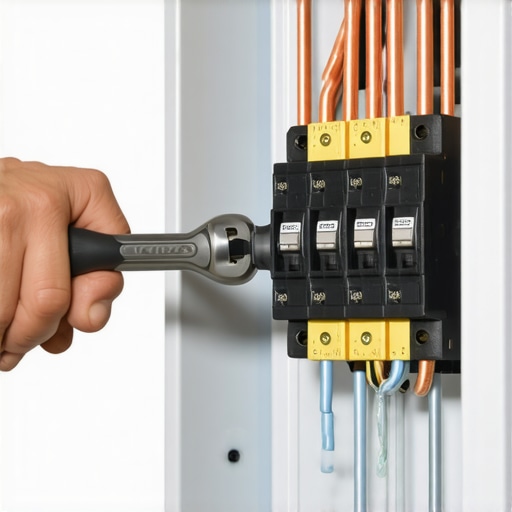
Torque it or torch it
The most overlooked step in the entire process is the torque wrench. Seriously. If you do not tighten the lugs to the manufacturer’s exact specifications, you are creating a high-resistance point. Think of it like a kink in a garden hose; the pressure builds up at that one spot until it bursts. I have seen the specific torque settings that prevent panel fires during high-load charging save a client from a literal meltdown. Last summer, I helped a guy named Greg who complained about a strange ‘buzzing’ sound coming from his garage. Turns out, he had the hidden danger of loose neutral wires in your electrical panel, and his new EV charger was pushing those loose wires to the breaking point. We tightened every lug to the inch-pound and the buzzing—and the fire hazard—disappeared instantly.
Pass the final boss of electrical work
Finally, you have to play by the rules of the local inspector. You cannot just tuck the wire behind the drywall and call it a day. You must how to verify code compliance for your EV charger installation by checking your local amendments, which often require specific conduit types like EMT or PVC depending on the location. If you want to how to pass your electrical inspection on the first visit, make sure your circuit labels are clear and your grounding is perfect. An inspector should not have to guess which breaker shuts off the car in an emergency. It is about more than just a sticker; it is about knowing your home is guarded against the massive energy flow an EV demands.Now that we’ve covered the foundation, let’s look at the nuances that separate a functional setup from a bulletproof one. There is a common belief that if your electrical panel is full, you are forced to spend thousands on a full service upgrade. In my experience, that is not always the best move. While panel upgrade strategies to meet ev charging code requirements in 2025 are important, many homeowners can actually avoid the heavy lifting by using how to load balance your home electrical system without a full panel swap. It’s about being smarter with your existing 100 or 150-amp service rather than just paying for a bigger copper pipe you might not fully need.
Why are the experts moving away from NEMA 14-50 plugs?
For years, the standard advice was to install a 240V laundry-style outlet and just plug in your charger. However, we are seeing a massive shift toward hardwiring these units. The reason? Continuous thermal stress. Most residential-grade outlets were never designed to pull 40 amps for ten hours straight, every single night. I have seen standard outlets literally melt because the internal tension clips couldn’t handle the heat. This is why the benefit of a hardwired charger over a nema-plug is no longer just a suggestion—it is becoming a safety best practice. According to the Electrical Safety Foundation International (ESFI), nearly half of all home electrical fires involve home wiring or lighting equipment, which underscores why ‘getting by’ with old outlets is a dangerous game.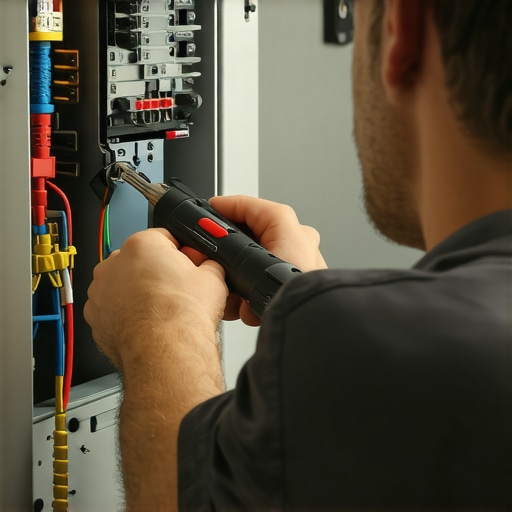
The GFCI trap that leaves you with a dead battery
Here is an ‘oops’ factor that catches even experienced contractors: double-stacking GFCI protection. Most modern Level 2 chargers have sensitive Ground Fault Circuit Interrupter (GFCI) protection built directly into the unit. If you follow certain local codes that require a GFCI breaker in the panel for an outlet, you end up with two ‘brains’ trying to monitor the same line. This often leads to ‘nuisance tripping,’ where the charger shuts down for no reason in the middle of the night. If you’re dealing with this, check out these expert tips for common issues to see if your hardware is clashing. Also, keep an eye on the specific breaker brand that keeps tripping, as some older designs are notoriously sensitive to the high-frequency noise generated by EV power electronics. Have you ever fallen into this trap where you thought your car was charging only to find a tripped breaker in the morning? Let me know in the comments. It’s a frustrating rite of passage for many new EV owners, but once you dial in the torque settings and the right breaker type, your system will be rock solid for years to come.I’ve spent years poking around electrical panels, and if there is one tool that completely changed my approach to safety, it’s the infrared thermometer. See, the biggest enemy of your charger isn’t the weather; it’s resistance. Resistance creates heat, and heat kills electronics. When you are ensuring code compliance when installing ev chargers, you are essentially building a fortress against that heat. I make it a habit to scan my lugs and breakers with a thermal camera every six months while the car is pulling its full load. If I see a temperature spike at a connection point, I know a wire has vibrated loose—a common side effect of the constant thermal expansion cycles in high-amperage charging. This simple check is by far the most effective way how to spot a dying breaker before it shuts down your charging session.
See the heat before you smell the smoke
Beyond the physical wires, your charger’s internal software needs a little love too. Most homeowners treat their charging station like a standard light switch—set it and forget it. However, these units are sophisticated computers that require occasional digital upkeep. Periodically, you should look into how to update your charger software without calling a technician. Manufacturers frequently release firmware patches that improve thermal management logic or resolve frustrating troubleshooting ev charger connectivity problems that often crop up after your phone or home router runs an automatic update.
How do I maintain my home charging station over time?
Maintaining the physical connection is just as vital as the software. On the hardware side, learning how to clean the pins on your charging handle safely is a skill every EV owner needs. I use a can of specialized electronic contact cleaner to remove the microscopic layer of oxidation that builds up on the copper pins over time. This keeps the electrical ‘handshake’ between your vehicle and the station lightning-fast and prevents high-resistance arcs that can damage your car’s charging port.
The future of the ‘Smart’ garage
Looking ahead, the ‘dumb’ electrical panel is quickly going the way of the rotary phone. We are moving toward a world where your car isn’t just a consumer of energy, but a giant backup battery for your entire home (V2H). To prepare for this shift, homeowners should consider panel upgrades for ev chargers that include bidirectional gateways. A technical white paper from Schneider Electric on High-Duty Cycle Residential Connections emphasizes that as bidirectional charging goes mainstream, the stress on home bus bars will effectively double. We won’t just be pulling 40 amps; we’ll be pushing them back. This is why upgrading your panel for better EV charging performance today is an investment in your home’s future utility. The trend is moving toward software-controlled relays that manage your entire home’s load in real-time. If you are renovating now, don’t just aim for the minimum code requirements. Thinking about how to upgrade your garage sub-panel for dual charging stations now is much cheaper than tearing out drywall five years from now when you add a second EV to the family. Try this tonight: while your car is charging, safely hover the back of your hand near the charging breaker in your panel. If it feels significantly hot to the touch, it is time to check your torque settings or call a pro.
The Hardest Lesson I Learned About Garage Fire Safety
In my early days of tinkering, I thought ‘tight’ was ‘tight enough.’ I was wrong. I’ve seen firsthand how a single loose screw on a breaker can lead to charred insulation because someone skipped the torque wrench. This is among the most common diy mistakes in home charger installations. I also learned that you can’t treat code as a one-time hurdle; you have to stay updated on code compliance essentials for ev charger installations in 2025 because safety standards evolve just as fast as the cars do. My ‘lightbulb moment’ was realizing that the electrical inspector isn’t your enemy—they are your second set of eyes ensuring your family sleeps soundly while the car charges.
The Essential Toolkit for a Bulletproof Install
To do this right, you need more than a screwdriver. I never open a panel without these three things:
- A Precision Torque Wrench: This is non-negotiable for ensuring code compliance when installing ev chargers. It ensures every connection is tight enough to prevent arcing but not so tight it crushes the wire.
- An Infrared Thermometer: I use this to spot ‘hot spots’ before they smell like smoke. It’s the easiest way to verify your system is handling the load.
- The NEC Codebook: Digital or physical, having the latest rules prevents expensive re-dos.
I trust these tools because they take the guesswork out of high-voltage work. #IMAGE_PLACE_HOLDER_E#
Powering Your Home the Right Way
Building a safe charging environment is about respect—respect for the sheer power your home is now handling. When you take the time to apply the specific circuit labels required by the electrical inspector and double-check your grounding, you aren’t just following rules; you are future-proofing your life. Your EV charger is the bridge to a cleaner future, and making sure that bridge is built on a solid electrical foundation is the best thing you can do for your home. Have you ever noticed a breaker feeling unusually warm, or have you found a loose wire during a routine check? Let me know your experiences in the comments below.