I remember the first night I plugged in my new EV. I walked into the garage, feeling like a genius for saving the planet, clicked the handle into the port, and—BAM. My overhead LED shop lights started a frantic, ghostly dance. It felt like I’d accidentally walked into a low-budget rave I wasn’t invited to. I stood there in the flickering gloom, wondering if I was about to burn the house down or if my car was trying to communicate in Morse code. It’s a jarring experience that makes you question your entire home’s electrical integrity.
The Real Reason Your Garage Turns Into a Disco Every Night
The truth is, EV chargers are thirsty. When that Level 2 charger kicks on, it pulls a massive amount of current almost instantly. If your home’s electrical system isn’t braced for the impact, you get a significant voltage drop. Think of it like someone flushing every toilet in the house while you’re in the shower; the pressure—or in this case, the voltage—plummets. Early on, I made the mistake of thinking it was just cheap light bulbs. I swapped them all out, but the flicker remained. It turns out, I actually had a loose neutral wire in the panel that was making everything worse. According to the Electrical Safety Foundation International (ESFI), nearly 51,000 home fires are caused by electrical issues each year, and while flickering lights are often just an annoyance, they can sometimes signal these deeper, more dangerous connections.
Is this flicker actually going to damage my car?
You’re probably worried that the unstable power is frying your car’s expensive onboard computer. While the car is usually fine because it has its own voltage regulators, your lights and other appliances aren’t so lucky. We’re going to stop the strobe today by looking at everything from balancing your household loads to checking for the common wire sizing errors that plague DIY installs. Have you ever felt that mini-panic when the lights dim the second you hear the charger clack into action?
Why Your Current Wiring Might Be Gasping for Air
Most garages weren’t built with 40 or 50 amps of continuous draw in mind. They were built for a garage door opener and a couple of 60-watt bulbs. When you introduce a high-load device, you’re essentially asking a garden hose to do the job of a fire hydrant. If you’re seeing a massive dip, you might need to look into upgrading your panel for better performance. I’ve seen folks try to ignore it, but eventually, you start hearing that dreaded hum from the main breaker, and that’s when the annoyance becomes a call the fire department situation. We need to ensure your setup is actually following modern code compliance so you can sleep soundly while your battery tops off.
Stop the Strobing with a Panel Audit
Your first move is to get eyes on the main panel while the car is actually drawing power. Think of your electrical panel as a busy airport control tower; if too many planes try to land on the same runway at once, things get chaotic. Often, the flicker is a symptom of an overloaded bus bar or a poor connection at the breaker itself. I remember helping a neighbor who thought his house was haunted because his kitchen pendants dimmed every time his Tesla kicked in. We opened his panel and found a breaker that was so hot you could have fried an egg on it. If you suspect your hardware is struggling, you should look into upgrading your panel for better performance. Sometimes the fix isn’t a total replacement, but simply knowing how to load balance your home electrical system without a full panel swap. By moving high-draw appliances to different phases in the panel, you can often stabilize the voltage enough to kill the flicker.
Why Wire Gauge is Non-Negotiable
If your panel is healthy but the lights are still dancing, the culprit is likely the ‘straw’ you’re trying to pull all that power through. Voltage drop happens when the wire is either too long or too thin for the current it’s carrying. It’s exactly like trying to spray a fire with a garden hose; the pressure at the nozzle is pathetic because the hose is too restrictive. Many DIYers fall into the common wire sizing error that causes voltage drops during charging by using 8-gauge wire for a 50-amp circuit over a long distance. You also need to be hyper-aware of the difference between copper and aluminum wiring for high load circuits. Aluminum expands and contracts more than copper, which can loosen connections over time and create the very resistance that makes your lights blink.
Balance Your Loads Before the Lights Dim
You have to treat your home’s electrical capacity like a tightrope walker. If you pile all the weight—the dryer, the AC, and the EV charger—on one side, the whole system wobbles. This ‘wobble’ is what you see in your LED bulbs. Most people don’t realize that their home’s power is split into two 120-volt legs. If your charger and your most-used lights are on the same leg, the flicker will be much more pronounced. Learning how to balance your household loads is the secret to a quiet, stable garage. In my own home, I had to move my garage lighting circuit to the opposite phase of my charger. The result was instant: no more ghost-light raves at 2:00 AM.
Don’t Forget the Digital Tweaks
Before you start ripping wires out of the wall, check your charger’s app. Modern Level 2 stations often allow you to throttle the amperage. If your lights flicker at 40 amps, try dropping the draw to 32 amps. You might lose an hour of charging speed overnight, but you’ll save your equipment from unnecessary stress. If the app is glitchy, you may need to know how to update your charger software without calling a technician. Often, manufacturers release firmware updates specifically designed to manage ‘inrush current,’ which is the massive spike of power that happens the second the charging session starts.Most homeowners assume that if their lights are flickering, the only ‘real’ fix is to shell out thousands for a massive service upgrade. This is where the ‘pro’ advice deviates from the standard sales pitch. In many cases, you can actually maximize your existing setup. I’ve helped countless people figure out how to use a 100-amp panel for ev charging without a costly upgrade by utilizing energy management systems (EMS) or smart switches. These devices ‘pause’ the car if the oven kicks on, which keeps your panel within safe limits without needing a crane to drop in a new transformer. Everyone says you need 200 amps for a modern home, but with smart load management, 100 amps can be more than enough for a daily commuter.
Why You Might Not Actually Need a New Main Panel
One massive ‘trap’ I see is the assumption that ‘up to code’ means ‘best performance.’ You can pass a city inspection with a NEMA 14-50 outlet, but in high-demand scenarios, there is a massive benefit of a hardwired charger over a nema plug. Plugs are a point of failure; they generate heat at the contact points. If you’re charging every single night at 48 amps, that plug is going to fatigue long before a hardwired connection does. I’ve seen cheap outlets literally char and melt behind the drywall because they weren’t ‘industrial grade.’ It’s vital to know how to spot a dangerous heat build up in your ev charging cable or at the wall before a smell of ozone fills your garage.
Does the brand of your breaker actually matter for long-term charging?
Absolutely. Some people think all breakers are created equal, but I’ve found that the specific breaker brand that keeps tripping on level 2 chargers is often a result of ‘thermal-magnetic’ sensitivity levels that don’t play well with the sustained high-heat profile of an EV. The IEEE (Institute of Electrical and Electronics Engineers) notes that continuous loads—defined as anything running for three hours or more—must be de-rated to 80% of the circuit’s capacity. If your breaker brand has a tight tolerance for heat, it’ll trip even if you aren’t technically ‘overloaded.’ You might think the breaker is faulty, but it’s actually doing its job—perhaps too well for the ambient temperature of your garage.
The Tiny Labeling Errors That Drive Inspectors Crazy
Then there’s the red tape. You can have the most beautiful wiring job in the world, but you’ll still get a ‘fail’ sticker if you ignore the conduit depth rule that fails more garage inspections than anything else or if you forget the specific circuit labels required by the electrical inspector. It’s these tiny, pedantic details that separate the DIY ‘weekend warrior’ from the master electrician. Even if you’re upgrading your panel for better ev charging performance, skipping the local permit process can haunt you when you try to sell your home later. 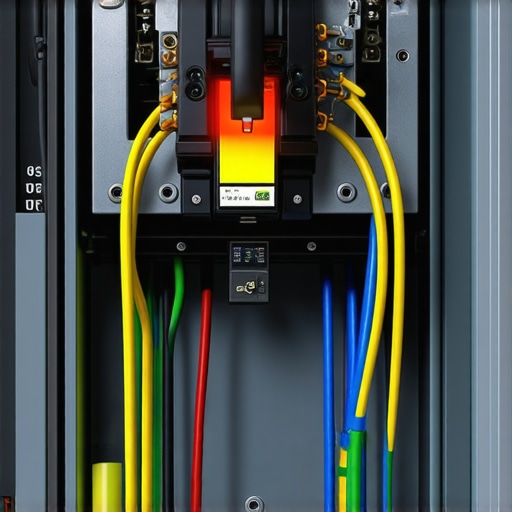 Have you ever fallen into this trap? Let me know in the comments. We’ve all been there—thinking we’ve solved the puzzle only to find one more hidden requirement. If you’re still scratching your head, check out my ev charger troubleshooting expert tips for common issues to see if your problem is simpler than it looks.
Once you’ve successfully navigated the maze of flickering lights and code requirements, you might think you can just set it and forget it. I used to think the same until a neighbor’s charger port actually melted because of a tiny piece of grit and a lack of maintenance. Keeping your setup running smoothly isn’t just about safety; it’s about protecting the massive investment you’ve made in your vehicle. I’ve found that a few simple habits can save you from an expensive middle-of-the-night emergency call.
Stop the Heat Before It Stops Your Commute
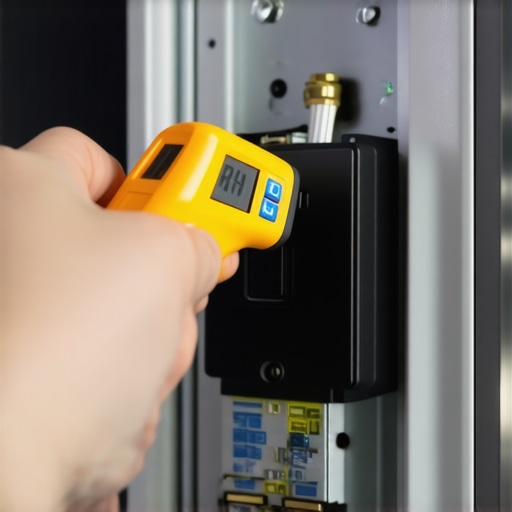
The biggest enemy of your electrical system is heat. Because an EV charger is a continuous load, any tiny flaw in your wiring gets magnified over several hours of charging. I personally keep an inexpensive infrared thermometer in my garage cabinet. Once a month, while the car has been charging for at least an hour, I point it at the breaker and the charging handle. If I see temperatures spiking significantly above the ambient room temp, I know I need to check for how to spot a dangerous heat build up in your ev charging cable. According to the specialized electrical safety guides from Fluke Corporation, thermal imaging and infrared checks are the most effective ways to detect high-resistance connections before they lead to catastrophic equipment failure.
How do I keep my charger running smoothly for years?
Maintenance is surprisingly low-tech. First, you need to ensure the physical connection remains clean. Dust, pet hair, and road salt can get into the pins of your handle and cause arcing. I recommend learning how to clean the pins on your charging handle safely using compressed air or specific electrical contact cleaners—never water or a damp rag. Second, listen to your equipment. A buzzing breaker is a dying breaker. If you catch it early, you can learn how to spot a dying breaker before it shuts down your charging session entirely. I also make it a point to check my app for firmware notifications. If your car and charger stop talking to each other, you’ll spend your morning frustrated, so stay ahead by troubleshooting ev charger connectivity problems before they leave you with an empty battery.
Prepare for the Next Generation of Power
The landscape of home energy is shifting faster than most people realize. We are moving toward a world where your car doesn’t just take power from your house—it gives it back. Bidirectional charging (V2G/V2H) is the next big thing, and it will put even more stress on your main panel. If you are already pushing your limits, you should look into panel upgrade strategies to meet ev charging code requirements in 2025. Getting the foundation right now means you won’t be ripping your walls open again in three years when you decide to add a second car or a backup battery system. Try this: Next time you’ve been charging for two hours, check the temperature of your charging cable near the plug. If it feels uncomfortably hot to the touch, don’t wait—use one of the advanced thermal tips we discussed to diagnose the resistance before it damages your port.
Lessons from the Trenches of the EV-Light Dance
Over the years, I have realized that home electrical systems are much more temperamental than we give them credit for. My biggest ‘aha!’ moment came when I stopped looking at the charger as the enemy and started viewing it as a stress test for the house. I learned that you should never trust a connection just because it looks tight; a loose neutral can hide in plain sight and cause ghost-like flickers that drive you mad. Another major takeaway is that hardwiring is almost always superior to using a plug, as it removes several points of resistance. Most importantly, I discovered that avoiding the most common DIY mistakes in home charger installations is less about skill and more about having the patience to check every terminal twice. You would be surprised how many ‘flicker’ issues are solved by simply torquing a lug to the manufacturer’s exact specifications.
Tools and Guides I Actually Use
If you want to move beyond guessing and start diagnosing like a pro, you need the right resources. I personally rely on an inexpensive infrared thermometer to check for heat signatures at the panel; it is the fastest way to find a high-resistance connection. For anyone doubting their current service capacity, I highly recommend using a guide on how to calculate if your 100-amp service can handle a daily commute before you buy any new hardware. I also keep a digital copy of my local municipal code handy, because knowing how to verify code compliance for your ev charger installation is the only way to ensure your insurance company stays happy. Finally, if the flicker leads to a bigger conversation about hardware, check out these panel upgrades for ev chargers to see what modern equipment can actually handle.
Get Ready for a Greener Driveway
Stopping that annoying light flicker is about more than just aesthetics; it is about making sure your home is a safe, efficient hub for the future of transportation. When your lights stop dancing, you can finally appreciate the quiet convenience of waking up to a full battery every single morning. It takes a bit of investigation and perhaps a few minor tweaks to your panel, but the peace of mind is worth every second of effort. You have the tools and the knowledge now to ensure your EV charger is a seamless addition to your home. Have you noticed any strange electrical quirks like dimming or humming since you started charging? Let me know your experience in the comments below!