I was standing in my garage at 10:30 PM, the smell of fresh concrete still lingering, holding an electrician’s quote for $1,200 just to get my new Level 2 charger ‘permanently’ mounted. My stomach did a little flip. I had already spent a small fortune on the car itself, and now the simple task of ensuring code compliance when installing ev chargers felt like it was going to bleed my savings dry. My neighbor, Bill, told me I was being cheap, arguing that a $60,000 car deserved a $1,200 wire job. But that was the moment I stopped listening to the hardware purists and started looking at the NEMA 14-50 outlet I already had. By opting for a high-quality plug-in charger instead of a permanent hardwired connection, I pocketed five hundred dollars that stayed exactly where it belonged: in my pocket. Today, I am going to show you why that ‘permanent’ look might just be a money pit and how we found a smarter path.
Skip the Expensive Hardwiring and Keep Your Cash
Early on, I made the classic rookie error of thinking ‘more permanent’ always meant ‘better quality.’ I actually wasted sixty bucks on a heavy-duty mounting bracket I didn’t need because I assumed the charger had to be bolted into the wall like a bank vault. In reality, the the benefit of a hardwired charger over a nema-plug is mostly about squeezing out a few extra amps that most of us will never actually use. While a hardwired unit can technically pull 48 or 50 amps, a plug-in setup on a 50-amp circuit safely delivers 40 amps. According to the U.S. Department of Energy, the average driver covers fewer than 40 miles a day, meaning even a ‘slower’ plug-in unit can fully replenish that range in about two hours. I wanted to make sure I knew how to pass your electrical inspection on the first visit without the headache of complex permanent wiring, and the plug-in route was the path of least resistance. Have you ever felt like you were being upsold on an electrical job you didn’t quite understand? Drop a comment below; I would love to hear if your installation quote gave you a bit of sticker shock too.
Is a plug-in really as safe as a hardwired connection?
A lot of folks worry that a plug is just one more failure point that could melt or get loose over time. While it is true that the most common diy mistakes in home charger installations often involve using cheap, residential-grade outlets meant for a clothes dryer, using an industrial-grade outlet makes the system incredibly robust. By sticking with the outlet, I avoided the labor-intensive process of running new conduit through my finished drywall. Plus, taking the time for how to calculate if your 100 amp service can handle a daily commute showed me I had plenty of capacity without a full, multi-thousand-dollar panel swap. Let’s look at why that five-hundred-dollar difference exists and why you might be overpaying for power you will never actually need.
Don’t Guess Your Panel Capacity
I remember the first time I pulled the dead front off my breaker box; it looked like a copper-colored spaghetti explosion. I had a 100-amp service, and I was terrified that plugging in a Tesla would be the straw that broke the camel’s back. Instead of guessing, I spent a Saturday morning learning how to calculate if your 100 amp service can handle a daily commute. You need to sum up your fixed loads—like your water heater, range, and AC—to see what is left for the car. If you find you are tight on space, you can often learn how to load balance your home electrical system without a full panel swap. I ended up scheduling my charging for 2 AM, which is the simplest form of manual load management, ensuring the AC was not fighting the car for every available electron.
Stop the Heat Before It Melts Your Outlet
When I was running the wire, I almost bought aluminum because it was half the price. But then I looked at the difference between copper and aluminum wiring for high load circuits and realized the risks of thermal expansion. Aluminum is fine for service entrances, but for a 40-amp continuous draw in my garage, I wanted the stability of copper. One night, about two weeks in, I smelled something faintly like hot plastic. It turns out I had not torqued the breaker lugs quite enough. High-amperage draws generate significant heat, and a loose wire is a fire waiting to happen. This is why you must know how to spot a dangerous heat build-up in your ev-charging-cable and at the outlet itself. If you encounter issues, don’t ignore them; check out ev-charger-troubleshooting-expert-tips-for-common-issues to see if it is a simple fix or a serious safety hazard.
Follow the Code Rules That Actually Matter
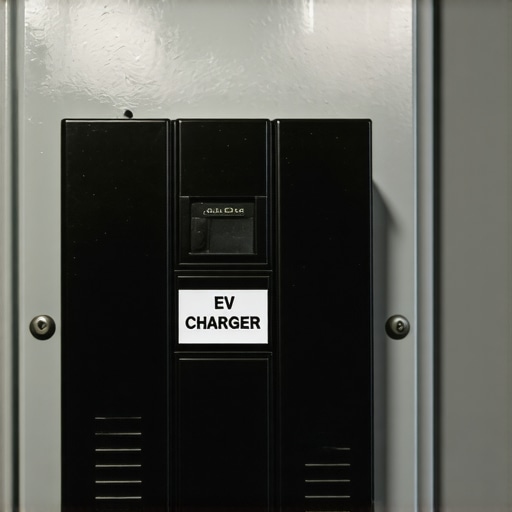
I once saw a neighbor fail an inspection because his conduit was not strapped tightly enough to the masonry. I learned the conduit depth rule that fails more garage inspections than anything else applies even when you are just running along the surface of a wall. Mechanical protection is not optional when you are dealing with this much power. Furthermore, knowing the specific circuit labels required by the electrical inspector saves you from a return visit and another fee. I used a simple P-touch labeler for the breaker and the outlet cover. It seems like a small detail, but it shows the inspector you didn’t cut corners. If you are still feeling unsure about the technical side, you can always look into upgrading your panel for better ev charging performance to give yourself a larger safety margin.
I see it on every forum and in every DIY group: the immediate advice to anyone with a 100-amp panel is ‘you need a 200-amp service upgrade.’ While electricians love that $3,000 to $5,000 paycheck, I am going to challenge that common belief. In my experience, most homes don’t actually need more total power; they just need better management of the power they already have. By looking into how to use a 100 amp panel for ev charging without a costly upgrade, I realized that modern load-shedding devices can pause your car’s charging for the twenty minutes your water heater is running, saving you thousands in unnecessary infrastructure costs.
Why is my brand-new breaker tripping halfway through the night?
It is incredibly frustrating to wake up to a half-charged car and a tripped breaker, especially when you know you weren’t running the dryer or the oven. This is often where the ‘oops’ factor kicks in. Many homeowners—and even some pros—forget that an EV is a ‘continuous load.’ According to the National Fire Protection Association (NFPA 70), a continuous load is one where the maximum current is expected to continue for three hours or more. This requires the circuit to be oversized by 125%. If you put a 50-amp charger on a 50-amp breaker, it will trip eventually due to thermal expansion. You also have to watch out for the specific breaker brand that keeps tripping on level 2 chargers, as some older GFCI breakers are hypersensitive to the self-test signals sent by the car. Have you ever fallen into the trap of buying a breaker that was technically the right size but the wrong ‘type’ for your car? Let me know in the comments; it happened to me twice before I figured out the nuance.
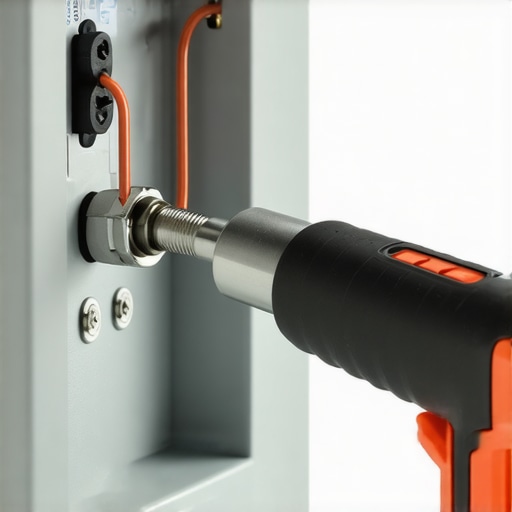
Another sophisticated mistake involves the neutral bar. When we talk about troubleshooting ev chargers common compliance pitfalls and fixes, we usually focus on the hot wires. But the hidden danger of loose neutral wires in your electrical panel is what actually burns houses down. Because an EV pulls so much current for so long, any slight resistance at the neutral connection generates massive heat. I’ve seen lugs that were ‘hand-tight’ literally melt into the plastic housing over a six-month period. If you are doing this yourself, use a torque wrench—not a screwdriver—to hit the exact inch-pounds specified on the panel’s door label. If you are already seeing flickering lights when the car is plugged in, stop immediately and check out ev charger troubleshooting expert tips for common issues before you end up with a charred bus bar. Staying safe is about more than just how to verify code compliance for your ev charger installation; it is about respecting the physics of high-amperage heat.
For those looking at future-proofing, don’t just throw money at a bigger panel. Look into panel upgrade strategies to meet ev charging code requirements in 2025 which favor smart panels and energy management systems over raw copper increases. Sometimes, upgrading your panel for better ev charging performance means adding a smart sub-panel rather than ripping out your whole service entrance. It’s about being surgical with your upgrades, not just expensive.
Track Your Temps with This $20 Gadget
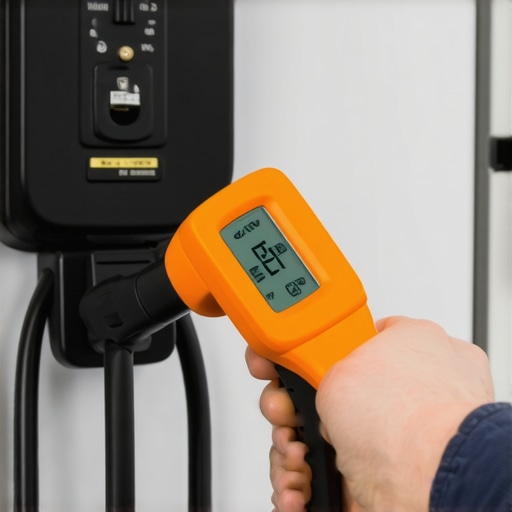
The single most important tool in my garage isn’t a fancy screwdriver or a digital multimeter; it’s a cheap infrared thermometer. I make it a habit to ‘shoot’ the temperature of my NEMA 14-50 plug and the breaker handle about once a month while the car is pulling its full 40 amps. If you see temperatures climbing above 140°F (60°C) at the plug, you’ve likely got a loose connection or a cheap outlet that’s starting to fail. Identifying these heat spikes early is a core part of ev charger troubleshooting expert tips for common issues before they turn into a melted mess. I personally caught a failing breaker this way—the handle was 20 degrees hotter than the ones next to it, signaling internal resistance that would have eventually caused a trip or a fire. This simple check is far more effective than just waiting for something to smell like burnt fish.
How do I maintain my home charging station over time?
Maintenance is surprisingly low-effort but high-stakes. Aside from the heat check, I recommend a seasonal inspection of the charging handle itself. Garage dust, spider webs, and even moisture can accumulate inside the connector pins. I’ve found that knowing how to clean the pins on your charging handle safely with a blast of compressed air and a specific electrical contact cleaner can prevent the ‘communication error’ codes that plague so many drivers. Furthermore, don’t ignore the cord. If you’re coiling it too tightly, you’re stressing the internal copper strands. According to NFPA 70B (Standard for Electrical Equipment Maintenance), mechanical stress on high-amperage cables is a leading cause of insulation failure. I keep mine in a loose, 2-foot diameter loop to keep the juice flowing without resistance.
Update Your Firmware Before You Call the Electrician
It sounds silly to ‘update’ a wall box, but many modern charging issues are actually software bugs. I once spent two hours thinking my car’s onboard charger was fried, only to realize the station needed a security patch to communicate with the car’s new OS. Learning how to update your charger software without calling a technician can save you a $150 service call. Most chargers have a hidden web interface or an app-based toggle for this. If your app is constantly hanging or failing to start a session, you are likely dealing with troubleshooting ev charger connectivity problems rather than a physical wiring fault. If a software reset doesn’t work, then it’s time to dive deeper into troubleshooting ev chargers common compliance pitfalls and fixes to ensure a wire hasn’t vibrated loose inside the unit.
The Future of Your Garage is Bidirectional
I’m already looking at my next move: V2H (Vehicle-to-Home) technology. The trend is moving toward your car acting as a giant backup battery for your house during a blackout. To get ready for this, you should be looking at panel upgrade strategies to meet ev charging code requirements in 2025, as bidirectional setups require specific interlock kits and transfer switches that standard chargers don’t need. Preparing your infrastructure now means you won’t have to rip everything out in three years. I suggest you grab an infrared thermometer this weekend and do a quick heat check on your panel while your car is charging—it’s the easiest way to prove to yourself that your DIY work is holding up to the pressure.
Hard Truths from My Personal Charging Journey
Looking back at my first install, the biggest lightbulb moment wasn’t about the car; it was about the infrastructure. I realized that a hidden danger of loose neutral wires in your electrical panel is far more likely to cause a failure than the charger itself. I also learned that you shouldn’t panic if your car won’t start; often, you just need to learn how to update your charger software without calling a technician. Lastly, never underestimate the impact of a minor common wire sizing error that causes voltage drops during charging; that extra dollar spent on thicker copper pays for itself in efficiency and safety.
My Go-To Checklist for a Fault-Free Garage
To keep my system running, I rely on a few specific tools and habits. First, I use a high-quality infrared thermometer to check for dangerous heat build-up in your ev-charging-cable during heavy use. I also keep a printed copy of the local code requirements to ensure I’m always ensuring code compliance when installing ev chargers. Finally, I swapped out my generic breaker for the specific breaker brand that keeps tripping on level 2 chargers less frequently, providing the stability a high-amperage continuous load requires.
Stop Overthinking and Plug In with Confidence
You don’t need to be an electrical engineer to have a reliable home setup, but you do need to be a diligent homeowner. By staying on top of troubleshooting ev chargers common compliance pitfalls and fixes, you can avoid the costly mistakes that stall out most beginners. As we look toward the future, keeping an eye on panel upgrade strategies to meet ev charging code requirements in 2025 will ensure your home is ready for whatever the next generation of EVs brings.
Have you ever run into a mysterious communication error with your wall box, or did your installation go perfectly on the first try? Let me know below!