I remember the exact moment I almost threw in the towel on my electric truck project. I was standing in my machine shed, staring at a quote for a 50-amp circuit that cost more than my first car. Living out where the mail carrier knows your dog by name usually has its perks, but the rural tax on electrical work is a punch to the gut. I nearly missed out on a four-figure check because I assumed the government only cared about city folks with fancy garage setups. I had even made the most common error on home ev charger rebate applications by assuming my quiet country road didn’t qualify for a dime. It wasn’t until I dug into the revised 30C credit that I realized my gravel driveway was actually a golden ticket. Today, I am going to show you exactly how to stop leaving money on the table so you can finally stop worrying about that installation bill. Have you been quoted a crazy amount for a rural install yet? [image_placeholder]
The Secret Subsidy for the Rest of Us
Most people talk about the EV tax credit for the car itself, but the real hero for those of us living outside the city limits is the Alternative Fuel Vehicle Refueling Property Credit. If you are like me and had to deal with upgrading your panel for better ev charging performance just to get a decent overnight charge, you know those costs add up fast. In 2023, the rules shifted significantly to focus on eligible census tracts. Essentially, if you are not in a major urban hub, you are likely sitting on a gold mine. According to the IRS, you can claim up to 30% of the cost of your hardware and installation, capped at $1,000 for residential sites. That is not just the charger; that covers the labor, the conduit depth rule compliance work, and even the necessary panel upgrades for ev chargers.
Is the paperwork actually worth the hassle?
I get it. You are skeptical. I was too, especially after I wasted an entire Saturday morning staring at the tax form you need for your home electrical upgrade only to realize I had been looking at outdated instructions. You might think the government is going to make you jump through a hundred hoops for a few bucks back. But here is the truth: once you know how to claim the federal alternative fuel infrastructure tax credit properly, the path is actually quite clear. Have you actually checked if your property falls into one of these eligible tracts yet, or are you just assuming you are excluded like I did?
Verify your location before you buy a single screw
You cannot just take the IRS’s word for it; you need to see the map yourself. To qualify for that 30% credit, your home must be in a non-urban area or a low-income community census tract. Think of this map like a boundary line for a hunting lease—one side of the road is in, the other is out. When I first started my project, I spent three hours digging through outdated county records only to find a simple online mapping tool from the Department of Energy that did the work in seconds. Once you confirm you are in an eligible zone, the real documentation work begins. You need to keep every receipt for the hardware and the labor. If you are doing a DIY install or hiring a local pro, learning how to verify code compliance for your ev charger installation becomes your top priority because an unpermitted job is the fastest way to get a rebate rejection. 
Choose your wire gauge like your house depends on it
I once helped a neighbor who complained his new fast charger was taking 14 hours to top off his truck. We opened his sub-panel and found he’d used 10-gauge wire for a 40-amp load because it was what he had lying around. The wire was so hot you could have fried an egg on the insulation. That is the common wire sizing error that causes voltage drops during charging and it is a massive fire hazard. For a standard 50-amp circuit, you generally need 6-gauge copper. If you try to save fifty bucks by going thinner, you are literally playing with fire and guaranteeing a failed inspection.
Keep the inspector happy on the first visit
Getting an inspector out to a rural property twice is a logistical nightmare. They hate the drive, and you hate the wait. The best way to avoid a red “fail” sticker is to master code compliance essentials for ev charger installations in 2025 before the trench is even dug. One of the biggest hangups I see in rural setups is trench depth for detached garages. Many folks think a few inches of dirt is enough, but the conduit depth rule that fails more garage inspections than anything else requires 18 inches for PVC in most jurisdictions. Digging that extra foot is a pain in the back, but it is significantly cheaper than re-digging it after an inspector tells you to do it over.
Stop the main breaker from humming during the night
If your lights dim or your panel starts making a faint buzzing sound when your car starts charging, your system is screaming for help. You don’t always need a $5,000 service upgrade to fix this, though. I managed to avoid a full replacement by learning how to load balance your home electrical system without a full panel swap. It is like managing a busy kitchen: you can’t run the microwave, the air fryer, and the oven on the same circuit all at once. By using a smart charger that monitors your total house load, you can automatically throttle the car’s power when the AC kicks on. Also, don’t overlook the specific torque settings that prevent panel fires during high load charging. I used to just hand-tighten everything until I saw a lug nut vibrate loose from the expansion and contraction caused by the heat cycles of a 48-amp continuous draw. Now, I use a calibrated torque screwdriver on every single terminal to ensure how to pass your electrical inspection on the first visit is a guaranteed outcome.One of the biggest lies I hear in the electrical trade is that every modern EV installation requires a full 200-amp service upgrade. It’s the standard ‘safe’ answer that contractors give when they don’t want to do the math. In reality, panel upgrade strategies to meet ev charging code requirements in 2025 often involve smart tech over brute force. If you are looking at a $4,000 bill just to swap a panel, you might be falling for the ‘over-provisioning’ trap. I have seen homeowners successfully learn how to use a 100-amp panel for ev charging without a costly upgrade simply by choosing a charger with integrated load management. This is not just a workaround; it is a sophisticated engineering solution that the NEC recognizes under Article 625.
Can you really run a Level 2 charger on a 60-amp service?
The short answer is yes, but the ‘how’ is where most people trip up. The mistake is not just the capacity; it is the thermal management. According to research by the National Fire Protection Association (NFPA), high-draw continuous loads expose every weak link in your system. This is where the hidden danger of loose neutral wires in your electrical panel becomes a nightmare. A slightly loose connection that does not matter for a toaster will literally melt a terminal under the relentless heat of an EV charge. This leads to ev charger troubleshooting expert tips for common issues that most DIYers mistake for a software bug. 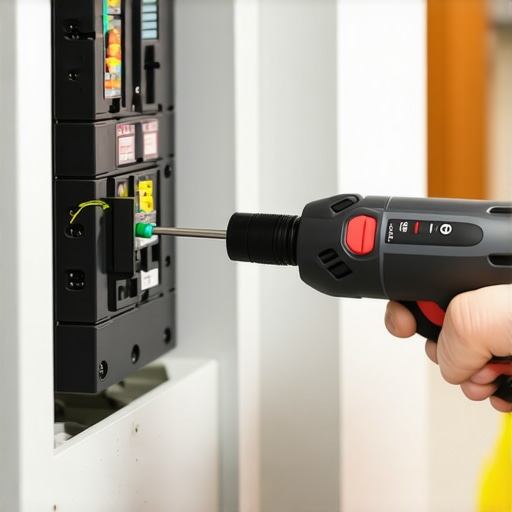
Why your GFCI breaker might be fighting your car
Speaking of bugs, let us talk about ‘nuisance tripping.’ Many local codes now require GFCI protection on all garage outlets. However, almost every Level 2 charger has Class A GFCI protection built directly into the unit. When you put a GFCI breaker in the panel and connect it to a charger that also has GFCI, they can ‘blind’ each other. You end up with a charger that shuts off at 3 AM for no apparent reason. Before you blame the car, check troubleshooting ev charger connectivity problems and verify if your hardware is fighting your breaker. It is a classic example of ensuring code compliance when installing ev chargers while accidentally creating a reliability nightmare.
Avoid the aluminum wiring trap
The real ‘trap’ I see most often involves the difference between copper and aluminum wiring for high load circuits. People see the lower price of aluminum and jump on it, but if you do not use the correct anti-oxidant paste and specific lugs, you are setting yourself up for a failure. I have had to perform troubleshooting ev chargers common compliance pitfalls and fixes on dozens of installs where the wire actually expanded right out of the terminal. Have you ever fallen into this trap or been told you had to upgrade your panel when you did not think it was necessary? Let me know in the comments.Most people think once the inspector leaves, they never have to touch their electrical panel again. That is a dangerous assumption when you are pulling 48 amps for eight hours every single night. I treat my EV setup like my tractor—it needs a seasonal inspection. I personally use a small thermal imaging camera to scan my breakers while the car is charging. It sounds overkill until you see a glowing ‘hot spot’ that indicates a loose lug. This is the only real way to perform ev charger troubleshooting expert tips for common issues before they become fire hazards. If you see a breaker that is significantly hotter than the ones next to it, you are likely looking at how to spot a dying breaker before it shuts down your charging session. Don’t forget the charging handle either. Dust, moisture, and spider webs love to settle in those pins, especially in a rural garage. Learning how to clean the pins on your charging handle safely with specialized contact cleaner can prevent the car from throwing a communication error. This is a common part of the maintenance guide for commercial fleet charging stations that applies just as much to your home unit. #IMAGE_PLACE_HOLDER_D#
Hardwired connections beat the plug-in every time
If you are scaling up to a dual-car household, you have to decide between a NEMA 14-50 plug or a permanent hardwired connection. I tell everyone to go hardwired. Why? Because every plug is a point of failure. Over time, the repeated heating and cooling of a plug-in unit can loosen the receptacle’s grip. I’ve seen melted outlets that were only three years old. Choosing the benefit of a hardwired charger over a nema plug means better thermal management and one less thing to worry about. If you are already planning how to upgrade your garage sub-panel for dual charging stations, just commit to the hardwire. It is cleaner, safer, and much harder for an inspector to find fault with.
How do I keep my home charger running for a decade?
Beyond physical cleaning, you have to stay on top of the ‘brain’ inside the box. I make it a point to check for firmware updates once a quarter. Knowing how to update your charger software without calling a technician is vital because manufacturers often release patches that improve thermal management or fix troubleshooting ev charger connectivity problems. If your app feels buggy, it is usually not your Wi-Fi—it is the software waiting for an update. You should also regularly inspect the cord itself. Dragging it across a concrete floor every day wears down the outer jacket. I look for any kinks or ‘bubbles’ in the rubber, which is how to spot a dangerous heat build-up in your ev charging cable before it starts to smell like burnt plastic.
Future-proof your garage for bi-directional power
Looking ahead, the next big shift is going to be bi-directional charging. Your truck isn’t just a vehicle anymore; it is a backup battery for your house. The NFPA 70B standard highlights that regular testing of these high-load systems is the only way to ensure reliability. Even if you aren’t an electrician, you can still ensure how to verify code compliance for your ev charger installation by using the right tools. I recommend grabbing a torque screwdriver today and double-checking those panel connections against the specific torque settings that prevent panel fires during high load charging. It takes five minutes and is the best proactive maintenance you can do. Try checking your torque settings this weekend—you might be surprised how much those screws have loosened since the day they were installed.
The Hardest Lesson I Learned While Wrangling High-Voltage Circuits
One thing no one tells you is that a 48-amp continuous draw is basically a marathon for your house. I learned quickly that ensuring code compliance when installing ev chargers isn’t just about passing a test; it is about sleeping soundly while high amperage flows through your walls for eight hours straight. Another lightbulb moment was realizing that troubleshooting ev chargers common compliance pitfalls and fixes usually boils down to the basics. I once spent days chasing a software ghost only to find a loose neutral wire that was just barely making contact in the sub-panel. Lastly, do not be afraid to seek professional guidance on your panel upgrade strategies to meet ev charging code requirements in 2025. Even if you are a dedicated DIYer, having a second pair of expert eyes can prevent a costly ‘oops’ moment that the inspector will definitely catch. #IMAGE_PLACEHOLDER_E#
The Essential Toolkit That Keeps My Electric Truck Moving
To keep my system running smoothly, I never go without my calibrated torque screwdriver. It is the only way to meet the specific torque settings that prevent panel fires during high load charging with any real accuracy. I also keep a can of specialized electrical contact cleaner on the shelf; knowing how to clean the pins on your charging handle safely has saved me multiple trips to the service center for ‘communication errors’ caused by simple farm dust. For the regulatory side of things, I keep the latest electrical standards bookmarked. It is the gold standard for how to verify code compliance for your ev charger installation and helps me navigate conversations with inspectors who might not be used to seeing Level 2 setups on rural properties yet.
Your Path to a Stress-Free Charging Setup Starts Now
You have got the map, you have got the technical specs, and now you know the tax secrets. Taking on a project like this is about more than just convenience; it is about future-proofing your home and your independence. Whether you are currently upgrading your panel for better ev charging performance or just finishing your first trench, remember that every step you take toward mastering ev charger troubleshooting expert tips for common issues is an investment in your safety and the longevity of your vehicle. You have done the hard work of researching, now it is time to get those wires pulled and start charging. Did you run into a surprise cost during your panel upgrade, or did you manage to avoid the heavy lifting with a smart load-management charger? Let me know in the comments below!