I remember the night I realized my car’s charger had its own secret curfew. I’d pulled into the garage around 6:30 PM, plugged in my Tesla, and headed inside for a burger. I woke up at 5:00 AM only to see that I’d gained maybe twenty miles of range. It was a gut-punch moment. I thought my hardware was failing or that a squirrel had chewed through a wire. But as I started digging into the data, a pattern emerged: the moment the sun went down, my charging speed fell off a cliff. If you’ve been scratching your head over why your Level 2 station feels like a Level 1 the moment the streetlights come on, you’re in the right place. We’re going to solve this mystery and get your speed back where it belongs.
Your Car Is Fighting the Rest of Your House for Every Last Amp
When the sun sets, your home’s electrical balance flips upside down. If you have a solar-integrated system, that beautiful stream of free electrons stops, and your house starts pulling hard from the grid. I made a classic rookie mistake early on by not checking the truth about using solar panels to power a level 2 station. My system was set to prioritize the house first, meaning my car got the leftovers. If your AC is cranking or the dryer is spinning, your car’s charging speed might be intentionally throttled to prevent a blackout. Learning how to load balance your home electrical system is the secret to keeping your car happy without spending five figures on a panel overhaul. According to the U.S. Energy Information Administration, residential electricity demand peaks in the early evening, which is exactly when many ‘smart’ chargers are programmed to throttle back to save the grid from collapsing.
Is my utility company actually controlling my charger?
It’s a common fear among my neighbors. You pay for the equipment, so you should decide the speed, right? In many cases, your charger might be part of a ‘demand response’ program you joined without even realizing it. These programs are designed to keep the neighborhood transformer from blowing during peak hours, but they can be a headache when you need a quick top-off. Have you ever noticed your charging rate suddenly triple the moment you go to bed and turn off the lights?
The Hidden Settings That Kill Your Nightly Charge
Often, the problem isn’t your wires; it’s the software. I’ve spent hours performing troubleshooting for common ev charger issues only to find a ‘schedule’ setting that was half-powering my car during peak rate hours. While this is great for avoiding a tripled electric bill, it’s frustrating when you actually need the range for an early morning trip. We need to look at whether your charger is being polite to the grid at the expense of your schedule.First, you need to rule out the polite ghost in the machine—the software. I once tore my hair out for three days because my charger was only delivering 3.8kW instead of the 11.5kW I was paying for. I’d gone through every expert tip for common issues, checked my breaker, and even reset the Wi-Fi. It turned out I had accidentally enabled a ‘Low Carbon’ setting in my car’s infotainment system that limited charging speed when the regional grid was under stress. You should learn how to update your charger software without calling a technician as your first move. This ensures your hardware is actually listening to your commands rather than following a pre-set schedule designed by a utility company’s algorithm. If you see the reason your smart charger app keeps losing connection is frequent, it might be defaulting to a safe, low-power mode because it can’t receive the ‘all clear’ from the cloud. 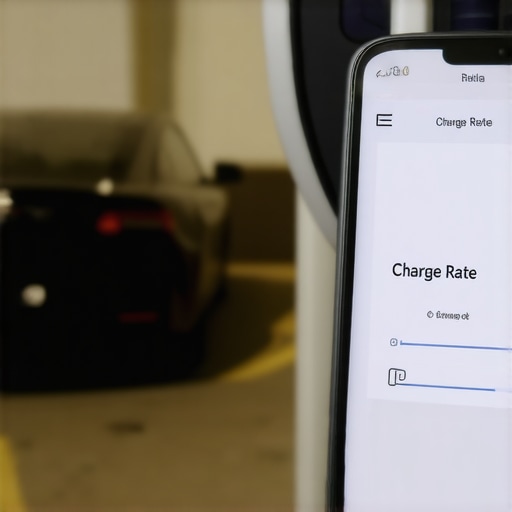
Force Your House to Play Fair with Your Charger
Think of your home’s electrical panel like a dinner table with a limited amount of food. If your air conditioner and water heater are the big eaters, your EV charger is the guest who gets the leftovers. When you have a massive load on a system not designed for it, voltage drops occur. This is where the common wire sizing error really hurts you. If your wires are too thin, they act like a clogged pipe, heating up and restricting flow. This heat triggers sensors in the charger to throttle the speed to prevent a fire.
Look for Signs of Heat in Your Panel
I’ve seen DIY installs where the homeowner used a smaller wire gauge to save twenty bucks. Don’t do that. You need to know the exact gauge of wire you need for a 60-amp circuit to maintain full speed without melting your insulation. While you’re at it, grab a screwdriver. One of the most overlooked fixes is tightening the lugs. Check the specific torque settings that prevent panel fires; a loose wire creates resistance, and resistance creates heat that tells your charger to slow down. I once found a lug so loose it was literally glowing red under my thermal camera. If you notice signs your main breaker is running dangerously hot, your charger is doing you a favor by slowing down—it’s trying to keep your house from burning.
Master Load Management Without a Full Swap
You don’t always need a $5,000 service upgrade. You can often implement strategies to meet ev charging code requirements by using a load management device. These smart controllers monitor your total home usage in real-time. When you turn off the dryer, the controller instantly tells the charger it can ‘eat’ more power. This is the most efficient way to load balance your home electrical system without begging the utility company for a larger transformer. It’s the difference between a frustrating trickle charge and a full battery by sunrise.I’ve seen too many homeowners get talked into a $4,000 panel swap when they didn’t actually need it. The common wisdom suggests that if you have a 100-amp service, you’re stuck with slow charging unless you upgrade the whole system. That’s just not true in 2025. You can actually learn how to use a 100-amp panel for ev charging by utilizing smart load shedding. However, there is a dangerous ‘oops’ factor I see weekly: the double-tapped breaker. This happens when a DIYer or a lazy contractor jams two wires into one breaker to save space. It’s one of the most common diy mistakes that leads to arcing and house fires. If you see two wires coming out of your charger’s breaker, stop everything and call a pro.
The 200-Amp Myth That Costs You Thousands
Everyone says you need a massive service upgrade for a Level 2 station, but the reality is that your ‘demand’ is often lower than you think. By performing a proper load calculation, you might find you have plenty of room. The trap most people fall into is ignoring the 125% rule. According to the National Fire Protection Association (NFPA) in the NEC Article 625, EV charging is classified as a ‘continuous load.’ This means if your charger pulls 40 amps, your circuit must be rated for 50 amps. If you skip this math, your breaker will overheat and trip every single night, and you’ll be left wondering why your battery is empty in the morning. Make sure you understand panel upgrades for ev chargers before you sign a contract for work you don’t need.
Can You Really Charge Safely on a 100-Amp Panel?
Yes, but you have to follow the rules to ensuring code compliance. The secret is often a hardware-based limit or a digital load manager. These devices are the real MVPs; they talk to your charger and say, ‘Hey, the oven is on, slow down for twenty minutes.’ It saves you the cost of a full service upgrade while keeping your house within safety limits. 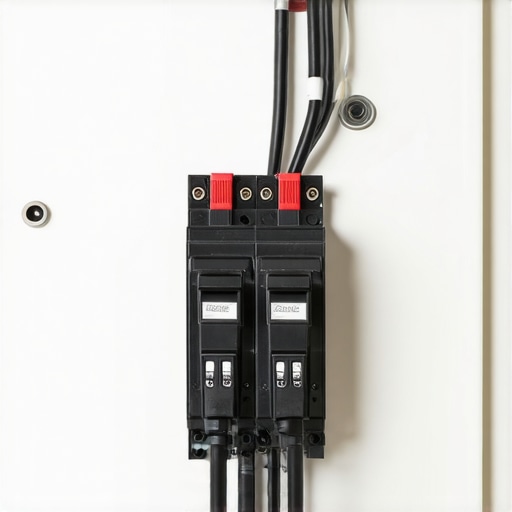
Stop Ignoring That Subtle Humming Sound
If you’ve ever walked past your garage and heard a faint buzz, don’t ignore it. I’ve found that why your main breaker hums is usually due to vibration from high current or a loose connection. Over time, that vibration backs out the screws, creating a high-resistance point. This is where expert tips for common issues come in handy—sometimes a simple torque wrench is the only tool you need to prevent a total system failure. Also, be wary of the specific breaker brand that keeps tripping. Some older ‘thin’ breakers simply aren’t designed for the thermal stress of an 8-hour charging session. If you don’t address this, you’ll eventually need to learn how to spot a dying breaker before it fails completely and leaves you stranded. Have you ever fallen into this trap or noticed your lights flickering when the car kicks in? Let me know in the comments below!That flicker or hum is your house trying to tell you it’s tired, and ignoring it is the fastest way to an expensive service call. Maintenance isn’t just about the wires in the wall; it’s about the interface where your car meets the grid. I’ve seen charging handles that look perfectly fine on the outside but are actually pitted with carbon buildup inside the sleeve. This creates resistance, which leads to heat, which leads to your charger throttling your speed. You need to know how to clean the pins on your charging handle safely using contact cleaner and a lint-free swab. Doing this twice a year can prevent you from needing to learn how to spot a dangerous heat build-up in your cable the hard way—usually when the plastic starts to smell like ozone.
The Tool Every EV Owner Actually Needs
Forget the fancy app; my most used tool is a $30 infrared thermometer. Every few months, while the car is pulling its maximum current, I open the panel and scan the breakers. If one is significantly hotter than the others, I know a connection is failing. According to the Electrical Safety Foundation International (ESFI), thermal imaging is one of the most effective non-invasive ways to prevent residential electrical fires. If you find a hot spot, it’s often because of a loose lug. This is where knowing the specific torque settings that prevent panel fires becomes critical. Don’t just ‘crank it down’—use a proper torque screwdriver to ensure the connection is secure without stripping the threads. 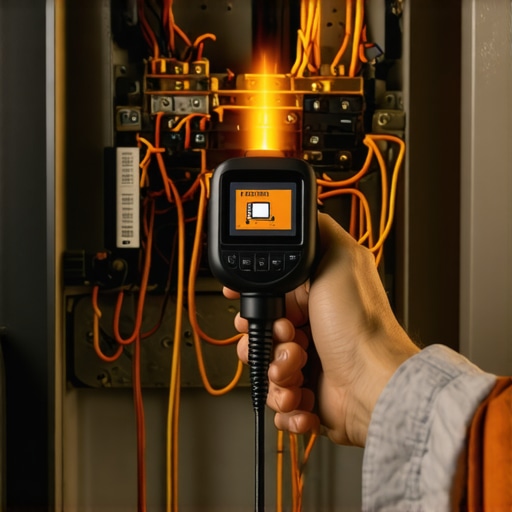
How do I maintain my home charging setup over the long haul?
Beyond the physical checks, treat your home setup like a pro would. I often adapt the maintenance guide for commercial fleet charging stations for residential use. This means checking for firmware updates every quarter and inspecting the weather sealing on your outdoor units. If you’ve been relying on a plug-in unit, look for signs of socket fatigue. The constant weight of a heavy Level 2 cable can slowly pull a NEMA 14-50 outlet out of the wall, leading to arcing and potential fire hazards.
Prepare Your Panel for the Future of Energy
We are moving toward a world of bidirectional charging where your car doesn’t just take power—it gives it back during peak hours to lower your bill. To get ready for this, you should start thinking about panel upgrades for ev chargers that include smart transfer switches. Scaling your system now saves you from re-wiring your entire garage in three years when you add a second EV. If you’re feeling bold, I highly recommend grabbing a cheap infrared thermometer this weekend and scanning your main breaker while the car is charging. It’s the single best way to verify your system is actually handling the load you’re throwing at it.I remember the night I realized my car’s charger had its own secret curfew. I’d pulled into the garage around 6:30 PM, plugged in my Tesla, and headed inside for a burger. I woke up at 5:00 AM only to see that I’d gained maybe twenty miles of range. It was a gut-punch moment. I thought my hardware was failing or that a squirrel had chewed through a wire. But as I started digging into the data, a pattern emerged: the moment the sun went down, my charging speed fell off a cliff. If you’ve been scratching your head over why your Level 2 station feels like a Level 1 the moment the streetlights come on, you’re in the right place. We’re going to solve this mystery and get your speed back where it belongs.
Your Car Is Fighting the Rest of Your House for Every Last Amp
When the sun sets, your home’s electrical balance flips upside down. If you have a solar-integrated system, that beautiful stream of free electrons stops, and your house starts pulling hard from the grid. I made a classic rookie mistake early on by not checking the truth about using solar panels to power a level 2 station. My system was set to prioritize the house first, meaning my car got the leftovers. If your AC is cranking or the dryer is spinning, your car’s charging speed might be intentionally throttled to prevent a blackout. Learning how to load balance your home electrical system is the secret to keeping your car happy without spending five figures on a panel overhaul. According to the U.S. Energy Information Administration, residential electricity demand peaks in the early evening, which is exactly when many ‘smart’ chargers are programmed to throttle back to save the grid from collapsing.
Is my utility company actually controlling my charger?
It’s a common fear among my neighbors. You pay for the equipment, so you should decide the speed, right? In many cases, your charger might be part of a ‘demand response’ program you joined without even realizing it. These programs are designed to keep the neighborhood transformer from blowing during peak hours, but they can be a headache when you need a quick top-off. Have you ever noticed your charging rate suddenly triple the moment you go to bed and turn off the lights?
The Hidden Settings That Kill Your Nightly Charge
Often, the problem isn’t your wires; it’s the software. I’ve spent hours performing troubleshooting for common ev charger issues only to find a ‘schedule’ setting that was half-powering my car during peak rate hours. While this is great for avoiding a tripled electric bill, it’s frustrating when you actually need the range for an early morning trip. We need to look at whether your charger is being polite to the grid at the expense of your schedule.First, you need to rule out the polite ghost in the machine—the software. I once tore my hair out for three days because my charger was only delivering 3.8kW instead of the 11.5kW I was paying for. I’d gone through every expert tip for common issues, checked my breaker, and even reset the Wi-Fi. It turned out I had accidentally enabled a ‘Low Carbon’ setting in my car’s infotainment system that limited charging speed when the regional grid was under stress. You should learn how to update your charger software without calling a technician as your first move. This ensures your hardware is actually listening to your commands rather than following a pre-set schedule designed by a utility company’s algorithm. If you see the reason your smart charger app keeps losing connection is frequent, it might be defaulting to a safe, low-power mode because it can’t receive the ‘all clear’ from the cloud.
Force Your House to Play Fair with Your Charger
Think of your home’s electrical panel like a dinner table with a limited amount of food. If your air conditioner and water heater are the big eaters, your EV charger is the guest who gets the leftovers. When you have a massive load on a system not designed for it, voltage drops occur. This is where the common wire sizing error really hurts you. If your wires are too thin, they act like a clogged pipe, heating up and restricting flow. This heat triggers sensors in the charger to throttle the speed to prevent a fire.
Look for Signs of Heat in Your Panel
I’ve seen DIY installs where the homeowner used a smaller wire gauge to save twenty bucks. Don’t do that. You need to know the exact gauge of wire you need for a 60-amp circuit to maintain full speed without melting your insulation. While you’re at it, grab a screwdriver. One of the most overlooked fixes is tightening the lugs. Check the specific torque settings that prevent panel fires; a loose wire creates resistance, and resistance creates heat that tells your charger to slow down. I once found a lug so loose it was literally glowing red under my thermal camera. If you notice signs your main breaker is running dangerously hot, your charger is doing you a favor by slowing down—it’s trying to keep your house from burning.
Master Load Management Without a Full Swap
You don’t always need a $5,000 service upgrade. You can often implement strategies to meet ev charging code requirements by using a load management device. These smart controllers monitor your total home usage in real-time. When you turn off the dryer, the controller instantly tells the charger it can ‘eat’ more power. This is the most efficient way to load balance your home electrical system without begging the utility company for a larger transformer. It’s the difference between a frustrating trickle charge and a full battery by sunrise.I’ve seen too many homeowners get talked into a $4,000 panel swap when they didn’t actually need it. The common wisdom suggests that if you have a 100-amp service, you’re stuck with slow charging unless you upgrade the whole system. That’s just not true in 2025. You can actually learn how to use a 100-amp panel for ev charging by utilizing smart load shedding. However, there is a dangerous ‘oops’ factor I see weekly: the double-tapped breaker. This happens when a DIYer or a lazy contractor jams two wires into one breaker to save space. It’s one of the most common diy mistakes that leads to arcing and house fires. If you see two wires coming out of your charger’s breaker, stop everything and call a pro.
The 200-Amp Myth That Costs You Thousands
Everyone says you need a massive service upgrade for a Level 2 station, but the reality is that your ‘demand’ is often lower than you think. By performing a proper load calculation, you might find you have plenty of room. The trap most people fall into is ignoring the 125% rule. According to the National Fire Protection Association (NFPA) in the NEC Article 625, EV charging is classified as a ‘continuous load.’ This means if your charger pulls 40 amps, your circuit must be rated for 50 amps. If you skip this math, your breaker will overheat and trip every single night, and you’ll be left wondering why your battery is empty in the morning. Make sure you understand panel upgrades for ev chargers before you sign a contract for work you don’t need.
Can You Really Charge Safely on a 100-Amp Panel?
Yes, but you have to follow the rules to ensuring code compliance. The secret is often a hardware-based limit or a digital load manager. These devices are the real MVPs; they talk to your charger and say, ‘Hey, the oven is on, slow down for twenty minutes.’ It saves you the cost of a full service upgrade while keeping your house within safety limits.
Stop Ignoring That Subtle Humming Sound
If you’ve ever walked past your garage and heard a faint buzz, don’t ignore it. I’ve found that why your main breaker hums is usually due to vibration from high current or a loose connection. Over time, that vibration backs out the screws, creating a high-resistance point. This is where expert tips for common issues come in handy—sometimes a simple torque wrench is the only tool you need to prevent a total system failure. Also, be wary of the specific breaker brand that keeps tripping. Some older ‘thin’ breakers simply aren’t designed for the thermal stress of an 8-hour charging session. If you don’t address this, you’ll eventually need to learn how to spot a dying breaker before it fails completely and leaves you stranded. Have you ever fallen into this trap or noticed your lights flickering when the car kicks in? Let me know in the comments below!That flicker or hum is your house trying to tell you it’s tired, and ignoring it is the fastest way to an expensive service call. Maintenance isn’t just about the wires in the wall; it’s about the interface where your car meets the grid. I’ve seen charging handles that look perfectly fine on the outside but are actually pitted with carbon buildup inside the sleeve. This creates resistance, which leads to heat, which leads to your charger throttling your speed. You need to know how to clean the pins on your charging handle safely using contact cleaner and a lint-free swab. Doing this twice a year can prevent you from needing to learn how to spot a dangerous heat build-up in your cable the hard way—usually when the plastic starts to smell like ozone.
The Tool Every EV Owner Actually Needs
Forget the fancy app; my most used tool is a $30 infrared thermometer. Every few months, while the car is pulling its maximum current, I open the panel and scan the breakers. If one is significantly hotter than the others, I know a connection is failing. According to the Electrical Safety Foundation International (ESFI), thermal imaging is one of the most effective non-invasive ways to prevent residential electrical fires. If you find a hot spot, it’s often because of a loose lug. This is where knowing the specific torque settings that prevent panel fires becomes critical. Don’t just ‘crank it down’—use a proper torque screwdriver to ensure the connection is secure without stripping the threads.
How do I maintain my home charging setup over the long haul?
Beyond the physical checks, treat your home setup like a pro would. I often adapt the maintenance guide for commercial fleet charging stations for residential use. This means checking for firmware updates every quarter and inspecting the weather sealing on your outdoor units. If you’ve been relying on a plug-in unit, look for signs of socket fatigue. The constant weight of a heavy Level 2 cable can slowly pull a NEMA 14-50 outlet out of the wall, leading to arcing and potential fire hazards.
Prepare Your Panel for the Future of Energy
We are moving toward a world of bidirectional charging where your car doesn’t just take power—it gives it back during peak hours to lower your bill. To get ready for this, you should start thinking about panel upgrades for ev chargers that include smart transfer switches. Scaling your system now saves you from re-wiring your entire garage in three years when you add a second EV. If you’re feeling bold, I highly recommend grabbing a cheap infrared thermometer this weekend and scanning your main breaker while the car is charging. It’s the single best way to verify your system is actually handling the load you’re throwing at it.
Lessons from My Near-Empty Morning Commutes
After years of tinkering with my own setup, I’ve realized that software is often a silent throttle. You can have the best wiring in the world, but if your car’s ‘Eco’ mode is fighting your utility’s peak-shave algorithm, you’ll never see top speeds. Secondly, never underestimate the power of a loose connection; heat is the enemy of efficiency. I always recommend that homeowners check the specific torque settings that prevent panel fires because even a quarter-turn of a screw can stop a charger from throttling down. Also, don’t let a small service panel scare you—most people can actually learn how to use a 100-amp panel for ev charging without the five-figure price tag of a full overhaul. Finally, a little bit of hygiene goes a long way; learning how to clean the pins on your charging handle safely can shave minutes off your daily routine by reducing electrical resistance.
The Essential Gear for Every EV Garage
You don’t need a degree in electrical engineering, but a few specific tools will make your life much easier. I personally swear by a handheld infrared thermometer. It’s the fastest way to look for signs your main breaker is running dangerously hot before a failure happens. I also keep a copy of the latest NEC Handbook handy, as staying current on ensuring code compliance when installing ev chargers is the only way to guarantee your insurance company stays happy. Lastly, if you find your system is maxed out, look into a smart load manager; it’s the ultimate shortcut for upgrading your panel for better ev charging performance without the physical labor of a service swap.
Take Control of Your Home’s Energy Future
Electricity shouldn’t be a source of anxiety. By taking these small steps—checking your software, monitoring your panel temperatures, and ensuring your connections are tight—you transition from a passive user to a master of your home’s infrastructure. Your EV is the most advanced appliance you’ve ever owned; it deserves a power source that is just as refined. Don’t let a nightly slowdown stand between you and your next adventure. With the right ev charger troubleshooting mindset, you can keep your battery full and your home safe. Have you noticed your garage lights flickering or your charger slowing down when the dryer kicks in? Let me know your experience in the comments below!