I’ll never forget the faint scent of ozone wafting from my electrical panel at 2:00 AM. I had just finished installing my shiny new 48-amp charger, thinking I was a genius for saving a few bucks by using a spare 50-amp breaker I had lying around. I mean, the math is simple, right? 50 is bigger than 48. But ten minutes into the first charge, click—the house went dark, and the breaker was so hot I could’ve fried an egg on it. That was my welcome to the world of continuous loads moment, and it’s exactly why your electrician is currently nagging you about a 60-amp circuit. Today, I am going to walk you through the physics and the legal requirements that stand between your car and a melted garage wall. We are going to solve the mystery of the 80% rule and make sure you never have to deal with why your breaker gets hot to the touch during charging ever again. Have you ever felt that surge of panic when your brand-new tech suddenly fails you?
The Hidden Math Behind the 80 Percent Rule
When I started my DIY journey, I made the massive mistake of skipping a panel load calculation. I figured my panel could handle anything. What I didn’t realize is that according to the National Electrical Code (NEC) Article 625, electric vehicle charging is classified as a continuous load. This means the device draws maximum current for three hours or more. Because of this, you are legally and physically required to over-provision your circuit by 125%. If you take 48 amps and multiply it by 1.25, you get exactly 60 amps. This is the real reason your circuit breaker trips at 90 percent charge when you try to squeeze it onto a smaller circuit. It is not just about the wires; it is about heat dissipation. A circuit breaker is essentially a heat-sensitive switch. If you run it at near-capacity for hours, it will eventually think there is a fire and shut down for safety. This is a core part of code compliance essentials for EV charger installations in 2025.
Is this 60-amp upgrade actually worth the extra money?
You might be looking at the cost of thicker wire—likely #6 or even #4 gauge copper—and wondering if you could just throttle the charger down to 40 amps to save money. You could, but then you are losing the very performance you paid for. If you want to reach that full potential, you need to understand the exact wire gauge you need and why cutting corners now leads to expensive repairs later. A surprising fact from the NFPA is that electrical failures or malfunctions are the second leading cause of U.S. home fires, and overloading circuits with high-draw appliances is a primary culprit. By listening to your electrician and going for that 60-amp breaker, you aren’t just buying a piece of plastic; you are buying the peace of mind that your house won’t be a statistic while you sleep.
Calculate Your Load Before You Pull Any Wire
The very first thing you need to do is put down the wire cutters and pick up a calculator. Most homeowners assume that if they have a 200-amp main panel, they are golden. But if you have an electric range, a heat pump, and a hot tub, you are already redlining your capacity. This is exactly why your ev permit application requires a load calculation worksheet. I remember helping a neighbor who was dead set on a 48-amp charger for his dual-motor SUV. We ran the numbers and realized that if his wife started the dryer while the car was charging, the main service would hit 105% capacity. We had to pivot to upgrading your panel for better ev charging performance before we even touched the garage. If you are planning for the future, keep in mind that why a 1000-amp service isnt always enough for two evs is a reality many families face as they transition away from gas.
Pulling the Right Wire for a High-Heat Garage
Once you know your panel can handle the juice, you have to choose your conduit and wire. For a 48-amp charger on a 60-amp breaker, you cannot settle for the bare minimum. While some codes allow for specific types of Romex, I always advocate for individual THHN wires in conduit. Why? Because garages get hot, and charging an EV is like running your oven on high for eight hours straight. You need to understand the difference between copper and aluminum for ev wiring because aluminum expands and contracts more significantly under thermal stress, which can lead to loose connections. 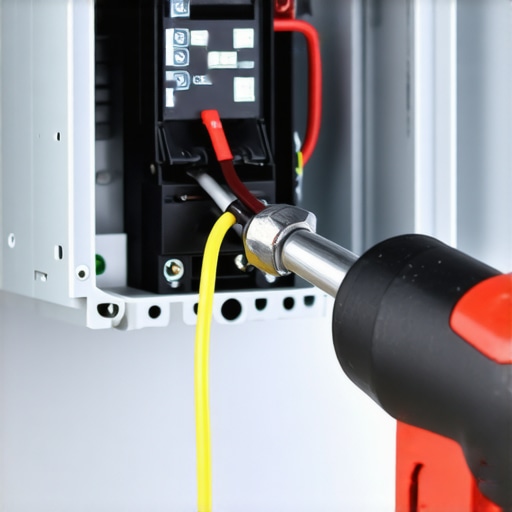 Furthermore, if your run goes through an unconditioned attic or a sunny exterior wall, you must account for ambient temperature derating. Using the best conduit materials for high heat garage environments ensures that your wire insulation doesn’t degrade over the next decade of nightly charging sessions.
Stop Guessing and Use a Torque Wrench
This is the step where most DIYers—and even some rushed pros—fail. Every breaker and every terminal on your charging station has a specific torque rating, usually measured in inch-pounds. I learned this the hard way when I went back to a job after a week because the client complained of a faint buzzing sound. I found that the lug had loosened just enough to cause micro-arcing. If you want to know how to verify code compliance for your ev charger installation, look at the torque marks. An inspector wants to see that you didn’t just ‘hand-tighten’ it. If you skip this, you might find why your tesla wall connector is blinking red three times, which is often a code for an internal over-temperature fault caused by—you guessed it—a loose, hot connection. Precision is the difference between a charger that lasts twenty years and one that fails in twenty months.Most ‘experts’ will tell you that if your panel is full, you are looking at a $3,000 service upgrade. I am here to tell you they are often wrong. In many cases, you can actually save thousands by looking into how to add an ev charger without a 200 amp panel upgrade. The secret lies in a technology called an Energy Management System (EMS). Instead of just throwing more raw power at your house, these devices act like a traffic cop for your electricity. If your dryer and oven are both running, the EMS simply throttles your car’s intake for a few minutes. It is a more elegant, data-driven approach than just buying a bigger box.
Why settle for a bigger panel when load shedding exists?
This is a question I wish more homeowners asked. According to a study by the Pecan Street Research Institute, residential peak demand usually lasts for less than two hours a day. Why pay for a massive 200-amp upgrade for a peak that happens five percent of the time? By learning how to use load shedding devices to avoid a full service upgrade, you stay within the safety margins of your current service while still getting a full charge by morning. However, there is a ‘trap’ here: many ‘smart’ chargers claim to do this via software, but if your Wi-Fi drops, the system defaults to full power and trips your main breaker. Always opt for hardwired load management if you want to remain in ensuring code compliance when installing ev chargers. 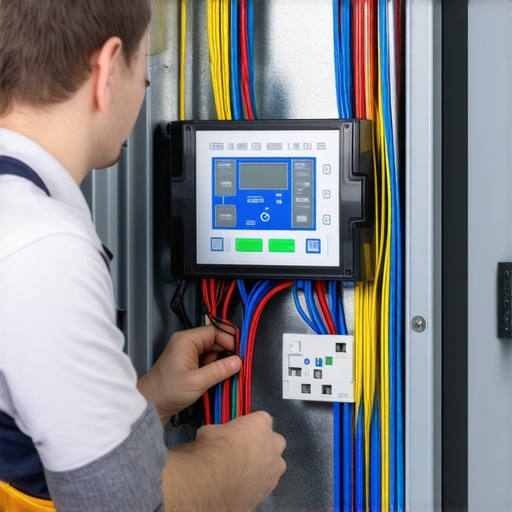 One mistake that makes my heart sink is seeing a $1,000 charger plugged into a panel without a dedicated surge protector. I have seen homeowners spend weeks troubleshooting ev chargers common compliance pitfalls and fixes, only to find out the mistake that causes ev charger motherboards to fry during storms was simply the lack of a $100 SPD (Surge Protective Device). In fact, the 2020 NEC and the 2023 updates now practically mandate surge protection for new or replaced service equipment. If your electrician is not mentioning this, they are not looking out for your car’s brain. Have you ever fallen into the trap of assuming a ‘smart’ device was smarter than the physics of a lightning strike? Let me know in the comments. If you are stuck on a specific code issue, you can always reach out through our contact us page for a professional second opinion.
Equip Your Garage Like a Professional Electrician
After years of tinkering, I have realized that the most expensive tool is the one you didn’t buy before something broke. If you are serious about DIY maintenance or just want to verify your hired pro’s work, you need two specific items. First, an infrared thermometer. Every few months, I pop the cover off my panel while the car is pulling its full 48-amp load and scan the breaker. If I see temperatures exceeding 60°C (140°F), I know I have a loose connection or a failing breaker. Second, and more importantly, is a calibrated torque wrench. I personally use the Wera 7441 series because it allows for the precise inch-pound settings required by the National Electrical Code. In fact, according to NFPA 70 (NEC) 2023 Edition, Article 110.14(D), if a torque value is provided on the equipment, you are legally required to use a calibrated tool to meet it. This isn’t just a suggestion; it’s a critical safety standard to prevent the high-resistance heat that leads to house fires. If you’ve been ev charger troubleshooting expert tips for common issues, you’ll find that a half-turn of a screw often solves the most persistent ‘mystery’ faults. 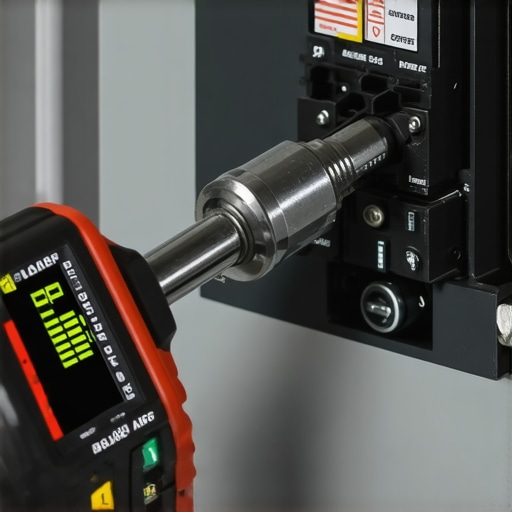
How do I maintain my home charging station over time?
Maintenance isn’t just about the wires inside the wall; it is about the hardware you touch every day. I recommend a three-point check every season change. Start by inspecting the pins on your charging handle. If you see any blackening or pitting, you are looking at carbon tracking, which will eventually fry your car’s port. Clean these pins with a dedicated contact cleaner—never water. Next, address the software. I have seen countless neighbors struggle with troubleshooting ev charger connectivity problems simply because they skipped a security patch. You should regularly check how to update the firmware on your smart charging station to ensure the handshaking protocol between the car and the wall remains seamless. Finally, don’t ignore the exterior. If your unit is outside, follow these 3 maintenance tasks that keep your outdoor charger running through winter to prevent ice from cracking the housing or the cable jacket.
What Your Home Service Will Look Like in 2030
We are rapidly moving toward an era of ‘Bidirectional Charging’ or V2H (Vehicle-to-Home). This means your car won’t just take power; it will provide it during an outage. However, this tech requires much more than a standard 60-amp circuit. We are looking at specialized ‘Power Transfer Switches’ and advanced panel upgrade strategies to meet ev charging code requirements in 2025 that include heavy-duty busbars. The future of home energy is a localized microgrid where your EV is the heart of the system. If you’re building or renovating now, I strongly urge you to upsize your conduit to 1.25 inches. It costs pennies more today but saves thousands when you eventually want to pull the heavier gauge wire required for V2H systems. My advice: don’t wait for a failure to act. Go to your garage tonight, plug in your car, and after thirty minutes, simply listen. If you hear a buzz or smell even a hint of warm plastic, it’s time to shut it down and refer to how to verify code compliance for your ev charger installation before you plug back in.
Lessons from the Front Lines of Electrical Failures
Looking back at my own 2:00 AM panel crisis, I realized that the hardest lesson wasn’t about the hardware, but the physics of continuous loads. I used to think a 50-amp breaker was ‘close enough’ for a 48-amp draw, but that 125% safety margin in the code exists because heat is cumulative. Another lightbulb moment came when I saw a friend’s motherboard fry because of a simple $100 surge protector oversight. My biggest takeaway? Never underestimate the power of a torque wrench. In my early days, I ‘hand-tightened’ everything, but once I saw how thermal expansion can loosen a lug over time, I never looked back. Prioritizing ensuring code compliance when installing ev chargers is the only way to sleep soundly while your car draws max power.
My Essential Toolkit for a Safe Garage
If you want to move from amateur to expert, there are three resources I swear by. First, the Wera 7441 series allows you to hit those specific inch-pound ratings that inspectors look for. #IMAGE_PLACEHOLDER_E# Second, the NFPA 70 Handbook—it is the ultimate guide for understanding why we use specific wire gauges and conduit. Third, a thermal imaging camera (even a cheap one for your smartphone) is the best way to spot a failing breaker before it trips. For those tricky moments, I always keep a tab open to ev charger troubleshooting expert tips for common issues. These tools transform a stressful DIY project into a precise, professional installation.
Your Future in Sustainable Home Energy
You are now part of a small group of homeowners who actually understand the ‘guts’ of their home’s energy system. By choosing the right 60-amp breaker and respecting the 80% rule, you’ve built a system that isn’t just functional, but truly future-proof. This is the first step toward a home that works for you, not against you. If you ever hit a snag or need a professional eye to review your setup, don’t hesitate to contact us. Have you ever felt your breaker box getting unusually warm or making a faint humming sound while your car is charging? Share your experience in the comments below!