I stood there in my garage last winter, shivering in my slippers, staring at my brand-new Ford F-150 Lightning. I had the adapter. I had the fancy Level 2 wall connector that had faithfully served my neighbor’s Model 3 for years. But instead of a satisfying click and a green light, I got nothing but a mocking red blinker. It felt like I had bought a universal key that suddenly didn’t fit my own front door. I learned the hard way that when it comes to juice, not all vehicles speak the same language, even if the plugs look like they should fit.
That Frustrating Moment Your Truck Refuses to Drink
I will be honest—I am an electrician by trade, and even I fell for the it is all just electricity trap early on. I once spent three hours troubleshooting ev charger connectivity problems because I assumed my Ford would play nice with a high-end unit designed primarily for Tesla’s communication handshake. It did not. This isn’t just about the shape of the plug anymore; it is about the software brains inside your car and your charger disagreeing on how to talk. Today, I am going to break down why this handshake fails and how you can get your Ford truck or any J1772-compatible car to actually cooperate with chargers that seem to prefer Elon’s fleet. We will look at the panel upgrades for ev chargers that actually matter and why some universal units are anything but universal.
Is My Expensive Charger Just a Paperweight Now?
You might be worried you have wasted thousands of dollars on a system that refuses to work. You haven’t. But you might be dealing with a why some new cars refuse to charge on older level 2 units scenario where the pilot signal is just slightly off. According to a study by J.D. Power, nearly 20% of EV owners have experienced charging failures at home or public stations, often due to software incompatibilities rather than hardware faults. It is a digital argument happening through the copper wires.
The Real Reason Software Blocks Your Power
It is easy to blame the wire, but it is usually the talk. Teslas and Fords use different communication protocols to initiate a charge. Sometimes, if you are upgrading your panel for better ev charging performance, you might overlook that the truck requires a more stable grounding reference than the charger is providing. I remember a client who thought his Ford was broken, but it turned out his why the gfci in your panel keeps nuisance tripping your charger was being triggered by the specific way the car tested the circuit before drawing power. Have you ever plugged in your truck only to have it reject the charger like a bad organ transplant? If so, you are not alone, and there is almost always a workaround that does not involve buying a whole new station.
Don’t Skip the Math Before You Plug In
Before you even touch a screwdriver, you have to realize that your electrical panel is like a dinner table; you can only put so many plates on it before things start falling off the edge. If you try to pull 48 amps for your truck while the AC and the dryer are humming, you are asking for a blackout. I once visited a homeowner who had just installed a high-speed charger himself. Every time he plugged in his Lightning, the main breaker for the whole house would trip after twenty minutes. He had skipped the math. To avoid this, you must account for the hidden cost of skipping a panel load calculation. If your panel is nearly full, you might need to learn how to squeeze a level 2 charger onto a 60 amp service using a smart load-management device that throttles the car when the oven is on.
Fix That Red Light with Proper Grounding
One of the most common reasons a Ford truck rejects a non-Ford charger is a sensitive ground-fault detection system. Fords are notoriously picky about the reference they get from the ground wire. I remember a messy job last July where a client, Dave, was convinced his expensive wallbox was a lemon. He had a persistent red error light that wouldn’t go away. We spent two hours hunting for the culprit until I realized his ground wire was slightly loose at the bus bar. In the world of high-voltage charging, ‘tight’ isn’t enough; it has to be perfect. Using the grounding trick that fixes intermittent charging errors—which often involves ensuring a dedicated, clean copper path without any shared neutrals—usually solves the ‘handshake’ failure immediately.
Give Your Charger Room to Breathe
Electricity creates heat, and sustained high-amperage draws create a lot of it. This is where the 80% rule comes in. If you want to charge at 48 amps, you cannot use a 50-amp breaker; you’ll melt the casing. This is why your electrician recommends a 60-amp circuit for a 48-amp charger. I have seen budget installations where people used standard residential-grade wire for an EV run, and within six months, the insulation was brittle and discolored. Always opt for industrial-grade copper if you want your truck to charge at peak speeds without the thermal throttling that kicks in when the wires get too hot.
Win the Battle of the Charging Timers
Sometimes the hardware is perfect, but the brains are fighting. Your Ford has an onboard charging schedule, and your ‘smart’ charger likely has one too. If the charger is set to turn on at midnight, but the truck is waiting for 1:00 AM, they often time out and fail to start at all. This is a classic case of why your cars internal timer conflicts with your wallbox. My advice? Pick one ‘master’ and disable the other. Usually, letting the truck handle the schedule via the FordPass app is more reliable because it knows the battery’s temperature and state of charge better than the wallbox ever will.
Everyone tells you that you absolutely must have a 200-amp service to even think about a Level 2 charger. Honestly? That is often just a way for contractors to sell you a $3,000 service upgrade you might not actually need. In my years on the job, I have seen plenty of homes where we successfully learned how to add an ev charger without a 200 amp panel upgrade simply by using smart load-management hardware. This tech acts like a traffic cop, pausing the car’s draw if the water heater and the oven both kick in at once. It is about working smarter with the capacity you have rather than just throwing bigger hardware at the problem.
The Critical Error That Most Professionals Miss
The biggest ‘oops’ I see—even from seasoned pros—is ignoring the torque specs on the terminal blocks. We are used to ‘hand-tight’ being good enough for a light switch, but an EV charger is a continuous load that pulls high amperage for eight hours straight. If those lugs aren’t tightened to the exact inch-pound spec, the thermal expansion and contraction will eventually wiggle them loose. This is the reason your ev charger smells like burnt plastic and can lead to a melted housing or worse. The National Fire Protection Association (NFPA) has highlighted in their safety reports that electrical failures often stem from these poor connections under sustained high-amperage loads. This is exactly why your charger needs a specific torque setting to pass inspection in 2025.
Does Your Utility Company Secretly Want to Pay for Your Upgrades?
Another nuance people overlook is the relationship with the grid. Many homeowners rush to buy the fastest 48-amp charger available, only to realize their utility meter can’t handle it. I always tell my clients to check how to tell if your utility meter can handle the extra load before signing any contracts. Interestingly, some companies are so desperate to manage peak demand that they offer massive rebates. You might find why your local utility might pay for your panel upgrade if you agree to use a smart charger that they can throttle during a heatwave. It is a win-win that most people miss because they are too focused on the hardware and not the ecosystem. Have you ever fallen into the trap of buying a high-speed charger only to find out your house couldn’t actually feed it? Let me know in the comments.
Why Modern Chargers Demand a Neutral Wire
Finally, let’s talk about the ‘missing’ wire. I’ve seen DIYers get frustrated because they pulled two hots and a ground, thinking 240V doesn’t need a neutral. While the car itself might not need it, many modern smart stations require that neutral for their internal 120V logic boards and Wi-Fi radios. This is why your new charger requires a neutral wire even for 240v. Skipping it doesn’t just mean your app won’t work; it often means the whole unit won’t even boot up. If you are struggling with a unit that won’t power on, ev charger troubleshooting expert tips for common issues often point right back to this fundamental wiring oversight. Always check the manual for that third conductor requirement before you close up the wall.
I’ve seen too many people treat their EV charger like a set it and forget it appliance, similar to a toaster. But remember, a toaster runs for two minutes; your charger runs for eight hours at a time. That constant heat cycles the copper, causing it to expand and contract. This is exactly why your main lugs might be loose after a year of charging. Every six months, I tell my clients to kill the power at the main breaker, open the wall unit, and check the tightness. You would be surprised how often a tight lug becomes a loose fire hazard after a single season of heavy use.
How do I maintain my home charging station over time?
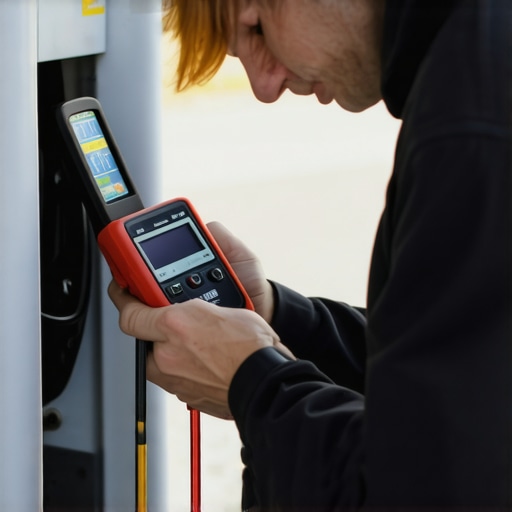
Maintenance isn’t just about tightening screws; it is about checking for thermal stress. I personally use a FLIR thermal camera—or even a cheap handheld infrared thermometer—to check the breaker and the wall unit while the car is pulling 48 amps. If you see temperatures exceeding 60°C (140°F) at the terminals, you have a high-resistance connection. This is the primary reason ev charger troubleshooting expert tips for common issues focus so much on thermal management rather than just software resets. Keeping the essential spare parts to keep for your home charging unit, like a spare high-amperage breaker of the same brand, can save you from waking up to a cold, uncharged truck on a Monday morning.
Invest in a Torque Wrench Before You Regret It
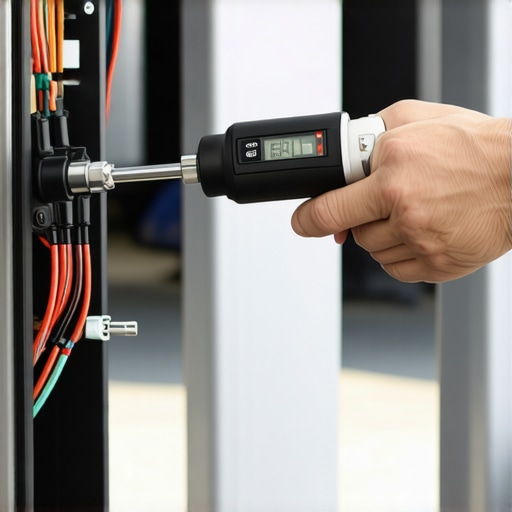
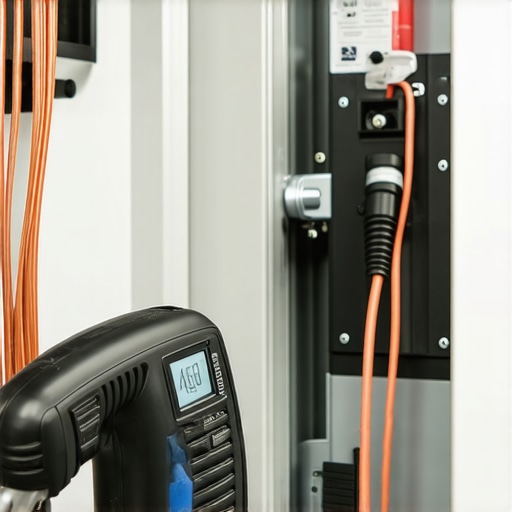
If you are handling any part of the install or maintenance yourself, do not guess. You must use the specific torque wrench settings for a wall connector. A technical white paper from Schneider Electric emphasizes that improper torque is the leading cause of terminal failure in continuous-load industrial applications. Most Level 2 chargers require a specific range between 20 and 50 inch-pounds, which is impossible to feel with a standard screwdriver. Over-tightening is just as bad as under-tightening because it strips the threads and creates microscopic air gaps. This precision, or lack thereof, is the reason your ev charger smells like burnt plastic when the connection starts to arc.
Looking ahead, we are moving toward a world where your Ford Lightning doesn’t just take power; it gives it back. Vehicle-to-Home (V2H) technology is the next big trend, and it will require even more robust panel upgrades for ev chargers because the current will flow both ways, putting sustained stress on your home’s infrastructure. To stay ahead of the curve and ensure your system is ready for the bidirectional future, you must focus on ensuring code compliance when installing ev chargers today. My best advice for you right now? Grab a calibrated torque wrench this weekend and double-check those terminal connections—it is the single most effective way to protect your investment.
Hard-Won Secrets from the Garage Floor
Over the years, I have realized that the biggest hurdle isn’t the hardware; it is the hubris of thinking we know better than the manual. One lightbulb moment for me was discovering that even a perfectly installed charger can fail if the car’s software is expecting a different handshake protocol. I also learned that you should never trust a ‘tight’ connection without a tool; I once found a lug that felt solid but was actually arcing because it hadn’t reached the proper torque. Finally, remember that the grid is your partner, not your enemy. Sometimes the fix isn’t a bigger panel, but a smarter way to manage the flow by looking into how to use load shedding devices to avoid a full service upgrade.
The Gear That Keeps My Truck Juiced
I don’t leave my charging setup to chance, and neither should you. Here are the items I swear by: First, a high-quality torque screwdriver like the ones from Wiha ensures you never have to worry about the reason your ev charger smells like burnt plastic. Second, I always recommend the NFPA 70 (National Electrical Code) handbook for anyone serious about code compliance essentials for ev charger installations in 2025. Third, keep a basic thermal imaging camera in your kit to check for hot spots in your panel after a heavy charging session. Lastly, check with your utility provider; many offer tools to help you with how to verify code compliance for your ev charger installation while saving you money.
Your Journey to a Flawless Charge Starts Now
Setting up your home for a high-powered EV doesn’t have to be a nightmare of red lights and tripped breakers. By focusing on the details—like precision torque, thermal monitoring, and proper upgrading your panel for better ev charging performance—you turn your garage from a source of stress into a high-tech fueling station. Don’t be afraid to dive into the technical side of your panel upgrade and EV charger maintenance. It’s the difference between a truck that’s ready for work and one that’s stuck in the driveway. Have you ever dealt with a charger that worked fine for months and then suddenly quit? Let me know your story in the comments!