It was 11:30 PM on a Tuesday. I was already halfway to a deep sleep when my phone buzzed with that dreaded notification: ‘Charging Interrupted.’ I groaned, threw on a robe, and walked out to the chilly garage. My charger was glowing a steady, mocking red, looking like a miniature version of a malfunctioned computer from a sci-fi flick. I’d done everything by the book—or so I thought. I had spent hours ensuring code compliance when installing EV chargers, yet here I was, manually resetting a breaker for a problem I couldn’t see. I’m going to level with you: intermittent charging errors are the worst kind of electrical gremlin. They don’t just break; they tease you. You think you’ve fixed them by resetting your home charging station, but then they strike again at 3 AM. Today, I’m showing you the grounding trick that finally put my own garage gremlins to bed. We are going to dive into how a ‘dirty’ ground creates enough electrical noise to trip the sensitive sensors inside your car’s onboard charger.
The One Simple Fix for Random Charging Interruptions
When I first started tinkering with high-voltage setups, I made a classic rookie move. I assumed that if a wire was simply connected to a metal bar, it was ‘grounded’ and therefore ‘good.’ I didn’t realize that for high-speed communication between a car and a charger, a ‘decent’ ground isn’t enough. It has to be pristine. I once spent nearly a thousand dollars on a panel upgrade thinking my old service was the bottleneck. It wasn’t. The real issue was a slightly loose lug and a shared ground that was carrying interference from my old workshop fridge. If your EV charging port light stays red or you keep seeing a check charger warning on your dashboard, you’re likely fighting the same ghost I was. According to the Copper Development Association, grounding system impedance should ideally be below 25 ohms to ensure safety and equipment performance, but many home systems hover far above that, causing the digital ‘handshake’ between the car and the wallbox to fail mid-charge.
Will This Void My Warranty or Damage My Car?
I get this question all the time from neighbors who see me out in the garage with a torque wrench. The fear is real: ‘If I mess with the grounding, am I going to fry my car’s motherboard?’ The short answer is no—actually, the opposite is true. A solid ground is your car’s primary defense against surges. When you verify code compliance for your ev charger installation, you aren’t just checking boxes for the city; you’re building a shield for your $50,000 investment. I’ve seen so many people give up and go back to gas because they couldn’t figure out why their charging station is stuck in waiting mode. Don’t be that person. Have you ever felt like your charger has a mind of its own, stopping only when you really need the range for the next morning? Let’s talk about how to stop that behavior for good.
Stop the Electrical Noise from Killing Your Charge
First, we have to look at the physical connections. Think of electrical current like water flowing through a pipe. If there’s even a tiny bit of grit—like a loose screw or a bit of corrosion—it creates turbulence. In the electrical world, that turbulence is ‘noise.’ This noise confuses the car’s onboard computer, which is why troubleshooting ev charger connectivity problems often starts with a screwdriver, not a software update. I once spent three hours tracing a fault only to find that the installer hadn’t used a torque wrench. Because they didn’t know why your charger needs a specific torque setting to pass inspection, the connection was just loose enough to expand and contract as it heated up, breaking the circuit every single night at 2 AM.
Separate Your Ground Bar in the Sub-panel
If your charger is running off a sub-panel in the garage, this is where most people trip up. You cannot simply bridge the ground and neutral wires like you might in a main service entrance. When these are bonded in a sub-panel, you’re essentially inviting every bit of ‘dirty’ electricity from your house into your car’s sensitive charging port. You need to ensure why your subpanel needs a separate ground bar for ev circuits to keep that communication line clean. It’s the difference between trying to have a conversation in a quiet library versus a rock concert.#IMAGE_PLACE_HOLDER_B#
Watch for Heat Damage at the Breaker
Next, pop the cover off your panel and look for discoloration. I’ve seen countless ‘mystery’ interruptions that were actually just thermal throttling. Certain older components can’t handle the continuous high-amperage draw of an EV. Researching the specific breaker brands that are known to overheat with evs can save you from a potential fire. If your breaker feels hot to the touch—not just warm, but ‘ouch’ hot—it’s failing. Even if it doesn’t trip immediately, that heat increases resistance, which drops the voltage and tells the car to stop charging for safety.
Use Thicker Wire for Distant Garages
If your garage is far from your main panel, you might be suffering from voltage drop. If the voltage dips too low, the car’s charger assumes there is a problem with the grid and shuts down. This is why pros insist on the specific wire gauge that prevents voltage drop over long runs. I remember helping a buddy who used a thinner wire to save $50. His car would start charging at 48 amps but would drop to 16 amps within twenty minutes because the wire was literally struggling to keep up.
Snug Your Main Lugs Every Year
Electricity creates vibration. It’s subtle, but over hundreds of charging cycles, those wires can actually wiggle themselves loose. It sounds crazy, but why your main lugs might be loose after a year of charging is a real phenomenon. I make it a habit every autumn to kill the power and give every major lug a quick snug-up. The first time I did this, I found the main feed to my charger was nearly a full turn loose. No wonder I was getting those ‘Charging Interrupted’ texts. Also, if you are doing a new install, remember that why your new charger requires a neutral wire even for 240v is often a requirement for the smart features to function without pulling ‘ghost’ power through the ground.
I’ve noticed a dangerous trend in online forums: the idea that every charging problem is a software bug. While it’s tempting to blame a clunky app, the reality is often found in the physical layer of your electrical system. Let’s dig deeper into the nuances that even seasoned DIYers miss. Everyone says you should aim for the highest amperage your car can handle, but in my experience, running a charger at its absolute thermal limit is a recipe for frustration. When you push a system to its max, you are inviting heat-related resistance that inevitably leads to the car protecting itself by slowing down. This is why your charging speed drops suddenly after 20 minutes of peak performance. Sometimes, dialling back from 48 amps to 40 amps can actually result in a faster total charge time because the hardware stays cool and consistent.
Stop Falling for the Double GFCI Trap
One of the most common ‘oops’ factors I see involves the misinterpreted safety codes. In many jurisdictions, the 2020 or 2023 NEC requires GFCI protection on all garage receptacles. However, almost every Level 2 smart charger already has a sensitive internal GFCI. When you put a GFCI breaker in the panel to feed a device that has its own internal GFCI, you create a ‘nuisance trip’ loop. These two safety systems essentially ‘talk’ over each other, leading to random shut-offs that leave you with an empty tank in the morning. This is precisely why the gfci in your panel keeps nuisance tripping your charger. If your local inspector allows it, hardwiring the unit often bypasses the need for that second, redundant breaker-level GFCI, creating a much more stable connection.
How do I stop my charger from throttling when it gets hot?
Heat is the silent killer of EV efficiency. Beyond just ambient garage temperature, the internal components of your breaker and the gauge of your wire play a massive role. According to the National Electrical Code (NEC) Section 625, EV charging is considered a ‘continuous load,’ meaning it must be calculated at 125% of the charger’s output. If you ignore this and use a breaker that is barely rated for the load, it will heat up, the internal bi-metal strip will flex, and the voltage will drop. To prevent this, you should understand why your electrician recommends a 60-amp circuit for a 48-amp charger. It’s not an upsell; it’s a buffer against thermal throttling. Have you ever fallen into this trap of ‘matching’ the breaker to the charger exactly? Let me know in the comments.
The Hidden Danger of Storms and Surges
Another nuance involves surge protection. Most people think their car’s internal electronics are the only things at risk during a thunderstorm. But the most vulnerable part is actually the charger’s communication board. I’ve seen hundreds of dollars wasted because of the mistake that causes ev charger motherboards to fry during storms—usually a lack of a whole-home surge protector at the main service entrance. A car is essentially a massive battery connected to a sensitive computer; you wouldn’t plug your high-end laptop directly into the wall without a strip, so why do it with your car? If you are already upgrading your panel for better ev charging performance, that is the exact moment to insist on a Type 2 surge protective device. It’s a small addition that prevents the most expensive ‘check charger’ light you’ll ever see.
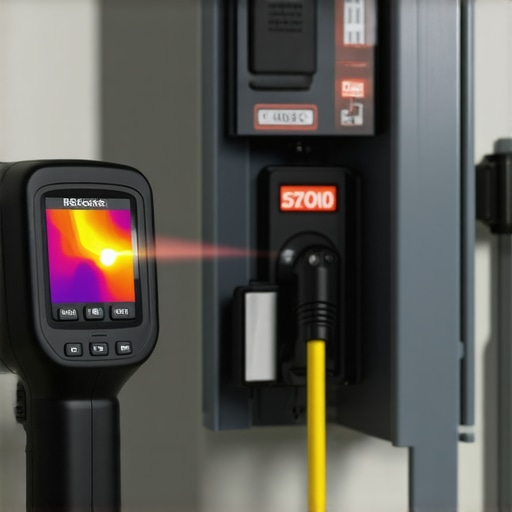
I don’t just set it and forget it. I’ve added a $200 thermal imaging camera to my toolkit, and it’s been a game-changer. By scanning the panel while the car is pulling a full 48 amps, I can see ‘hot spots’ long before they turn into a melted mess. If you ever wonder the reason your ev charger smells like burnt plastic, it’s usually a connection that’s glowing at 180 degrees Fahrenheit under the surface. I follow the guidelines set by groups like the InterNational Electrical Testing Association (NETA), which suggest that any temperature difference of more than 4°C between similar components under load warrants immediate investigation to prevent hardware failure.
Use a Thermal Camera to Find Hidden Problems
The beauty of a thermal scan is that it catches human error that a visual inspection misses. Even if you followed every step of ensuring code compliance when installing EV chargers, a single lug that has loosened due to thermal expansion can become a fire hazard. I make it a point to scan my breaker and the wall unit itself twice a year. If I see a bright white glare on the screen where it should be a dull orange, I know a connection needs re-torquing. This proactive approach is the only way to avoid the frustration of troubleshooting ev charger connectivity problems that are actually caused by internal heat spikes.
How do I keep my charging setup healthy for the next decade?
The secret isn’t just checking the wires; it’s about the connector itself. I’ve started using a specialized contact cleaner and a small set of the essential spare parts to keep for your home charging unit. I check for pitting or carbon buildup on the J1772 pins every few months. If you see black soot or signs of arcing, stop immediately. You might need to learn how to replace a frayed cable without buying a new station before it damages the car’s inlet. I also keep a close eye on the software side. Even if you aren’t a ‘tech person,’ knowing how to update the firmware on your smart charging station is non-negotiable now. Manufacturers are constantly pushing patches that improve thermal management. If you are still seeing errors, check out these ev charger troubleshooting expert tips for common issues to see if it’s a known bug.
Prepare for the Bidirectional Charging Revolution
The landscape is shifting toward bidirectional charging, or ‘Vehicle-to-Home’ (V2H). In the next five years, your charger won’t just be a straw drinking from the grid; it will be the source that feeds your house during a blackout. This means your panel will be working twice as hard, switching between import and export modes. If you haven’t looked into panel upgrade strategies to meet ev charging code requirements in 2025, you’re going to be behind the curve when these features become standard. Beyond just the panel, consider the physical environment. If your unit is outside, how to protect your outdoor ev charger from heavy rain and snow becomes a weekly concern. I use a simple silicone dielectric grease on the plug contacts to prevent moisture from causing micro-arcs. I challenge you this weekend to grab a non-contact infrared thermometer and point it at your breaker while your car is charging. If it’s reading over 140°F, it’s time to call a pro and talk about troubleshooting ev chargers common compliance pitfalls and fixes.
The High-Voltage Secrets I Learned the Hard Way
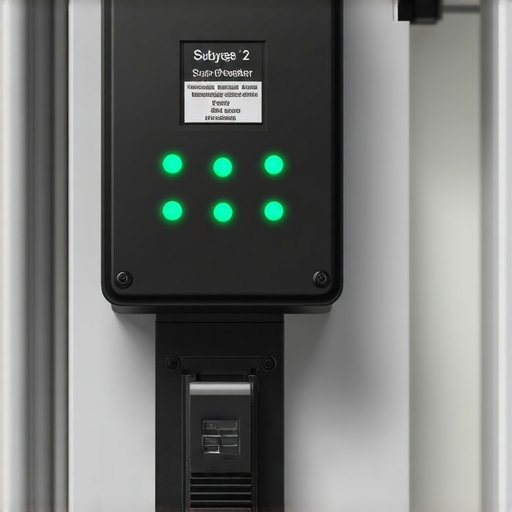
After years of wrestling with electrical gremlins, I’ve realized that a stable charger isn’t a result of luck; it’s a result of discipline. First, stop treating your grounding wire like an afterthought. I used to think as long as the light was green, the circuit was perfect, but high-frequency interference is invisible. Second, don’t ignore the ‘gut feeling’ of a warm breaker. If you find yourself troubleshooting ev chargers common compliance pitfalls and fixes, remember that heat is your clearest indicator of a loose connection. Finally, I’ve learned that code isn’t a hurdle—it’s a blueprint for reliability. People who cut corners on ensuring code compliance when installing EV chargers are usually the ones calling me at midnight when their car won’t start.
The Diagnostic Kit I Swear By for Garage Reliability
If you’re serious about maintaining your setup, you need more than a standard toolbox. I personally trust a thermal imaging camera above all else; it’s the only way to see if your breaker is under-spec before it melts. I also recommend a high-quality torque wrench to prevent the vibration-induced loosening that causes so many headaches. For those looking to dive deeper, keep a copy of the NEC Handbook nearby and always stock the essential spare parts to keep for your home charging unit. These tools aren’t just for professionals; they are for any homeowner who values their time and their vehicle’s battery health.
Claim Your Spot in the Electric Future
Transitioning to an EV is a major shift, and it’s natural to feel a bit overwhelmed when things don’t work perfectly. But remember, every wire you snug and every how to verify code compliance for your ev charger installation check you perform is making your home smarter and safer. You’ve done the hard part by making the switch to electric; now, just give your charging system the attention it deserves. Whether you’re upgrading your panel for better ev charging performance or just cleaning your contacts, you’re building a foundation that will last for decades. Have you ever discovered a loose wire or a hot breaker during a routine check? Let me know in the comments below!