I’ll never forget the skeptical look on my brother-in-law’s face when he saw the permit for my garage’s electrical overhaul. To him, it looked like a lot of money spent on a glorified toaster plug. But I had a hunch. I remember standing in my driveway, coffee in hand, watching the electrician pull the thick 6-gauge wire through the conduit. It felt like overkill at the time, especially since my first EV was just a tiny commuter car. But I kept thinking about the long game. Fast forward to when we both decided to list our homes in the same neighborhood. While his listing languished for months, mine became a bidding war focal point. It wasn’t the kitchen granite or the fresh paint; it was the ‘future-proof’ garage. I learned the hard way that a professional EV setup isn’t just about juice—it’s about property equity. Today, I’m going to show you why that ‘extra’ work in your panel is actually a down payment on your next home’s profit.
The Day My Garage Outsold the Rest of the Block
I’ll let you in on a secret: I once tried to cut corners. I thought I could skip the heavy lifting and just learn how to add an ev charger without a 200 amp panel upgrade. It worked for a week, then the flickering started. I didn’t realize that why your ev charger is causing your tv to flicker was a sign of a much deeper, more expensive problem. That mistake cost me a weekend of panic and a hefty bill to fix what I should have done right the first time. But that failure taught me the most valuable lesson in home ownership: buyers today aren’t looking for just a house; they’re looking for a hub.
When you invest in a pro setup, you aren’t just buying a charger; you’re building a system. This means ensuring code compliance when installing ev chargers so that the home inspector doesn’t flag your property the moment a sale is pending. I’ve seen so many deals fall through because of the permit error that stops home charger installs in their tracks. I remember the cold sweat I broke into when my first ‘DIY’ attempt led to the reason your ev charger smells like burnt plastic. It was a humbling moment that proved you can’t just wing it with high-voltage equipment. That’s why a ‘Pro’ setup is the gold standard. It’s not just about the charger on the wall; it’s about the code compliance essentials for ev charger installations in 2025 that give future buyers peace of mind. They want to know the house is ready for the next decade of transportation.
Is This Really Worth the Investment Right Now?
You might be thinking, ‘Is this just another tech fad that will be obsolete in three years?’ Here’s the kicker: according to data from Zillow, homes mentioned as having an EV charging station can sell for up to 1.5% more than similar homes without them. On a $500,000 home, that’s an extra $7,500 in your pocket just for having the right wires in the wall. It’s the modern version of a finished basement or a gourmet kitchen. People want the convenience of how to prep your homes electrical for a future ev purchase already handled for them.
Have you ever looked at your electrical panel and felt a bit of ‘breaker-envy’ seeing your neighbor’s sleek setup? Or maybe you’ve worried that your older home just can’t handle the load? Trust me, I’ve been there, staring at a 100-amp box and wondering if I was about to blow the whole neighborhood’s grid. We’re going to dive into the panel upgrades for ev chargers what you need to know so you can stop worrying and start building equity. Let’s get your home ready for the next generation of drivers.
Do the Math Before You Buy the Breaker
Think of your home’s electrical panel like a dinner party table. You only have so many chairs (amps) available. If you invite a massive guest like a Level 2 charger without checking if there’s a seat left, someone—likely your air conditioner or your oven—is going to get kicked out. This is where most people fail. They assume a 200-amp service means they have 200 amps to play with, but that’s rarely the case. Before you even touch a screwdriver, you need to know how to tell if your utility meter can handle the extra load. If you skip this, why your ev permit application requires a load calculation worksheet will become painfully clear when the city inspector tosses your paperwork back at you.
I remember a project where the homeowner was adamant they didn’t need a panel upgrade. They had 100 amps and thought they could just “be careful.” I watched as they turned on their dryer while the car was charging, and the main breaker didn’t just trip—it hummed with a terrifying mechanical vibration before giving up the ghost. If you’re tight on space, you don’t always need a $3,000 service overhaul. You can look into how to use load shedding devices to avoid a full service upgrade. These gadgets act like a bouncer at the door, pausing your car’s charging if the kitchen starts pulling too much power.
Choose the Right Wire or Risk a Meltdown
Heat is the enemy of electricity. When you run 40 or 48 amps through a wire for eight hours straight, that wire gets hot. If the wire is too thin, it turns into a heating element inside your walls. This is why understanding the exact wire gauge you need for a 50 amp ev circuit is non-negotiable. Most DIYers see a 50-amp breaker and grab 8-gauge wire because it’s cheaper and easier to bend. But for a continuous load like an EV, you want 6-gauge copper. It’s the difference between a fire hazard and a “set it and forget it” system.
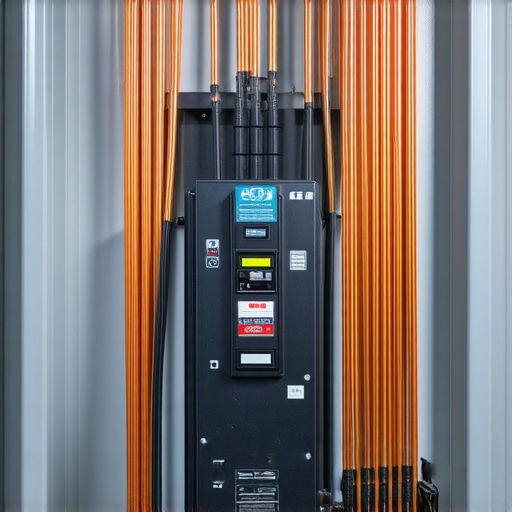
This brings us to a common point of confusion: why your electrician recommends a 60 amp circuit for a 48 amp charger. It’s the “80% rule.” You never want to run a circuit at 100% capacity for hours. I’ve seen what happens when people ignore this; the reason your ev charger smells like burnt plastic is usually a loose connection or an undersized wire that finally gave up. I once found a meltdown inside a junction box that looked like a marshmallow roasted over a campfire—all because the installer used “close enough” wiring.
Little Details That Make or Break the Inspection
Once the heavy lifting is done, the “pro” difference shows up in the finishing touches. A sloppy install might charge your car, but it won’t pass a sale inspection later. You need to how to verify code compliance for your ev charger installation by checking local height requirements. Did you know the exact distance your charger must be from the garage floor is actually a safety code to prevent explosive gases from reaching the electrical arc? Even something as simple as the proper way to seal conduit openings against spiders and dust can prevent a short circuit three years down the line when a nest bridges two terminals together. These are the small wins that build the long-term equity we talked about earlier.
Most homeowners believe that a 200-amp panel is the ultimate finish line for home electrification. I’m going to tell you something controversial: it might actually be a waste of your money. If you have a 100 or 150-amp service and use intelligent power management, you can often avoid a $4,000 utility upgrade while still charging at full speed. This is where panel upgrade strategies to meet ev charging code requirements in 2025 come into play. It’s about being surgical with your infrastructure, not just throwing more raw amps at the problem. By using technology instead of just bigger copper, you can save thousands and still pass every inspection.
Stop Chasing Amps and Start Managing Loads
But here is the ‘Oops’ factor that ruins even the most expensive installs: the torque wrench. Most people—and even some general electricians—think ‘hand-tight’ is enough for the lugs. It isn’t. According to the National Fire Protection Association (NFPA 70), specific torque settings are now a mandatory part of the National Electrical Code because loose connections are the leading cause of electrical fires in high-draw circuits. If you don’t see your installer pull out a calibrated torque driver, you need to ask why your charger needs a specific torque setting to pass inspection. A connection that is off by just a few inch-pounds can lead to thermal expansion over time, eventually causing why your main lugs might be loose after a year of charging. This is a safety hazard that doesn’t show up on day one, but it’s a ticking clock for your home’s reliability.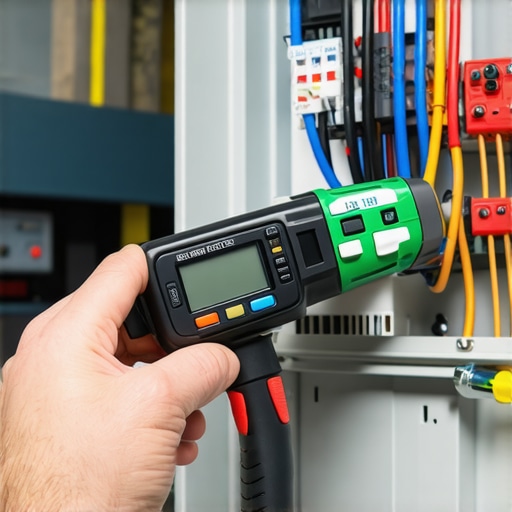
Why does my safety breaker keep tripping when the car is perfectly fine?
One of the most frustrating ‘advanced’ issues I see is the battle between two electronic brains. Modern EV chargers have built-in Ground Fault Circuit Interrupter (GFCI) protection. If your local code requires a GFCI breaker in the panel as well, you often end up with ‘nuisance tripping.’ The two systems essentially get into a digital shouting match over the electrical signature, and the breaker wins by cutting the power. You’ll want to look into why the gfci in your panel keeps nuisance tripping your charger to solve this without compromising safety. This is exactly why how to find an electrician who actually understands ev codes is so critical; a standard guy might just swap the breaker for a non-GFCI version to ‘fix’ it, which is a massive code violation, rather than diagnosing the crosstalk properly.We also need to talk about the hidden ‘phantom’ errors. Sometimes, it’s not the wires at all, but the software. If you’re seeing a red ring on your charger, don’t panic and call the utility company yet. Start with ev charger troubleshooting expert tips for common issues. I’ve seen homeowners spend hundreds on service calls only to realize they just needed to learn how to update the firmware on your smart charging station. Have you ever fallen into this trap of over-complicating a simple fix, or maybe spent thousands on an upgrade you didn’t actually need? Let me know in the comments.I carry a thermal imaging camera in my tool bag now. It sounds paranoid, but after seeing a neighbor’s subpanel glow like a neon sign under a 48-amp load, I’m a believer. If you want to keep your system from becoming a cautionary tale, you need to think like a technician. Most people install the box and never look at it again, but that’s how you end up with why your ev plug contacts look burnt and what to do next. I make it a habit to check my connections every six months. It takes ten minutes but saves thousands.
The One Tool Most DIYers Skip That Actually Saves Your House
Every pro I respect uses a calibrated torque screwdriver. It’s not just a suggestion; the National Electrical Code (NEC) Section 110.14(D) explicitly mandates using a torque tool where a value is indicated on the equipment. I’ve seen ‘hand-tight’ terminals vibrate loose due to the thermal cycling of daily charging. If you’re handling your own upkeep, you should also know how to diagnose a faulty internal relay in your charging station before it completely fails. It usually starts with a faint clicking or a slight delay in the charging handshake. Identifying these sounds early is the difference between a quick part swap and buying a whole new unit. If the software starts acting up, don’t immediately blame the hardware; I’ve found that troubleshooting ev charger connectivity problems often reveals a simple IP conflict with a smart fridge rather than a dead motherboard.
How can I keep my charging speeds high for years?
Maintenance isn’t just about safety; it’s about performance. Dust and oxidation are the silent killers of efficiency. In the winter, you’ll notice why some ev chargers work better with cold weather than others often comes down to the quality of the thermal management within the unit. Keep your ports clean with a blast of compressed air and always check for debris inside the J1772 handle. I also recommend keeping the essential spare parts to keep for your home charging unit, like a spare holster or a high-quality replacement cable. By staying ahead of the wear and tear, you ensure that your upgrading your panel for better ev charging performance wasn’t in vain.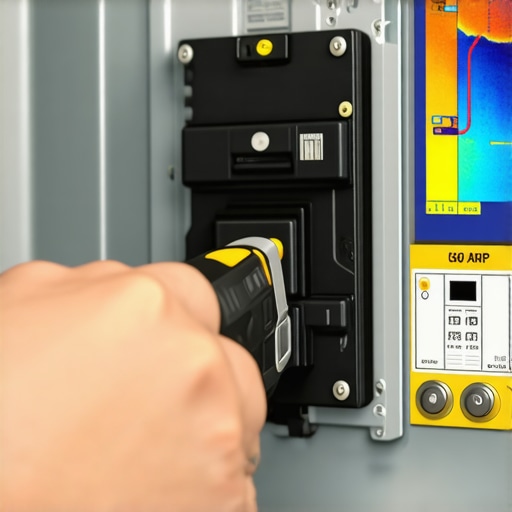
Why Your Next Car Might Actually Power Your Entire Home
We are rapidly moving toward a world of bidirectional charging, or ‘Vehicle-to-Home’ (V2H). In the next five years, your EV won’t just be a consumer of energy; it will be your home’s backup battery. This means the infrastructure you’re building today needs to be robust enough to handle power flowing in both directions. If you’re already planning for a second car, you’ll want to master how to balance multiple evs on a single home circuit now, so you don’t have to rip open your walls again when the technology shifts. My advice? Grab a thermal leak detector—even a cheap one—and scan your breaker panel while the car is charging at max speed tonight. If you see a ‘hot spot’ that looks significantly brighter than the rest, it’s time to tighten those lugs or call a pro before that heat turns into a permanent problem.
The Expensive Shortcuts I’ll Never Take Again
I’ve learned that the biggest mistake you can make isn’t spending too much on a pro install—it’s spending just enough to fail an inspection later. One major lightbulb moment for me was realizing that a load calculation isn’t just a suggestion; it’s a blueprint for safety. I used to think my 150-amp panel was invincible until I saw the lights dim when the dryer and the car competed for power. If you find yourself in a similar spot, checking out troubleshooting ev chargers common compliance pitfalls and fixes can save you from a lot of unnecessary stress. Another hard lesson: torque settings are non-negotiable. Using a standard screwdriver instead of a calibrated torque tool is how you end up with loose lugs and melted insulation a year down the road. Peace of mind comes from knowing every connection is tightened to the exact inch-pound required by code.
The Only Toolkit That Matters for EV Confidence
To truly future-proof your setup, you need more than just a charger. I personally rely on a few specific resources to keep things running perfectly. First, the 2025 NEC handbook is my bible for code compliance essentials for ev charger installations in 2025. Second, I always keep a thermal leak detector handy; it’s the easiest way to spot a failing breaker before it trips. For software hiccups, I frequently refer back to ev charger troubleshooting expert tips for common issues because most ‘hardware’ problems are actually just connectivity glitches. Finally, I recommend a high-quality Wi-Fi extender for the garage; a smart charger is only as smart as its signal strength.
#IMAGE_PLACEHOLDER_E#
Start Your Home’s High-Voltage Transformation Today
Building a pro-grade charging station is about more than just juice—it’s about preparing your home for the next thirty years. It’s a statement that your property is modern, efficient, and ready for the future. As you move forward, remember that upgrading your panel for better ev charging performance is the foundation of a reliable system. Don’t let the technical details intimidate you; instead, use them as a checklist for excellence. Whether you’re doing the prep work yourself or learning how to find an electrician who actually understands ev codes, you’re making a high-value investment in your home’s longevity. Have you ever encountered a surprising electrical ‘quirk’ while prepping your garage for a new EV? Let me know in the comments below!