It was 5:00 AM, and the thermometer on my porch read a bitter -4 degrees. I hopped into my EV, expecting a full charge, but instead, I was greeted by a dashboard warning and a measly 15 miles of range. My budget-friendly charger had frozen up—literally. It was a humiliating realization. I’d spent thousands on a high-tech car only to be defeated by a cheap plastic box that couldn’t handle a Colorado frost. [IMAGE_PLACEHOLDER]
Winter Proofing Your Morning Routine
If you have ever stood in your pajamas, frantically shaking a charging handle that’s frozen into its holster, you know the rage I’m talking about. The truth is, not all chargers are created equal when the mercury drops. Some are built with high-grade components that stay flexible and efficient, while others turn into glorified paperweights. Today, I’m going to pull back the curtain on why your neighbor’s car is charging fine while yours is struggling, and exactly what you can do to fix it. We’ll look at everything from thermal management to why 3 maintenance tasks that keep your outdoor charger running through winter are non-negotiable.
Is a high-end charger actually worth the money?
I used to be the guy who said electricity is electricity. I bought a generic unit off an auction site because I wanted to save a few bucks. That was a massive mistake. That unit lacked proper thermal regulation, and on cold days, it would throttle the power so low that I’d barely get any range at all. I didn’t realize that why your charging station isn’t reaching its full 48-amp potential often comes down to how the internal hardware reacts to ambient temperature. According to research from the Idaho National Laboratory, charging rates can drop by as much as 36 percent in freezing temperatures because of the chemical physics of the battery and the charger’s struggle to maintain current. I want to help you avoid that same empty tank feeling. Have you ever woken up to find your charger completely unresponsive during a cold snap? It’s a common headache, but it’s usually avoidable. Often, the issue is as simple as ev charger troubleshooting for internal sensors that are too sensitive to the frost. Let’s dive into the science of why some hardware just handles the ice better.
Get Your Hardware Ready for the Deep Freeze
Think of your EV charger like a garden hose. In the summer, it’s flexible and easy to move. But when it drops below zero, that cheap plastic turns into a brittle, unyielding rod. I learned this the hard way when I tried to coil my budget cable in January and heard a sickening crack. To avoid this, you need a cable rated for cold weather—typically high-quality rubber instead of PVC. If you’re building a setup from scratch, knowing the exact wire gauge you need for a 50-amp ev circuit is the difference between a warm, efficient charge and a wasted night. Resistance builds heat, and in the winter, you want that energy going into the battery, not warming up a thin wire in your wall.
Give Your Electrical Panel a Fighting Chance
Your home’s electrical panel is like an athlete’s heart; it has to pump harder when the conditions get tough. When the heater is blasting, the water heater is cycling, and your car is thirsty for juice, a 100-amp service often chokes. I once had a client whose garage lights would dim every time their Tesla started its pre-conditioning cycle. We found their breaker was literally humming from the strain. This is why upgrading your panel for better ev charging performance is often the first real step in winter-proofing. It’s not just about capacity; it’s about stability. If you’re pushing your system to the limit, you might need to look into how to use load shedding devices to avoid a full service upgrade, which intelligently pauses your car’s charging if the oven or dryer kicks on. 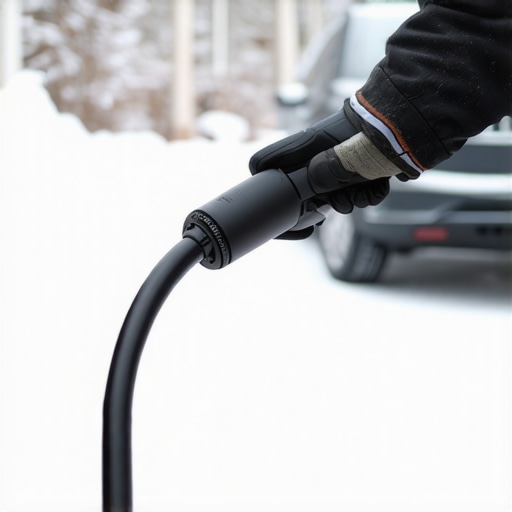
Protect the Connection Points
The most common point of failure isn’t the car or the charger—it’s the physical plug. Ice gets into the tiny crevices of the J1772 or NACS handle and freezes it solid. Last winter, I spent twenty minutes with a de-icer spray just trying to get to work. Now, I apply a tiny bit of dielectric grease to the pins and the holster. It acts like a raincoat for your electronics. Beyond the grease, you should learn how to stop your charger handle from sticking in the port by using a simple plug cover or even a magnetic snow parka for the charging port. It sounds overkill until you’re the one running late because your car is literally tethered to your house by a block of ice.
Stay on the Right Side of the Law
Don’t let the cold tempt you into shortcuts. I’ve seen people run orange extension cords across snowy driveways, which is a recipe for a fire or a short circuit. When you are modifying your home’s guts, following code compliance essentials for ev charger installations in 2025 is your safety net. Inspectors look for specific things in cold climates, like proper grounding and weather-rated enclosures. If you skip these, you might find that why the city inspector failed your garage wiring usually boils down to using indoor-rated components in an outdoor environment. I once saw a DIY install where the conduit hadn’t been buried deep enough, and the ground heave from the frost actually snapped the PVC pipe like a twig. Always check the specific depth requirements for underground ev wiring to keep your investment safe from the literal earth moving beneath it.
Once you’ve conquered the ice, you might think you’re in the clear. But as I’ve learned from years of tinkering and helping neighbors with their setups, the real issues often hide in the technical details that even ‘handy’ DIYers miss. Everyone says that as long as you have a 240V outlet and a matching breaker, you are ready to roll. In my experience, that’s a dangerous oversimplification. High-speed EV charging isn’t like running a toaster; it’s a continuous load that can last for ten hours straight. This creates a thermal stress on your home’s infrastructure that most people never consider until something starts to smell like burnt ozone.
Stop Guessing on Your Terminal Tightness
The most common ‘oops’ factor I see isn’t a faulty charger—it’s a loose screw. When you install a high-amp breaker, you can’t just tighten it until it feels ‘snug.’ Heat causes metal to expand and contract. Over hundreds of charging cycles, a slightly loose connection will wiggle itself even looser, creating resistance, more heat, and eventually a fire. I always tell people that the specific torque settings that prevent panel fires during high load charging are the most important numbers in your manual. If you didn’t use a calibrated torque wrench on your lugs, you haven’t finished the job. It’s a tiny detail that separates a professional install from a ticking time bomb.
The $20 Outlet That Could Torch Your Garage
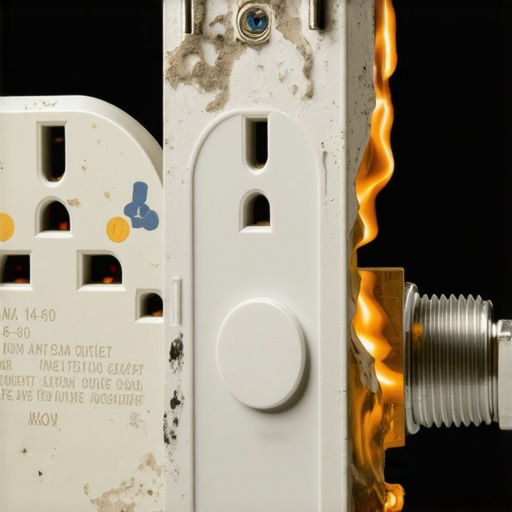
Here is a contrarian take: stop buying the cheapest NEMA 14-50 outlet you can find at the big-box hardware store. Those $15-$20 outlets are designed for ranges that draw power intermittently. They are not built for the 100% duty cycle of an electric vehicle. I’ve seen cheap outlets literally melt into a puddle of plastic because they couldn’t dissipate the heat of a 40-amp draw. If you want to avoid ev charger troubleshooting sessions in the middle of the night, you need an industrial-grade receptacle. Learning how to pick a nema 14-50 outlet that wont melt under pressure is the best insurance policy you can buy for your garage.
Does your 100-amp panel have a secret limit?
I get asked this constantly by homeowners living in older neighborhoods. They see two empty slots in their panel and assume they’re good to go. The nuance here is the ‘load calculation.’ Your panel might have physical space, but the total demand of your HVAC, water heater, and oven might already be tapping out your service. According to data from the National Fire Protection Association (NFPA), residential electrical failures are often the result of exceeding the system’s calculated capacity. This is why the hidden cost of skipping a panel load calculation often hits people in the form of a failed inspection or a main breaker that trips every time the dryer kicks on. If you’re tight on capacity, you might need to explore how to add an ev charger without a 200-amp panel upgrade using smart load-management tech.
Verify Your Grounding Before the Inspector Arrives
One advanced mistake I see is assuming a ‘ground’ is just a wire attached to a rod. In high-load EV circuits, your ground needs to be pristine to prevent communication errors between the car and the wall unit. If you see a ‘check charger’ light, don’t just restart it. You should how to verify code compliance for your ev charger installation by checking the continuity of your ground path. A weak ground can cause phantom errors that are a nightmare to track down. Have you ever fallen into this trap of thinking ‘close enough’ was good enough for high-voltage wiring? Let me know in the comments. It’s always better to catch these nuances now than to deal with why your charging station isnt reaching its full 48-amp potential after you’ve already closed up the walls.
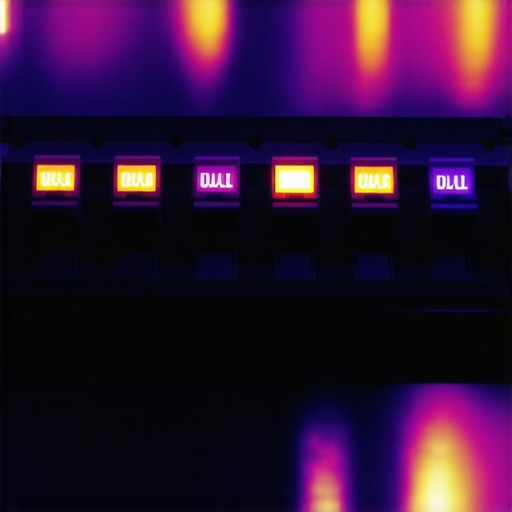
Once you’ve nailed the installation, the game shifts from just ‘getting it done’ to ‘keeping it alive.’ I treat my charger like a high-end appliance, not a light switch. Every six months, I grab my FLIR thermal camera—a tool I swear by—and scan the breaker while the car is pulling a full 48 amps. If you see a glowing white-hot spot on a connection, you’ve found a potential fire before it starts. This is one of those 3 maintenance tasks that keep your outdoor charger running through winter that most people ignore until they smell smoke. If you aren’t comfortable with a thermal camera, at least learn how to spot a dying breaker before it shuts down your charging session by listening for buzzing or feeling for excessive heat on the plastic casing.
Keep Your Gear Alive for the Long Haul
Software is the silent partner in your charging setup. I’ve seen firmware bugs cause chargers to hang in a ‘waiting’ state for no reason, or worse, fail to communicate with the car’s BMS (Battery Management System). Regularly checking how to update the firmware on your smart charging station ensures you have the latest safety protocols and charging curves. But software is only half the battle; you need to shield the physical hardware from ‘silent killers’ like power surges. I recommend every homeowner install a dedicated Surge Protective Device (SPD). Understanding why your ev charger needs a surge protector in the panel can save you from a $700 motherboard replacement after a summer thunderstorm. If you want total peace of mind, look for 3 signs you need a whole house surge protector for your ev to protect everything from your kitchen appliances to your car’s sensitive electronics.
How do I keep my charging setup healthy for the next decade?
Maintenance isn’t just about fixing what’s broken; it’s about anticipating wear. According to the National Electrical Code (NEC) Article 625, EV charging equipment must be maintained and inspected to ensure that the grounding path remains intact and that the ventilation requirements (if any) are not obstructed. I make it a habit to check the physical cable for nicks or UV damage every spring. If you’re planning on adding a second vehicle to the fleet, you should start looking into panel upgrade strategies to meet ev charging code requirements in 2025 now. I predict that within the next five years, Vehicle-to-Home (V2H) technology will become standard, turning your car into a backup battery for your house. Prepping your system today by how to upgrade your homes service for dual ev charging will save you thousands in labor costs when that technology goes mainstream. If you haven’t done a thermal check on your panel in the last year, I strongly encourage you to book a quick inspection or grab a non-contact thermometer and do a baseline check yourself tonight while the car is plugged in. If anything feels hot to the touch, don’t wait—reach out to a pro at our contact us page before a small loose wire becomes a big expensive problem.
The Hardest Lessons I Learned While Frozen in My Garage
After years of dealing with sub-zero temperatures and high-voltage hardware, I have realized that the smallest oversight usually causes the biggest headaches. First, never underestimate the power of expansion and contraction; those copper wires move more than you think, which is why checking your torque settings is a seasonal necessity. Second, I learned the hard way that ‘water-resistant’ does not mean ‘ice-proof.’ If you leave your handle exposed, the internal locking mechanism will eventually fail. Finally, always trust your gut. If your car is making a strange sound or the charging speed feels off, it probably is. Understanding troubleshooting ev chargers common compliance pitfalls and fixes is often about catching these small cues before they lead to a complete system shutdown.
The Survival Gear I Actually Use Every Winter
I don’t just rely on luck to keep my car charged. My toolkit includes a high-quality non-contact thermal thermometer to check for hot spots on my breakers during deep-freeze charging sessions. I also keep a dedicated bottle of silicone-based de-icer that is safe for electronics, specifically for the charging port door. For those looking to dive deeper into the technical side, I highly recommend keeping a copy of the latest NEC guidelines or reading up on panel upgrades for ev chargers what you need to know. These resources are my go-to when I need to verify that my setup is still meeting the highest safety standards after a particularly brutal storm season.
Don’t Let the First Frost Freeze Your Progress
Transitioning to an electric vehicle is a journey, and winter is simply the final exam. By taking the time to secure your hardware and verify your electrical stability today, you are ensuring that your morning commute remains stress-free no matter what the thermometer says. Remember that ensuring code compliance when installing ev chargers is not just about passing an inspection; it is about protecting your home and your family. Once you have the right infrastructure in place, you can stop worrying about the cold and start enjoying the quiet, efficient power of your EV. If you ever find yourself stuck, don’t hesitate to revisit the basics of ev charger troubleshooting to get back on the road. Have you ever been stranded by a frozen charging handle or a tripped breaker in the middle of a snowstorm? Let me know your survival stories in the comments below!