I still remember the smell—that acrid, chemical tang of melting insulation that makes your heart sink into your stomach. It was three weeks after I’d installed my first ‘budget’ home charging setup. I thought I was being clever by using the same leftover wire I’d used for my dryer. But around 2:00 AM, my nostrils caught that unmistakable scent. I ran to the garage and found the junction box too hot to touch. The reason your ev charger smells like burnt plastic is usually simpler than you think, and in my case, it was a classic case of using residential-grade habits for an industrial-sized job. I learned the hard way that an EV isn’t just another appliance; it is a marathon runner that never stops to breathe. Today, I’m going to show you why the wire sitting behind your drywall might be your biggest bottleneck and how to choose the right ‘heavy-duty’ path to keep your home safe.
Why Standard Romex Isn’t Always the Hero of Your Garage
Residential wiring, specifically the NM-B cable we often call Romex, is fantastic for lights, outlets, and even your microwave. It’s designed for intermittent use. You pop some popcorn for three minutes, and the wire cools down. But an EV charger pulls a massive amount of current for eight, ten, or twelve hours straight. This is what we call a continuous load. Early in my DIY days, I made the mistake of ignoring the 80% rule, thinking I could push a standard residential circuit to its absolute limit without consequences. I quickly realized that the exact wire gauge you need for a 50-amp ev circuit changes significantly when you factor in the heat generated over long hours. Industrial-grade wiring, like THHN in conduit, handles heat dissipation much better than the plastic-jacketed wire stuffed into your insulation. According to the National Fire Protection Association (NFPA) in the NEC Handbook, continuous loads generate cumulative heat that can degrade wire insulation over time if the thermal rating isn’t strictly respected.
Is industrial-grade wire just a way for electricians to overcharge me?
It’s a fair question to ask because copper prices are no joke these days. You might look at a thick, stranded industrial wire and think it’s overkill for a simple home garage. However, the difference lies in the ‘insulation rating’ and the ‘jacket.’ Industrial wires are often rated for 90°C, while standard residential stuff might only be rated for 60°C or 75°C. When you are how to pick a nema 14-50 outlet that wont melt under pressure, you have to realize that the outlet is only as good as the wire feeding it. If that wire is struggling to breathe, the heat will travel right to the plug. Have you ever touched your charging cable after a long night and felt it was surprisingly warm? That’s your first hint that your system is working harder than it should.
The Core Difference Between Copper and Aluminum in High-Load Scenarios
We also need to talk about what’s actually inside that insulation. In many homes, aluminum is used for heavy feeders because it’s cheaper, but for the final run to your charger, I almost always advocate for copper. The the difference between copper and aluminum for ev wiring comes down to expansion and contraction. Aluminum moves more when it gets hot, which can loosen your connections over months of charging cycles. In an industrial setting, we use specific torque tools to prevent this, but at home, most people just ‘hand-tighten’ and pray. That’s a recipe for a fire. Using a high-strand-count copper wire—the kind you’d find in a factory—makes the installation more flexible and the connections much more secure against the vibrating reality of high-amperage electricity. Have you noticed any flickering lights or strange noises when you plug in your car? If so, we need to look at your wire grade immediately.
Don’t Guess Your Panel Capacity
Before you even touch a screwdriver, you have to play the numbers game. I’ve seen homeowners skip the math only to find their main breaker tripping the moment the dryer and the EV charger run at the same time. This is exactly why your ev permit application requires a load calculation worksheet. It’s not just red tape; it’s a map of your home’s electrical thirst. If your panel is already crowded, don’t panic—you might not need a massive service change. Often, you can learn how to add an ev charger without a 200 amp panel upgrade by using smart load-shedding devices that pause the charger when the oven kicks on. I once worked on a 1950s ranch where we managed this perfectly, saving the owner thousands in utility fees while still getting them a full Level 2 charge overnight.
The 60-Amp Secret for Faster Charging
Most people buy a 48-amp charger and assume a 50-amp circuit is plenty. It’s not. The National Electrical Code requires a circuit to be 125% of the continuous load. That’s why your electrician recommends a 60-amp circuit for a 48-amp charger. If you try to squeeze 48 amps through a 50-amp breaker for six hours, that breaker will get hot enough to cook an egg before it eventually fails. It’s like trying to run a marathon while breathing through a straw; eventually, your lungs—or in this case, your copper—will give out. Using the specific wire gauge that prevents voltage drop over long runs is also critical here, especially if your charger is on the far side of the house from the panel. 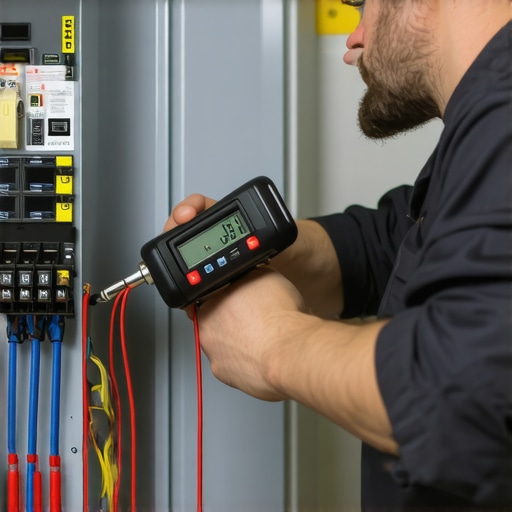
Torque Wrenches Aren’t Optional
If you think ‘tight enough’ is a valid measurement, your house is at risk. I’ve seen dozens of DIY jobs fail because the installer used a standard screwdriver. This is why your charger needs a specific torque setting to pass inspection. Under the heat of a continuous load, metal expands and contracts. If those lugs aren’t torqued to the exact inch-pounds specified by the manufacturer, the connection loosens, resistance builds, and things start to melt. I remember one specific inspection where the city official didn’t even look at the wires—he just pulled out his own torque wrench, and when the screw turned another quarter-turn, it was an automatic ‘Fail.’ It felt harsh, but that inspector potentially saved a garage from a midnight fire. To stay on the right side of the law, make sure you’re ensuring code compliance when installing ev chargers by following the terminal labeling to the letter.
Managing Heat in Finished Spaces
If you are running your lines through a finished ceiling, heat dissipation becomes an even bigger hurdle. When you how to run ev charging conduit through a finished ceiling, you must account for the ambient temperature inside those joist bays. Insulation acts like a blanket, keeping the heat in the wire rather than letting it escape. This is where choosing the right conduit material, like EMT or rigid PVC, makes a massive difference in the longevity of your system. I’ve found that even a few extra inches of clearance from a hot water pipe can be the difference between a system that lasts twenty years and one that requires ev charger troubleshooting expert tips for common issues just six months after installation.Most homeowners assume that if they buy the most expensive, ‘smartest’ charger on the market, they are buying speed and reliability. I’m going to go against the grain here: expensive smart chargers are often the primary source of ‘no-charge’ mornings. I’ve spent countless hours troubleshooting ev charger connectivity problems only to find that the car and the charger are stuck in a digital argument over firmware. If the software handshake fails, your car sits there empty. This is why your smart charger is actually slower than a basic plug-in model in real-world scenarios where stability beats features. According to the Electric Power Research Institute (EPRI), nearly 20% of residential charging failures are attributed to communication errors between the station and the vehicle’s onboard computer, rather than actual electrical faults.
Why Double Safety Layers Actually Break Your Setup
Then there is the ‘Double GFCI’ trap. Many DIYers see a requirement for a GFCI breaker in the garage and think, ‘More safety is always better.’ However, Level 2 chargers already have sensitive ground-fault protection built into their motherboards. When you stack a GFCI breaker on top of a GFCI-protected charger, they create ‘blind’ current leaks that cause the breaker to pop for no reason. This is why the gfci in your panel keeps nuisance tripping your charger. It’s a compliance headache that drives homeowners crazy because the equipment isn’t actually broken; it’s just over-engineered for its own good.
Can your breaker brand handle a ten-hour sprint?
Not all breakers are built for the marathon of EV charging. If you are using a cheaper, residential-grade breaker in a crowded panel, it will eventually lose its tension under the constant heat. I’ve identified the specific breaker brands that are known to overheat with evs through years of looking at melting plastic in the field. When a breaker heats up, it trips earlier than its rated amperage, leading to why your charging speed drops suddenly after 20 minutes. You think the car is full; in reality, the breaker is just gasping for air. If you’ve ever had a charger stop mid-cycle without a clear error code, you might need to learn how to diagnose a faulty internal relay in your charging station or check the breaker’s thermal health. 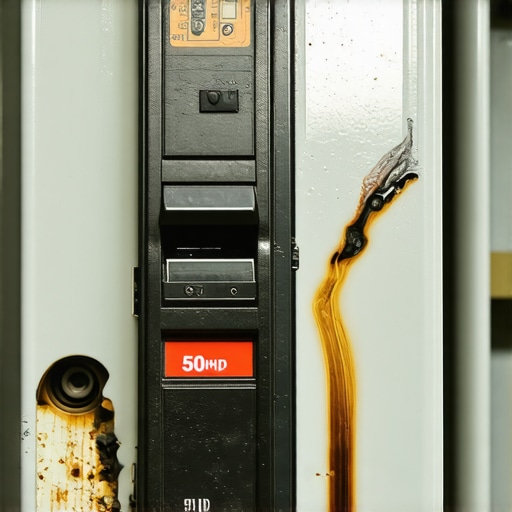
The Real Cost of Professional Compliance
Before you commit to a major project, remember that ensuring code compliance when installing ev chargers isn’t just about passing the inspection—it’s about preventing a house fire five years down the line. I once saw a DIY job where the owner used the wrong screws to mount the unit, and the constant vibration of the internal contactors eventually pulled the whole thing off the wall while it was live. Have you ever encountered a ‘mystery trip’ that vanished the next day? Let me know in the comments, and we can figure out if it’s a software glitch or a hardware heat issue.The Gear That Separates Pros From Fire Hazards
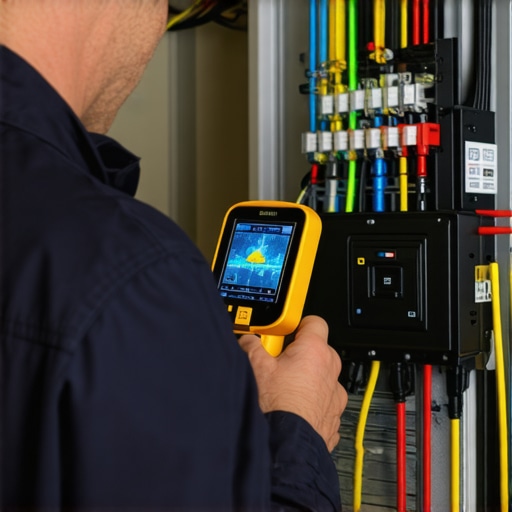
I don’t just walk away once the lights turn green. To really sleep at night, I rely on two specific tools that most DIYers—and even some pros—ignore: a calibrated torque screwdriver and a thermal imaging camera. If you want to know how to verify code compliance for your ev charger installation, you have to start with the physical connection. I personally use a Wera Kraftform torque set because the audible click ensures I’m hitting the exact inch-pounds required by National Electrical Code (NEC) Section 110.14(D). This specific code was updated to emphasize that manual tightening is simply insufficient for high-draw circuits. Without it, you’re just guessing, and in the world of high-voltage electricity, guessing leads to melted plastic and insurance claims. Once the system has been running at full tilt for an hour, I pull out a FLIR thermal camera. It’s the only way to see if a breaker is running hot before it starts to smell. This is one of those ev charger troubleshooting expert tips for common issues that can prevent a total system failure during a summer heatwave when the garage is already a sauna.
How do I keep my charger healthy for the next decade?
Maintaining an EV circuit isn’t about daily tinkering; it’s about a deliberate annual health check. Every twelve months, I recommend turning off the main breaker and performing a thorough visual inspection. Look for any subtle discoloration on the wire jackets near the terminals. If you see even a hint of brown or black, you have a high-resistance connection that needs immediate attention. You should also be ensuring code compliance when installing ev chargers by checking that your outdoor seals and conduit fittings are still watertight. Spiders and moisture are the silent killers of garage electronics, often causing internal shorts that are hard to track down. Keeping a few essential spare parts for your home charging unit, like a replacement holster or a spare gasket, can save you from a week of waiting while parts are on backorder.
If you’re planning on adding a second EV soon, stop thinking about individual circuits and start thinking about your home’s energy ecosystem. This is where upgrading your panel for better ev charging performance becomes unavoidable. We are rapidly moving toward a world of bidirectional charging, where your car serves as a backup battery for your house. If your panel is a crowded mess of legacy breakers now, it won’t handle the sophisticated gateways required for Vehicle-to-Home (V2H) technology. I’ve seen many homeowners struggle with troubleshooting ev charger connectivity problems simply because their older, unshielded panels create too much electromagnetic noise for the smart modules to communicate effectively. To stay ahead of the curve, you should investigate panel upgrade strategies to meet ev charging code requirements in 2025. My best advice for right now? Go buy a cheap thermal leak detector or an infrared thermometer—it’s an easy way to spot trouble before it becomes an emergency. Try scanning your breaker panel tonight after a long charging session and see if any circuit is significantly hotter than the others.
What My Biggest DIY Mistakes Taught Me About High-Voltage Safety
Over the years, I’ve realized that the distance between a ‘working’ charger and a ‘safe’ charger is measured in the details we often overlook. First, I learned that heat is cumulative; just because your breaker hasn’t tripped in the first twenty minutes doesn’t mean it won’t melt by hour six. This is exactly why why your ev permit application requires a load calculation worksheet—it prevents you from overtaxing a system that was never designed for a marathon. Second, the ‘smart’ in smart chargers refers to convenience, not electrical integrity. A fancy app won’t save a loose lug. Lastly, I’ve found that ensuring code compliance when installing ev chargers is the only way to truly guarantee your insurance company stays on your side if the unthinkable happens.
The Three Devices I Never Start an EV Project Without
To avoid the headaches of ev charger troubleshooting expert tips for common issues, I rely on a specific toolkit that goes beyond a standard hardware store haul. I always keep a calibrated torque screwdriver handy; without hitting the specific inch-pounds, you are essentially inviting a fire to start in your junction box. I also suggest every homeowner invest in a simple infrared thermometer. It’s a low-cost way to check if your panel is running too hot while you sleep. Finally, for anyone dealing with older homes, I recommend the NEC Handbook. It’s the literal bible of safety that explains how to verify code compliance for your ev charger installation without having to guess if your ground wire is sufficient. #IMAGE_PLACEHOLDER_E#
Your Path to a Safe and Reliable Home Power Grid
Transitioning to an electric vehicle is more than just buying a car; it’s an upgrade to your home’s fundamental utility. While the technical side can feel daunting, the peace of mind that comes from a rock-solid installation is worth every hour of research. Whether you are currently upgrading your panel for better ev charging performance or just trying to fix a nuisance trip, remember that your garage is now a high-power fueling station. Treat it with the respect it deserves, and it will serve you faithfully for years to come. Have you ever noticed your charging cable feeling unusually hot after a long night? Let me know in the comments below, and let’s figure out if it’s a normal thermal load or a sign of a deeper issue.