It was a Tuesday night, about 11:30 PM, when I smelled it—that acrid, chemical stench of ozone and melting vinyl wafting from the garage. I ran out, thinking my car was on fire, but the smell was coming from the wall. I popped the cover on my electrical panel and nearly jumped back. One specific breaker was literally sizzling. I didn’t know it then, but I had fallen into the classic trap of treating a high-draw EV charger like a simple coffee maker. It’s not. It’s a relentless, high-amperage beast that doesn’t take breaks.
Your Electrical Panel Wasn’t Built for a Marathon
Most of us grow up thinking a 50-amp breaker is a 50-amp breaker, regardless of the brand. But here’s the cold, hard truth: many residential panels were designed for intermittent loads. Your AC kicks on, cools the house, and shuts off. Your oven heats up and cycles. An EV charger is different. It pulls max power for six, eight, maybe twelve hours straight. This is what we call a continuous load. Early in my DIY journey, I made the mistake of swapping in a cheap, off-brand breaker just to save twenty bucks. That bargain ended up warping the plastic housing and almost ruining my entire bus bar. You really need to understand the specific breaker brands that are known to overheat with evs before you trust your home to a budget component. If you’ve noticed the reason your ev charger smells like burnt plastic, you aren’t alone; it’s usually the breaker-to-bus-bar connection failing under the strain of that constant heat.
Is a pricey industrial breaker actually worth the extra cash?
You might be wondering if you’re being up-sold on expensive gear. I get it. I’ve been there, staring at a $100 breaker versus a $15 one. But according to the National Electrical Code (NEC) Article 210.20(A), any circuit running for more than three hours is a continuous load and must be sized at 125% of that load. This is exactly why your electrician recommends a 60-amp circuit for a 48-amp charger. It’s not just a suggestion; it’s physics. Certain brands like Federal Pacific or older Sylvania Zinsco units are notorious for failing to trip even when they’re melting into a puddle. Have you ever touched your panel door during a charging session and felt a warm spot? If so, I want to hear about it—what brand of breaker are you currently running? We need to get that sorted before the warm spot becomes a fire department visit. To keep your home safe, you should look into panel upgrades for ev chargers specifically designed for these modern demands.
I remember helping my neighbor, Dave, install a generic level 2 unit last summer. We thought his 100-amp service could handle it because the math seemed simple enough in our heads. We were wrong. The moment his central air and the clothes dryer kicked in while the car was drawing a full 40 amps, the main breaker didn’t just trip; it groaned. That experience taught me that the hidden cost of skipping a panel load calculation isn’t just a permit fee—it’s the risk of a total blackout or a fried main lug during a heatwave.
Calculate Your Total Load Before Buying Parts
You cannot just eyeball your panel and assume there is room for a 50-amp circuit. You need to perform a formal load calculation. This involves adding up the square footage of your home, your large appliances (HVAC, water heater, range), and applying the proper demand factors. This is precisely why your ev permit application requires a load calculation worksheet. If you find your total exceeds 80% of your main service rating, you may need to learn how to add an ev charger without a 200-amp panel upgrade by using a smart load-shedding device that pauses your car’s charging when the oven is on.
Pick the Right Wire for Sustained Heat
Residential wiring like Romex (NM-B) is common, but it has a lower heat tolerance than individual wires in conduit. When a charger runs for hours, the heat builds up. If your run is long—say, from a basement panel to a detached garage—you must account for voltage drop. I always suggest stepping up to the specific wire gauge that prevents voltage drop over long runs to ensure your car actually gets the voltage it needs rather than losing it as heat in the walls. Don’t settle for the bare minimum; there is a the real difference between residential and industrial grade wire for evs, especially when it comes to the thickness of the insulation and its ability to withstand the vibration of a constant AC hum.
Torque Every Connection to Prevent Thermal Runaway
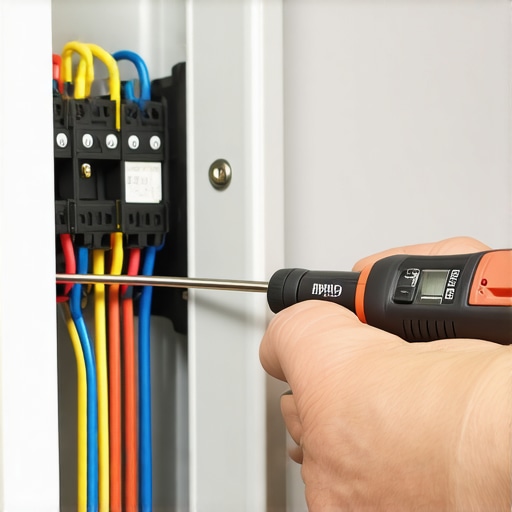
This is where most DIYers and even some pros fail. You cannot just tighten a breaker screw ‘until it feels tight.’ Heat causes metal to expand and contract. Over time, a slightly loose screw becomes a high-resistance point that melts your breaker. You must use a calibrated torque wrench. I’ve seen chargers fail within a month because someone skipped checking why your charger needs a specific torque setting to pass inspection. Even a few inch-pounds of difference can be the gap between a safe installation and a fire hazard.
Skip the Plug and Hardwire Your Unit
While a NEMA 14-50 plug seems convenient, it’s often the weakest link. Most consumer-grade outlets aren’t designed to have 40 amps surging through them for 10 hours every night. If you want the most robust connection, hardwiring is the way to go. It eliminates the plug-to-socket interface, which is a common failure point. Understanding the real difference between hardwired and plug-in charging stations helps you realize that hardwiring often allows for higher charging speeds, sometimes up to 48 or 80 amps, provided your panel can take it. Finally, always verify your work against the latest NEC updates; ensuring code compliance when installing ev chargers is the only way to guarantee your insurance company will have your back if something ever goes wrong.
Let’s dig deeper into what the ‘experts’ often get wrong. Most electricians will tell you that if you want a Level 2 charger, you absolutely must upgrade to a 200-amp service. I disagree. While upgrading your panel for better ev charging performance is the gold standard, it isn’t the only way to play the game safely. If you have a 100-amp or 125-amp service, you can often save thousands by learning how to use load shedding devices to avoid a full service upgrade. These ‘smart’ systems act as a digital traffic cop, monitoring your home’s total draw and temporarily throttling or pausing the car charger if the HVAC and water heater are working too hard. It’s a sophisticated workaround that keeps you code-compliant without the massive utility bill for a service lateral upgrade.
The Hidden Risk in Your Main Lugs
Here is the ‘oops’ factor that almost no one checks: your main lugs. You might have torqued your new 60-amp breaker perfectly, but the vibration and thermal cycling of charging an EV daily can actually loosen the main connections coming from the utility meter. I’ve seen panels where the branch circuits were pristine, but the main lugs were charring because they hadn’t been retightened in twenty years. This is exactly why your main lugs might be loose after a year of charging. A study by the National Institute of Standards and Technology (NIST) confirms that even a 10% decrease in terminal torque can cause significant localized heating, leading to terminal failure. 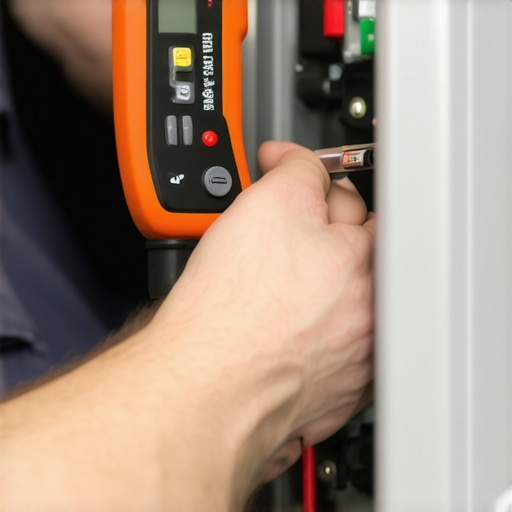
Why does the GFCI trip when everything looks perfect?
This is one of the most common ev charger troubleshooting expert tips for common issues: the dreaded ‘nuisance trip.’ Many local codes now require a GFCI breaker in the panel for any garage outlet. However, almost all Level 2 chargers have their own internal GFCI logic. When you put a GFCI charger on a GFCI breaker, they can interfere with each other, leading to random shut-offs in the middle of the night. If you’re struggling with this, you need to understand why the gfci in your panel keeps nuisance tripping your charger before you start replacing expensive hardware. Beyond the physical wires, don’t overlook the software. If your unit is ‘smart,’ you might find that why your ev charging app requires a cloud subscription is more than just a marketing gimmick—it can be a point of failure if your Wi-Fi signal in the garage is weak. If you are struggling with a persistent error, looking into troubleshooting ev chargers common compliance pitfalls and fixes can save you a service call. Finally, before you call the job done, make sure you know how to verify code compliance for your ev charger installation to protect your home’s resale value. Have you ever fallen into the trap of thinking a simple breaker swap was enough? Let me know in the comments.Maintenance isn’t just about wiping the dust off the plastic box; it’s about ensuring the high-amperage highway in your walls stays cool. If you’re serious about your home’s safety, you need to think like a commercial facility manager. According to the NFPA 70B Standard for Electrical Equipment Maintenance, which was recently elevated from a recommendation to a full standard, regular thermal inspections are the only way to catch ‘invisible’ failures before they ignite. I personally use a small FLIR thermal camera attachment for my smartphone. Once a month, while the car is pulling a full load, I scan the panel. If I see a bright purple-to-white glow on a single wire or breaker, I know a connection is loosening. This is the expert way to handle troubleshooting ev chargers common compliance pitfalls and fixes before they become midnight emergencies. Beyond the camera, there is the persistent issue of ‘thermal creep.’ Even if you did everything right on day one, copper is soft. It slightly compresses under the constant pressure of a lug, and the repeated heating and cooling cycles can eventually back a screw out just a fraction of a millimeter. This is exactly why your main lugs might be loose after a year of charging. I’ve made it a habit to kill the main power once a year and re-verify every terminal. But don’t just ‘crank it’ until you can’t turn it anymore; over-tightening is just as dangerous as under-tightening because it strips the threads and weakens the metal. You must follow the specific torque wrench settings for a wall connector or your specific breaker brand. I use a CDI Dial Torque Wrench because it provides a precise, visual reading of the tension, ensuring I hit the exact inch-pounds required by the manufacturer. 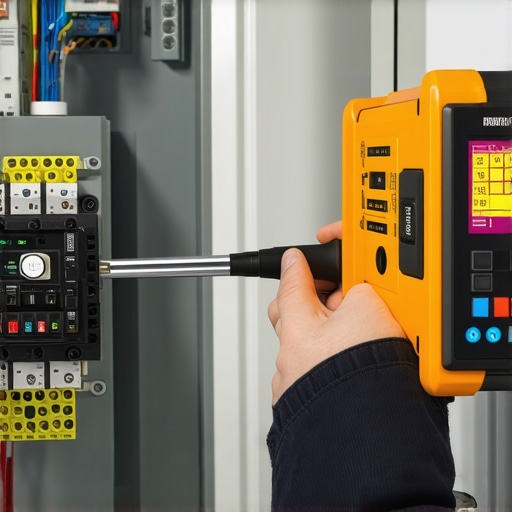 You also need to protect the ‘brains’ of the operation. Voltage spikes are the silent killers of expensive Level 2 motherboards, and a standard power strip won’t help you here. This is exactly why your main service panel needs a surge protector for your ev. Most people don’t realize that a lightning strike three blocks away or a utility transformer malfunction can send a ripple through the grid that fries your charger’s communication board instantly.
How do I keep my home charging setup healthy for the long haul?
The future of this tech is moving toward bidirectional charging—where your car can actually power your house during a blackout. This makes how to verify code compliance for your ev charger installation even more critical because the flow of electricity won’t be one-way anymore. To stay ahead, keep your charger’s firmware updated via the manufacturer’s app to patch safety bugs and physically inspect the pins of your charging handle. If you see any pitting, green oxidation, or discoloration, you’re looking at why your ev plug contacts look burnt and what to do next. My advice? Grab a calibrated torque wrench this weekend and check your panel connections. It’s the single most authoritative thing you can do to ensure your home remains a safe haven rather than a high-voltage liability.
The Mistakes That Cost Me a Quiet Night’s Sleep
Looking back at that sizzling breaker, I realized I’d treated my home’s electrical system as a static entity when it is actually a dynamic network that reacts to stress. One huge ‘lightbulb moment’ for me was realizing that code compliance isn’t just about passing an inspection; it’s about fundamental life safety. I used to think a breaker trip was a nuisance, but now I see it as a life-saving ‘thank you’ from my equipment. Another hard lesson? Never assume the previous homeowner did things right. I found out the hard way that panel upgrade strategies to meet ev charging code requirements in 2025 are significantly stricter for a reason—the continuous loads we are pulling now are unprecedented in residential history. I also learned that if your car stops charging randomly, troubleshooting ev charger connectivity problems is often easier than diagnosing a physical wire failure, so always check your Wi-Fi signal first.
The Toolkit That Makes a DIYer Look Like a Pro
If you’re going to touch your own panel or supervise an install, you need more than a standard screwdriver. I personally trust and recommend three specific resources. First, a CDI Dial Torque Wrench is non-negotiable; it takes the guesswork out of terminal pressure, and you’ll be shocked how ‘loose’ a connection feels when it’s actually at the manufacturer’s spec. Second, keep a digital copy of the code compliance essentials for ev charger installations in 2025 on your phone to reference during the build. Third, a basic thermal camera attachment for your phone is the only way to see ‘invisible’ heat building up before it has a chance to melt your hardware. #IMAGE_PLACEHOLDER_E#
Ready to Turn Your Garage into a Powerhouse?
Taking control of your home’s energy doesn’t have to be an intimidating chore. By focusing on a proper panel upgrade and staying diligent with troubleshooting, you aren’t just charging a vehicle—you’re future-proofing your home. Whether you are installing a new ev charger or just verifying your existing code compliance, doing it the right way ensures your family sleeps soundly while your car fuels up. Beyond the safety aspect, consider the real reason your home value increases with a pro ev setup: modern buyers actively look for high-capacity, safe electrical systems that are ready for the electric transition. You’ve done the research and put in the work; now enjoy the convenience of a gas-station-free life with total confidence in your home’s wiring.
Have you checked the torque settings on your breaker screws since your charger was installed? Let me know what you found in the comments below!