I remember standing in my kitchen, staring at a half-frozen pizza while the entire house sat in pitch-black silence. I had just plugged in my new EV, thinking I was being efficient by charging it while the dryer was running and the AC was humming along. I was wrong. I had made the classic mistake of assuming my 100-amp service could handle everything at once without a plan. That night taught me a very expensive and dark lesson about electrical loads. If you are worried about your lights flickering or your main breaker giving up the ghost every time you plug in your car, you are in the right place. Today, I am going to show you how dynamic load balancing acts like a traffic cop for your home’s electricity, ensuring your car gets juice without killing your microwave.
The Night I Accidentally Killed My House Power
It is a sinking feeling when you hear that loud *clunk* from the garage and everything goes dark. Early in my EV journey, I skipped the hidden cost of skipping a panel load calculation and figured my old breaker box would just ‘deal with it.’ It didn’t. I ended up with a breaker that was hot to the touch and a very frustrated family. Most of us live in homes designed long before anyone dreamed of parking a giant battery in the garage. According to research from Pecan Street, adding a Level 2 charger can nearly double a typical home’s peak electrical demand. That is a massive jump for an older system to handle. This is where most electricians will tell you that you need a full service upgrade, but there is a smarter, cheaper way.
Is Dynamic Balancing Actually Worth the Extra Cost?
You might be skeptical, thinking this is just another fancy feature designed to drain your wallet. I felt the same way until I realized that adding a charger without a 200-amp panel upgrade is actually possible with the right tech. Dynamic load balancing is a ‘smart’ feature where the charger talks to your electrical panel in real-time. If you turn on the oven and the water heater, the charger sees that spike and automatically dials back the power to your car. When the oven clicks off, the charger ramps back up. It is the difference between blowing a fuse and just having a slightly slower charge for an hour. Have you ever noticed your charging speed drops when your AC kicks on? That is actually a sign your system is struggling, and dynamic balancing is the safety net you didn’t know you needed.
Stop the Constant Fear of Tripped Breakers
The beauty of this technology is that it keeps you within code compliance for your EV charger installation without requiring you to tear out your drywall for new heavy-duty wires. It allows your home to breathe. Instead of a ‘dumb’ charger that blindly pulls 40 amps regardless of what else is happening, a smart charger with dynamic balancing is polite. It waits its turn. I used to go out to the garage every hour just to make sure I hadn’t tripped anything; now, I don’t even think about it. If you have ever had to run out to your electrical panel in your pajamas, I want to hear about it—leave a comment or reach out! We are going to dive into exactly how these units install and which ones actually play nice with older home wiring.
Install Current Transformer Clamps for Real-Time Monitoring
Setting up dynamic load balancing starts at your main breaker panel, not the garage wall. You need to install Current Transformer (CT) clamps—small sensors that snap around your main incoming power lines. These act as the eyes of your system, constantly reporting how much juice your house is gulping down. When I first tried this, I was intimidated by the thick service wires, but the process is surprisingly straightforward if you have the right gear. By using these sensors, you can often figure out how to use load shedding devices to avoid a full service upgrade. It is a game-changer for 100-amp or 125-amp panels. Without these clamps, your charger is just guessing, which is how you end up with a tripped main breaker in the middle of a shower.
Hardwired Data vs. Wi-Fi Reliability
Once the clamps are in, they need to talk to the charger. You have two choices: a physical data cable (usually Cat5 or Cat6) or a wireless signal. I have found that while wireless sounds easier, it is often the source of most troubleshooting ev charger connectivity problems. If your garage is far from the panel, that signal can drop, and most smart chargers will default to a ‘limp mode’—charging at a snail’s pace for safety. I eventually ran a dedicated data line because I tired of my car not being full in the morning just because the Wi-Fi blinked.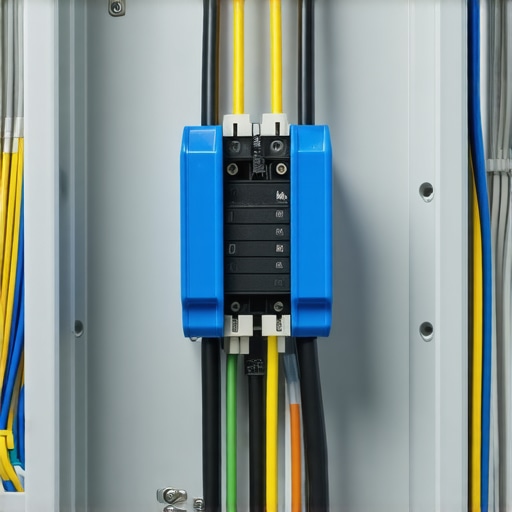
Submit a Load Calculation Worksheet First
Do not think that just because you are using smart tech, you can skip the paperwork. Most cities require you to prove your system will not melt the neighborhood transformer. This is why why your ev permit application requires a load calculation worksheet even for dynamic systems. You have to show the ‘worst-case’ math. Even if you are upgrading your panel for better ev charging performance, the inspector wants to see that your dynamic settings are locked and cannot be easily tampered with by someone looking for a faster charge at the expense of safety.
Don’t Guess on Your Wire Gauge
Even with load balancing, the physical wire from the breaker to the charger must be rated for the maximum possible pull. I have seen people try to save money by using thinner wire, thinking the software will protect them. That is a recipe for a fire. You must use the exact wire gauge you need for a 50-amp ev circuit to ensure the physical infrastructure matches the potential load.
The Moment of Truth with the Stress Test
The most nerve-wracking part of my install was the final stress test. To how to load test your house before adding a second charger or even your first, you have to turn everything on. I stood in my garage with my phone, watching the charger’s app. I had my wife turn on the dryer, the oven, and the microwave all at once. I watched the charging rate on my car drop from 40 amps down to 12 amps in seconds. It worked. No tripped breakers, no flickering lights—just a smart system doing exactly what it was designed to do. This is the ultimate way to ensure how to verify code compliance for your ev charger installation while keeping your home’s electrical heart beating steady.
While that successful stress test is a huge milestone, let’s dig deeper into the nuances that the glossy brochures won’t tell you. A common industry ‘best practice’ is to treat dynamic load balancing as a cure-all for aging infrastructure. Everyone says that software-based management is the ultimate fix for 100-amp panels, but in my experience, hardware quality always trumps logic gates. If you are plugging a high-end charger into a panel with tired bus bars or loose lugs, you are playing with fire—literally. I have seen enthusiasts install top-tier units only to find why your smart charger is actually slower than a basic plug-in model because the unit is constantly throttling due to thermal issues the software can’t fix.
Smart Tech Can’t Fix a Tired Panel
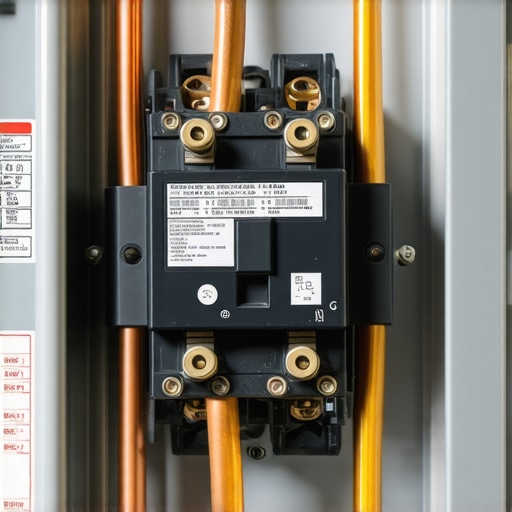
The contrarian truth is that the ‘smart’ features often mask underlying physical failures. Most people think that because their app says everything is ‘green,’ the wiring is fine. However, the National Fire Protection Association (NFPA) 70 code specifies that EV chargers are ‘continuous loads,’ meaning they run at full power for three hours or more. This is the ultimate torture test. If your breaker isn’t up to the task, the software might balance the load, but the physical connection will still degrade. You need to be aware of the specific breaker brands that are known to overheat with evs before you trust your home to an algorithm. Relying on software to manage a panel that is physically at its limit is like putting a speed limiter on a car with balding tires—it helps, but it doesn’t solve the core safety risk.
Can You Really Trust Software to Protect Your Family?
This is the question that keeps me up at night. While dynamic balancing is incredible for ensuring code compliance when installing ev chargers, it is not a substitute for a solid physical foundation. Have you ever fallen into the trap of thinking a ‘smart’ gadget could bypass the laws of physics? Let me know in the comments. I have seen chargers ‘fail’ because of minor voltage fluctuations that a ‘dumb’ charger would have ignored, leading to ev charger troubleshooting expert tips for common issues becoming a weekly routine for the owner.
The 4-Wire Mistake That Grinds Everything to a Halt
The ‘Oops’ factor often comes down to the smallest details, like the neutral wire. Many modern smart chargers are surprisingly picky. I’ve seen installations fail inspection because the owner didn’t realize why your new charger requires a neutral wire even for 240v connections. Even if the charger only ‘needs’ two hots and a ground to move electricity to the car, the smart motherboard often requires that neutral for its own internal power supply or sensing logic. If you skip it, you might get a ‘Check Charger’ light or, worse, find the reason your ev charger smells like burnt plastic is because the electronics are trying to find a path to ground that shouldn’t exist. Professionalism in this field means moving beyond the basics and respecting the physical requirements of the hardware just as much as the smart features in the app.
Moving past the initial setup phase is where the real ownership begins. I have seen too many people treat their EV charger like a ‘set it and forget it’ appliance, only to wake up six months later to a melted terminal or a car that didn’t charge because of a minor software glitch. Professional-grade maintenance isn’t about being paranoid; it is about respecting the sheer amount of energy flowing through your walls every night. If you want to avoid the heartbreak of seeing a Check Charger light at 6 AM, you need to treat your electrical panel like the high-performance engine it now is.
Grab a Torque Screwdriver Before It Is Too Late
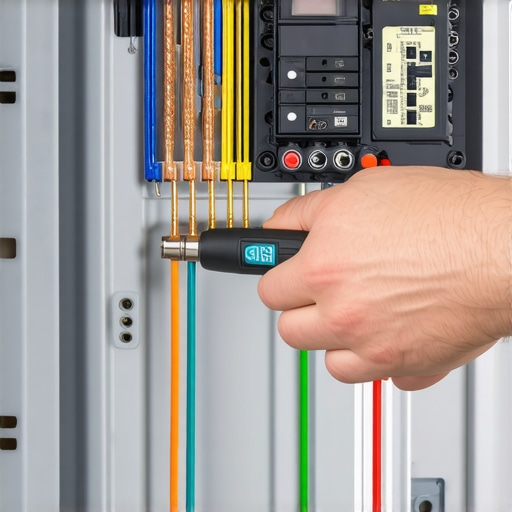
The single most important tool in my kit isn’t a fancy multimeter—it is a calibrated torque screwdriver. According to the National Electrical Code (NEC) Section 110.14(D), if a terminal has a listed torque value, you are legally required to use a tool to achieve it. Most breakers for EV circuits require around 45 to 50 lb-in. Hand-tightening with a standard screwdriver is the fastest way to invite high resistance, which leads to why your breaker gets hot to the touch during charging. I make it a habit to check the tightness of my breaker terminals every six months because thermal cycling—the heating and cooling of wires—can actually cause connections to loosen over time. This simple ten-minute check is the difference between a system that lasts 20 years and one that fails in three.
How do I maintain my home charging station over time?
Maintenance is less about the car and more about the physical environment. I keep an infrared thermometer in my garage to ‘shoot’ the breaker while the car is pulling 48 amps. If I see a temperature jump of more than 30 degrees Celsius over ambient, I know I have a problem before it trips. You should also keep a small stash of the essential spare parts to keep for your home charging unit, such as a replacement holster or a spare gasket. Furthermore, don’t ignore the digital side; learning how to update the firmware on your smart charging station is vital for security and to fix those pesky handshake errors that occur after your car receives an over-the-air update.
The Coming Shift to Bidirectional Charging
Looking ahead, the conversation is shifting from just getting power to the car to pulling power from it. We are entering the era of Vehicle-to-Home (V2H) and Vehicle-to-Grid (V2G) technology. This means your charger will soon act as a backup generator during blackouts. If you are upgrading your panel for better ev charging performance today, you should already be thinking about where an automatic transfer switch or a ‘dark start’ battery might sit. I predict that within five years, a ‘standard’ EV install won’t just be a wire and a box; it will be a fully integrated energy management system that talks to your solar panels and your utility’s peak-pricing API in real-time. This is why ensuring code compliance when installing ev chargers is so critical now—your foundation has to be rock solid before you layer on these advanced features.
I strongly recommend you go out to your garage tonight with a flashlight. Open your panel cover (carefully!) and look for any signs of discoloration or ‘bluing’ on the wires leading to your EV breaker. If you see it, don’t wait for a fire—call a pro. My advanced tip for the week? Buy a cheap thermal camera attachment for your smartphone. It is the ultimate ‘truth teller’ for electrical safety and will show you exactly where heat is building up before you ever smell smoke.
The 3 Hardest Lessons I Learned Managing My Own Power
Looking back on my transition to a smart charging setup, I realized that software is a bridge, not a foundation. First, never assume a ‘green’ light in an app means your physical wires aren’t crying for help. I learned that why your breaker gets hot to the touch during charging is often due to loose lugs that software simply can’t detect. Second, the Wi-Fi in your garage is probably weaker than you think. If your smart balancer loses connection, it might default to a trickle charge, leaving you stranded with a dead battery in the morning. Third, always think one step ahead; even if you have one car now, looking into how to upgrade your homes service for dual ev charging today will save you thousands in labor costs tomorrow.
My No-Nonsense Toolkit for EV Safety
I don’t go near a panel without three specific items that have saved me from major headaches. I rely heavily on a calibrated torque screwdriver to ensure every connection meets the 50 lb-in requirement, which prevents the high resistance that leads to melted plastic. I also keep a smartphone thermal camera handy; it is the ultimate truth-teller when you want to identify the specific breaker brands that are known to overheat with evs before they actually fail. Finally, I always keep a physical copy of my why your ev permit application requires a load calculation worksheet taped inside the panel door. It’s an essential reference for any future electrician or inspector who works on the house.
Taking the Lead in Your Home Energy Revolution
Stepping into the world of smart electrical management can feel like learning a new language, but the payoff is total control over your home’s most expensive appliance. By mastering dynamic load balancing, you aren’t just following a trend; you are ensuring your family’s safety while ensuring code compliance when installing ev chargers. This technology gives your home the intelligence to adapt to your life, rather than forcing you to schedule your laundry around your commute. You have the tools and the knowledge now—it’s time to put them to work and charge with total confidence. Have you ever experienced a ‘ghost trip’ where your breaker popped for no obvious reason while charging? Let me know in the comments below!