The smell of scorched insulation is a scent you never forget. I remember standing in my garage three years ago, feeling like a total genius because I’d just ‘saved’ eight hundred dollars by wiring my own Level 2 charger. I had the heavy-gauge wire, the shiny new breaker, and a YouTube tutorial that made it look easier than assembling IKEA furniture. But as the sun went down on that first day of charging, a faint, acrid aroma began to waft from my main service panel. I hadn’t accounted for the sheer, brutal heat that a 48-amp load generates over several hours. That ‘lightbulb moment’ wasn’t a spark of inspiration—it was an actual spark inside my wall. Today, I want to pull back the curtain on why that two-hundred-dollar DIY kit often ends up costing two thousand in the long run. We are going to look at the three specific areas where homeowners lose money when they try to bypass the pros, from hidden permit traps to the hardware that literally melts under pressure. Have you ever stared at your breaker box and wondered if you were just one loose wire away from a disaster?
Your Weekend Savings Might Disappear in Permit Fines
Many people assume that if the charger turns on and the car starts drawing juice, the job is a success. I made that mistake too. I didn’t realize that failing to verify code compliance for your setup could result in a ‘stop work’ order or, even worse, a massive headache when you try to sell your home down the road. Most local jurisdictions require a specific load calculation worksheet before you even turn a screwdriver. If you skip the permit to save a few bucks, you might face a permit error that kills your installation later. I’ve seen neighbors forced to tear out perfectly good drywall just because an inspector couldn’t see the conduit depth.
Is This Really Just a Simple Weekend Project?
Skepticism is healthy here. You’re probably thinking that it is just three wires and a ground, so how hard can it be? The reality is that EV charging is a ‘continuous load,’ meaning it runs at full tilt for hours on end. This isn’t like a toaster or a vacuum that runs for five minutes. According to the National Fire Protection Association (NFPA), electrical failures or malfunctions are a leading cause of home fires, accounting for roughly 13% of all home structure fires annually. One tiny mistake, like skipping the forgotten torque test that saves panels, can lead to a catastrophic failure. I personally learned the hard way that a hand-tightened lug isn’t enough; you need precision to keep your home from becoming a statistic. Before you pick up that wire stripper, you need to understand the true cost of the tools and tests you probably don’t have in your toolbox yet.
Stop Guessing and Start Calculating Your Real Load
Think of your home’s electrical panel as a pizza. If you’ve already promised slices to the AC, the oven, and the dryer, you can’t just give away another half-pizza to your Tesla without something running out. This is why a load calculation worksheet is the non-negotiable first step. I remember trying to eyeball my panel capacity and thinking I had plenty of room because I had two empty slots. What I didn’t see was that those slots were on a bus bar already strained by an aging HVAC unit. To truly verify code compliance for your setup, you have to sum up the existing continuous and non-continuous loads. If you skip this, you’re not just risking a tripped main breaker; you’re risking a service-wide brownout.
Why 60 Amps is the Magic Number for 48 Amp Chargers
A common point of confusion is the 80% rule. For a device that runs for hours—like an EV charger—the National Electrical Code dictates you can only use 80% of the circuit’s rated capacity. That is why your electrician recommends a 60-amp circuit for a 48-amp charger. If you put a 48-amp load on a 50-amp breaker, that breaker will get so hot you could practically fry an egg on it. Over time, that heat weakens the internal spring mechanism, leading to nuisance trips or a failure to trip during a real surge. Choosing the specific wire gauge that prevents voltage drop is equally vital; for a 60-amp run, you’re typically looking at 6 AWG copper, but long runs might require 4 AWG to keep the efficiency high and the heat low.
Stop Using Your Hands to Guess Torque Settings
The most common failure point isn’t the charger itself; it’s the connection point inside the panel. When I finally bought a proper torque wrench for my second attempt, I realized my ‘hand-tight’ was nearly 15 inch-pounds under the manufacturer’s spec. That gap creates resistance, and resistance creates heat. You need to follow the forgotten torque test that saves panels by using a calibrated tool to hit the exact numbers etched on your breaker or charger lugs. This is often the difference between a system that lasts a decade and one that melts in six months. 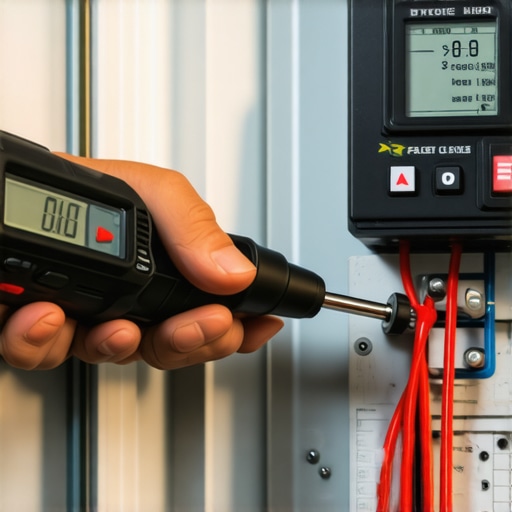
Protect Your Investment with the Right Materials
Beyond the wires, the housing matters. If you’re running lines through a garage that hits 100 degrees in July, you need the best conduit materials for high-heat garage environments like Schedule 80 PVC or EMT. I once used a thinner flex conduit that started to sag and discolor because I hadn’t accounted for the ambient heat combined with the thermal output of the wires. Ensuring everything is secured and labeled correctly isn’t just about being neat; it’s how you prove your electrical panel is code-compliant for resale. An inspector wants to see that you didn’t just ‘make it work’ but that you built it to endure. Also, make sure your charger needs a specific torque setting to pass inspection, as many jurisdictions now require installers to witness the torque test during the final walkthrough.Everyone tells you that if you have a 200-amp service, you’re golden for an EV. In my experience, that’s a dangerous oversimplification. I’ve walked into garages with brand-new 200-amp panels that were essentially maxed out because the homeowner had a heated pool, two AC units, and an electric double-oven. Adding a high-draw charger to that mix isn’t just about finding an open slot; it’s about the total simultaneous load. To truly stay safe, you should look into panel upgrade strategies to meet EV charging code requirements in 2025 rather than just crossing your fingers. The ‘oops’ factor here is the assumption that capacity equals availability. I once saw a DIYer install a 50-amp breaker in a panel that was already drawing 180 amps during peak summer hours. The result wasn’t just a tripped breaker; it was a melted bus bar that required a full service replacement.
Why Does My Charging Speed Drop After Just 20 Minutes?
If you’ve noticed your car starts charging at 11kW but throttles down to 6kW after a short while, you’re likely dealing with thermal protection. This is often a sign of common issues addressed by EV charger troubleshooting. When terminals get too hot due to poor connections or cheap components, the charger (if it’s smart) will pull back the amperage to prevent a fire. However, the root cause is often hardware-specific. In fact, some manufacturers have faced scrutiny because the specific breaker brands that hate constant EV loads tend to lose their tension over time, creating a high-resistance bridge. According to a study by the National Fire Protection Association (NFPA), nearly 15% of home electrical fires involve faulty connections or old equipment being pushed past its continuous duty rating. 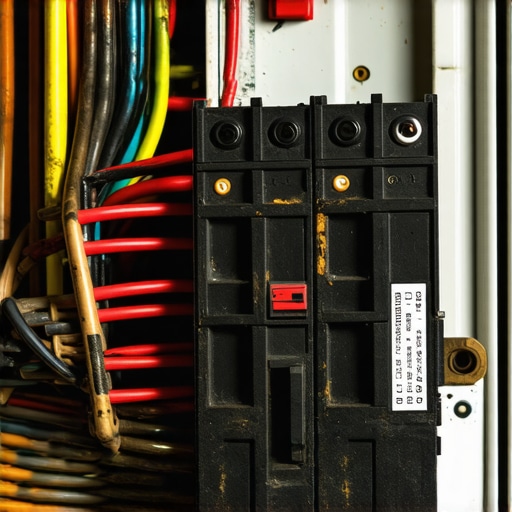
Don’t Ignore the Hidden Dangers of a Loose Neutral
One of the most sophisticated traps for the DIY installer is the neutral wire. In a standard 240V Level 2 setup, many people think the neutral is just an afterthought since the car primarily draws from the two hot legs. But if your panel has a slight imbalance, a loose neutral can cause voltage spikes that fry the delicate motherboard of your expensive charging station. Learning how to detect a loose neutral wire before your electronics fry is a master-level skill that saves thousands in equipment. I always recommend ensuring code compliance when installing EV chargers by performing a full voltage drop test under load. This isn’t just paperwork; it’s a performance benchmark. If your voltage drops more than 3% from the panel to the car, your wire is too thin or your connections are failing. If you’re unsure about your current setup, checking code compliance essentials for EV charger installations in 2025 is the best way to protect your home’s resale value and your family’s safety. Have you ever fallen into this trap or noticed your lights flickering when the car starts to charge? Let me know in the comments.
The shift from ‘it works’ to ‘it lasts’ is where most DIYers fail. I’ve spent the last three years obsessing over my own garage setup, and the one thing I can tell you is that heat is your absolute worst enemy. It’s not just about the initial install; it’s about the fact that copper and aluminum expand and contract every single time your car starts its eight-hour charge cycle. I personally use a CDI torque wrench—specifically a high-accuracy click-type model—to ensure my connections meet the exact inch-pound specs provided by the manufacturer. If you don’t own one, borrow one. This is why your main lugs might be loose after a year of charging, as those micro-vibrations and thermal shifts can back out even the tightest screw over time.
How do I maintain my charging setup over time?
Maintenance isn’t just for your car’s tires; it’s for the hardware that fuels it. Every six months, I do a visual inspection of my charging handle and cable. Look for ‘rainbowing’ on the copper pins—this indicates excessive heat and potential oxidation. I also recommend keeping the essential spare parts to keep for your home charging unit, like a high-quality replacement holster, to prevent the internal contacts from being exposed to dust and moisture. If you notice your charging session cutting out intermittently without a breaker trip, you might need to diagnose a faulty internal relay in your charging station. These mechanical switches have a finite lifespan, usually rated for several thousand cycles before the contacts pit or weld shut.
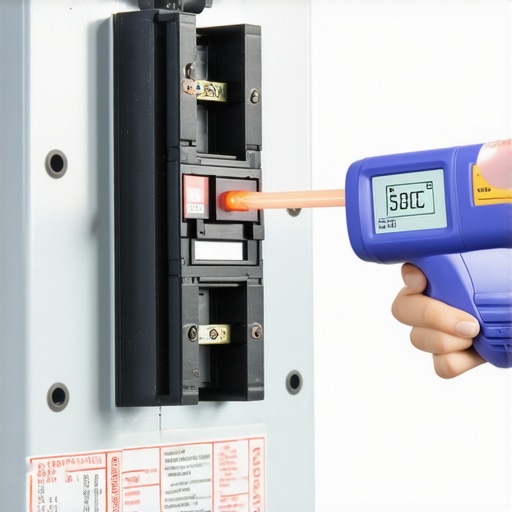
One tool that saved me from a major headache is a simple infrared thermometer. During a peak charging session, I point it at my main breaker. According to IEEE Standard 1100-2005 (The Emerald Book), which covers the grounding and powering of sensitive electronic equipment, maintaining stable thermal environments is key to preventing premature hardware failure. If your breaker is hitting 150 degrees Fahrenheit, you’re in the danger zone. This often happens because the panel itself is crowded and lacks proper airflow. You might find that panel upgrades for EV chargers are necessary just to give your breakers room to ‘breathe’ and dissipate the continuous thermal load.
Smart Management is the Future of Home Power
Looking ahead, I expect we will stop seeing ‘dumb’ 60-amp circuits altogether. The trend is moving toward how smart chargers use dynamic balancing to prevent blown fuses. Instead of upgrading your entire service to 400 amps—which can cost five figures in some older neighborhoods—systems will automatically throttle your car’s draw when the electric oven or AC kicks on. It’s a more elegant, software-driven approach to home energy. However, even the smartest software can’t fix a physical voltage spike, which is why your main service panel needs a surge protector for your EV. One lightning strike or utility transformer pop can turn your seven-hundred-dollar charger into a very expensive paperweight in a millisecond. If you’re still running into software glitches, don’t panic; start by troubleshooting EV charger connectivity problems through your router settings before you assume the hardware is dead. My best advice? Take five minutes this weekend to pop the cover off your panel and look for any signs of soot or discoloration around the EV breaker—it is the easiest way to catch a fire before it starts.
The Hard-Won Truths About My Garage Setup
Looking back at my near-disaster, I realize that the biggest mistake wasn’t the lack of skill, but the lack of respect for the continuous load. In my three years of tweaking and testing, I’ve discovered three specific realities that you won’t find in a basic manual. First, heat is a silent killer of components. Even a slightly loose screw becomes a miniature heater when 48 amps flow through it for six hours straight. Second, your panel doesn’t lie; if you see even a hint of buzzing or flickering, stop immediately. Third, documentation is your greatest asset. Keeping a log of your load calculations and permit approvals is vital for future insurance claims. I finally learned that following the specific torque wrench settings for a wall connector isn’t just about passing inspection—it is about being able to sleep at night while your car is plugged in downstairs.
The Gear That Keeps My House Standing
If you are going to touch your high-voltage system, you need more than a standard screwdriver set. I’ve curated a list of essentials that shifted my garage from a fire hazard to a professional-grade hub. I swear by my CDI Torque Wrench; it’s the only way to ensure the lugs are seated perfectly without stripping the threads. I also keep a handheld infrared thermometer in my toolbox to check for hotspots during the first few charging sessions of the month. Furthermore, understanding the difference between a 500 and 1500 charger install helped me realize where to invest in premium materials like copper instead of aluminum. These tools aren’t just gadgets; they are the barrier between a functioning EV charger and a service-wide failure.
#IMAGE_PLACEHOLDER_E#
Future-Proof Your Home One Wire at a Time
The transition to electric mobility is one of the biggest changes your home’s infrastructure will ever face. It can be intimidating to open that panel door, but taking the time to do it right is incredibly rewarding. Whether you are upgrading your panel for better ev charging performance or just tidying up a basic Level 2 circuit, remember that quality work pays for itself. Always keep in mind the real reason your home value increases with a pro ev setup: it’s the certified safety that future buyers crave. If you ever feel like you’re in over your head, don’t gamble with your safety—you can always contact us for a professional review of your system. Your home is your most valuable asset; treat its power with the care it deserves. Have you ever discovered a loose wire or a surprisingly hot breaker while checking your charging setup? Let me know in the comments below!