The smell of melting plastic is something you never quite forget, especially when it’s drifting out of your electrical panel at 2:00 AM. I remember standing in my garage, flashlight in hand, watching a thin wisp of smoke curl away from a 50-amp breaker. My new EV was charging peacefully, but the connection inside the panel was screaming for help. I had done what most DIYers—and even some rushed pros—do: I tightened the lugs until they felt ‘snug’ and called it a day. That mistake almost cost me a house, and it’s why I’m so obsessed with the forgotten torque test. Today, I’m going to show you why that ‘calibrated wrist’ of yours is a fire hazard and how to actually secure your system for the long haul.
Why Hand-Tightening Just Does Not Cut It for EV Power
The high, continuous load of an electric vehicle is unlike anything else in your home. While a toaster runs for two minutes, your car might pull max current for ten hours straight. This creates massive heat, which leads to thermal expansion and contraction. If your connections are not set to the exact inch-pounds required by the manufacturer, those wires will eventually wiggle themselves loose. I learned this the hard way when I found out how to tell if your panel is actually a fire hazard after seeing charred insulation on my own main lugs. It is a terrifying realization. You might think you have a solid connection, but without a proper torque wrench, you are just guessing. This is why your charger needs a specific torque setting to pass inspection; it is not just red tape, it is physics. Have you ever opened your panel and noticed a slight discoloration on the wires or felt a breaker that was uncomfortably hot to the touch?
Is a Torque Wrench Really Necessary for One Little Circuit?
It feels like overkill, right? Buying a specialized tool just to tighten two or three screws seems like a neighborhood myth. But the data does not lie. According to the National Fire Protection Association (NFPA), electrical failures or malfunctions were the second leading cause of U.S. home fires between 2015 and 2019, often stemming from poor connections. Even a microscopic gap caused by an under-torqued screw can lead to arcing. I used to be a skeptic until I saw how easily a loose main lug causes power flickers throughout the whole house. If you are serious about safety, you need to look up the specific torque wrench settings for a wall connector or whatever unit you are installing. Knowing how to detect a loose neutral wire before it ruins your sensitive electronics is the difference between a successful upgrade and a very expensive repair bill. We are going to dive into the exact tools you need to make sure your garage stays a garage and not a fire scene.
Grab the Tools That Keep Your House Standing
Stop reaching for that standard screwdriver right now. If you want to avoid a localized sun forming inside your electrical panel, you need an insulated torque wrench calibrated in inch-pounds (in-lb). Think of it like a precision instrument for a surgeon; a fraction of an inch-pound is the difference between a cool-running system and a melted mess. I remember my second big install back in 2018. I used a cheap beam-style wrench I found in the back of my truck. It felt ‘snug,’ but when I came back a week later with a proper digital wrench to check my work, I found the lugs were nearly 10 inch-pounds under spec because the wire had settled. That’s why I always emphasize checking the specific torque wrench settings for a wall connector before even stripping the wire. A ‘calibrated wrist’ is just another name for a lucky guess, and luck has no place in high-voltage wiring.#IMAGE_PLACE_HOLDER_B#
The Search for the Magic Torque Number
Next, you have to find the actual spec. Look at the side of your breaker or the sticker inside the panel door. It is not a suggestion; it is a requirement for ensuring code compliance when installing ev chargers. Manufacturers like Square D or Eaton print these numbers directly on the equipment for a reason. If you are running a heavy load over a distance, you also need to verify the specific wire gauge that prevents voltage drop over long runs, as thicker wire requires significantly more force to seat properly in the terminal. If you are working on an older system, you might realize panel upgrades for ev chargers are unavoidable because those old, oxidized busbars just can’t take the necessary torque without stripping or cracking.
Seat the Wire Before You Crank the Wrench
When you actually start tightening, do it in stages. I like to ‘seat’ the wire first by tightening it firmly by hand, then wiggle the wire slightly to settle the strands, and then torque to 100% of the spec. This allows the copper strands to compress evenly. If you just crank it to the limit in one go, the strands can shift later under the pressure of thermal expansion, leaving you with a loose connection after just a few charging sessions. This shifting is a major reason why your main lugs might be loose after a year of charging. I once helped a neighbor who complained of a ‘humming’ sound in his garage; turns out, he had skipped this seating step, and the wire was literally vibrating inside the lug.
Look Beyond the Breaker for Total Safety
While you have the panel open and the torque wrench in hand, don’t stop at the new breaker. Check the main lugs and the neutral bar as well. The vibration from a high-draw EV circuit can sometimes affect adjacent connections. It is also the perfect time to install extra layers of defense. For instance, understanding why your main service panel needs a surge protector for your ev can save you thousands in fried vehicle motherboards later. Think of your electrical panel as a living organism; when you add a massive new organ like an EV circuit, you have to ensure the ‘connective tissue’ of the entire system is tightened and secured to handle the new metabolic demand.The common belief among weekend warriors is that if a connection is ‘rock solid,’ it is safe. In my experience, ‘as tight as possible’ is actually a recipe for disaster. When you over-tighten a lug, you risk stripping the delicate threads or, worse, deforming the wire until its cross-sectional area is reduced. This creates a bottleneck for current, leading to the exact same overheating issues as a loose connection. This is why the National Electrical Code (NEC) added Section 110.14(D), which mandates that any technician or homeowner must use a calibrated torque tool where a tightening torque is indicated by the manufacturer. It is not just a suggestion from a manual; it is a federal safety standard designed to prevent catastrophic failures.
Why More Muscle Often Means More Fire
Over-torquing is a silent killer because it often passes the initial visual inspection but fails under the stress of 40-amp continuous loads. When you exceed the manufacturer’s torque spec, you cause ‘cold flow’ in aluminum or copper conductors. The metal essentially gets squeezed out from under the screw, and as the system cycles through thermal expansion, that crushed metal loses its spring tension. Eventually, you end up with a high-resistance connection that leads to a fire. I have spent hours troubleshooting ev chargers common compliance pitfalls and fixes, only to find that the installer literally crushed the life out of the terminals. This is one of the most frequent ev charger troubleshooting expert tips for common issues I share: don’t confuse strength with safety. 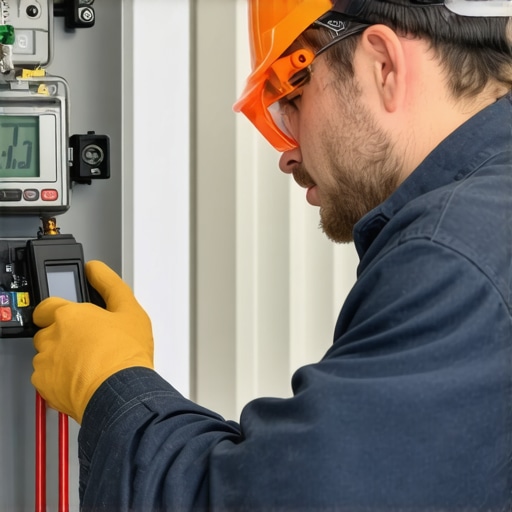
Can You Really Over-Tighten a High-Voltage Connection?
Many advanced DIYers ask if they can just ‘crank it down’ for extra safety, but doing so compromises the integrity of the breaker itself. If you are working on older systems, you might even find that panel upgrades for ev chargers are necessary simply because the old lugs cannot handle modern torque requirements without failing or cracking. I have seen DIYers spend days on the wiring only to fail their final inspection because of a how to fix the grounding fail that ruins ev permits. It is not just about the hot wires; that ground wire is your insurance policy. If you are struggling with intermittent faults, don’t hesitate to contact us for expert guidance before you energize the system.
Why Your Permit Is More Than Just A Piece Of Paper
Most people think a permit is just a city tax, but it is actually your last line of defense against an insurance denial. If you skip the permit, you are also skipping the required load calculation. I have seen homeowners try to squeeze a level 2 charger onto a 60 amp service without realizing their existing appliances are already maxing out that panel. Understanding why your ev permit application requires a load calculation worksheet is crucial because it protects you from overloading your entire service entrance. If you ignore this, you might find 5 signs your old electrical panel is a charging bottleneck the hard way—usually when your main breaker trips while you are cooking dinner and charging the car simultaneously. Before you pull the trigger on an install, look into panel upgrade strategies to meet ev charging code requirements in 2025 to ensure your home infrastructure can actually handle the metabolic demand of high-speed charging. One common ‘oops’ is failing to account for the 125% continuous load rule, which is a major factor in ensuring code compliance when installing ev chargers. Have you ever fallen into this trap or noticed a strange smell coming from your panel? Let me know in the comments.After you have passed that final inspection, the biggest mistake you can make is assuming the job is finished forever. I treat my EV circuit like a high-performance engine; it needs a literal health check-up once a year. I personally use a FLIR thermal imaging camera—even a cheap mobile attachment works—to scan my panel while the car is pulling its full 48 amps. If I see a bright purple glow around a terminal, I know I need to re-torque it before it turns into a service call. This is part of the how to verify code compliance for your ev charger installation process that many people ignore after the permit is signed. If you start seeing weird errors on your dash, you should jump into troubleshooting ev charger connectivity problems or, more seriously, how to diagnose a faulty internal relay in your charging station. Most relays fail because of cumulative heat stress, not manufacturer defects. 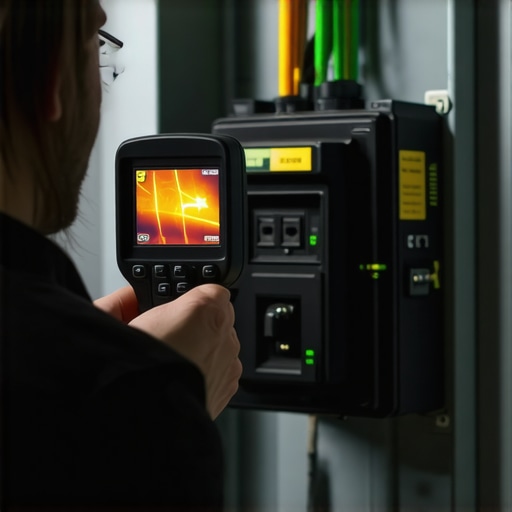
How Do I Keep My Charging System Safe Over the Long Haul?
Maintenance isn’t just about tightening screws; it’s about environmental protection and managing the physical wear of high-voltage components. In my garage, I have found that even dust buildup can cause tracking on the circuit board of the charger, which eventually leads to arcing. The Electrical Safety Foundation International (ESFI) notes that consistent thermal cycling is the primary driver of ‘creeping’ in electrical connections, where metals actually shift and deform over time. I highly recommend keeping the essential spare parts to keep for your home charging unit, like a spare J1772 handle or a high-quality 60-amp breaker, because these components often fail on holiday weekends when supply houses are closed. If you are planning for the future, you are likely looking at upgrading your panel for better ev charging performance to accommodate a second vehicle. Don’t just slap another breaker in; consider why your garage needs a subpanel for that second ev. This allows you to manage the load more effectively without running five different conduits back to your main service. Looking ahead, we are moving toward bi-directional charging where your car powers your house. This means your connections will be working 24/7, making code compliance essentials for ev charger installations in 2025 more critical than ever. My advanced tip for you today: buy a $20 non-contact infrared thermometer and check your breaker temperature after two hours of charging. If it is over 140°F, you have a high-resistance connection that needs immediate attention. If you are unsure about the readings, do not hesitate to contact us for a professional evaluation.
Lessons Learned from a Half-Melted Square D Breaker
The biggest revelation I had after years of tinkering is that thermal expansion is a patient enemy. It does not strike the first time you plug in; it waits until the hundredth cycle when the metal has finally ‘crept’ enough to create a gap. I stopped guessing the moment I understood how to tell if your panel is actually a fire hazard by looking for the tell-tale signs of micro-arcing around the lug plastic. Another insight: always check your work after a week of heavy use. You would be surprised how much a thick copper wire can settle after being heated to 140°F multiple nights in a row. This is why your charger needs a specific torque setting to pass inspection; it is the only way to account for that eventual material settling and prevent arcing. Finally, I realized that many intermittent fault codes on the car side are actually just loose terminals inside the wall unit reflecting noise back into the car’s computer.
The Only Gear I Trust Near My Service Entrance
If you are serious about DIY electrical work, stop using the standard screwdrivers you bought for assembling flat-pack furniture. I personally swear by a calibrated inch-pound torque wrench with a certificate of accuracy; without that certificate, you are just holding a fancy clicking stick. For ev charger troubleshooting expert tips for common issues, I also keep a cheap infrared thermometer in my toolbox to scan for heat bloom during a charge session. Lastly, I highly recommend keeping a copy of the NEC Handbook nearby and taping the manufacturer’s spec sheet directly to the inside of your panel door so you never have to guess the torque numbers again. These tools turn a dangerous guessing game into a repeatable science.
#IMAGE_PLACE_HOLDER_E#
Secure Your Connections and Sleep Soundly
Taking these extra steps might feel like a chore, but the peace of mind you get when you hear that contactor click and know everything is tight to the inch-pound is worth every second. By ensuring code compliance when installing ev chargers, you are not just following arbitrary city rules; you are building a long-term fortress for your family’s safety. Whether you are upgrading your panel for better ev charging performance or just tightening a single lug, your commitment to precision is what prevents a midnight call to the fire department. Have you ever discovered a loose or charred wire while working on your own electrical system? Let me know your close-call stories in the comments below.