I remember sitting in my office at 2 AM, staring at a spreadsheet that looked like a crime scene. I had just committed to ten new electric delivery vans for my small courier business, and my electrician had just told me the cost to upgrade our main panel was $45,000. I felt physically ill. I thought I had done my homework, but I was staring at a financial cliff that threatened to swallow my entire profit margin for the year. I had made the classic mistake of focusing on the vehicle price tags while ignoring the infrastructure costs lurking in the shadows. It was not until a local inspector mentioned a ‘forgotten’ state incentive that I realized I was leaving nearly sixty grand on the table. Today, I am going to show you how to find those same pots of gold so you do not have the same heart-stopping moment I did. We are going to look at the rebates that actually pay for the ‘boring’ stuff—the panels, the conduit, and the labor—not just the chargers themselves.
Stop Paying Full Price for Your Fleet’s Power Grid
When I first started looking into transitioning my fleet, I assumed the government only cared about the cars. I was wrong. My biggest blunder was not realizing that utility companies often have massive budgets specifically set aside for ‘make-ready’ infrastructure. Because I did not know how to get the utility company to pay for your service upgrade, I almost paid for the whole thing out of pocket. Many small business owners are in the same boat, unaware that the utility often covers everything from the transformer to the meter.
Is the government paperwork actually worth the headache?
The skepticism is real. I get it. We have all been burned by ‘easy’ tax credits that required a PhD to file. But here is a punchy truth: the Alternative Fuel Vehicle Refueling Property Credit (Section 30C) was recently expanded. According to the Internal Revenue Service, businesses in eligible census tracts can claim up to 30% of the cost of their hardware and installation, capped at $100,000 per unit. That is not chump change. If you are worried about the complexity, you might be missing out on the tax credits for chargers that most small businesses miss. We are going to dive deep into how you can stack these incentives. We will talk about the tax credit loophole for shared commercial charging spaces and why your local utility might be your new best friend. Have you ever looked at a quote for a panel upgrade and wondered if there was a way to make it disappear from your balance sheet? Let us figure it out together. If you are seeing signs that your old electrical panel is a charging bottleneck, do not panic yet. There is a way to fix it without draining your bank account.
Force the Utility Company to Open Their Wallet First
I remember sitting on a conference call with my local utility representative, Dave. I was prepared to beg for a payment plan on that $45,000 upgrade I mentioned earlier, but Dave stopped me mid-sentence. ‘Have you applied for our Make-Ready program?’ he asked. I had no idea what he was talking about. It turns out, utilities are often mandated by state regulators to meet aggressive carbon-reduction goals, and they have massive budgets specifically to help businesses prepare their sites for chargers. By the time Dave was done, they had agreed to cover the conduit and the transformer installation entirely. If you want to replicate this, your first step is not calling an electrician; it is calling your utility’s commercial account manager. You need to ask specifically about ‘infrastructure incentives’ or ‘line extension credits.’ If you do not do this, you might miss out on how to get the utility company to pay for your service upgrade. This is not just for the big corporations either; small shops can often get their entire panel cost wiped out because the utility wants those charging miles on their grid.
Beat the Panel Bottleneck Without Buying a New One
Sometimes, the smartest way to save money on an upgrade is to avoid the upgrade entirely. Think of your electrical panel like a pizza. If you have ten people (chargers) wanting a slice, but only one pizza (the main feed), you have a problem. Instead of buying a bigger pizza, you can use software to slice it thinner and distribute it based on who is actually hungry. This is where why your commercial garage needs load management software becomes a financial lifesaver. I once helped a colleague with a small warehouse who was told he needed a $20,000 service upgrade for four chargers. Instead, we installed a load management system that capped the total draw of all units at 60 amps. The inspector signed off on it because we showed how to load balance your fleet without tripping the main feed. This saved him from tearing up the concrete for new lines. 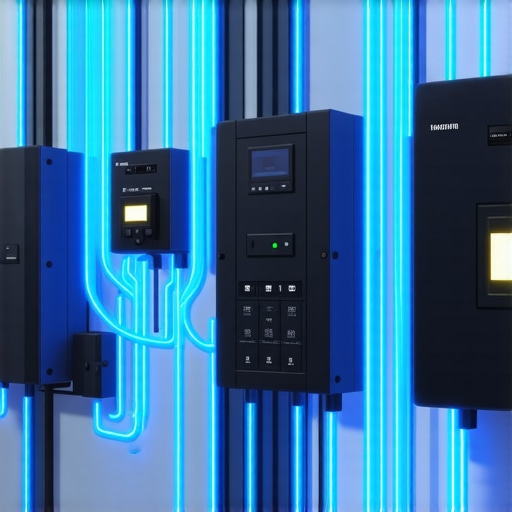
Don’t Let a Small Permit Error Kill Your Big Check
I have seen business owners do everything right, only to have their rebate denied because a wire was the wrong color or a label was missing. It is devastating. To keep the money, you have to prove you played by the rules from day one. You need to know how to verify code compliance for your ev charger installation before the inspector even pulls into your parking lot. In my early days, I almost lost a $5,000 rebate because I did not realize the local code required a specific disconnect switch that was not in the original manufacturer manual. That one oversight nearly cost me the entire incentive. Check the panel upgrade strategies to meet ev charging code requirements in 2025 to make sure your hardware choice does not disqualify you. If you are managing a fleet, you should also look into why fleet managers are switching to dc fast charging overnight, as these units often come with even higher-tier rebates that can offset the steeper price tags. You also need to ensure your electrician performs the forgotten torque test that prevents panel fires; if the inspector sees that you have used a torque wrench to meet manufacturer specs, you are much more likely to pass on the first try and get your check faster. Remember, the goal is to stack these: utility money first, then the tax loophole for small business charging stations, and finally state-level equipment grants. If you miss even one layer, you are essentially paying a volunteer tax to the city.One of the biggest lies told in the EV world is that ‘passing inspection’ means your system is optimized. It isn’t. In my experience, building to the absolute minimum code is the fastest way to experience thermal throttling. Most owners assume that if the inspector signs off, they are good to go, but the National Electrical Code (NEC) is a floor, not a ceiling. For example, while code might allow a certain wire gauge for a 50-amp circuit, you might find that thinner wire is costing you miles every night due to voltage drop. If your charger is at the end of a long run, that heat isn’t just wasted energy—it’s a slow-motion car crash for your hardware’s lifespan.
Does your electrical setup handle the ‘continuous load’ reality?
The ‘oops’ factor I see most often involves the misunderstanding of ‘continuous loads.’ Most household appliances—like a toaster or a dryer—cycle on and off. An EV charger is different; it draws maximum current for hours on end. According to the Electrical Safety Foundation International (ESFI), this sustained heat can expose weaknesses in your panel that standard tests won’t catch. If you aren’t using industrial-grade components, you’ll start to see why the specific breaker brands that hate constant ev loads end up tripping or even melting. I’ve walked into garages where the owner was complaining about troubleshooting ev charger connectivity problems, only to find the real issue was a heat-soaked breaker causing the internal computer to reboot constantly. 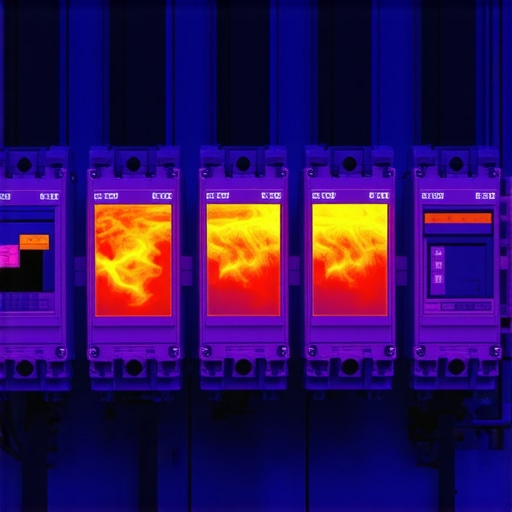 Another nuance people miss is the difference between safety and reliability. You can have a perfectly safe install that still results in why your charging speed drops suddenly after 20 minutes. This is usually the charger’s internal thermal protection kicking in because the ambient temperature in your garage is too high or because why your charger needs a specific torque setting to pass inspection wasn’t followed, creating a high-resistance point. If you’re seeing these issues, check out the troubleshooting ev chargers common compliance pitfalls and fixes to see if your ‘pro’ install was actually a hack job. Before you sign off on your next project, look closely at your panel upgrade strategies to meet ev charging code requirements in 2025. Don’t just settle for what’s legal; aim for what’s durable. If you don’t, you’ll be upgrading your panel for better ev charging performance again in three years when the heat finally takes its toll. Have you ever fallen into this trap? Let me know in the comments.
The Two Tools That Keep My Shop From Burning Down
I don’t care how good your electrician is; copper and aluminum expand and contract every time they heat up. After six months of heavy fleet use, those perfectly tight connections can start to wiggle. I carry two things in my truck at all times: a high-quality torque wrench and a pocket-sized thermal camera. If you don’t use the specific torque wrench settings for a wall connector, you are basically guessing with your life. I’ve seen lugs that felt ‘hand-tight’ but were actually 15% below spec, which is enough to start a slow-burn arc. Every quarter, I open my main panel and scan it with a FLIR camera while the vans are charging. If I see a breaker glowing purple while the others are blue, I know I’ve caught a failure before it became a fire. This is the only way how to detect a loose neutral wire before your electronics fry. According to technical documentation from IEEE (Institute of Electrical and Electronics Engineers), even minor voltage imbalances caused by loose connections can reduce the efficiency of your charging equipment by as much as 5-10% over time. 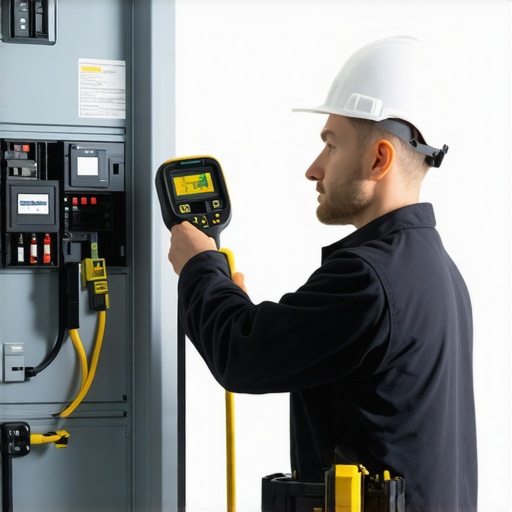
How do I maintain my charging infrastructure over time?
Maintenance isn’t just about the panel; it’s about the ‘business end’ of the cable. I make it a habit to check the pins on the charger handle once a month. If you see any black soot or discoloration, stop immediately. That is a sign of high resistance, and you need to know why your ev plug contacts look burnt and what to do next. If you are charging outdoors, you must learn how to spot corrosion inside your outdoor charging pedestal. Salt air or even just morning dew can eat through your terminals if the seals aren’t perfect. If a cable gets run over—and in a busy shop, it will—do not just wrap it in electrical tape. Knowing how to replace a frayed cable without buying a new station can save you $600 in hardware costs alone.
Prepare for the Day Your Truck Powers Your Whole Office
The future of this technology isn’t just drawing power; it’s pushing it back. We are moving toward a world of bidirectional charging where your fleet is a giant battery backup for your building. If you are already upgrading your panel for better ev charging performance, make sure you are thinking about V2H (Vehicle-to-Home) or V2B (Vehicle-to-Building) capabilities. I predict that within the next five years, the ‘smart’ part of your charger won’t just be for scheduling; it will be for selling power back to the grid during peak hours. If you are expanding, consider why your garage needs a subpanel for that second ev now rather than later. It is much cheaper to run one heavy-duty line today than to rip up your walls again in 2027. Advanced Tip: Go buy a cheap infrared thermometer today. After your next long charging session, point it at your main breaker. If it’s over 140°F (60°C), you need to call a pro to check your lug torque immediately.
What I Learned After My First 500 Charging Cycles
I used to think that once the inspector signed the permit, my job was done. I was wrong. The hardest lesson I learned is that high-amperage electrical systems are living, breathing things. Over time, heat makes copper expand and contract, which can loosen lugs you thought were tight forever. I also realized that documentation is your best friend for future profits; knowing how to prove your electrical panel is code compliant for resale is just as important as the installation itself. If you do not keep records of your torque settings and permit numbers now, you will be scrambling when it is time to sell your commercial property or move your business.
My second ‘lightbulb’ moment was realizing that troubleshooting shouldn’t be a guessing game. If a charger stops working at 4 AM, you need a protocol. I started keeping a log of every error code we encountered, and it turned out that 90% of our problems were simple connectivity or software handshake issues. You can save thousands in service calls by mastering ev charger troubleshooting expert tips for common issues before you ever pick up the phone to call a technician.
The Tools I Won’t Step Into the Garage Without
To keep my fleet running without a hitch, I have a ‘charging survival kit’ that stays in my office. First, I highly recommend a FLIR thermal camera attachment for your smartphone. It is the only way to see heat-soaked breakers before they trip. Second, keep a copy of the NFPA 70 (National Electrical Code) handbook nearby—specifically the sections on Article 625—to settle any arguments with contractors. Finally, for those moments when the hardware just won’t cooperate, I always reference a trusted guide on troubleshooting ev chargers common compliance pitfalls and fixes to ensure I am not accidentally violating my warranty while trying to fix a problem.
Take the First Step Toward a Powered Fleet
You have the blueprint now. You know how to hunt down utility rebates, how to navigate the complexities of code compliance, and how to protect your EV charger from the hidden dangers of thermal stress. Building this infrastructure is not just a line item on your expenses; it is a fundamental shift in how your business moves. There is a quiet confidence that comes with knowing your panel upgrade was done to the highest standards and that you have captured every available tax credit. The real reason your home value increases with a pro ev setup applies to commercial spaces too—efficiency and readiness are the new gold standards. If you hit a wall with your local utility or need a technical second opinion, do not hesitate to contact us. We have been in those trenches and can help you bridge the gap between a blueprint and a powered-up parking lot. Have you run into any unexpected permit hurdles in your city? Let me know in the comments below!