I remember sitting at my desk a few years back, staring at a quote for a commercial-grade charging station and feeling my stomach drop. It wasn’t just the hardware; it was the installation, the permits, and that inevitable panel upgrade I knew I’d eventually need. I almost threw the whole project in the trash. I told myself that my small business just couldn’t justify the five-figure investment, even if it meant attracting better customers. But then, a conversation with a fellow entrepreneur over a lukewarm coffee changed my entire perspective. He asked me if I had checked the census tract map for the Section 30C tax credit. I hadn’t. That one little oversight nearly cost me thousands of dollars in lost incentives. Today, I want to walk you through the ‘loophole’—which is really just a very generous, underutilized federal incentive—that can slash your installation costs by up to 30%.
The Day I Almost Gave Up on Electric Charging for My Shop
When I first started looking into how to wire a 3-phase charger for your business location, I was overwhelmed. The costs felt like a mountain I couldn’t climb. I made the classic rookie mistake: I assumed that because I wasn’t a massive corporation, these tax breaks weren’t for me. I even went as far as ordering the equipment before realizing I hadn’t checked if my specific location qualified for the rural or low-income community requirements that the 2023 updates demanded. Don’t be like me. You need to verify your eligibility before you even pick up a screwdriver. According to the Internal Revenue Service, the Section 30C credit can cover up to $100,000 for business properties, provided you meet certain labor and location requirements. It turns out, the tax credits for chargers that most small businesses miss are often the ones that make the project financially viable. Have you ever looked at the 30% credit and thought your business was ‘too small’ to qualify? You might be surprised at how inclusive the new definitions actually are.
Does the Government Really Hand Out This Much Cash?
It sounds too good to be true, doesn’t it? The skepticism is healthy. When I first saw the numbers, I figured there must be a catch that would make the true cost of running a commercial charger at a retail shop astronomical anyway. While there are hoops to jump through—like prevailing wage requirements for larger projects—the core of the ‘loophole’ is simply knowing that the credit now applies to a much broader range of hardware and ‘dual-use’ property than it used to. We are going to break down how to claim this credit, ensure your installation is code-compliant to satisfy the IRS, and why how to get your business on the federal map of charging locations is the cherry on top of this financial sundae.
Stop Guessing and Start Calculating Your Load
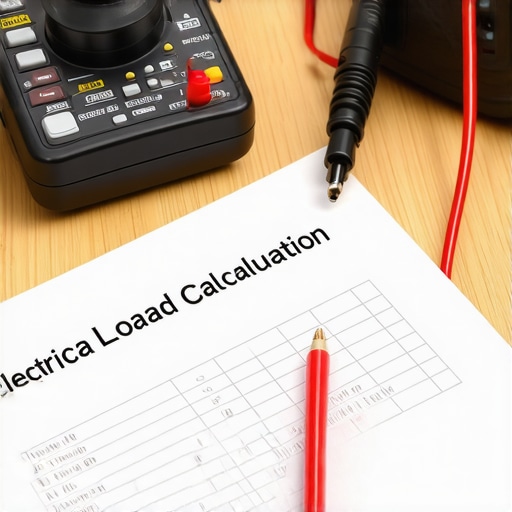
Before you buy a single foot of conduit, you have to treat your electrical system like a bridge. You wouldn’t drive a semi-truck over a bridge built for golf carts, and you shouldn’t dump a massive electrical draw onto an aging service. This is why your ev permit application requires a load calculation worksheet. It’s not just red tape; it’s the only way to ensure your building doesn’t become a fire hazard. I once watched a client try to bypass this step at their workshop, only to have the main breaker trip every time the air compressor and the charger ran simultaneously. We ended up doing the math afterward, which was twice as expensive as doing it right the first time.
Don’t Fry Your Panel Before You Start
If your building is more than twenty years old, there is a high probability you are looking at panel upgrades for ev chargers. Think of your electrical panel as a waiter. If you keep asking one waiter to serve fifty tables, they are going to quit. Upgrading your service ensures that the ‘waiter’ can handle the intense, continuous load that EV charging demands. You also need to look outside. You must learn how to tell if your utility meter can handle the extra load before the utility company hits you with an unexpected infrastructure fee. I’ve seen projects stall for months because the transformer on the street wasn’t up to the task.
How to Win the Permit Game with Precision
Inspectors don’t care how sleek your charger looks; they care about the torque settings on your terminals. It sounds nitpicky, but why your charger needs a specific torque setting to pass inspection comes down to preventing heat buildup. Loose wires create resistance, and resistance creates fire. When I was setting up my first multi-unit site, I used a standard screwdriver instead of a calibrated torque wrench. The inspector failed me on the spot. It was embarrassing, but it taught me that how to verify code compliance for your ev charger installation starts with the smallest details. If you are trying to how to set up a shared charging station for a small office, these details are what keep your insurance company happy.
Maximize the 30% Tax Credit Without the Headaches
To actually get that 30% back, you need to document everything. The IRS wants to see that you’ve met the prevailing wage and apprenticeship requirements if your project is over a certain size. This is where the tax credits for chargers that most small businesses miss often slip through the cracks. People assume the credit is automatic, but it requires a specific form and a clear paper trail of your installation costs. If your shop gets hot in the summer, you even need to consider the best conduit materials for high heat garage environments to prevent the wiring from degrading over time. Treat your receipts like gold. I keep a digital folder for every permit, every wire purchase, and every labor hour spent on the install. When tax season rolls around, that folder is the difference between a massive refund and a massive audit.
The standard advice you will hear in most online forums is to ‘just install a NEMA 14-50 outlet’ because it offers flexibility for different chargers. I am going to tell you why that is a massive mistake for a commercial setting. For a retail shop or a small office, those outlets are rarely built for the 8-to-10-hour continuous draw of a modern EV at full power. I have seen high-quality industrial outlets literally melt because the internal contacts could not handle the sustained heat. This is where the real difference between hardwired and plug-in charging stations becomes a matter of safety and long-term liability, not just professional preference. When you hardwire, you eliminate several physical points of failure and, more importantly, you bypass the annoying code requirement for a GFCI breaker at the panel.
Why does bypassing that breaker matter? Because almost every modern EV charger already has sensitive internal GFCI protection built into the hardware. If you are forced to put a GFCI breaker in your panel to feed a plug-in charger, you end up with two safety systems ‘fighting’ each other. This is why the gfci in your panel keeps nuisance tripping your charger. It is a ghost in the machine that will have your customers complaining their cars did not charge, even though nothing is technically broken. Hardwiring solves this by allowing a standard breaker to be used safely.
Why do electricians insist on 60 amps for a 48-amp charger?
This is the most common point of confusion for small business owners who are trying to save on equipment costs. They see ’48 amps’ on the box and assume a 50-amp breaker is the correct fit. It is not. The National Electrical Code (NEC) classifies EV charging as a ‘continuous load,’ meaning it is expected to run at its peak for three hours or more. Because of this, you are legally required to size the circuit at 125% of the charger’s maximum output. That is why your electrician recommends a 60-amp circuit for a 48-amp charger. If you skip this calculation, you are not just violating code; you are literally cooking your insulation from the inside out over months of use.
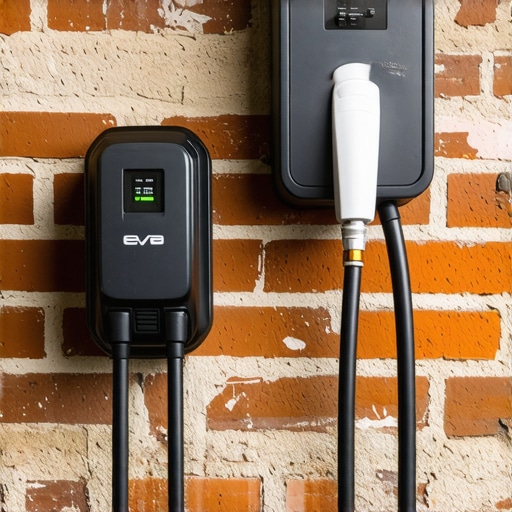
One advanced ‘trap’ I see constantly during the final inspection is the how to fix the grounding fail that ruins ev permits. High-end chargers perform a sophisticated self-check of the ground impedance before they ever allow power to flow into the vehicle. If your building’s grounding rod is corroded or your bonding at the service entrance is not perfect, the charger will throw a red fault light and refuse to work, even if every other power tool in your shop runs fine. According to experts at the National Fire Protection Association, improper grounding remains a leading cause of intermittent electrical equipment failure in commercial retrofits. Before you sign off on your project, make sure you are ensuring code compliance when installing ev chargers by looking at the small stuff—the labels, the terminal torque, and the clearance zones. Have you ever fallen into the ‘nuisance trip’ trap or had an inspector fail you for something that seemed trivial? Let me know in the comments.
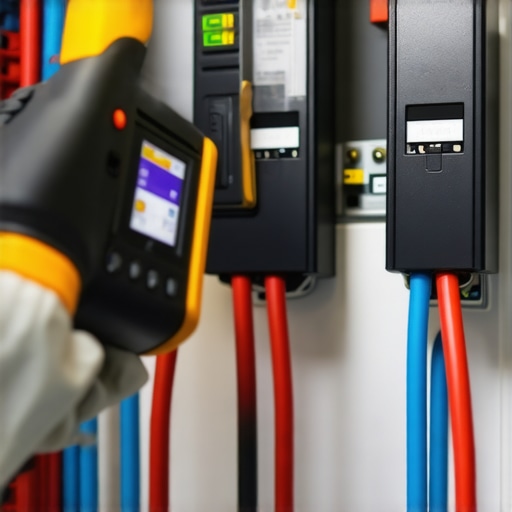
Once the permit is signed and the lights are green, most business owners think the job is done. I used to think the same until I realized that a commercial charger is a high-performance machine, not a ‘set it and forget it’ appliance. If you want to keep your shop running smoothly, you need to transition into a maintenance mindset. I personally invested in a handheld thermal camera—nothing fancy, just a smartphone attachment—and it has been a game-changer. Every six months, I scan my panel while the cars are drawing full power. If I see a glowing orange spot on a breaker, I know I have a loose connection before it has the chance to melt the plastic. This is exactly why your main lugs might be loose after a year of charging; the constant heating and cooling of the wires causes them to expand and contract, slowly backing out the screws. If you are serious about upgrading your panel for better ev charging performance, you have to realize that maintenance is part of that performance curve.
How do I keep my charging station healthy for years?
Maintenance is mostly about cleanliness and physical integrity. I’ve seen chargers fail because spiders decided to move into the conduit or because the cable was left out in the snow until it became brittle. You need to know why your charging cable is stiff in the winter and what to do to prevent the internal copper from fraying. A simple habit of wiping down the connector pins with a dry cloth can prevent the buildup of non-conductive grit. Also, listen to your equipment. If you start hearing a buzz, you should investigate how to stop a charging station from humbling or buzzing before the internal relay fails entirely. According to the technical guidelines in the NEMA EVSE 1.2-2021 standard, periodic inspection of the physical connector for signs of ‘pitting’ or oxidation is the single best way to prevent the high-resistance heat that leads to fire hazards. It only takes five minutes, but it protects a four-figure investment.
One thing I didn’t anticipate was the software side of things. Modern chargers are basically computers with high-voltage relays attached. I’ve spent more time troubleshooting ev charger connectivity problems than I ever did worrying about the actual electricity. If your charger loses Wi-Fi, it might stop reporting data, which means you lose the proof you need for those tax credits we discussed earlier. I always recommend installing a dedicated surge protector at the main service entrance because a single lightning strike nearby can fry the sensitive logic boards in your station. This is why your main service panel needs a surge protector for your ev—it is cheap insurance for your shop’s infrastructure.
Looking ahead, the trend is moving toward smarter load management rather than just bigger wires. I predict that within five years, we won’t be doing massive service upgrades as often because software will do the heavy lifting. We are already seeing how smart chargers use dynamic balancing to prevent blown fuses by communicating with each other to throttle power. If you are planning to expand, you should look into why your garage needs a sub-panel for multiple chargers now, rather than trying to daisy-chain units later. My best advice? Go grab a calibrated torque wrench and check the tightness of your charger’s terminal blocks tomorrow morning—making sure they hit the manufacturer’s spec is the easiest way to ensure you are how to verify code compliance for your ev charger installation even years after the inspector has left.
What I Learned the Hard Way About Inspection Day
Looking back at my first commercial installation, the biggest lesson wasn’t about the hardware; it was about the documentation. I have realized that compliance is a lifestyle, not a one-time event. First, never assume your utility company is on your side without a paper trail; getting them involved early can save you months of waiting for a transformer upgrade. Second, the ‘soft’ costs like permitting and load calculations are where projects usually bleed money. I now use a dedicated checklist for ensuring code compliance when installing ev chargers to make sure I haven’t missed a single label or torque spec. Finally, remember that your charger is a data point. If you aren’t troubleshooting ev charger connectivity problems immediately, you are losing the history needed to prove your tax credit eligibility. It is the small, consistent checks that keep the inspectors happy and your business protected.
#IMAGE_PLACEHOLDER_E#
My Reliability Toolkit for Heavy Duty Charging
I do not step onto a job site without a few specific tools that have saved my skin more than once. I highly recommend investing in a digital torque wrench specifically for those terminal blocks; hitting the specific torque wrench settings for a wall connector is the only way to sleep soundly at night. For monitoring, a thermal imaging camera is essential for upgrading your panel for better ev charging performance because it spots heat before it smells like smoke. I also suggest every owner install a high-quality Type 1 Surge Protective Device (SPD). Knowing why your main service panel needs a surge protector for your ev is the difference between a minor fix and a massive board replacement after a summer storm. These are not just gadgets; they are the gatekeepers of your uptime.
Turn Your Parking Lot Into a Financial Asset
It is easy to get bogged down in the technicalities of breakers and conduit, but do not lose sight of the bigger picture. You are transforming your business into a destination for the next generation of customers. By taking the time to understand the tax credits for chargers that most small businesses miss, you are effectively letting the federal government subsidize your transition to a modern, sustainable infrastructure. Start with one unit, do the math correctly, and build from there. The future of transportation is already pulling into your lot—make sure you are ready to welcome it with a system that is safe, compliant, and built to last. Have you ever had a charging installation project stall because of an unexpected electrical panel issue? Let me know your story in the comments below!