I remember the exact moment I realized my ambition had outpaced my electrical capacity. It was a Tuesday evening, raining sideways, and I had just added the fourth delivery van to our small company fleet. I plugged it in, heard that satisfying ‘thunk’ of the contactor closing, and three seconds later, the entire building went pitch black. The silence was deafening. My main breaker hadn’t just tripped; it was hot to the touch. I’d made the classic rookie mistake of assuming that because I had ‘open slots’ in my panel, I had enough juice for a full-scale fleet operation. I was wrong, and that mistake nearly cost me a week of downtime and a very expensive emergency call-out.
Stop Killing Your Main Breaker with This Simple Logic
If you are trying to manage multiple vehicles, you’ve likely looked at your service panel and felt a bit of dread. Most of us are taught that more power requires bigger wires and a massive check written to the utility company. According to the U.S. Department of Energy, upgrading a commercial transformer can cost a business tens of thousands of dollars before a single charger even turns on. But here is the secret I learned the hard way: you don’t always need more power; you just need to be smarter with the power you already have. By using smart chargers that use dynamic balancing, you can prevent those embarrassing blackouts without digging a single trench for new conduits. I wasted months trying to manually schedule my drivers’ charging times, but human error always wins—someone always forgets and plugs in at the same time the HVAC kicks into high gear. Now, I focus on calculating the exact circuit load to ensure we stay within safe margins. Have you ever had your entire operation grind to a halt because of a single charging cable?
Is dynamic load balancing actually worth the hype?
I used to be a skeptic, thinking it was just a fancy way for manufacturers to overcharge me for software. But after my ‘Dark Tuesday’ incident, I realized that stopping your breaker from tripping is worth every penny of the initial investment. The technology effectively ‘talks’ to your building’s main feed and tells the chargers to dial it back when the elevators or heavy machinery are running. You might be worried about why your permit application requires a load calculation, but trust me, that paperwork is the only thing standing between you and a potential electrical fire. We’re going to dive into how to set this up so you can sleep through the night while your fleet charges safely.
Fix the Math Before You Buy the Hardware
You can’t eyeball electrical capacity. If you try to guess, the local inspector or a melted busbar will eventually correct you. Before you even think about mounting a unit, you need to perform a rigorous load calculation. Think of your service panel like a crowded elevator; it has a weight limit, and every appliance is a passenger. When I was prepping for our sixth van, I had to fill out a load calculation worksheet that accounted for everything from the office coffee maker to the warehouse lights. If your existing demand is already hitting 80% of your main breaker’s rating, you are in the “red zone.” At this point, you have two choices: a costly service upgrade or panel upgrade strategies that leverage smart management software to shuffle the deck when things get tight.
Why 80% is the Magic Number for Continuous Loads
Electric vehicle charging isn’t like a toaster that runs for two minutes; it’s a “continuous load” that can draw max current for eight hours straight. This heat buildup is why your electrician recommends a 60-amp circuit for a 48-amp charger. If you try to run a 48-amp charger on a 50-amp breaker, that breaker is going to get “tired” from the heat and eventually trip or, worse, weld itself shut. I once tried to squeeze a level 2 charger onto a 60-amp service that was already powering a commercial AC unit. I thought I was being clever by only charging at night, but a late-shift cleaning crew turned on the high-draw vacuums and popped the main. It wasn’t just the downtime that sucked; it was the realization that I’d ignored the “buffer” required by the National Electrical Code.
The Hidden Dangers of a Loose Connection
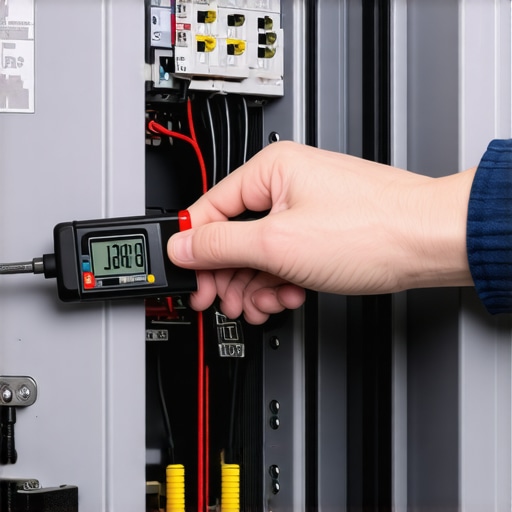
About six months after my first big install, I noticed a faint “fishy” smell near the panel. That is the smell of overheating plastic. I opened the dead front and saw one of the main lugs was discolored. I’d skipped the final torque check because I was in a rush. I’ve since learned that the forgotten torque test is the only way to prevent panel fires. Thermal expansion and contraction are real; those wires “wiggle” slightly every time they heat up and cool down. If you aren’t seeing signs your main lug is loose early—like flickering warehouse lights or a humming sound—you are gambling with your facility. Now, we use a calibrated torque wrench for every single terminal, ensuring we meet the manufacturer’s exact specifications. It’s a five-minute task that prevents a five-figure disaster.
Don’t Ignore the Small Stuff During Installation
Beyond the big wires, the small details matter. For example, if you are running multiple vehicles, you might need to calculate the exact circuit load for a dual-head charger to ensure the shared power doesn’t exceed the branch circuit. I’ve seen guys use the wrong screws—the specific screws you should never use for an electrical box can actually pierce wire insulation if you aren’t careful. It’s these minor oversights that lead to troubleshooting headaches down the line. If you are doing this yourself, remember that code compliance isn’t just a suggestion; it’s a survival guide for your equipment and your building.
The biggest mistake I see people make is assuming that a ‘pass’ from the building inspector means the job is optimized. It’s a dangerous myth. Code compliance is the bare minimum—it’s the electrical equivalent of a ‘D minus’ grade. It keeps your house from burning down, but it doesn’t ensure your equipment runs efficiently or stays cool under pressure. For instance, you might [how to verify code compliance for your ev charger installation](https://brightsparkzelectric.com/how-to-verify-code-compliance-for-your-ev-charger-installation) and pass with flying colors, but if your contractor used the minimum allowed wire gauge for a 50-foot run, you are literally throwing money away as wasted heat. I’ve seen countless setups where [why your charging speed drops suddenly after 20 minutes](https://brightsparkzelectric.com/why-your-charging-speed-drops-suddenly-after-20-minutes) isn’t a software glitch, but the car’s onboard computer throttling back because it senses the heat from an undersized conductor. According to research from the Electrical Safety Foundation International (ESFI), continuous high-current loads like EV charging require a system specifically designed for thermal endurance, not just a standard branch circuit.
Is voltage drop stealing battery life during those long overnight sessions?
When you push 48 amps through a wire that is just slightly too small over a long distance, the resistance creates significant heat. That heat isn’t just a safety concern; it’s energy you are paying for that never actually reaches your car. This is why I always advocate for [the specific wire gauge that prevents voltage drop over long runs](https://brightsparkzelectric.com/the-specific-wire-gauge-that-prevents-voltage-drop-over-long-runs), even if the local inspector says a smaller wire technically ‘meets code.’ If you are planning for the long haul, over-engineering your wire size is the best investment you can make. 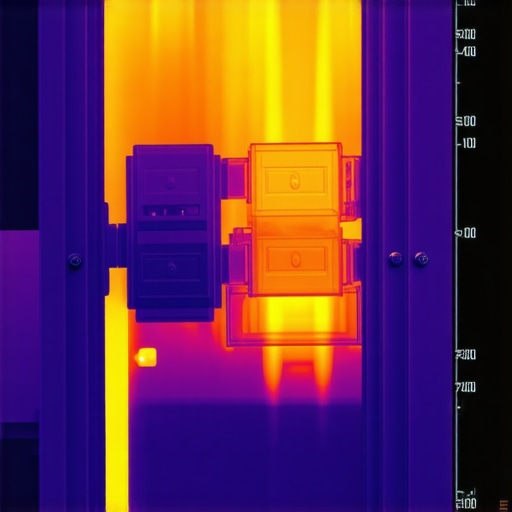
Don’t let your ‘compliant’ panel become a thermal bottleneck
If you are starting to notice [why your ev plug contacts look burnt and what to do next](https://brightsparkzelectric.com/why-your-ev-plug-contacts-look-burnt-and-what-to-do-next), you’ve likely fallen into the trap of ignoring terminal maintenance. People think electrical connections are ‘set and forget,’ but the heavy thermal cycling of an 8-hour charge can actually loosen lugs over time through expansion and contraction. This is why [troubleshooting ev chargers common compliance pitfalls and fixes](https://brightsparkzelectric.com/troubleshooting-ev-chargers-common-compliance-pitfalls-and-fixes) should be an annual safety check, not a one-time event. You need to approach [panel upgrades for ev chargers what you need to know](https://brightsparkzelectric.com/panel-upgrades-for-ev-chargers-what-you-need-to-know) with a focus on airflow. Even if your load calculation works on paper, a crowded panel with no ‘breathing room’ between high-draw breakers will lead to nuisance tripping on hot summer days. Have you ever fallen into this trap? Let me know in the comments.I’ve stopped trusting my ‘gut feeling’ when it comes to electrical connections. After seeing a main lug glow cherry red early in my career, I realized that my hands simply aren’t sensitive enough to detect the precision required for high-amperage terminals. Now, I never touch a panel without a calibrated digital torque wrench. If you aren’t using the specific torque wrench settings for a wall connector, you are basically guessing with a potential fire hazard. I also keep an infrared thermometer in my toolkit; once a month, I scan the breakers while the fleet is charging. If I see a significant temperature spike on one specific lug, I know I’ve got a loose connection or a failing component before it ever trips. This proactive approach follows the maintenance principles outlined in NFPA 70B (Standard for Electrical Equipment Maintenance), which emphasizes that electrical equipment isn’t truly ‘maintained’ unless it’s periodically inspected under full load. Knowing why your charger needs a specific torque setting to pass inspection is the difference between a system that survives three years and one that lasts thirty.
How do I keep the system healthy year after year?
The biggest threat to your long-term infrastructure success is ‘mechanical creep.’ Over time, the constant heating and cooling of the conductors in your panel causes metals to expand and contract, which can actually loosen the screws. I recommend a ‘maintenance Sunday’ every six months where you check for signs of wear, like why your charger handle feels sticky after a rainstorm or if you need to how to stop a charging station from humbling or buzzing. It’s also smart to keep the essential spare parts to keep for your home charging unit on a shelf in the garage—specifically a spare charging cable and a replacement holster. These are the components that take the most physical abuse from drivers or family members in a rush.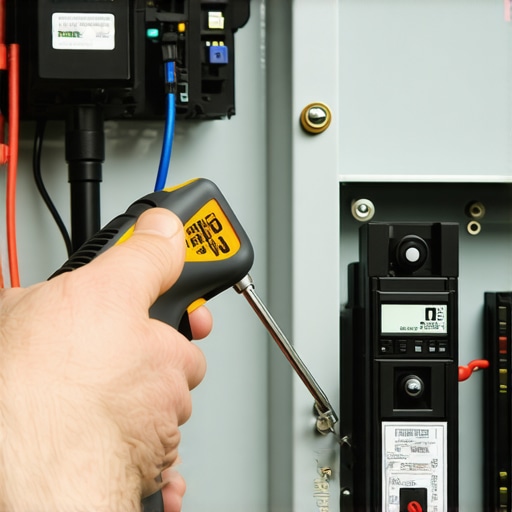 When you are ready to grow, don’t just keep cramming breakers into your main panel. Eventually, the lack of physical space makes heat dissipation impossible. I found that upgrading your panel for better ev charging performance usually involves why your garage needs a sub-panel for multiple chargers. This keeps the ‘high-heat’ activity localized and away from your sensitive home electronics. As we move toward the next decade, bidirectional charging is going to become the standard, making your car a battery for your entire building. If you aren’t ensuring code compliance when installing ev chargers today, you’ll be paying double tomorrow to rip it all out for the next tech wave. Always how to verify code compliance for your ev charger installation with a qualified pro if you have any doubts. Grab an infrared thermometer and scan your panel while your car is charging at full blast tonight—you might be surprised by what you find.
The Unspoken Realities of Power Management
After years of managing high-draw electrical systems, I have realized that the real work begins long after the inspector signs off on the permit. The most vital lesson I’ve learned is that your electrical panel is a dynamic environment, not a static box; it breathes and moves with every charging cycle. You should never ignore the ‘scent’ of an electrical load; if you ever detect a faint smell of ozone or heated plastic, your hardware is telling you something your breaker hasn’t caught yet. Furthermore, how to verify code compliance for your ev charger installation is an ongoing safety habit, not just a one-time checkbox. I now treat my service panel with the same respect as a vehicle engine, requiring regular check-ups to prevent thermal fatigue. #IMAGE_PLACEHOLDER_E#
My High-Current Survival Guide
To maintain peak performance and avoid costly downtime, I rely on a specific toolkit that goes beyond standard screwdrivers. First, a calibrated digital torque wrench is non-negotiable for meeting the specifications required for a safe connection. Second, I always keep the essential spare parts to keep for your home charging unit, such as spare fuses and terminal blocks, in a dedicated emergency kit. Finally, I trust the NFPA 70B standards for electrical maintenance as my ultimate guide for high-capacity systems. Using these tools for troubleshooting ev chargers common compliance pitfalls and fixes ensures that I am never caught off guard by a preventable failure.
Powering Your Fleet into the Future
Investing in your electrical infrastructure is the most important step in securing a reliable and scalable green fleet. By staying proactive and ensuring code compliance when installing ev chargers, you are protecting your assets from the silent threats of heat and mechanical creep. Don’t let the complexity of modern power management hold you back—start with a solid load calculation and build with the future in mind. Have you ever noticed your electrical panel getting warmer than usual during a long charging session? Let me know in the comments below!