I stepped out into the garage at 6:15 AM, coffee steaming in my hand, expecting a full ‘tank’ for my commute. Instead, my dashboard showed a measly 38 miles of range. I had been plugged in for nine hours. My first thought was that my expensive new station was a lemon. But after a few frantic hours of ev charger troubleshooting, I realized the hardware was perfectly fine. The electricity was simply getting ‘tired’ on its way to the car. I had fallen victim to the silent thief of the electrical world: voltage drop. If you have ever wondered why your car isn’t as ready for the day as you are, this secret might be the culprit.
Stop Blaming Your Charger for Slow Charging Speeds
It is a common frustration for new EV owners. You spend a fortune on a high-end Level 2 station, yet you are still getting results that feel like a standard wall outlet. I made a classic rookie mistake early on by assuming wire was just wire. I used a smaller gauge because it was cheaper and significantly easier to pull through the conduit. I did not understand why thinner wire is costing you miles every night until I actually measured the heat coming off my junction box. When your wire is too small for the distance it has to travel, the voltage drops. Your car’s sensitive onboard computer detects that low voltage and immediately throttles the intake to prevent damage. [image placeholder]
Is a beefier wire really worth the extra expense?
You might be wondering if spending the extra money on heavy-duty copper is just ‘overkill’ suggested by an over-eager electrician. It isn’t. Selecting the specific wire gauge that prevents voltage drop is about more than just speed; it is about safety. The National Fire Protection Association (NFPA) indicates that continuous loads—those running for three hours or more—require a 125% safety buffer in circuit capacity. If your voltage sags because of poor wiring, your system has to work harder, generating heat that can eventually lead to terminal failure. Have you ever touched your charging handle after an hour and found it uncomfortably warm to the touch?
The Silent Efficiency Killer in Your Garage
We are not just talking about a few lost minutes here and there. We are talking about ensuring code compliance when installing ev chargers so you do not accidentally void your homeowner’s insurance. If you are running a line 50 feet or more from your main service, that ‘secret’ voltage drop is likely stealing 5% to 10% of your charging efficiency. Before you go out and spend thousands on a panel upgrade, you need to look at the ‘pipes’ delivering the power. In the next few minutes, I will show you how to diagnose this yourself and the simple fix that can double your overnight range gain.To stop the voltage thief, you need to see exactly where the energy is leaking. You cannot manage what you do not measure. Start by performing a ‘delta test’ using a reliable multimeter. This involves measuring the voltage at your main breaker while the car is idle, and then measuring it again at the charging station while the vehicle is pulling its maximum load. If the gap between those two numbers is more than 3% to 5%, your wiring is acting as a massive resistor, turning your electricity into heat instead of range. I remember the first time I ran this test on my own setup; I saw the voltage tank from 244V at the panel to 219V at the car. That 25-volt drop was effectively turning my Level 2 unit into a glorified space heater, and it was a textbook example of ev charger troubleshooting done right after weeks of head-scratching.
Grab Your Multimeter and Run a Delta Test
Identifying the exact point of failure prevents you from wasting money on parts you do not need. If the voltage is low at the breaker, your utility company might be the problem. If it is only low at the charger, the wire is the culprit. While you have the station cover off, look for 4 signs your electrician used the wrong gauge wire, such as discolored insulation or excessive stiffness. Heat is the ultimate indicator of poor efficiency. If a specific section of conduit feels hot to the touch—not just warm, but hot—you are likely dealing with an undersized conductor for the length of the run. 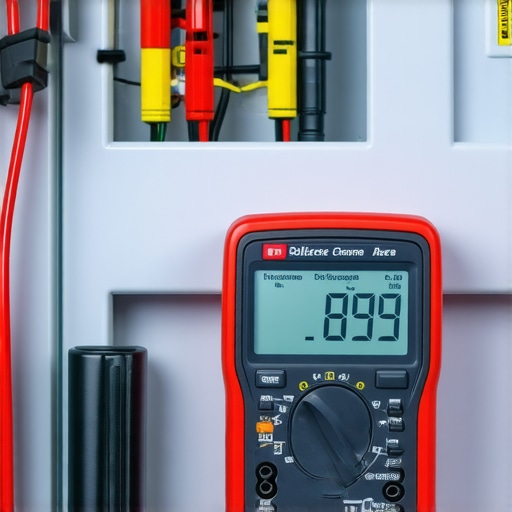
Why a Hand-Tightened Connection is a Fire Risk
Once you have confirmed the wire gauge is correct, the next most common culprit for slow charging is a loose mechanical connection. In my second year of EV ownership, I helped a neighbor whose charging speed had halved over a single month. When we opened his wall connector, the smell of ozone was immediate. One of the main lugs had backed out slightly due to thermal expansion and contraction. We used a precision tool to hit the specific torque wrench settings for a wall connector and the charging speed jumped back to full capacity instantly. This is the forgotten torque test that prevents panel fires and ensures your car gets every amp it asks for.
The 80 Percent Rule for Long-Term Performance
You also need to ensure your circuit is not hovering right on the edge of its limit. The National Electrical Code requires that continuous loads like EV chargers only utilize 80% of the circuit’s total capacity. This is why your electrician recommends a 60-amp circuit for a 48-amp charger. If you try to run a 48-amp charger on a 50-amp breaker, the breaker will eventually heat up and trip, or worse, it will slowly degrade the internal spring tension, leading to nuisance trips. To ensure you stay within the lines, you should how to verify code compliance for your ev charger installation by checking the labels on your equipment. If your panel is already full, you might be tempted to squeeze the charger in anyway, but that is how you end up with a melted busbar.A melted busbar is just the beginning of the nightmare for a homeowner who ignores the technical details. Let’s dig deeper into the common myths. Everyone tells you that ‘smart’ chargers are the future because they allow you to schedule sessions via an app, but here is the contrarian truth: a smart charger is often just a fancy way to hide a mediocre electrical installation. I have seen countless homeowners rely on software-based load limiting to avoid upgrading your panel for better ev charging performance. While it works on paper, you are creating a single point of failure. If your smart charger lost its wi-fi connection again, the unit might default to its highest setting, potentially overloading a circuit that was never meant to handle it. This ‘software-first’ approach is a dangerous trap; real reliability comes from the quality of your copper and breakers, not your cloud subscription. One massive ‘oops’ factor I see involve NEMA 14-50 outlets. People love them because they make the charger portable. However, most ‘big box’ store outlets are designed for ranges or dryers that run for short cycles, not an EV pulling 40 amps for eight hours straight. This leads to terminal overheating and is exactly why there is such a critical difference between hardwired and plug-in chargers. If you want a setup that lasts a decade without a service call, you should choose a hardwired connection every single time. 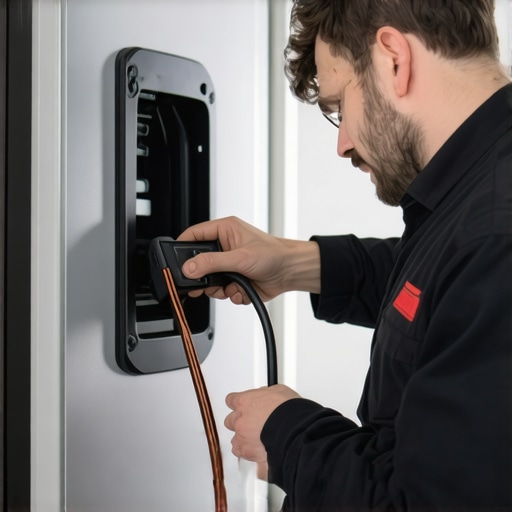
Should you invest in a smart load-management system instead of a new panel?
According to the National Electrical Code (NEC) Article 625, energy management systems are a valid way to handle loads, but they are not a magic wand. While panel upgrade strategies to meet ev charging code requirements in 2025 often involve dynamic load balancing, the physical installation is where most people fail. If the current transformer (CT) clamps are installed even an inch out of place, the system will ‘hunt’ for a stable current, causing troubleshooting ev chargers common compliance pitfalls and fixes to become your new frustrating weekend hobby. Another nuance involves the grounding myth. Most people think a ground is just a safety wire, but for many high-end EVs, it is a critical data path. If your ground rod is slightly loose or the soil is too dry, your car might throw a vague ‘charging interrupted’ error. I have seen the grounding trick that fixes intermittent charging errors save people from replacing perfectly good charging stations. Furthermore, beware of the ‘neutral wire trap.’ In some jurisdictions, why your ev circuit needs a dedicated neutral in some jurisdictions is a matter of strict local code that can fail an inspection even if the charger does not technically use the neutral wire. Have you ever fallen into this trap? Let me know in the comments.Moving beyond the initial installation, the real challenge is the “set it and forget it” mentality. High-voltage systems are dynamic and react to the environment every single night. If you want to move from amateur to pro, you need to look at heat. I personally use a small thermal imaging attachment for my phone. It sounds like overkill until you see a bright white spot on a breaker that should be cool. This is the gold standard for ev charger troubleshooting because it identifies resistance before it causes a fire. According to NFPA 70B, the National Fire Protection Association’s standard for electrical equipment maintenance, infrared inspections are one of the most effective ways to identify loose connections in high-power circuits before they fail. If you see your main lugs glowing under a load, you are looking at a panel upgrade in your very near future if you do not tighten those lugs immediately. 
Your Six-Month Checklist to Avoid a Service Call
I make it a habit every six months to pull the cover off my station and look for signs of “wicking” or insulation discoloration. You would be surprised how much dust and even spider webs can accumulate inside an enclosure, which can lead to tracking and arc faults over time. If you notice any weird smells while the car is plugged in, you should immediately check 5 reasons your electrical panel smells like fish to ensure you are not dealing with melting plastic components. This is not just about paranoia; it is about how to verify code compliance for your ev charger installation over the long term. Electrical code is not just for the day the inspector shows up; it is a living standard for safety that ensures your home remains protected.
What is the best way to keep my EV charger running for a decade?
Beyond physical checks, the next frontier is protection from the grid itself. Your EV is essentially a giant battery connected to a sometimes-unstable power source. I strongly recommend adding a Type 2 Whole House Surge Protective Device (SPD) to your main panel. This is why your main service panel needs a surge protector for your ev. A single lightning strike or utility surge can fry the sensitive motherboard of a $600 charger in a millisecond. Looking ahead, the industry is moving rapidly toward bidirectional charging (V2X), where your car powers your house during peak hours. To prepare for this shift, look into panel upgrade strategies to meet ev charging code requirements in 2025. You do not want to have to redo all your conduit work in two years when you buy a vehicle that can run your air conditioning during a blackout. **My advanced tip for you today:** grab a high-quality multimeter and measure the voltage at your charger while the car is idle, and then again while it is pulling a full load. If you see a drop of more than 5 volts, your wire gauge is the bottleneck. Fix that now, and you will save hundreds in lost energy costs over the life of the vehicle.
The Expensive Lesson I Learned While Chasing Missing Amps
Looking back at my first DIY attempt, I realized that high-voltage electrical work is as much an art as it is a science. One of the biggest ‘lightbulb’ moments for me was realizing that every degree of heat coming off a wire is energy that never reached my battery. If you are experiencing why your level 2 charger takes twice as long as the box promised, it is rarely a software bug; it is almost always physical resistance. I used to think I was saving money by skipping a few gauge sizes, but why thinner wire is costing you miles every night becomes painfully obvious when you calculate the yearly cost of wasted electricity. Trust your gut—if a connection looks or feels sketchy, it probably is. [image placeholder]
The Tools That Saved My Morning Commute
To get your setup perfect, I recommend three non-negotiable items. First, get a multimeter that handles ‘Min/Max’ recording so you can catch voltage dips in the middle of the night. Second, never touch a lug without a torque wrench; following why your charger needs a specific torque setting to pass inspection is the difference between a safe home and a fire hazard. Finally, keep a guide on code compliance essentials for ev charger installations in 2025 handy. These resources take the guesswork out of the equation and give you the confidence to talk to any electrician as an equal.
Take Control of Your Garage and Your Range
Don’t let the technical jargon of EV charging intimidate you. You’ve already done the hard part by switching to electric; now it is just about fine-tuning the delivery. By taking these small steps, you aren’t just fixing a slow charge—you are future-proofing your home and ensuring your vehicle is always ready for the next adventure. Whether you are dealing with minor voltage sag or preparing for upgrading your panel for better ev charging performance, remember that a solid foundation of copper and torque is your best friend. Your car, and your peace of mind, will thank you. Have you ever found a loose connection in your panel that was causing a mysterious power drop? Let me know in the comments below.