I’ll never forget the acrid scent of melting plastic wafting from my breaker panel just three weeks after I thought I’d finally finished my garage setup. I stood there, staring at the wall, realizing that the ‘expert’ I hired had traded my safety for a slightly easier pull through the conduit. It’s a gut-wrenching feeling when you realize your home’s most expensive appliance is being fed through a straw when it needs a firehose. Today, I’m going to help you spot those sneaky red flags before your charger becomes a literal hot mess, ensuring you know exactly how to protect your investment and your peace of mind. [image placeholder]
Watch Out for These Red Flags in Your Garage
When I first started tinkering with home energy, I made the classic rookie mistake of thinking copper is copper. I once tried to run a high-draw tool on a thin extension cord and nearly learned a lesson the hard way when the plug fused to the outlet. That experience taught me that the specific wire gauge that prevents voltage drop over long runs is not a suggestion—it is a law of physics. If your electrician used 10-gauge wire for a 40-amp load because it was what they had on the truck, you aren’t just losing efficiency; you are inviting a fire. According to the National Fire Protection Association (NFPA), electrical failures account for roughly 13% of home structure fires, and improper wiring is a leading culprit. You need to know how to tell if your panel is actually a fire hazard before the damage is done. Have you ever noticed your charging cable feeling unusually hot to the touch after a session?
Is a Licensed Pro Really Likely to Cut Corners?
It sounds crazy, right? You pay for a professional because you want it done right. But between rising material costs and the rush to finish jobs, some installers might overlook the 3 hidden costs of DIY EV charger wiring—one of which is actually hiring a ‘pro’ who treats your home like a DIY project. Often, they might not explain why your electrician recommends a 60-amp circuit for a 48-amp charger, opting instead to undersize the wire to save on the bill. I’ve seen it happen too often: a technician uses the minimum code requirement without accounting for the continuous load an EV demands, which is a very different beast than a dryer or an oven that cycles on and off.
Stop the Heat Before it Starts with Proper Wire Sizing
Think of your EV charger like a marathon runner. Unlike a toaster or a microwave that ‘sprints’ for two minutes, your car is going to pull max current for six, eight, or even ten hours straight. This ‘continuous load’ generates a relentless amount of heat. If your installer used standard Romex for a high-amperage circuit, you’re asking for trouble. I always insist on THHN wire in conduit because of the difference between residential and industrial grade wire for EVs. Industrial-grade wiring handles that thermal stress without the insulation becoming brittle over time. If you see ‘NM-B’ printed on the cable running to your 48-amp charger, you’ve found your first red flag. Using the wrong material is like using a garden hose to supply a fire hydrant; it might work for a minute, but the pressure will eventually cause a failure.
Tighten Down Every Connection with a Torque Wrench
This is the step most ‘pro’ installers skip because it takes an extra five minutes. They use a standard screwdriver and tighten it ‘until it feels right.’ That is a recipe for disaster. I once inspected a garage where the owner complained of a faint buzzing sound. When I opened the panel, the lug holding the charger’s hot wire was so loose I could literally wiggle it with my pinky. That is a ‘fire in a box’ waiting to happen. A loose connection creates resistance, and resistance creates heat—lots of it. That is why the forgotten torque test that prevents panel fires is the single most important safety check you can perform. You must ensure your electrician uses a calibrated torque wrench and follows the specific torque wrench settings for a wall connector or breaker to ensure the metal-to-metal contact is absolute. 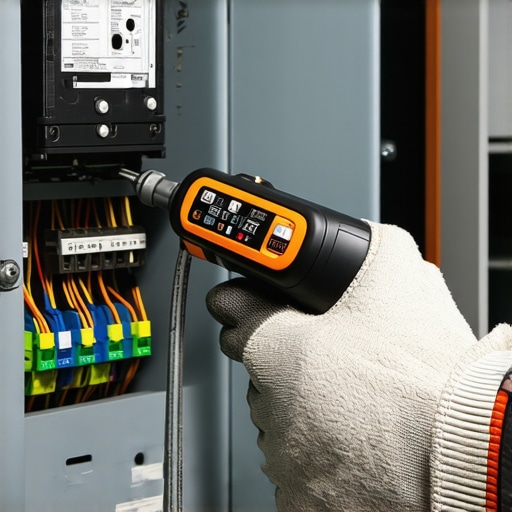
Don’t Overwhelm Your Main Service Panel
Most older homes were never designed to have a 50-amp or 60-amp appliance added to the mix without something else giving way. It’s like trying to pour a gallon of water through a funnel designed for a pint; eventually, it’s going to overflow. Before you even buy the charger, you need to know if you have the ‘headroom.’ Look for 5 signs your main breaker is overwhelmed by a new level 2 charger, such as lights flickering when the car starts charging or the main breaker feeling hot to the touch. If your panel is already full of double-tapped breakers, you’re looking at a serious hazard.
Do the Math Before You Buy
Don’t let an installer ‘eyeball’ your panel capacity. A professional must perform a formal load calculation. If they don’t, your permit will likely be rejected anyway because why your ev permit application requires a load calculation worksheet isn’t just bureaucracy—it’s safety math. If your total house load plus the car exceeds your main breaker’s rating, you’ll need to explore panel upgrades for ev chargers. I’ve seen homeowners try to skip this, only to have their main breaker trip in the middle of a summer heatwave when the A/C kicks on while the car is charging. It’s an expensive, sweaty mistake that is easily avoided with a little upfront diligence and proper planning.But let’s take it a step further. Most people assume that once the inspector slaps that green sticker on the panel, the job is perfectly done. Here is a hard truth: electrical code is the minimum safety requirement to prevent your house from burning down—it is not a performance standard. While you are [ensuring code compliance when installing ev chargers](https://brightsparkzelectric.com/ensuring-code-compliance-when-installing-ev-chargers), you might still be using components that will fail prematurely under the stress of daily charging. For instance, I’ve found that [the specific breaker brands that hate constant ev loads](https://brightsparkzelectric.com/the-specific-breaker-brands-that-hate-constant-ev-loads) often meet code but will nuisance-trip or even slightly melt because their internal thermal-magnetic trip units aren’t designed for a 100% duty cycle. If you aren’t choosing industrial-grade components, you’re just waiting for a service call.
The Hidden Grounding Trap That Delays Your Charge
One of the most common ‘oops’ moments happens when a DIYer or a rushed pro neglects the nuances of the grounding system. If your car is throwing a ‘ground fault’ error, it might not be a broken wire. It’s often a subtle issue with [how to fix the grounding fail that ruins ev permits](https://brightsparkzelectric.com/how-to-fix-the-grounding-fail-that-ruins-ev-permits), where the resistance is just high enough to fail the car’s internal safety check but low enough to pass a basic continuity test. This is why [upgrading your panel for better ev charging performance](https://brightsparkzelectric.com/upgrading-your-panel-for-better-ev-charging-performance) usually involves more than just adding a breaker; it’s about reinforcing the entire grounding path of the home. I’ve seen homeowners spend thousands on a panel swap when they really just needed a new ground rod to stabilize the reference voltage.
Why does your charging speed drop even when nothing is tripped?
If you notice your car starts at a full 48 amps but slowly trickles down to 24, you’re likely experiencing thermal derating. According to the National Renewable Energy Laboratory (NREL), many home charging units are designed to protect themselves by cutting power if their internal temperature exceeds a safe threshold. This ‘hidden nuance’ is often missed because it doesn’t blow a fuse or trip a breaker—it just makes your ‘fast’ charger remarkably slow. If you’ve wondered [why your charging speed drops suddenly after 20 minutes](https://brightsparkzelectric.com/why-your-charging-speed-drops-suddenly-after-20-minutes), it’s almost always a heat issue in the handle or the wall unit, not the car. Choosing [the best conduit materials for high-heat garage environments](https://brightsparkzelectric.com/the-best-conduit-materials-for-high-heat-garage-environments) can help mitigate some of this ambient heat soak. #IMAGE_PLACE_HOLDER_C#
Don’t Overlook the Smart Load Balancing Alternative
Everyone tells you that if your panel is full, you need a $3,000 upgrade. But in my experience, that’s often overkill. You can often skip the massive bill by understanding [how smart chargers use dynamic balancing to prevent blown-fuses](https://brightsparkzelectric.com/how-smart-chargers-use-dynamic-balancing-to-prevent-blown-fuses). This technology allows the charger to ‘watch’ your home’s total power draw and throttle itself only when the dryer or AC is running. It’s a sophisticated way to stay within code without tearing apart your utility entrance. Finally, remember that even the best wiring won’t help if your smart charger can’t talk to the internet. I can’t tell you how many times I’ve been called out for a ‘broken charger’ only to find the owner is [troubleshooting ev charger connectivity problems](https://brightsparkzelectric.com/troubleshooting-ev-charger-connectivity-problems) caused by a metal garage door acting like a Faraday cage. It’s these small, non-electrical nuances that turn a ‘pro’ install into a source of daily frustration. Have you ever fallen into this trap where the hardware looked great but the system just wouldn’t work? Let me know in the comments.
Maintenance isn’t just about wiping the dust off the plastic casing or making sure the cord is neatly coiled. It is about what happens behind the drywall and inside the heavy metal box in your garage. Most people think electricity is ‘set and forget,’ but metal expands and contracts as it heats up and cools down. This thermal cycling is the silent enemy of a stable connection. I make it a habit to check my own lugs every six months because I know why your main lugs might be loose after a year of charging. Even if the installation was perfect on day one, those microscopic movements can back out a screw just enough to create a high-resistance point.
The Six-Month Checkup That Saves Your Home
If you don’t take the time to perform the forgotten torque test that prevents panel fires, you are essentially leaving your safety to chance. According to the Electrical Safety Foundation (ESFI), nearly 51,000 home electrical fires occur each year, and consistent thermal monitoring is one of the most effective non-invasive ways to prevent arc-flash incidents. I always keep a small kit of the essential spare parts to keep for your home charging unit, including a few extra 60-amp breakers and industrial-grade lugs, just in case I find signs of heat stress during my biannual inspection.
How can I keep my charger running safely for years?
The key is proactive monitoring. Beyond just checking the tightness of connections, you should be looking for discoloration in the wire insulation. If the copper looks like it has been ‘rainbowed’ or if the white plastic is turning a toasted brown, you have a problem. This is often the first step in how to diagnose a faulty internal relay in your charging station. Don’t wait for the unit to stop clicking; if it smells like ozone or burnt toast, shut off the breaker immediately. You should also consider why your main service panel needs a surge protector for your ev, especially if you live in an area prone to summer lightning storms. A single spike can fry a $700 motherboard in a heartbeat.
My Secret Weapon for Troubleshooting Heat
I never step into a garage to troubleshoot a charging issue without my infrared (IR) thermometer. It is a $20 tool that can save you thousands. While the car is drawing full power, I point the laser at the breaker and the terminal blocks. If a connection is significantly hotter than the others, I know exactly where the resistance is building up. This allows me to address the issue before it causes a nuisance trip or permanent damage. It’s an easy way to verify that your system is running within safe thermal limits. 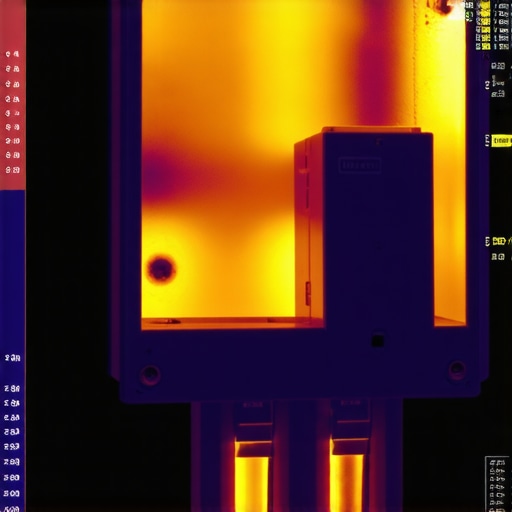
Build for the Future with a Dedicated Subpanel
As we look toward 2025 and beyond, the trend is moving toward ‘Vehicle-to-Home’ (V2H) and bidirectional charging. Your car won’t just take power; it will give it back to your house during a blackout. This means your garage setup needs more than just a single outlet. I’m already seeing homeowners realize why your garage needs a subpanel for that second ev as they trade in their second gas car for an electric one. Learning how to properly size a subpanel for your ev workshop now will save you from having to rip out your drywall twice. Try this: grab an infrared thermometer today and scan your panel while the car is charging—it’s the easiest way to find a loose wire before it becomes a smell. It’s a simple, high-impact habit that separates the enthusiasts from the experts.
Hard Truths I Learned from Melted Copper and Blown Breakers
One thing people rarely tell you is that your electrical system is a living, breathing entity. Every time your EV pulls 48 amps, those wires expand. When it stops, they contract. This thermal cycling is the reason why your main lugs might be loose after a year of charging even if they were tight on day one. I have learned that the ‘lowest bidder’ often costs three times more in the long run when you factor in the emergency service calls and melted components.
- Trust but verify your installer. If they do not bring out a torque wrench, they are not finished. I have found that why your charger needs a specific torque setting to pass inspection is the number one reason both DIYers and pros fail their first site visit.
- Code is the floor, not the ceiling. Just because it passes inspection does not mean it is optimized for performance. Moving beyond the basics ensures your equipment lasts for a decade rather than just a few years.
- Documentation adds real value. Keep your load calculations and permits organized. When the time comes to move, knowing how to prove your electrical panel is code compliant for resale can be a major selling point for potential buyers.
The Go-To Toolkit for a Flawless Garage Installation
If you want to move beyond basic maintenance, you need tools that tell you the story of your electricity. I never troubleshoot without a high-quality Infrared Thermometer—it is the fastest way to see heat before you smell it. I also highly recommend keeping the essential spare parts to keep for your home charging unit in a dedicated bin in your garage, including extra industrial-grade lugs and a spare 60-amp breaker. For those with families, the best breaker lockouts for your home charging circuit provide an extra layer of safety. Finally, always keep a copy of the code compliance essentials for ev charger installations in 2025 nearby to ensure your system remains up to date as regulations shift.
Take Control of Your Home Energy Future
Installing an EV charger is about more than just convenience; it is the first step toward a smarter, more efficient home. By applying these ev charger troubleshooting expert tips for common issues and staying ahead of the maintenance curve, you are not just protecting your car—you are protecting your entire household. It might feel like a lot of technical detail now, but once you hear that satisfying ‘click’ and see your range climb safely every night, you will know the effort was worth it. There is a real sense of pride in knowing the real reason your home value increases with a pro ev setup comes down to the quality and safety of the work you insisted on today. Have you run into any weird errors or strange smells during your first few weeks of charging? Let me know in the comments below!