I was standing in my garage, chest puffed out, looking at my brand-new Level 2 charger installation. I’d used the best 6-gauge copper I could find and followed the manufacturer’s diagram to the letter. Or so I thought. When the municipal inspector walked in, he didn’t even look at my torque settings first. He went straight for the junction box. He poked a finger at the missing white wire and gave me that look—the one that says, ‘You’re going to be doing this again, aren’t you?’ It turns out, I’d fallen for the classic DIY trap: I assumed if the charger didn’t use a neutral, I didn’t need a neutral. That single assumption led to a rejected permit and a weekend spent wrestling with conduit. Today, I’m going to save you that headache by explaining exactly why your new charger requires a neutral wire even for 240v in specific jurisdictions. We are going to dive into the quirks of local codes, the ‘future-proofing’ logic that inspectors love, and how to make sure your setup doesn’t become why the city inspector failed your garage wiring project. Have you ever had a project stalled because of a tiny detail you thought was optional? I’d love to hear your ‘inspector from hell’ stories in the comments.
The Day the Inspector Shook His Head at My Wiring
I’ll be the first to admit I’m a bit of a ‘manual’ guy. If the book says A, B, and C, I do A, B, and C. But here’s the kicker: the manual for my charger said a neutral was optional for hardwired installations. My local jurisdiction, however, followed a specific amendment to the 2020 NEC that demanded a neutral for any 50-amp circuit in a garage, just in case a future homeowner wanted to swap that hardwired unit for a NEMA 14-50 outlet. I was so focused on the hardware that I forgot to verify code compliance for your ev charger installation at the local level. It’s a common blunder, and it’s exactly the mistake that causes ev charger motherboards to fry during storms or leads to nuisance trips when things aren’t grounded and bonded perfectly. If you are planning a panel upgrades for ev chargers what you need to know is that the rules change the moment you cross city lines.
Is a Fourth Wire Just a Massive Waste of Money?
I get it. Copper isn’t cheap. Adding a dedicated neutral wire feels like throwing money into a wall for no reason. You might be thinking, ‘My car charges fine without it, so why bother?’ The reality is that ensuring code compliance when installing ev chargers isn’t just about the current car you own. According to a study by the National Fire Protection Association (NFPA), nearly 15% of home electrical fires are linked to faulty or outdated wiring methods that didn’t account for modern continuous loads. That neutral wire provides a path for unbalanced loads and, in many smart chargers, powers the logic boards and Wi-Fi modules. Without it, you might find yourself troubleshooting ev charger connectivity problems that seem completely random but are actually power-supply issues within the unit itself.
The Real Reason Local Codes Overrule Your Charger’s Manual
When you start digging into code compliance essentials for ev charger installations in 2025, you’ll notice a trend. Cities like Chicago or parts of California are getting much stricter about how we run power to our garages. They aren’t just looking at what works today; they are looking at what won’t burn the house down in twenty years. If you skip the neutral now, you’re basically betting that you’ll never want a different charger or an outlet in that spot. I made that bet and lost. I ended up having to pull out my old wire and buy a 4-conductor cable. It was a mess. If you’re currently wondering why your ev permit application requires a load calculation worksheet and a detailed wiring diagram, it’s because the city wants to ensure that neutral-to-ground bond is exactly where it should be. We’re going to break down the exact scenarios where you can—and absolutely cannot—skip that white wire.
Go Beyond the Manual and Check Your Local Amendments
I used to think the NEC (National Electrical Code) was the final word on everything electrical. I was wrong. Think of the NEC as the baseline ‘law of the land,’ but your specific city is like a homeowner’s association with its own set of picky rules. When I ignored this and just followed the charger’s manual, I missed a crucial local amendment that required a neutral wire for all 50-amp garage circuits. Before you even strip a single inch of insulation, you need to verify code compliance for your ev charger installation by calling your local building department. Ask them specifically if they require a 4-wire setup for hardwired units. It’s like checking the weather before a hike; it takes two minutes and saves you from a total disaster later.
The Four-Wire Strategy That Future-Proofs Your Garage
If you are running new conduit, don’t just pull the bare minimum. I once tried to save $40 by skipping the neutral on a long run to a detached garage. Two years later, that owner wanted to switch to a plug-in unit that required a NEMA 14-50 outlet. Because I hadn’t pulled that white wire, we had to dig up the yard again. Pulling a neutral wire now is the cheapest insurance policy you’ll ever buy. When selecting your materials, pay close attention to the exact wire gauge you need for a 50 amp ev circuit. Most pros stick with 6 AWG copper, but if your run is exceptionally long, you might need to upsize to account for voltage drop. 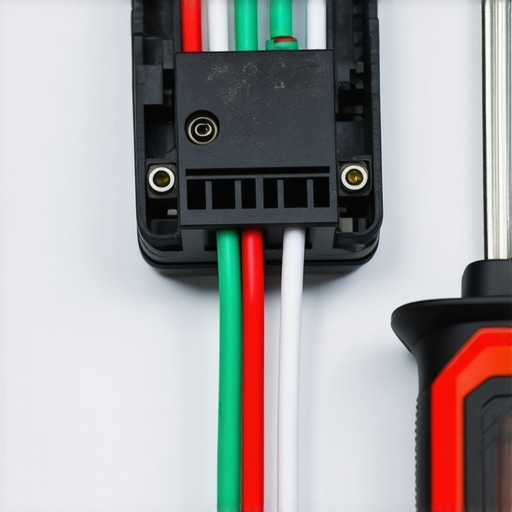
Getting the Torque Right to Avoid Burnt Terminals
Have you ever felt a breaker after an hour of charging? It shouldn’t be ‘hot’—just warm. If it’s scorching, you likely have a loose connection. This is where most DIYers fail. I remember my inspector pulling out a torque screwdriver and checking every single lug. If it isn’t tightened to the manufacturer’s spec, it won’t pass. There is a very real reason why your charger needs a specific torque setting to pass inspection: heat expansion. Under a continuous load, those wires expand and contract. If they aren’t torqued perfectly, the connection loosens over time, leading to arcing and melted plastic.
How the Neutral Wire Fixes Your Wi-Fi Woes
You might wonder what a power wire has to do with your phone app. Many modern ‘smart’ chargers use the neutral to power their internal logic boards independently of the high-voltage charging path. I’ve seen cases where troubleshooting ev charger connectivity problems revealed that the unit was trying to ‘steal’ a return path through the ground because the neutral was missing. This creates ‘dirty power’ that can freeze up your Wi-Fi module or cause the app to report incorrect data. If you’re dealing with a sub-panel in the garage, also ensure you understand why your subpanel needs a separate ground bar for ev circuits. Mixing your neutrals and grounds in a sub-panel is a major code violation that creates a parallel path for current, which is a massive safety risk.Everyone tells you that if you are adding a Level 2 charger to your home, you absolutely must upgrade your main service to 200 amps. But here is the contrarian truth: you might be throwing $3,000 away for no reason. While most electricians will jump straight to a full service replacement, I have found that how to add an ev charger without a 200 amp panel upgrade often comes down to smart load management. By using a load-shedding device, you can prioritize your oven or AC, and have the charger automatically throttle down when the house is pulling heavy current. It is a sophisticated way of upgrading your panel for better ev charging performance without the utility company having to dig up your front yard.
Stop Fighting with Your Nuisance-Tripping GFCI
One of the biggest ‘traps’ I see DIYers—and even some pros—fall into is the double-GFCI headache. Most modern Level 2 chargers already have sensitive Ground Fault Circuit Interrupter (GFCI) protection built into their motherboards. If you follow the strict letter of the 2020 NEC for outlets and install a GFCI breaker in the panel, those two systems will often ‘fight’ each other. This is exactly why the gfci in your panel keeps nuisance tripping your charger at 2:00 AM. In many jurisdictions, if you hardwire the charger instead of using a plug, you can often bypass the need for that panel-level GFCI, which solves the problem instantly. If you are currently troubleshooting ev charger connectivity problems or power interruptions, check your breaker type first. 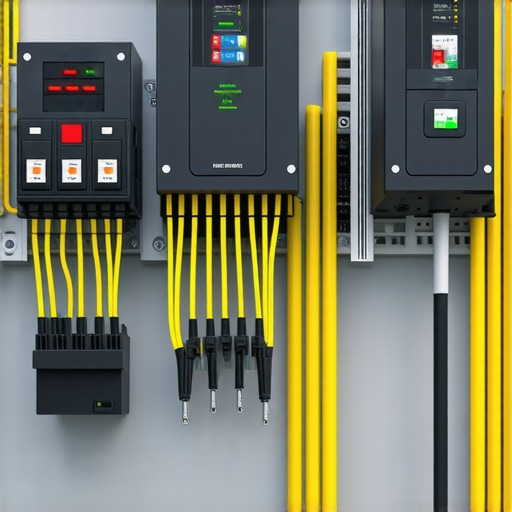
How Do You Manage Two EVs on One Tiny Circuit?
This is the advanced question I get from families who just bought their second Tesla or Rivian. You do not necessarily need two separate 60-amp circuits. In fact, running two high-draw lines is a great way to trigger a massive heat spike in your busbar. Instead, look into how to balance multiple evs on a single home circuit using ‘power sharing.’ Many high-end chargers can communicate with each other via Wi-Fi or a dedicated data wire to split the available 50 or 60 amps between two cars. This is one of those panel upgrade strategies to meet ev charging code requirements in 2025 that saves your hardware from premature wear. A technical report from the Electric Power Research Institute (EPRI) found that smart load-sharing can reduce total peak demand by up to 40% without significantly increasing total charge time for the average commuter.
The Hidden Cost of Skipping Your Load Calculation
If you are looking at troubleshooting ev chargers common compliance pitfalls and fixes, the absolute king of all errors is the missing load calculation. I have seen chargers melt main lugs because the homeowner assumed their 100-amp panel could ‘handle one more thing.’ Before you touch a screwdriver, you must understand why your ev permit application requires a load calculation worksheet. It is not just red tape; it is the only way to know if your main breaker is a ticking time bomb. This is why ensuring code compliance when installing ev chargers is the only way to sleep soundly while your car draws max power for six hours straight. Have you ever fallen into this trap or had a charger keep tripping for no apparent reason? Let me know in the comments.
It’s easy to think that once the inspector signs off, you’re done forever. But electrical systems—especially those handling 40 or 50 amps for hours on end—are dynamic. I’ve seen enough melted plastic to know that why your main lugs might be loose after a year of charging is usually down to thermal cycling. Every time your car charges, those copper wires heat up and expand; when it stops, they cool and contract. Over time, this ‘breathing’ can loosen even the tightest screw, leading to high resistance and potential failure.
How do I keep my home charging station running for a decade?
The secret isn’t just a clean installation; it’s an annual check-up. According to the International Association of Electrical Inspectors (IAEI), termination failure is one of the leading causes of equipment damage in high-amperage residential circuits. I personally make it a habit to pop the cover off my charger every twelve months (with the breaker off, obviously!) to look for any signs of discoloration or ‘pitting’ on the wires. This is where ev charger troubleshooting expert tips for common issues really come in handy—catching the small stuff before it becomes a ‘replace the whole unit’ problem. I also recommend checking that you how to update the firmware on your smart charging station to ensure you have the latest safety patches and grid-communication protocols.
One tool I refuse to work without is a high-quality torque screwdriver. I’m not talking about a cheap hardware store find; I mean a calibrated tool from a brand like Wera or Wiha. If the manual calls for 22 inch-pounds, 20 isn’t enough and 25 might strip the lug. Precision is safety. In the future, I predict we won’t even be doing this manually; we are moving toward ‘smart connectors’ that can sense their own termination temperature and throttle charging automatically if they detect high resistance. Until that becomes standard, your manual vigilance is the best defense you have. Don’t forget about the physical wear and tear on the outside, either. If you live in a cold climate, you’ve likely noticed why your charging cable is stiff in the winter and what to do, which can lead to micro-fractures in the cable jacket. Keeping your cable coiled properly on a dedicated hook will extend its life significantly, and your why your ev battery health depends on your home charger settings often starts with how clean the signal is coming through that cable. If you want to be a true charging pro, go out to your garage tonight and check your charger’s firmware version in the app. If you’re two versions behind, hit that update button—it’s the easiest maintenance win you’ll get all week.
Hard Truths My Inspector Taught Me About EV Wiring
- Your charger’s manual is a guide, but your local building department is the ultimate authority. I learned the hard way that code compliance essentials for ev charger installations in 2025 often demand more than what the manufacturer suggests.
- Torque settings are non-negotiable. Using a standard screwdriver is a recipe for melted terminals; precision prevents fires.
- Pulling that extra neutral wire today saves you from digging up your driveway tomorrow when you decide to switch to a plug-in unit later on.
The Professional Toolkit I Keep in My Garage
If you want to do this right, you need the right gear. I never start a project without my calibrated torque screwdriver—specifically a Wera or Wiha set—to ensure I meet why your charger needs a specific torque setting to pass inspection requirements. I also keep a printed copy of my city’s specific electrical amendments and a pre-filled why your ev permit application requires a load calculation worksheet to avoid any surprises during the permit process. #IMAGE_PLACEHOLDER_E# Finally, keeping the essential spare parts to keep for your home charging unit, like extra lug screws and a high-quality terminal block, ensures I’m never left stranded if a component fails due to vibration or thermal wear.
Take the Reins on Your Home Energy Future
Setting up your own charging station is about more than just convenience; it is about taking control of your home’s energy ecosystem. By ensuring code compliance when installing ev chargers, you aren’t just jumping through hoops for the city; you are building a safe, reliable foundation for the next decade of driving. Don’t let a single wire or a torque setting intimidate you. If you hit a wall, you can always learn how to find an electrician who actually understands ev codes to help you get over the finish line. Have you ever had a specific part of your EV setup fail an inspection or cause a headache? Let me know in the comments below!