I remember standing in my garage last February, coffee in one hand and my charger in the other, trying to get my car to acknowledge its “fuel.” I pushed. I wiggled. I might have even used a few choice words that my neighbors definitely heard. There is nothing more maddening than a charger that refuses to click into place when you are already ten minutes late. It feels like such a simple physical connection, yet when it fails, your electric vehicle is basically a very expensive paperweight. I have been there, and I have learned the hard way that brute force is never the answer. Today, we are going to dive into the three non-obvious culprits I have discovered after years of troubleshooting EV charger connectivity problems so you can get back on the road without a headache.
Stop Forcing It Before You Break the Port
Wait! Before you put your full body weight into that handle, take a breath. I made the mistake of “muscling” a plug early on, and let’s just say that fixing a grounding fail is a walk in the park compared to the cost of replacing a cracked charging port on your car. That “click” isn’t just a satisfying sound; it is a critical safety signal. It is the physical confirmation that the pilot pin has made contact and it is safe to start the high-voltage flow. If that latch does not engage, the car simply won’t talk to the charger.
Does the click really matter for charging?
You might think as long as the power is flowing, a little wiggle room is fine. However, safety standards from organizations like SAE International dictate that the proximity detection circuit should not signal the car to start the session unless the latch is fully seated. If you try to bypass this or use a cheap knockoff charging cable, you are inviting electrical arcing. I have seen burnt plug contacts that would make any homeowner’s heart sink, and it usually starts with a connection that was “almost” right. Have you ever felt that annoying resistance when trying to plug in after a rainstorm or a long drive? Usually, the problem is hiding in plain sight, and it often involves tiny debris or temperature-related expansion that we tend to ignore until the car refuses to charge altogether. Let’s look at what is actually stopping that latch from doing its job.
Scour the Connector for Nearly Invisible Debris
I once spent three frantic mornings wondering why my car wouldn’t start its session, only to find a tiny, mangled piece of plastic—part of a Lego set my nephew had dropped—wedged deep inside the port. It was just large enough to prevent the pilot pin from seating but small enough that I couldn’t see it without a high-powered flashlight. If you are experiencing troubleshooting EV charger connectivity problems, your first step is a surgical inspection of both the handle and the car’s port. Use a can of compressed air or a non-conductive pick to clear out dust, spider webs, or grit. Even a thin layer of oxidation can cause resistance, which leads to heat. When that heat builds up, you might notice that your EV plug contacts look burnt, which is a clear sign that the physical connection is failing before the software even gets a chance to handshake.#IMAGE_PLACE_HOLDER_B#
Stop Thermal Creep from Loosening Your Main Lugs
Think of your home’s electrical panel like a pair of shoes. When you walk (or pull 40 amps of current for eight hours), things heat up and expand. When you stop, they cool down and contract. Over hundreds of charging cycles, this “breathing” can actually back out the screws holding your wires in place. This is why your main lugs might be loose after a year of charging. A loose connection creates a high-resistance bridge that can make the charger’s sensors think there is a ground fault or a wiring error. If you hear a faint buzzing or see lights flickering when the car starts, you need to check the tightness of those connections. However, don’t just “crank” them down with a standard screwdriver. You must use the specific torque wrench settings for a wall connector to ensure the connection is secure without stripping the threads or crushing the wire.
Identify the Warning Signs of a Loose Neutral
While you are looking at the panel, keep an eye out for erratic behavior from other appliances. If your microwave clock resets or your LED bulbs flicker when the car is charging, you might need to learn how to detect a loose neutral wire. This isn’t just a connectivity issue; it’s a hazard that can send unbalanced voltage through your sensitive electronics. I’ve seen entire smart home hubs fried because a charger installation wasn’t checked for proper terminal seating after the first month of heavy use.
Give Your Electrical Panel Room to Breathe
If your charger connects but then drops out after twenty minutes, the problem might not be the plug—it might be your home’s heart being overworked. Running a Level 2 charger on an older 100-amp service is like trying to run a marathon while breathing through a cocktail straw. It might work for a few minutes, but eventually, the system will overheat. This is where panel upgrades for EV chargers become non-negotiable. Modern chargers are demanding, and if your panel is constantly hitting its thermal limit, the internal breakers will trip as a safety precaution. I once helped a friend who insisted his charger was broken, but it turned out his 1970s-era panel was simply gasping for air. We had to perform a full service upgrade just to handle the continuous load.
Check the Weatherproofing on Your Outdoor Setup
For those with outdoor chargers, humidity is your silent enemy. I’ve found that your charger handle feels sticky after a rainstorm not just because of the water, but because of the residue left behind as that water evaporates. This residue can coat the pins and prevent the car from recognizing the charger. A quick wipe with an electronics-grade cleaner can often resolve a “No Connection” error that looks like a major hardware failure but is really just a bit of road grime.Most people assume that if the charger lights up, the electrical work is finished. But here is the nuance most homeowners miss: power stability is not just about having enough room in your breaker box. I often see people obsessing over getting the fastest Level 2 unit available, thinking it is a simple ‘plug and play’ upgrade. In reality, chasing raw speed without a comprehensive strategy is the fastest way to shorten the lifespan of your infrastructure. Everyone says you need a bigger panel, but in my experience, load management and circuit health are far more critical than just adding more amps. If you skip a proper panel upgrade for EV chargers, you are not just slowing down your car; you are risking a thermal event that can compromise your home’s safety. The ‘oops’ factor usually hits during the first summer heatwave. I have seen countless DIYers install a high-powered unit only to realize their utility meter cannot handle the extra load. It is a gut-wrenching moment when the city inspector fails your project because you did not submit a load calculation. According to the National Electrical Code (NEC) Article 625, EV chargers are considered continuous loads. This means they draw full power for hours on end, which is exactly why your EV permit application requires a load calculation worksheet. Neglecting this is the #1 reason permits get denied in 2025. #IMAGE_PLACE_HOLDER_C#
Why does my 48-amp charger require a 60-amp circuit anyway?
It is a question that trips up even the savviest tech enthusiasts. The ‘80% rule’ is the industry’s way of ensuring your house does not catch fire. Since an EV charger runs for more than three hours, it must only pull 80% of the circuit’s rated capacity. This is why your electrician recommends a 60-amp circuit for a 48-amp charger. If you try to run a 48-amp load on a 50-amp breaker, that breaker will eventually trip—not because of a short, but because of cumulative heat. The hidden nuance is often in the grounding. A ‘ghost’ fault is a common nightmare where the charger works at night but fails in the afternoon. This is often due to soil moisture changes affecting the ground rod. Learning the grounding trick that fixes intermittent charging errors can save you hundreds in unnecessary service calls. Don’t forget that ensuring code compliance when installing EV chargers is as much about the things you can’t see—like wire insulation ratings—as the charger itself. Have you ever fallen into this trap where you bought the hardware before checking your home’s capacity? Let me know in the comments.
Grab a Torque Wrench if You Value Your House
If you want to move beyond the amateur DIY phase, there is one tool you absolutely must own: a calibrated digital torque wrench. I cannot tell you how many service calls I have taken where the root cause was a terminal screw that was tightened ‘by feel.’ The NFPA 70 National Electrical Code (NEC) Section 110.14(D) explicitly states that if a torque value is provided by the manufacturer, you must use a calibrated tool to meet it. This isn’t just bureaucratic red tape; it is the only way to prevent the expansion and contraction cycles from turning your breaker into a heat gun. I personally use a Wera 7400 series, but any high-quality calibrated tool will do. This is the single biggest factor in ensuring code compliance when installing EV chargers for the long haul. When you use the right tool, you stop guessing why your charger needs a specific torque setting to pass inspection and start knowing your home is secure.
Why Your Garage Might Need a Sub-panel Soon
Most homeowners start with one EV, but it is almost never the last. If you find yourself constantly shuffling cars in the driveway, you are going to hit a wall with your current wiring. Instead of running a second heavy-gauge line all the way from your main service, consider why your garage needs a subpanel for that second ev. This allows you to manage multiple chargers from one central hub in the garage. It also sets you up for the future of ‘load sharing,’ where two cars can intelligently split the power from a single 60-amp circuit. I have found that upgrading your panel for better ev charging performance now saves thousands of dollars in labor later when the second EV inevitably arrives. 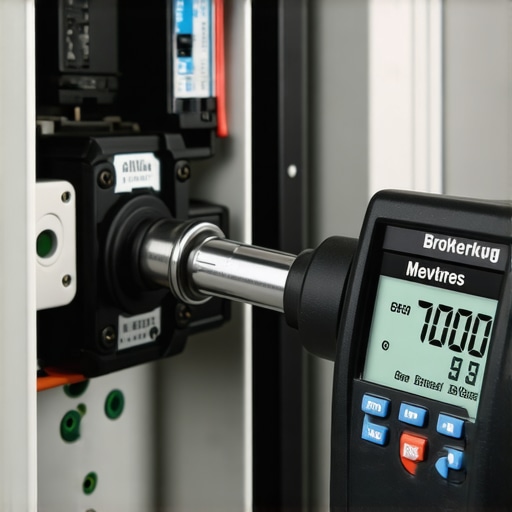
How do I keep my home charging station alive for a decade?
Maintenance for an EV charger is less about the software and more about the physical environment. Once a year, I recommend shutting off the breaker and doing a visual ‘sniff test’ and heat check. I use a basic infrared thermometer to scan my panel while the car is charging at full blast. If any breaker is reading above 140°F, you have a high-resistance connection that needs immediate attention. This simple check is the best way how to tell if your panel is actually a fire hazard before a smell of ozone fills your house. Additionally, I keep a kit of the essential spare parts to keep for your home charging unit, specifically spare mounting holsters and connector cleaners, to prevent road salt and grit from grinding down the contact pins.
The 2025 Trend You Can’t Ignore
The next big shift we are seeing is the move toward dynamic power management. As we head into next year, code compliance essentials for ev charger installations in 2025 will increasingly focus on smart systems that talk to your appliances. These systems understand how smart chargers use dynamic balancing to prevent blown fuses by throttling the car’s intake when your AC or dryer kicks on. This technology is the ultimate ‘cheat code’ for older homes with 100-amp service. Try this tonight: Grab a non-contact thermometer and scan your main breaker while your car is charging. If it is significantly hotter than the surrounding breakers, you might be at the limit of your system’s health. Feel free to reach out via our contact page if those numbers look scary.
The Expensive Lesson My First EV Taught Me
I used to think that electrical components were static, but the biggest “lightbulb moment” I ever had was realizing they are living, breathing systems. After wrestling with troubleshooting EV charger connectivity problems for months, I realized the hardware wasn’t the issue—it was the environment. I learned that 90% of intermittent faults happen at the physical connection points, not in the car’s software. If you aren’t checking for troubleshooting EV chargers common compliance pitfalls and fixes, you’re likely just treating the symptoms while the disease—loose terminals—festers. Another hard truth? Your local utility grid is more fragile than it looks. Before you add that second charger, you absolutely must verify if your infrastructure can handle the sustained heat.
#IMAGE_PLACEHOLDER_E#
Tools That Stop Electrical Fires Before They Start
You don’t need a degree in electrical engineering to keep your house safe, but you do need more than a hardware-store screwdriver. Here is my personal “reliability kit”: First, a high-quality digital torque wrench to ensure you are verifying code compliance for your ev charger installation. Second, a non-contact infrared thermometer to check for hot spots in your panel every six months. Finally, I always keep a can of high-purity electronics contact cleaner to remove the microscopic oxidation that stops the handshake. These tools transform you from a frustrated owner into a proactive steward of your home’s energy. If you’re overwhelmed, looking into panel upgrade strategies to meet ev charging code requirements in 2025 is the best first step you can take.
Your Future in a Fully Charged Garage
Transitioning to an electric vehicle is more than just a change in fuel; it is a commitment to a smarter home. While the initial hurdles of ensuring code compliance when installing EV chargers might feel like a headache, the peace of mind that comes with a rock-solid installation is priceless. You are building a system that will power your commute for the next decade. Take it slow, do it right, and don’t be afraid to ask for a professional’s eyes if something feels off. Have you ever noticed your charger getting unusually hot during a long session? Let me know in the comments below!