I remember standing in my driveway last January, breath visible in the air, staring at my dashboard in total disbelief. My ‘fast’ home charger was barely trickling juice into my car, and the estimated completion time looked more like a calendar date than a clock reading. I’d done everything right—or so I thought—but the miles-per-hour readout was pathetic, and the car felt like it had decided to go into hibernation mode without asking me first. If you have ever walked out to your garage only to find your car hasn’t even hit 50% after eight hours of being plugged in, believe me, I know that sinking feeling in your gut. Today, I want to pull back the curtain on why this happens and show you how to beat the frost so you can actually get where you need to go.
That Frustrating Morning My Charger Decided to Hibernate
I made a massive mistake early on in my EV journey: I assumed that the number printed on my wall-mounted charger was a guarantee, not a suggestion. One morning, with the thermometer bottoming out at zero, I skipped the preconditioning phase because I was in a rush. I figured the car would just ‘warm up’ as it charged. Instead, the truth about fast charging your ev in freezing temperatures hit me hard. The battery management system (BMS) was so worried about ‘lithium plating’—a nasty phenomenon where lithium ions coat the surface of the anode instead of moving into it—that it throttled the speed to a crawl. It wasn’t a broken charger; it was physics. You might even notice that why your charging cable is stiff in the winter and what to do becomes part of your morning workout, but the real battle is happening inside those chemical cells. We are going to solve this today by looking at thermal management and how some ev chargers work better with cold weather than others, especially those with robust connectivity that let you schedule warm-ups from your breakfast table.
Wait, Is My Battery Actually Damaged Forever?
It is the question that keeps every new owner up at night when they see those sluggish numbers. The short answer is no, but the long answer is that your car is acting like a protective parent. According to a study by the Idaho National Laboratory, DC fast charging rates can drop by as much as 36% when temperatures hit freezing compared to a mild 77°F. That is a massive hit to your efficiency! Your battery isn’t broken; it’s just cold and stubborn. I once spent three hours troubleshooting what I thought was a faulty unit, only to realize I was dealing with one of those expert tips for common issues where the battery was just too cold to accept a high-current handshake. If you have faced this, you aren’t alone. Have you ever noticed your car taking twice as long to charge just because of a light frost? Understanding the ‘why’ is the first step toward reclaiming your time and making sure you aren’t left stranded when the mercury dips. We need to talk about how to keep your charging cable from freezing to the driveway and why your specific setup might be working against you.Thinking about your battery as a chemical engine rather than just a fuel tank changes everything. When it’s freezing, those ions are moving through sludge. To get around this, you have to master the art of preconditioning. I once sat in my car for forty minutes at a public station, fuming because I was getting 15kW, only to realize my battery was ‘cold-soaked.’ The solution is simple: tell the car you’re coming. Most modern EVs allow you to set a departure time via your smartphone. This doesn’t just warm the cabin so you aren’t shivering; it sends a controlled current through the battery cells to raise their internal temperature to the ‘sweet spot’ for lithium-ion movement. If you find your app isn’t talking to your unit, you might be dealing with troubleshooting ev charger connectivity problems that prevent that vital handshake from happening while you’re still inside finishing your coffee. 
Fix Your Power Supply Before the Next Freeze
If your charger is underperforming, the culprit might not be the cold alone—it could be your home’s electrical backbone struggling under the load. A few years ago, I helped a neighbor who was convinced his charger was a lemon. Every time the temperature dropped and his car pulled max amps to heat the battery, his breaker would trip. It turned out he was trying to squeeze a level 2 charger onto a 60 amp service without accounting for the fact that his electric furnace was also kicking into overdrive.
Submit a Proper Load Calculation
Before you blame the weather, check your math. Most municipalities require a professional look at your panel because why your ev permit application requires a load calculation worksheet isn’t just red tape; it’s about fire safety. If your panel is maxed out, you’re likely seeing a voltage drop that slows your charging to a crawl. You might find that upgrading your panel for better ev charging performance is the only way to maintain consistent speeds when the grid is stressed and your home’s demand is at its peak.
Check Your Physical Connections and Torque
Cold weather causes materials to contract, which can loosen electrical connections over time. I learned this the hard way when I noticed a faint, rhythmic buzzing sound coming from my wall unit. A loose wire was creating resistance, which generates heat—and heat in a cold garage is a recipe for a melted terminal. You need to ensure your electrician followed the specific torque wrench settings for a wall connector. A secure connection ensures that all the power you’re paying for actually reaches the car instead of bleeding off as wasted heat at the breaker.
Invest in Hardware That Can Handle the Frost
Not all chargers are built equal when the mercury hits the floor. Some budget units use thinner internal wiring that becomes incredibly resistive in the cold. I’ve seen cheap, internet-bought chargers basically turn into space heaters themselves because their internal components couldn’t handle the sustained 48-amp draw in a 10-degree garage. This is why some ev chargers work better with cold weather than others; they use industrial-grade contactors that won’t stick or fail when frosted over. If you are looking for the secret to getting faster charging without a new panel, look into smart load management devices that prioritize your EV without blowing your main fuse. Also, never resort to a quick fix when things get tough; the danger of using an extension cord for level 1 charging is magnified in winter when moisture and ice can cause dangerous short circuits. Keeping your equipment dry and your connections tight is the only way to ensure your morning commute starts with a full tank.
Let’s dig deeper into the stuff most people overlook because they are too focused on the shiny new car in the driveway. Most owners believe that once an inspector signs off on the permit, their work is done. But here is the contrarian truth: a passed inspection is the bare minimum for legality, not a guarantee of long-term performance. I’ve seen plenty of “code-compliant” jobs fail within two years because the installer didn’t account for the brutal reality of continuous loads. Unlike a dryer that runs for 45 minutes, an EV pulls max power for six to ten hours straight. This constant heat cycle can reveal every tiny flaw in your system.
The Compliance Trap That Actually Slows You Down
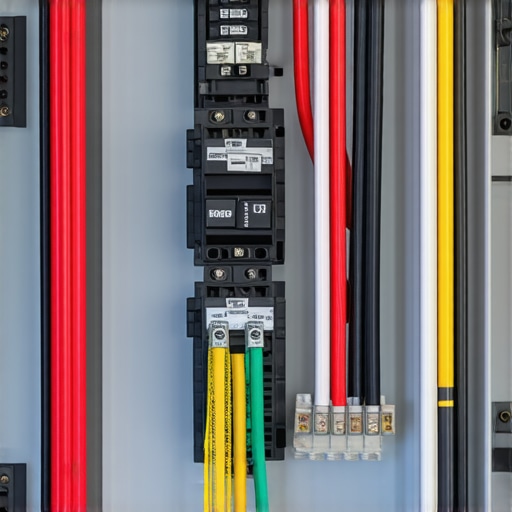
One of the biggest “oops” factors I see is the mismatch between the breaker and the wire. People often assume that if they have a 50-amp breaker, they are getting 50 amps of charging. In reality, why your electrician recommends a 60 amp circuit for a 48 amp charger is tied to the 80% rule in the National Electrical Code. According to Section 625 of the NEC, EV charging is a ‘continuous load,’ meaning you can only safely use 80% of the circuit’s capacity. If you try to push 50 amps through a 50-amp circuit, you aren’t just flirting with a fire; you are ensuring your breaker will eventually overheat and trip, leading to those frustrating expert tips for common issues where the car just stops charging at 2 AM. I once met a guy who went through three chargers before realizing his wire gauge was the bottleneck, not the hardware itself.
Does Every Level 2 Setup Really Need a Massive Panel Upgrade?
The short answer is: not anymore, but you have to be smart about it. The old-school way was to just swap out the whole service, which is why panel upgrades for ev chargers often come with a $3,000 price tag. However, the hidden nuance is that how smart chargers use dynamic balancing to prevent blown fuses can save you a fortune. These units ‘sip’ power when your AC or oven is on and ‘gulp’ it when the rest of the house is asleep. If your contractor hasn’t mentioned load management, they might be leading you toward an expensive and unnecessary service change. You should also watch out for the specific breaker brands that hate constant ev loads, as some older panels use designs that simply cannot handle the thermal stress of an EV. This is exactly why your ev permit application requires a load calculation worksheet; it is the only way to prove your home won’t become a hazard.
Stop the Nuisance Tripping Before It Starts
If you have ever dealt with troubleshooting ev charger connectivity problems, you know how annoying tech glitches are, but “nuisance tripping” is a different beast. Many local codes now require a GFCI breaker for garage outlets. The problem? Most EV chargers have their own internal GFCI. When you have two “brains” trying to detect a ground fault, they often fight, leading to why the gfci in your panel keeps nuisance tripping your charger. To fix this, hardwiring the unit is almost always the superior choice. Not only does it bypass the need for a pesky GFCI breaker in many jurisdictions, but it also eliminates a potential point of failure: the outlet itself. Have you ever fallen into this trap of thinking a passed inspection was the end of the story? Let me know in the comments. If you are still unsure, you can always verify code compliance for your ev charger installation by checking the specific torque marks on your connections, as why your charger needs a specific torque setting to pass inspection is the most ignored safety step in the industry.
It’s easy to think that once the green light on the charger is solid and your car is humming, you’re set for life. But let’s be real: electricity is friction, and friction creates heat. Over the course of a few years, that heat does funny things to copper and aluminum. I’ve started carrying a small thermal imaging camera attachment for my phone in my glovebox. Why? Because why your main lugs might be loose after a year of charging isn’t just a theory; it’s a physical reality called ‘thermal creep.’ If you haven’t checked your connections since the day of installation, you’re essentially running a high-stakes experiment in your garage.
The Tool Every EV Owner Should Borrow from an Electrician
In my experience, the most dangerous problems are the ones you can’t see or hear. A breaker might feel cool to the touch on the outside, but inside, where the wire meets the lug, it could be cookin’. I personally use a Seek Thermal or FLIR attachment to scan my panel every six months while the car is pulling its full 48-amp load. If I see a purple glow turning into a white-hot signature at a specific terminal, I know it’s time to grab the torque wrench and tighten things back down to spec. Maintenance isn’t just about cleaning the dust off the outer casing; it’s about ensuring the internal health of the circuit. I always suggest keeping a small kit of the essential spare parts to keep for your home charging unit, such as a high-quality holster and replacement terminal blocks. If you ever hear a click but the car won’t start, knowing how to diagnose a faulty internal relay in your charging station can save you a $600 replacement fee. But the biggest ‘pro’ move? Installing a surge protector at the main. Trust me, why your main service panel needs a surge protector for your ev becomes painfully obvious the first time a summer lightning storm rolls through and your vehicle becomes the most expensive fuse in the house.
How do I keep my charging system healthy for the next decade?
The secret is consistency and technical discipline. You should treat your EV circuit like a piece of industrial machinery, not a standard wall outlet. This means periodic inspections of the cable jacket for cracks and checking the plug contacts for any signs of pitting. The National Fire Protection Association (NFPA) 70 handbook clarifies that termination points on high-amperage continuous loads are the most frequent points of failure due to the constant expansion and contraction of the metals. Beyond hardware, you need to stay ahead of the curve with code compliance essentials for ev charger installations in 2025. What passed an inspection three years ago might not be the safest way to handle the hardware of tomorrow, especially as we move toward bi-directional charging. If you are starting to notice the charging handle getting warm, it might be time for upgrading your panel for better ev charging performance to ensure you have the headroom needed for long-term safety.
The V2H Future is Closer Than You Think
Looking ahead, the trend is moving away from the car simply being a ‘consumer’ of power. We are entering the era of Vehicle-to-Home (V2H). In the next five years, your EV won’t just sit there; it will act as a whole-home battery backup. This is going to put even more stress on your home’s electrical backbone. When your car starts pushing 10kW back into your house during a blackout, you’ll be glad you didn’t skip the ensuring code compliance when installing ev chargers phase. We’re already seeing panel upgrade strategies to meet ev charging code requirements in 2025 that focus on smart sub-panels rather than just bigger main breakers. My advice? Go grab an infrared thermometer today—even a cheap one—and point it at your breaker after the car has been charging for an hour. If it’s reading over 140°F, it’s time to call in the pros before a small loose wire becomes a big, expensive problem.
The Reality Check I Needed After My First Winter Outage
Reflecting on those early mornings when my car was basically a paperweight, I realized that EV ownership is a journey of technical literacy. The most important ‘lightbulb moment’ for me was accepting that code compliance isn’t about following rules for the sake of it; it’s about the physics of heat. I used to think a warm charging handle was normal—it’s not. It’s a cry for help from a loose connection. Another hard lesson? Don’t trust the default settings on your app. Your car’s internal timer and your wallbox are often in a digital tug-of-war, which is why your car’s internal timer conflicts with your wallbox more often than you’d think. Finally, I learned that a panel upgrade is an investment in the house, not just the car. It provides the breathing room that prevents your lights from flickering every time the heater kicks on.
The Resources That Keep My Garage Safe and Fast
I didn’t get these answers from the car’s manual. I had to dig into professional circles and use the right tools. If you want to take this seriously, I highly recommend picking up a Seek Thermal camera attachment. It’s the only way to see ‘hidden’ heat before it becomes a fire hazard. I also frequently reference the NFPA 70 Handbook; it’s the gold standard for ensuring code compliance when installing ev chargers and keeps you from getting scammed by bad advice. For hardware, I only trust industrial-grade contactors—the kind found in high-end units—because they don’t ‘stick’ when the temperature drops. If you are ever stuck, my first stop is always the expert tips for common issues guide, which has saved me at least three service calls over the last two years.
#IMAGE_PLACEHOLDER_E#
Build a Charging System That Actually Lasts
Owning an EV should feel like the future, not a chore. By taking the time to verify code compliance for your ev charger installation and staying proactive with your maintenance, you remove the anxiety of the morning commute. You aren’t just plugging in a car; you’re managing a sophisticated energy node in your home. Don’t be afraid to pull the cover off your panel (safely!) and take a look at what’s going on inside. Whether you are planning a panel upgrade or just tightening a few lugs, every bit of knowledge makes you a more resilient owner. Let’s make sure that next January, your car is ready to go exactly when you are.
Have you ever noticed your charging speed mysteriously drop when it gets below freezing? Let me know in the comments below!