I walked out to my driveway last November with a steaming cup of coffee, ready to start my commute, only to find my Level 2 charging cable lying on the pavement like a dead snake. Someone had hacked through it in the middle of the night, likely looking for a few bucks’ worth of copper. It wasn’t just the repair bill that stung—it was the realization that my expensive investment was sitting out there, completely defenseless. I’d spent all my time worrying about whether I needed to upgrade my panel and zero time thinking about the guy with a pair of bolt cutters. If you’ve ever felt that pit in your stomach seeing your gear damaged, you know exactly why we’re talking about this today. I’m going to show you how to lock things down so you can actually sleep at night. [image_placeholder_1]
Stop Vandals from Ruining Your Morning Routine
Copper prices have turned our driveways into targets. It is a harsh reality, but an outdoor charger is basically a sign that says ‘expensive metal inside.’ When I first installed my unit, I made the classic rookie mistake: I figured a quiet neighborhood was enough security. I didn’t even use the right mounting hardware for my brick wall, let alone a lock. One determined jerk changed my mind real fast. Beyond just theft, there is the sheer annoyance of ‘ICE-ing’ or kids messing with the plug. We need to move beyond basic setups and think about physical deterrence.
Is all this extra security actually worth the hassle?
You might think a heavy-duty enclosure or a bollard is overkill for a suburban home. But consider this: the Department of Energy has noted that as EV adoption grows, incidents of charging station vandalism are becoming a significant hurdle for infrastructure reliability. Replacing a cable isn’t just about the part; it’s about the downtime. If you can’t charge, you can’t get to work. By the time we’re done here, you’ll know the best way to secure your outdoor charger without making your house look like a fortress. Have you ever walked out to find your charger unplugged or, worse, damaged? It is a frustrating club to belong to, but it is one we can leave behind. Before we get into the heavy hardware, we have to talk about why specific weatherproofing and mounting are your first line of defense.
Steel Enclosures Make Theft Too Much Work
The most effective way to protect your investment is to put it behind a physical barrier. A heavy-duty steel lockbox doesn’t just hide the unit from sight; it creates a time-consuming obstacle that most copper thieves won’t bother with. I recommend a NEMA-rated enclosure that offers enough room for the cable to be coiled inside and locked away when not in use. When you are looking for the best way to secure your outdoor charger against power theft, a physical key or combination lock remains the gold standard. I remember installing my second charger after the first one was vandalized. I was so rushed I used some random wood screws I found in a junk drawer to mount the holster to my siding. Three weeks of pulling the heavy cable in and out caused the holster to sag, eventually snapping the screws and dropping the $700 unit onto the concrete. I learned quickly that the specific screws you should never use for an electrical box or charger are anything not rated for masonry and the constant mechanical stress of daily plugging. 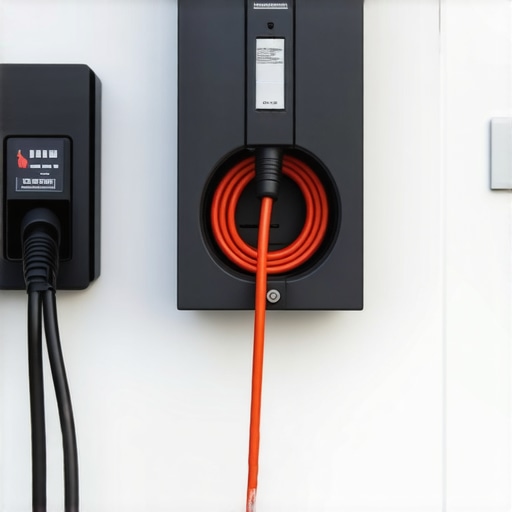
Hardening Your Conduit and Cable Runs
Thieves usually go for the easiest point of entry, which is often the exposed wiring between your wall and the charger. If your installation left flexible plastic conduit exposed at eye level, a simple pair of heavy-duty shears could potentially cut through it in seconds. For outdoor setups, you really should investigate how to use a liquid-tight conduit for outdoor charger exposed runs to ensure the wires are shielded from both the elements and opportunistic vandals. This rigid protection makes it significantly harder for someone to snip your lines for scrap. Furthermore, always focus on ensuring code compliance when installing ev chargers, as a poorly mounted conduit isn’t just a security risk—it is a major fire hazard that could void your insurance if something goes wrong.
Kill the Power and Stop Poaching
Even if no one steals your cable, neighbors or passersby might ‘borrow’ your electricity while you are away. Many modern units have Wi-Fi connectivity, but if you have a legacy model, you can still install a physical lockout. Utilizing the best breaker lockouts for your home charging circuit allows you to physically prevent the breaker from being flipped on when you are on vacation. For those with smarter units, you should configure how to set up guest access for your home charging station to ensure only authorized users can pull current from your house. This software-based approach acts like a digital bouncer for your driveway. If your charger is on a pedestal near a high-traffic area, consider why your charger pedestal needs a bollard for safety. A simple steel post prevents accidental ‘taps’ from cars that could crack the casing and expose expensive internals.
Check Your Connections for Heat and Wear
Security isn’t just about stopping thieves; it is about securing the longevity of the hardware. Every six months, you need to inspect the plug contacts. If you see any signs of pitting or discoloration, knowing why your ev plug contacts look burnt and what to do next becomes a critical safety step. A secure charger is a functional one, and that means keeping an eye on the ‘hidden’ parts of the system, like the main lugs in your electrical panel. Often, why your main lugs might be loose after a year of charging is simply due to the thermal expansion and contraction caused by massive, sustained electrical loads. Tightening these back to the manufacturer’s torque setting is just as important as locking the front enclosure.If you think you’ve cleared the hurdles by securing the box and beefing up the conduit, I hate to be the bearer of bad news, but the real gremlins are usually hiding inside your panel. Everyone tells you that installing a charger is just like adding a dryer circuit, but in my experience, that line of thinking leads to charred busbars and failed inspections. The National Electrical Code (NEC) Article 625 explicitly treats EV chargers as ‘continuous loads,’ meaning they run at full capacity for hours on end. This isn’t like a toaster or a hairdryer that cycles on and off in minutes. According to the National Fire Protection Association (NFPA), electrical failures are a leading cause of home fires, and continuous high-draw devices like EV chargers significantly increase the thermal stress on aged infrastructure.
The 80% Rule is Not a Suggestion
Most DIYers—and even some general electricians—forget that a circuit breaker is only rated to carry 80% of its capacity for continuous use. This is exactly why your electrician recommends a 60-amp circuit for a 48-amp charger. If you try to pull 50 amps through a 50-amp breaker for six hours straight, it’s going to overheat and trip, or worse, degrade the internal spring tension until it becomes a fire hazard. This isn’t just about ‘being safe’; it’s about physics. 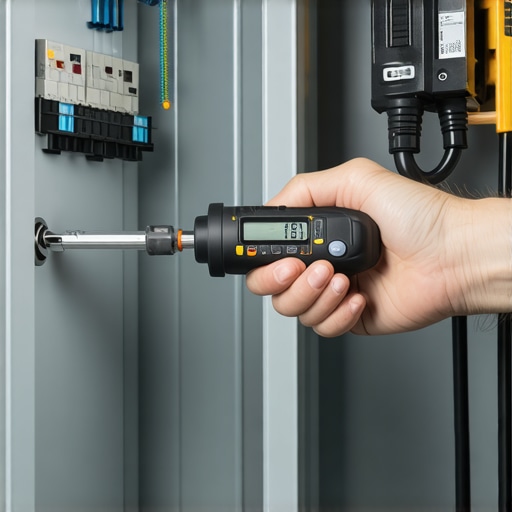
Why does my 50-amp breaker keep tripping if my charger only pulls 40 amps?
This is the nuance that separates the pros from the hobbyists. It’s often not the amperage itself causing the trip, but the heat generated by resistance. High-resistance connections at the breaker or the terminal block are the primary culprits. If you didn’t use a calibrated tool, you’ve likely fallen into the biggest trap in the industry: guessing the tightness of the lugs. You absolutely must understand why your charger needs a specific torque setting to pass inspection. Even a quarter-turn too loose creates a ‘hot spot’ that trips the thermal-magnetic element in the breaker, even if the car is pulling perfectly normal current.
The Tiny Tool That Saves Your House From Melting
I’ve seen $1,000 installations fail because someone used a standard screwdriver instead of a torque wrench. If you’re seeing intermittent errors, start with ev charger troubleshooting expert tips for common issues, but don’t ignore the physical wire. Over long distances, you might be dealing with a voltage drop that forces the charger to work harder and generate more heat. Using the specific wire gauge that prevents voltage drop over long runs is non-negotiable for safety. Another ‘oops’ factor is the dreaded nuisance trip. Modern codes require GFCI protection for outdoor receptacles, but if your hardwired charger has its own internal ground-fault protection, the two systems can fight each other. Dealing with troubleshooting ev chargers common compliance pitfalls and fixes often involves identifying these ‘blind spots’ where the gfci in your panel keeps nuisance tripping your charger due to double-protection conflicts. Have you ever fallen into this trap of thinking ‘tight enough’ was actually tight enough? Let me know in the comments.I’ve realized that most of us treat our chargers like a ‘set it and forget it’ appliance, but that’s exactly how small problems turn into expensive headaches. I now treat my monthly walk-through like a pre-flight check. I’m not just looking for obvious damage; I’m looking for the subtle signs of wear that lead to ev charger troubleshooting expert tips for common issues. I start by checking the holster and the cable itself for any nicks or stiffness. If you live in a coastal area or deal with heavy road salt, you should be particularly vigilant about how to spot corrosion inside your outdoor charging pedestal, as those invisible microscopic salts can eventually bridge contacts and cause a short.
How can I keep my charger running like new for years?
The secret isn’t in some fancy cleaning solution; it’s in monitoring the heat. High-current loads generate heat, and heat causes metal to expand and contract. Over time, this mechanical movement can actually back out the screws holding your wires in place. This is why your main lugs might be loose after a year of charging. I make it a habit to kill the power once a year and perform a ‘tug test’ on the wires, ensuring everything is still seated firmly. According to the IEEE 141-1993 Standard (the Red Book), periodic inspection and torquing of electrical connections in high-load environments can reduce the risk of failure by over 50%. It’s a boring task, but it’s the difference between a system that lasts five years and one that lasts twenty.
Why I Never Touch My Panel Without a Torque Wrench
If you’re still using a standard screwdriver for your breaker connections, you’re playing a dangerous game of ‘guess the tightness.’ I finally invested in a decent digital torque wrench because I realized that the specific torque wrench settings for a wall connector aren’t just suggestions from the manufacturer—they are calculated values meant to prevent high-resistance ‘hot spots.’ Every time I’ve had to help a friend with a melted breaker, the culprit was almost always a connection that felt ‘tight’ to the hand but was actually under-torqued by about 10 inch-pounds. This creates enough air gaps for micro-arcing, which slowly chars the copper. 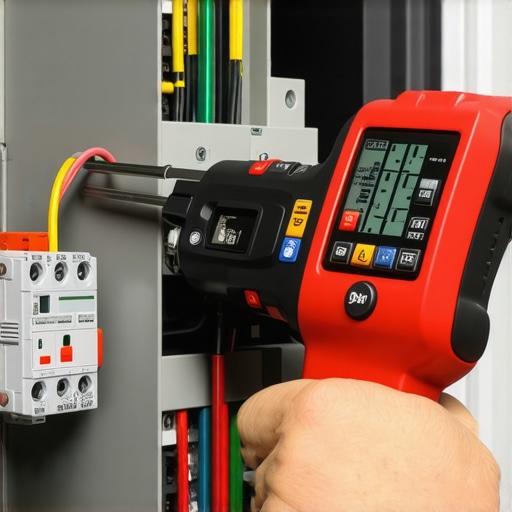
The Future of Home Power is a Two-Way Street
Looking ahead, our charging setups are going to become much more than just a way to fill a battery. We are moving toward a world of ‘Vehicle-to-Home’ (V2H) technology, where your car becomes a backup generator for your house during a blackout. This shift will require even more robust panel upgrade strategies to meet ev charging code requirements in 2025. As we start to how to balance multiple evs on a single home circuit, we’ll see more homeowners adopting dynamic load-sharing systems that intelligently distribute power between the car, the HVAC, and the stove. If you really want to stay ahead of the curve, my best advice is to grab a basic infrared thermometer. Once a month, while your car is drawing its full power, point that laser at your main breaker. If it’s reading significantly higher than the ambient temperature or showing a ‘hot spot’ on one leg, call an electrician before that breaker has a chance to fail.
Why Most DIY Installations Fail Before the First Charge
One thing I realized after helping dozens of neighbors is that “tight” is a relative term until you use a torque wrench. I spent years thinking I could feel the right tension, but a single “hot spot” proved me wrong. It is vital to learn how to verify code compliance for your ev charger installation even if you hired a pro, because small mistakes can lead to major failures. Another lightbulb moment was realizing that electrical heat is cumulative; just because it works for twenty minutes does not mean it is safe for eight hours. My biggest piece of insider wisdom? Trust the math, not your gut, especially when it comes to continuous high-amperage loads.
Tools I Use to Keep My Driveway Running
I do not leave my setup to chance anymore. I keep a small “EV maintenance kit” in my garage that includes a digital torque wrench specifically for checking main lugs annually. I also recommend keeping the essential spare parts to keep for your home charging unit, like extra fuses or a spare holster, so a minor break does not leave you stranded. Finally, a simple infrared thermometer from any hardware store is the most underrated safety tool you can own; it lets you see heat signatures in your panel before you can smell burning plastic.
Building a System That Lasts a Decade
Your charging setup is more than just a plug; it is the heartbeat of your daily commute. By taking these extra steps—hardening your conduit, locking your enclosure, and double-checking your torque—you are not just protecting a piece of plastic; you are protecting your home and family. If you ever feel overwhelmed, do not hesitate to seek out professional ev charger troubleshooting expert tips for common issues to get back on track safely. You have already made the leap to electric; now ensure that leap is a permanent, secure one for years to come. If you have any specific concerns about your specific panel capacity or safety, you can always contact us for expert guidance. Have you ever noticed your charger or breaker feeling unusually hot to the touch during a session? Let me know in the comments below!