I’ll never forget the rainy Tuesday when my neighbor, Jim, knocked on my door at 11 PM. He’d just bought a used Leaf, his home charger hadn’t arrived yet, and he was panicking about his morning commute. I wanted to help, but I spent twenty minutes fumbling with my phone, trying to ‘authorize’ his car while standing in a puddle. It was embarrassing. I had the power, literally, but I didn’t have the process. We eventually got him juiced up, but it shouldn’t have been that hard. If you’ve ever felt like a frustrated IT manager just because someone wants to borrow a few kilowatts, you’re in the right place. Today, I’m going to show you how to streamline that guest access so you can be the hero of the block without the headache.
Stop Acting Like a Valet Every Time a Friend Visits
Sharing your home charging station shouldn’t feel like a security breach or a part-time job. When I first installed my unit, I made the classic rookie mistake: I thought ‘smart features’ meant I had to do everything manually from my phone. I’d be in the middle of dinner, get a text from a visiting cousin, and have to stop everything to use an app to schedule charging for them. It was clunky and, frankly, a bit annoying. We want to be the ‘Helpful Neighbor,’ not the ‘Guy Who Has to Be Home to Unlock the Plug.’ The goal is a system where guests can plug in, authenticate, and charge without you lifting a finger—while still making sure you don’t wake up to a $500 bill because the whole street is using your juice. It’s not just about convenience; it’s about making sure your home setup is robust enough to handle the extra load. I remember being worried about whether my equipment could handle back-to-back sessions, which led me to dive deep into panel upgrades for EV chargers to ensure I wouldn’t trip a breaker while my guests were topping off. According to a report by the Alternative Fuels Data Center, residential chargers represent over 80% of all EV charging, yet a significant portion of owners struggle with the software interfaces designed for multi-user access. It’s a widespread hurdle, but one we can jump over together. Have you ever had a friend get stuck in ‘waiting mode’ at your house because the permissions didn’t sync? It usually happens at the worst possible time, like right before a long road trip. Dealing with troubleshooting EV charger connectivity problems in front of a guest is the last thing you want to do on a Saturday afternoon.
Is guest access more trouble than it’s worth?
A lot of folks worry that opening up their charger, even just for guests, is an invitation for trouble. I get it. I was paranoid for months that I hadn’t found the best way to secure my outdoor charger against power theft. I’ve seen those horror stories on forums about people ‘leeching’ off driveways in the middle of the night. But here’s the truth: modern smart chargers have some pretty slick tools—like RFID cards or guest PINs—that make it safer than leaving your garden hose out. I actually learned the hard way that NOT having a guest protocol is riskier. Once, after a firmware update, my charger defaulted to ‘Open,’ and I didn’t realize it for a week! If you don’t know how to update the firmware on your smart charging station correctly, you might be leaving the door wide open without even knowing it. We’re going to fix that today by setting up a protocol that’s as secure as your Wi-Fi but as easy to use as a guest bathroom. We will walk through the specific app settings and physical workarounds that keep your energy bill under control and your neighbors happy.
Configure Your App to Do the Heavy Lifting
First things first: your smartphone is your best friend here, but only if you set it up correctly. Most modern Level 2 units have a ‘Guest Mode’ buried in the settings that allows you to share access via an email invite or a unique PIN. I used to think I had to be physically present to tap my phone against the unit, but that’s a myth. By setting up a guest profile, you can track exactly how many kilowatts your cousin’s Model 3 pulls during their weekend stay. This is crucial because sometimes your smart charger app is giving you wrong data if the guest isn’t logged in correctly, leading to awkward conversations about who owes what for the utility bill. I recommend setting a ‘Schedule’ for guest users specifically. This ensures that even if they plug in at 4 PM during peak rates, the charger won’t actually kick in until 11 PM when electricity is cheapest. If you don’t know how to use an app to schedule charging, you’re basically leaving money on the driveway. 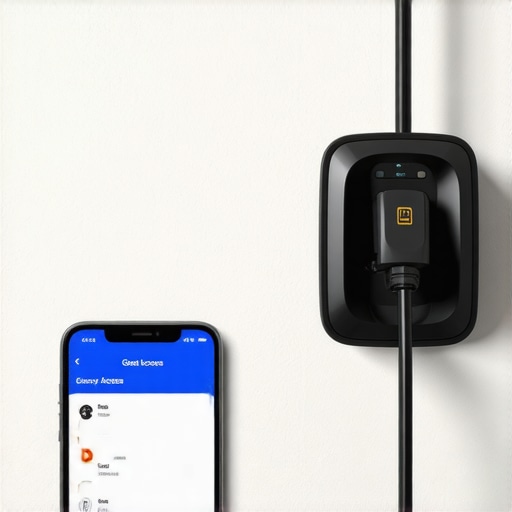
Stop Blindly Trusting Default Settings
When I first set up my unit, I left it on the ‘Auto-Start’ factory setting. That meant anyone with a J1772 plug could roll up and start sipping my power. I learned my lesson when I saw a strange car in my driveway at 2 AM—turned out it was a neighbor who thought it was a public station! Now, I keep my charger in ‘Authorized Only’ mode. If you’re worried about the hassle of unlocking it every time, look into RFID cards. They’re like hotel key cards; you just hand one to your guest when they arrive, and they can tap-to-charge whenever they need. It’s the easiest way to secure your outdoor charger from energy theft without needing to remember a dozen passwords.
Don’t Let Extra Charging Fry Your Circuit
Now for the technical side that most people ignore until something starts to smell like burnt plastic. Sharing your charger adds a lot of stress to your electrical system. I remember a summer afternoon when my brother-in-law stopped by to top off his F-150 Lightning. I was already running the laundry and the AC. Because I hadn’t yet looked into how to use load shedding devices, the main breaker tripped and plunged the whole house into a sweltering darkness. It was embarrassing and entirely preventable. If your guest’s car pulls a sustained 48 amps for eight hours, you need to be certain your panel can handle it. If you notice why your breaker gets hot to the touch during charging, that’s a major red flag that your system is overloaded.
Balance the Load Like a Pro
Think of your home’s electricity like a water pipe. If everyone turns on the faucets at once, the pressure drops or the pipe bursts. To avoid this, you might need to consider panel upgrades for EV chargers to ensure there’s enough ‘headroom’ for that extra guest car. Some high-end chargers even offer ‘dynamic load balancing’ which automatically slows down the car’s charging speed if the house starts using too much power for other things. If you ever hear why your ev charger is making a clicking sound but not charging, it’s often the internal safety relays screaming that the voltage isn’t stable enough to continue. Keeping your hardware in check isn’t just about convenience; it’s about making sure your house stays standing while your friends get their juice.I’ve seen too many DIYers get the software right but the hardware dangerously wrong. Everyone says a 200-amp service is the gold standard, but in my experience, the quality of the installation matters far more than the raw number on your main breaker. The ‘oops’ factor I see most often? Neglecting the torque specs on your connections. According to the National Fire Protection Association (NFPA), electrical failures or malfunctions are a leading cause of home fires, and with an EV pulling max current for hours, a slightly loose wire becomes a heating element. This is exactly why your main lugs might be loose after a year of charging. If you aren’t checking those connections, you’re playing a high-stakes game of chance.
Why the city inspector keeps failing your ‘perfect’ wiring
It’s a common frustration: you followed a YouTube tutorial, yet the red tag is hanging on your meter. Most people miss the nuance of ‘continuous load’ requirements. The National Electrical Code (NEC) Article 625 is very specific—EV chargers are considered continuous loads, meaning the circuit must be sized at 125% of the charger’s output. If you’re trying to pull 48 amps on a 50-amp breaker, you’re going to fail. That’s why your electrician recommends a 60-amp circuit for a 48-amp charger. It’s not a money grab; it’s the law. If you’re struggling with the red tape, you need to know how to verify code compliance for your ev charger installation before the inspector knocks. 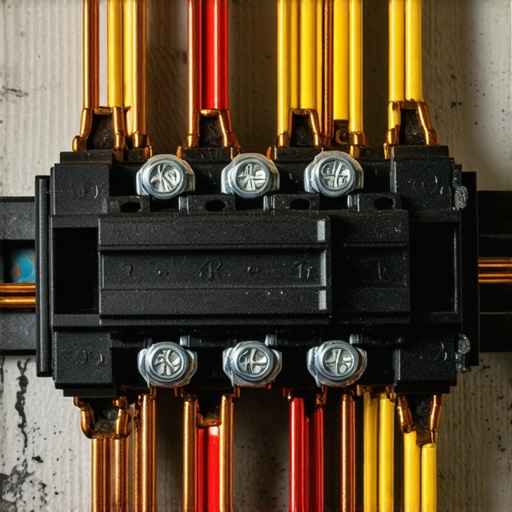
Don’t let a cheap breaker ruin your weekend
I used to think a breaker was a breaker. Then I saw a ‘budget’ brand melt into a puddle because it couldn’t handle the thermal stress of an overnight charge. There are specific breaker brands that are known to overheat with EVs, and saving $20 at the hardware store isn’t worth a service call. If you’re seeing signs of trouble, you should look into upgrading your panel for better ev charging performance rather than just swapping in another cheap fuse. It’s also worth noting that some modern panels hate the internal GFCI of a smart charger. This is a classic troubleshooting nightmare—why the gfci in your panel keeps nuisance tripping your charger—and it usually stems from having two GFCIs ‘fighting’ each other on the same line.
Is a full service upgrade actually necessary?
Here is the contrarian truth: you might not need to spend $3,000 on a new utility feed. While most pros push for a massive overhaul, you can often get away with panel upgrade strategies to meet ev charging code requirements in 2025 that involve smart load management. By using ‘load shedding’ devices, you can keep your existing 100-amp service while still safely hosting a guest’s car. It’s all about ensuring code compliance when installing ev chargers while being smart about your home’s energy budget. Have you ever fallen into this trap where you thought you needed a total upgrade only to find a simpler fix? Let me know in the comments.Once the inspector leaves and the green light on your charger glows steadily, it is tempting to think the job is finished forever. But I have learned the hard way that a home charging station is a high-performance appliance, not a ‘set-and-forget’ toaster. If you want to avoid the panic of waking up to an empty battery, you need a proactive maintenance game plan. I make it a habit every six months to inspect my hardware. I actually keep a small kit of the essential spare parts to keep for your home charging unit, including a spare J1772 holster, because plastic fatigue is real, especially if your charger sits in the sun. If you ever have a storm-induced flicker, knowing how to reset your home charging station after a power outage is the difference between a smooth commute and a frantic call for an Uber.
Stop Treating Your Charger Like a Toaster
I noticed a few months ago that my charging handle was becoming difficult to remove from my car’s port. Instead of forcing it, I took a second to look at the contacts. Dirt, grime, and even tiny spiders can nest in there, causing friction and heat. Learning how to stop your charger handle from sticking in the port saved me from a costly replacement of the vehicle’s charging inlet. Maintenance isn’t just about the software; it’s about the physical connection. According to the technical guidelines from the National Electrical Manufacturers Association (NEMA) in their EVSE 1.2 standards, the physical connector is the most frequent point of mechanical failure due to ‘insertion fatigue.’ If you live in a colder climate, you’ll also notice that cable flexibility drops significantly in January, which is why some ev chargers work better with cold weather than others. A stiff cable puts extra torque on your wall mount, potentially loosening the screws over time.
How do I maintain my home charging setup over the long haul?
The secret weapon in my toolbox isn’t a screwdriver—it’s a cheap infrared thermometer. Every few months, while the car is pulling its maximum current, I point that red laser at my circuit breaker. If I see a reading significantly higher than the ambient temperature, I know it is time to call a pro. This simple check helps identify why your breaker gets hot to the touch during charging before it leads to a nuisance trip or a melted component. I also recommend checking the torque on your panel’s lugs annually. Vibrations from the grid and thermal expansion can loosen connections, and as we discussed earlier, that is exactly why your main lugs might be loose after a year of charging. 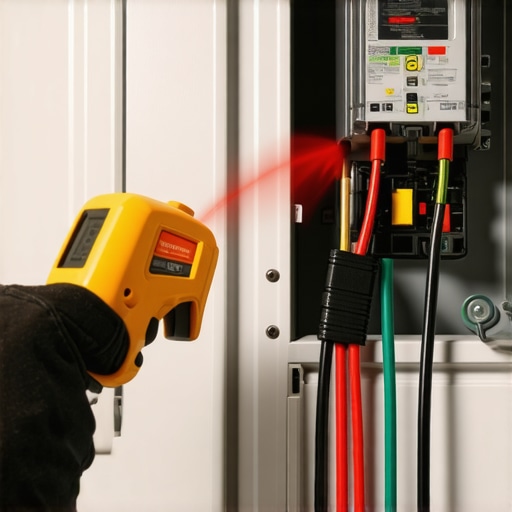
Gear Up for the Two-Car Future
If you think sharing your charger with a guest is a challenge, just wait until your spouse gets an EV too. We are moving toward a world where ‘bidirectional charging’ (V2H) will allow our cars to power our homes during outages, but that adds even more complexity to your panel. I’m already seeing a trend where homeowners are moving away from single-charger setups and looking into how to balance multiple evs on a single home circuit. This uses ‘power sharing’ technology where two chargers talk to each other to stay within the limit of a single 60-amp breaker. It’s a brilliant way to scale your setup without another massive bill for upgrading your panel for better ev charging performance. My best advice? Buy an infrared thermometer today and scan your breaker while your car is charging; it’s the fastest way to verify your system is actually as healthy as it looks.
Lessons Learned From 500 Charging Sessions in My Driveway
If I could go back to that first rainy night with Jim, I’d tell myself three things. First, software is secondary to safety. You can have the slickest app in the world, but if your connections aren’t tight, you’re inviting trouble. I’ve seen firsthand the mistake that causes ev charger motherboards to fry during storms, and it usually boils down to poor grounding or lack of surge protection. Second, maintenance is a physical job. It’s easy to forget that why your main lugs might be loose after a year of charging is simply due to the constant thermal expansion and contraction of heavy electricity flow. Finally, don’t be afraid to say ‘no’ if your panel isn’t ready. Being a hero isn’t worth a house fire.
My Essential Kit for a Stress-Free Charging Setup
Over the years, I’ve narrowed down my must-have tools to just a few items that give me absolute peace of mind. I never go more than a few months without pulling these out:
- Infrared Thermometer: My first line of defense. I scan the breaker and the wall unit while it’s under load to catch heat spikes early.
- Torque Screwdriver: This ensures every connection is exactly to spec, which is critical for ensuring code compliance when installing ev chargers.
- The NFPA 70 (National Electrical Code): Specifically Article 625. It’s dry reading, but it’s the only way to truly know how to verify code compliance for your ev charger installation without guessing.
Claim Your Status as the Hero of the Block
Setting up your home charging station for guest access is about more than just being nice; it’s about participating in the future of energy. When you have a system that is secure, maintained, and code-compliant, you aren’t just an EV owner—you’re a micro-utility provider for your friends and family. It feels great to see that green ‘charging’ light on a friend’s dashboard and know your home is handling it perfectly. If you ever run into a technical wall or need a professional eye on your panel, don’t hesitate to contact us for expert guidance. Your EV journey is just getting started, and you’re now equipped to lead the charge. Have you ever had to rescue a neighbor or friend with your charger? Let me know your experiences in the comments below!