It was 11:30 PM on a rainy Tuesday when I heard that distinctive, heavy thunk from the garage. My heart sank. I knew exactly what it was: the breaker had tripped. I had just tried to get clever by plugging in both our EVs, thinking I could just for a second pull enough juice for both without the house complaining. I was wrong. I ended up standing in my pajamas with a flashlight, realizing my simple charging solution was actually a fire hazard. I woke up the next morning to two dead cars and a very stressed commute. That night was a wake-up call for me. If you are like most EV owners, you have probably looked at your electrical panel and realized there is simply no room for another massive 50-amp breaker without a full-blown panel upgrade. But here is the good news I learned the hard way: you do not actually need a second circuit to keep two cars topped off. You just need a better strategy. Today, I am going to show you how to stop the juggling act and charge both vehicles without risking a house fire.
You Really Can Charge Two Cars on One Breaker
Most people assume they need to throw thousands of dollars at an electrician to upgrade the home service for dual EV charging, but that is often overkill. I spent the last few years testing load-sharing hardware because, frankly, I was too cheap to dig a new trench for a second line. The secret isn’t more power; it is smarter management. We are going to look at how to use load-shedding devices to avoid a full service upgrade while keeping your family safe and your house within code. It is about working with the electricity you already have rather than fighting for more.
Will This Setup Actually Set My House on Fire?
This was my biggest fear early on, and it should be yours too if you are not careful. I made a massive mistake when we first got the second car—I bought a cheap, unrated Y-splitter from a questionable website. Within a week, I noticed the reason my EV charger smelled like burnt plastic was because the contacts were literally melting inside the wall. It was a terrifying lesson in why choosing a NEMA 14-50 outlet that won’t melt is vital for safety. According to the National Electrical Code (NEC) Section 625.42, an energy management system is a legally recognized way to limit the load on a circuit, meaning you can stay safe and compliant without a new panel. Have you ever walked into your garage and smelled something hot near your charger? It is a sign you cannot ignore. Everything comes down to a proper load calculation worksheet. If you do the math right, you can balance multiple EVs on a single home circuit without ever worrying about that breaker thunking again. I will show you which hardware actually works and how to set it up so you can sleep soundly.
Grab a Smart Splitter if You Are on a Budget
If you have a single NEMA 14-50 outlet and two cars that do not need a full battery every single morning, the easiest way to solve the problem is a smart circuit splitter. This is not your standard hardware store Y-adapter—those are death traps for high-draw appliances. These smart devices act as a digital traffic cop. When Car A is finished pulling its maximum current, the device automatically flips the power over to Car B. I used one of these for six months in my previous rental. It worked, but there was a catch: it is an ‘either-or’ situation. You are not charging both at once; you are just automating the midnight swap. To get both vehicles sipping juice simultaneously without tripping the breaker, you need to look into integrated hardware.
Let the Chargers Talk to Each Other
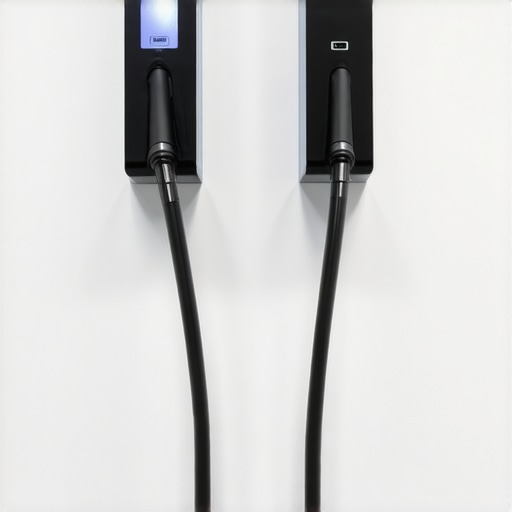
The gold standard for a dual-car household is using two chargers that support dynamic load sharing. This is where the hardware gets clever. You wire both chargers to the same 50-amp or 60-amp circuit, and they communicate—usually via a hardwired data cable or a secure Wi-Fi bridge—to ensure they never exceed the circuit’s capacity. If only one car is plugged in, it gets the full available amperage. As soon as you plug in the second car, the units negotiate and split the power 50/50. This is how smart chargers use dynamic balancing to prevent blown fuses. It is like having two kids sharing a single milkshake with two straws; they can both drink at the same time, but the glass only holds so much. This setup is incredibly efficient for overnight charging because even at half speed, most EVs will be topped off by 6:00 AM.
Don’t Skip the Boring Math
Before you even touch a screwdriver or buy a second unit, you have to know what your main panel can actually handle. I once skipped this and just assumed my 100-amp service was ‘fine’ because it had not blown up yet. Big mistake. I spent three hours wiring everything up, only to realize that the moment the central AC kicked on while both cars were charging, the whole house went dark. The hidden cost of skipping a panel load calculation is not just money; it is the sheer frustration of having to do the work twice. You must account for every heavy hitter in your house—the dryer, the oven, and the HVAC—before you decide to balance multiple EVs on a single home circuit.
Why Your Connections Must Be Perfect
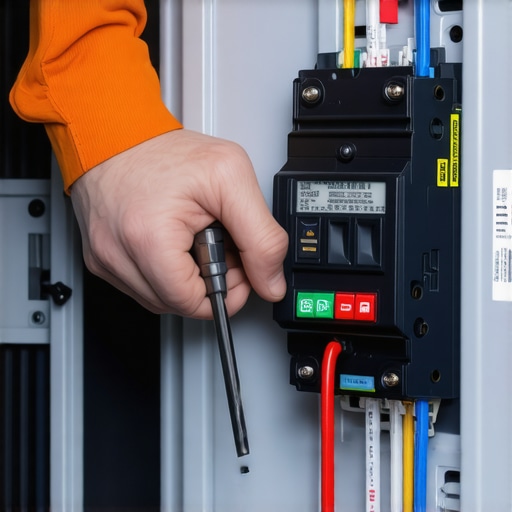
When you are finally ready for the physical installation, the details matter more than you think. For example, do you know why your charger needs a specific torque setting to pass inspection? If those terminal lugs are not tightened to the exact inch-pound specification listed on the box, the connection can wiggle as it heats and cools over several hours of charging. That tiny wiggle creates resistance, and resistance creates heat—the kind that melts your expensive copper and plastic. I remember the first time I used a calibrated torque wrench on a breaker; I was genuinely shocked at how much tighter ‘to spec’ felt compared to what I thought was ‘hand tight.’ You also need to ensure you are using the specific wire gauge that prevents voltage drop over long runs, especially if your panel is on the opposite side of the house from your garage.
The Sub-Panel Cleanup Strategy
Sometimes, the main panel is just too crowded to work with comfortably, and trying to jam two sets of heavy-gauge wires into a small space is a recipe for a loose connection. This is why your garage needs a sub-panel for multiple chargers. It cleans up the mess, gives you a single point of disconnect near the vehicles, and makes future troubleshooting much easier. I did this in my second home, and while it felt like overkill during the install, it allowed me to perfectly organize the circuit. Just make sure you follow the rules for labeling; using the right way to label your electrical panel for ev circuits ensures that anyone—from a family member to an emergency responder—can shut down the power quickly if something goes wrong. Also, check your local building department requirements because why your new charger requires a neutral wire even for 240v is a common point of confusion that can fail an inspection if you are not prepared for it.
But even with the right wires in place, there is a nuance most people—and even some general electricians—miss. Everyone will tell you that to support two cars, you absolutely must upgrade your service to 200 amps. In my experience, that is not always the case. I have seen 100-amp panels handle two EVs and an electric range perfectly fine by using smart power management. You can learn how to add an ev charger without a 200 amp panel upgrade simply by prioritizing load-shedding over raw capacity. The goal isn’t just to shove more power through the pipes; it’s to ensure those pipes don’t burst when you’re not looking.
Stop Chasing Amps You Don’t Actually Need
The biggest myth in the EV world is that faster is always better. Most drivers only cover 30 to 40 miles a day, yet they insist on a 48-amp charging rate for both cars. This ‘max power’ mindset is what leads to expensive, unnecessary utility work. If you throttle your chargers to 20 or 24 amps each on a shared 50-amp circuit, you still get 200+ miles of range overnight. This approach significantly reduces the heat stress on your home’s infrastructure. By choosing the specific wire gauge that prevents voltage drop over long runs, you ensure that the power you are paying for actually reaches the car instead of bleeding off as heat in your walls. This is a critical step in how to verify code compliance for your ev charger installation.
Why Does Your Breaker Keep Tripping for No Apparent Reason?
If you have followed every rule and your breaker still trips, you are likely dealing with ‘nuisance tripping.’ This usually happens because of a conflict between the GFCI protection built into the charger and the GFCI breaker in your panel. The National Electrical Code (NEC) requires GFCI protection for garage outlets, but double-stacking these protections often creates ‘leakage current’ confusion. According to research by the NFPA, these micro-interruptions can be incredibly difficult to diagnose without the right tools. Understanding why the gfci in your panel keeps nuisance tripping your charger is the first step toward a stable setup. Often, the solution is as simple as switching to a hardwired unit, which bypasses the need for a plug-in GFCI breaker entirely. Have you ever fallen into this trap where a ‘safety feature’ actually breaks your system? Let me know in the comments.
The Danger of Ignoring Thermal Creep
Here is the ‘oops’ factor that almost cost me a garage. Even if your installation was perfect on day one, electrical connections are not ‘set and forget.’ Because EV charging is a continuous load—meaning it runs at full power for hours—the metals in your panel expand and contract. This is known as thermal creep. Over a year, those perfectly tightened screws can vibrate just loose enough to cause an arc. This is exactly why your main lugs might be loose after a year of charging and why I now recommend a thermal inspection every twelve months. If you notice your charging speeds dipping or your app giving you weird errors, you should start with ev charger troubleshooting expert tips for common issues before you assume the hardware is broken. Sometimes, the fix is just a quarter-turn of a torque wrench. Staying ahead of these advanced issues is what separates a DIY gamble from a professional, long-term charging solution.
To keep my setup from turning into a cautionary tale, I had to stop treating my electrical panel like a ‘set it and forget it’ appliance. I started carrying a small toolkit specifically for my garage. The most important tool I own isn’t even a screwdriver; it is a compact infrared thermal camera that plugs into my smartphone. Every six months, I pop the cover off my panel while both cars are drawing full power. If I see a breaker glowing purple or white compared to its neighbors, I know I have a problem before the smell of ozone ever hits my nose. You can find similar advice in my guide on ev charger troubleshooting expert tips for common issues. I also keep a high-quality torque screwdriver handy because, as we discussed, those lugs do wiggle loose. Following why your charger needs a specific torque setting to pass inspection isn’t just for the inspector; it is for your own peace of mind.
How do I keep my dual-charging setup healthy for years?
Beyond the physical hardware, you need to become a bit of a software nerd. Most smart chargers today are basically computers with high-voltage relays. I make it a habit to check for updates once a month to ensure I am running the latest load-balancing algorithms. Knowing how to update the firmware on your smart charging station can actually improve your charging efficiency and fix bugs that might cause nuisance trips. I also perform a visual check of the charging handles themselves. Look for pitting or discoloration on the metal pins. If you see black marks, stop charging immediately. This is the first sign of a high-resistance connection that could lead to why your ev plug contacts look burnt and what to do next. I also recommend a quick wipe-down of the cables in winter, especially if you live in a salt-heavy area, to prevent the jacket from becoming brittle. 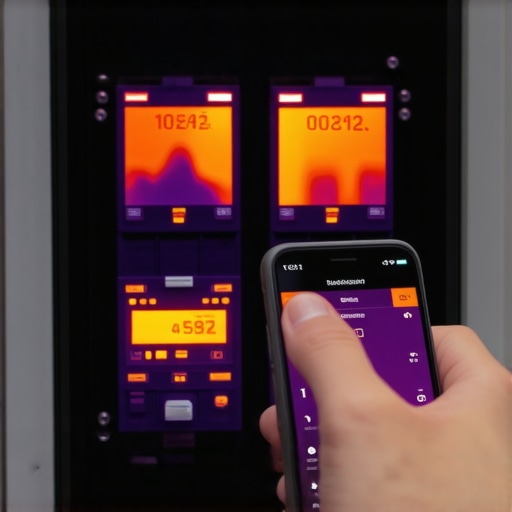 Looking ahead, I suspect the era of ‘dumb’ breaker panels is nearly over. We are moving toward fully integrated home energy management systems where your car, your solar array, and your HVAC system negotiate for power in real-time. By implementing panel upgrade strategies to meet ev charging code requirements in 2025, you are essentially building a small-scale power plant in your garage. According to the NEMA PB 2.2-2023 Application Guide, molded case circuit breakers operating at continuous load—like an EV charger—require periodic thermal imaging to identify high-resistance connections before they fail. This isn’t just me being paranoid; it is the industry standard for safety. If you are still running a 100-amp service, you might feel the pressure to jump to 200 amps immediately, but I suggest you first look into how to add an ev charger without a 200 amp panel upgrade by using smart load-shedding hardware. It is the most cost-effective way to scale your home for the electric future without the five-figure utility bill. My challenge to you today: go out to your garage, open your charger’s app, and look at the ‘Amperage’ or ‘Voltage’ logs for the last seven days. If you see the voltage dropping significantly (more than 3-5%) when the second car kicks on, you likely have a loose connection or undersized wiring that needs attention right now.
Hard-Won Truths from My Garage Floor
After years of managing two EVs on a single residential service, I’ve realized that peace of mind is worth more than peak charging speed. If I could go back to that rainy Tuesday, I’d tell myself that being ‘clever’ with electricity is just a polite word for being dangerous. Here are the lightbulb moments that finally made my setup stable:
- Maxing out is a mistake: Just because your car can pull 48 amps doesn’t mean it should. Throttling down to 24 amps on each vehicle significantly reduces heat and extends the life of your breakers.
- The ‘Sniff Test’ isn’t enough: By the time you smell burnt plastic, the damage is likely permanent. Proactive thermal checks are the only way to catch a failing connection.
- Permits protect your home value: Cutting corners might save a few hundred dollars today, but it could cost you a home sale or an insurance claim later. Always follow the steps for how to verify code compliance for your ev charger installation.
- Firmware is part of maintenance: Treat your smart charger like your smartphone. Those monthly updates often contain critical safety patches for load-balancing logic.
#IMAGE_PLACEHOLDER_E#
The Gear That Keeps My Garage Safe
You don’t need a degree in electrical engineering to maintain a safe setup, but you do need the right tools. Over the years, I’ve curated a small kit that has saved me from several service calls. First, I highly recommend a calibrated torque screwdriver. It’s the only way to ensure you aren’t over-tightening or under-tightening the lugs in your panel—a major cause of thermal creep. Second, grab a copy of the NEC Handbook or bookmark a reliable guide on panel upgrades for ev chargers. Knowing the rules yourself helps you speak the same language as your electrician. Finally, a thermal imaging camera attachment for your phone is the ultimate diagnostic tool; it lets you see heat build-up before it triggers a breaker or starts a fire.
Your Electric Future is Already Here
Setting up a dual-car garage shouldn’t feel like a gamble. When you move away from the ‘plug and pray’ method and embrace smart power management, you’re not just charging cars—you’re upgrading your panel for better ev charging performance that will last for a decade. The technology to balance high loads safely exists, and it’s more accessible than ever. Don’t let the fear of a 200-amp upgrade stop you from enjoying the convenience of two EVs. With the right hardware and a commitment to ensuring code compliance when installing ev chargers, you can wake up every morning to a full battery and a safe home. It’s time to stop worrying about the breaker and start enjoying the drive.
Have you ever experienced a “nuisance trip” or a hot outlet while charging your vehicles? Let me know your story in the comments below!