I’ll never forget the first time I stepped into my garage at 2:00 AM to grab a soda. I’d just installed a high-powered Level 2 unit, and my car was thirstily drinking up kilowatts. The moment I opened that door, a wall of thick, heavy heat hit me square in the face. It wasn’t just warm; it smelled like “expensive trouble”—that unmistakable scent of hot plastic and ozone. I remember thinking, “Is my house about to burn down, or is this just what fast charging feels like?” It turns out, I was making a classic rookie mistake that almost cost me a very expensive piece of hardware. I’d focused so much on the torque settings to pass inspection that I completely forgot the simple physics of heat dissipation.
The Hidden Danger of a Stagnant Garage
We often treat our garages like a giant, indestructible box, but when you’re pulling 48 or 80 amps for hours, that space turns into a slow cooker. Most people don’t realize that EV batteries and charging stations generate a massive amount of “waste heat.” If that heat has nowhere to go, your charging speeds take a nosedive. I’ve seen cases where people wondered why their level 2 charger takes twice as long as the box promised, and nine times out of ten, it’s because the unit is thermal-throttling to save its own life. According to the Department of Energy, high temperatures can significantly degrade lithium-ion battery life over time, making ventilation not just a comfort issue, but a financial one. If you’ve ever noticed that your ev charger smells like burnt plastic, you’re already past the warning stage. You need air, and you need it now.
Is installing a ventilation system actually worth the hassle?
I get it. You just spent a few thousand dollars on the car and the charger. The last thing you want to do is cut a hole in your wall or mess with the HVAC. But here’s the reality: a fan is cheaper than a new charging motherboard. When I first started, I thought I could skip the airflow upgrades because I lived in a cooler climate. I was wrong. The stagnant air inside the garage doesn’t care what the temperature is outside; it creates its own microclimate. Have you ever felt the wall behind your charger after a long session and wondered if it was supposed to be that hot? Or maybe you’ve had to deal with a cramped space and wondered how to pass an ev inspection when your garage is overcrowded and overheating? Drop a comment or reach out—I’d love to hear if your garage feels like a sauna every morning. Today, we’re going to look at the exact steps to clear the air and keep your gear cool.
Start With the Copper and the Breaker
Before you even think about installing fans, you have to look at the bones of your electrical system. Heat starts at the source. If your wiring is too thin for the current you’re pulling, the wires themselves act like the heating elements in a toaster. Using the exact wire gauge you need for a 50-amp ev circuit is the first line of defense against a garage that feels like a furnace. Think of your electrical circuit like a garden hose; if you try to force the volume of a fire hydrant through it, the pressure and friction create heat. This is precisely why your electrician recommends a 60-amp circuit for a 48-amp charger. That 20% buffer, known as the continuous load rule, ensures your breaker and wires aren’t running at their absolute thermal limit for eight hours straight.
The 80 Percent Rule Is Your Best Friend
I learned this the hard way last summer. I tried to save a few bucks by using standard PVC conduit in a run that went through my attic and down into the garage. By mid-August, the combination of a 48-amp draw and the 100-degree ambient temperature caused the conduit to literally bow and sag off the wall because it couldn’t handle the localized heat. I had to rip everything out and start over. If you’re in a high-heat environment, you need to research the best conduit materials for high heat garage environments, such as EMT or heavy-duty Schedule 80, to ensure your physical infrastructure doesn’t fail before your charger does.
Force the Air Out With Active Ventilation
Passive vents—those little slats in your garage door or walls—are rarely enough for high-speed charging. You need to move the air with intent. I recommend installing a through-wall exhaust fan specifically rated for high CFM (cubic feet per minute). Place the intake low on one side of the garage and the exhaust fan high on the opposite side. This creates a cross-flow that pulls cool air across the floor—where your car’s battery pack sits—and pushes the rising heat out through the roof or upper wall. 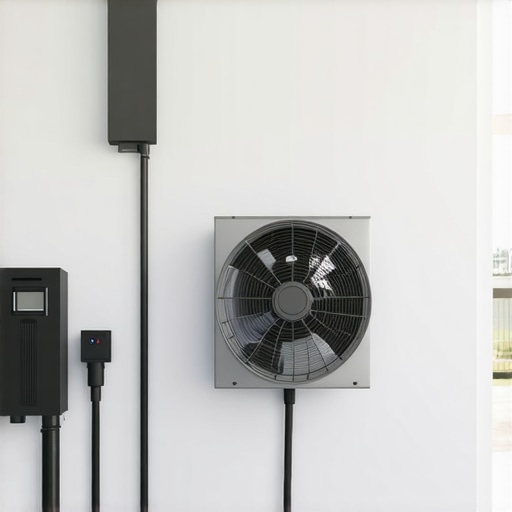
Keep the Digital Brain Cool Too
Most people don’t realize that smart chargers are basically small computers. When they overheat, the Wi-Fi chip is often the first component to glitch. If you find your app is constantly disconnecting, you should first check how to update the firmware on your smart charging station. Sometimes manufacturers release software patches that adjust the thermal throttling parameters to be more efficient. If the software is current and you’re still seeing performance dips, you’re likely witnessing why your charging speed drops suddenly after 20 minutes. This is the unit’s internal safety relay kicking in to prevent the motherboard from frying.
Manage the Load Without Breaking the Bank
If your garage is already a heat trap, adding more electrical stress to an old panel is a recipe for a nuisance trip. However, you don’t always need a $3,000 service upgrade to fix this. You can explore how to add an ev charger without a 200-amp panel upgrade by utilizing load-shedding devices or dynamic balancing. These systems automatically throttle the charger’s power when your home’s air conditioner or electric dryer kicks on, reducing the total heat generated in the panel and the garage during peak usage times. This keeps your home within code while preventing your main lugs from expanding and contracting too violently under heat stress.Most DIYers and even some green electricians assume that once a terminal is torqued and the inspector leaves, the job is done forever. This is a dangerous myth. The reality is that EV charging is one of the most grueling tasks your home’s electrical system will ever face. I’ve seen homeowners drop thousands on upgrading your panel for better ev charging performance, only to have the system fail a year later because of a phenomenon called thermal cycling. Every time you charge, the metal in your panel expands; when you stop, it contracts. Over hundreds of cycles, this can actually loosen the screws holding your wires in place. If you don’t believe me, look at why your main lugs might be loose after a year of charging. This is the ‘Oops’ factor that most people ignore until they smell smoke. 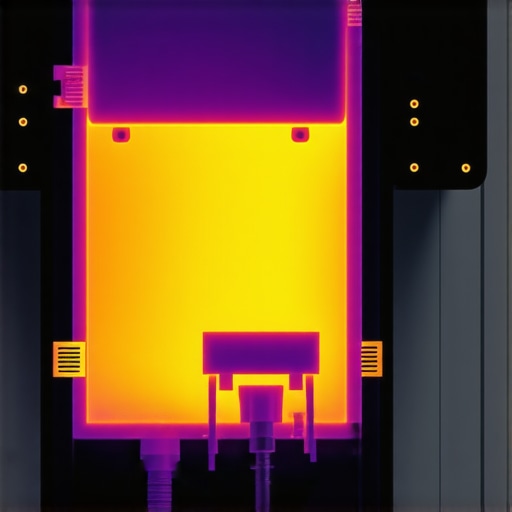
The 200-Amp Myth and Smarter Alternatives
Everyone says you absolutely need a 200-amp service to charge a modern EV at full speed, but in my experience, that’s not always the most efficient path. While panel upgrades for ev chargers are the gold standard, many homeowners ignore the potential of smart energy management. Instead of gutting your utility closet, you might find that how to use load shedding devices to avoid a full service upgrade is a more surgical and cost-effective solution. According to data from the Electrical Safety Foundation (ESFI), high-draw continuous loads account for a significant portion of electrical failures in aging infrastructure. By managing the load rather than just increasing the capacity, you actually put less stress on your existing components. Have you ever been told a full upgrade was your only option? Let me know in the comments—I’ve seen plenty of ‘required’ upgrades that were actually avoidable.
Why does the GFCI keep tripping when everything looks perfect?
This is the ultimate nuisance for many new EV owners. You’ve followed the rules and used a GFCI breaker, yet the car stops charging at 3:00 AM for no apparent reason. Most people blame the charger, but the culprit is often ‘leakage current’ inherent in the car’s onboard charging system. Many smart chargers have their own internal ground-fault protection, and when you pair that with a GFCI breaker in the panel, they ‘fight’ each other. This is why the gfci in your panel keeps nuisance tripping your charger. It’s a classic case of too much safety equipment causing a system failure.
Stop Ignoring the Clicking Sounds
If your charging station starts making a rhythmic clicking noise, don’t just walk away. That sound is usually a mechanical relay trying—and failing—to close. This often happens because of a voltage drop. If you skipped the hidden cost of skipping a panel load calculation, your system might be trying to pull more power than the branch circuit can provide, causing the voltage to sag and the relay to chatter. You need to know how to diagnose a faulty internal relay in your charging station before that clicking turns into a permanent failure. Always how to verify code compliance for your ev charger installation after the first month of heavy use to ensure everything is still tight and running cool. Have you ever fallen into this trap? Let me know in the comments.
Two Essential Tools for Your Garage Toolbox
I used to think a standard set of screwdrivers was all I needed to keep my setup safe. That changed when I dug into NFPA 70, Section 110.14(D). The National Electrical Code now mandates that if a torque value is listed on a terminal, you must use a calibrated torque tool to secure it. I personally use a Wiha torque-VDE set because it prevents the ‘crushed wire’ syndrome—over-tightening copper is just as dangerous as leaving it loose because it creates high-resistance hotspots. I always tell my readers to how to verify code compliance for your ev charger installation by checking those terminal screws every six months. The second must-have is a simple thermal camera attachment for your phone. Once a month, while the car is pulling its maximum load, I scan the panel and the charger. If I see a bright white glow on one specific breaker, I know I’ve found a loose connection or a failing component long before it turns into a fire.
How do I keep my charging setup running like new for years?
Long-term reliability is about more than just keeping it tight; it is about listening to the machine. If you start to hear a low-frequency vibration, you need to know how to stop a charging station from humbling or buzzing before that mechanical stress ruins the internal circuitry. I also suggest keeping a small kit of the essential spare parts to keep for your home charging unit, like a high-quality replacement holster, to prevent the pins from oxidizing. 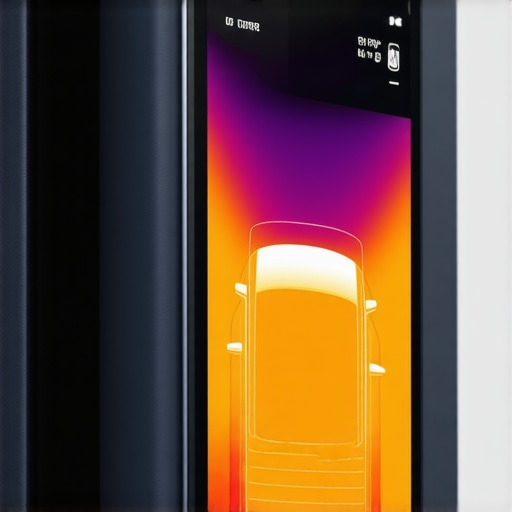
The Future of Home Energy Is Two-Way Traffic
We are rapidly approaching a shift where your EV isn’t just a battery—it’s a backup power source for your entire house. Bidirectional charging (V2H) is the next big frontier, but it doubles the thermal stress on your home’s wiring. Staying ahead of the curve means understanding code compliance essentials for ev charger installations in 2025 now, so you don’t have to rip everything out later. If you want to sleep better tonight, go grab a thermal camera and scan your panel during a charge cycle; it’s the only way to truly see what is happening behind the drywall.
Less o n s B o u g h t w i t h S w e a t a n d S e r v i c e C a l l s < / h 2 >
Af t e r y e a r s o f t i n k e r i n g , I ‘ v e r e a l i z e d t h a t t h e m o s t r o b u s t s y s t e m s a r e n ‘ t t h e o n e s w i t h t h e b i g g e s t w i r e s ; t h e y ‘ r e t h e o n e s w i t h t h e b e s t m a i n t e n a n c e h a b i t s . O n e l i g h t b u l b m o m e n t f o r m e w a s r e a l i z i n g t h a t m o s t ‘ b r o k e n ‘ c h a r g e r s a r e a c t u a l l y j u s t v i c t i m s o f l o o s e l u g s . A n o t h e r b i g o n e ? Y o u d o n ‘ t a l w a y s n e e d a m a s s i v e p a n e l u p g r a d e t o g e t t h e j o b d o n e r i g h t ; s o m e t i m e s , y o u j u s t n e e d a s m a r t e r w a y t o m a n a g e t h e l o a d y o u a l r e a d y h a v e . I u s e d t o t h i n k t r o u b l e s h o o t i n g < / b > w a s s o m e t h i n g y o u d i d o n l y w h e n t h i n g s f a i l e d , b u t n o w I t r e a t i t a s a m o n t h l y p r e v e n t a t i v e r i t u a l . I f y o u w a n t t o s t a y a h e a d o f t h e g a m e , l e a r n i n g < a h r e f = " h t t p s : / / b r i g h t s p a r k z e l e c t r i c . c o m / h o w - t o - v e r i f y - c o d e - c o m p l i a n c e - f o r - y o u r - e v - c h a r g e r - i n s t a l l a t i o n ">h o w t o v e r i f y c o d e c o m p l i a n c e f o r y o u r e v c h a r g e r i n s t a l l a t i o n < / a > i s t h e s i n g l e b e s t i n v e s t m e n t o f y o u r t i m e . < / p >
I f y o u ‘ r e s e r i i o u s a b o u t t h i s , s t o p g u e s s i n g . I s w e a r b y m y c a l i b r a t e d t o r q u e s c r e w d r i v e r < / b > a n d a b a s i c t h e r m a l c a m e r a . T h e s e a r e n ‘ t j u s t t o y s ; t h e y a r e t h e g a t e k e e p e r s o f y o u r h o m e ‘ s s a f e t y . F o r t h o s e l o o k i n g f o r t h e ‘ B i b l e ‘ o f e l e c t r i c a l w o r k , t h e N F P A 7 0 H a n d b o o k i s y o u r b e s t f r i e n d . I f t h e t e c h n i c a l j a r g o n f e e l s l i k e a f o r e i g n l a n g u a g e , I h i g h l y r e c o m m e n d c h e c k i n g o u t o u r g u i d e o n < a h r e f = " h t t p s : / / b r i g h t s p a r k z e l e c t r i c . c o m / e v - c h a r g e r - t r o u b l e s h o o t i n g - e x p e r t - t i p s - f o r - c o m m o n - i s s u e s ">e v c h a r g e r t r o u b l e s h o o t i n g e x p e r t t i p s f o r c o m m o n i s s u e s < / a > t o b r i d g e t h e g a p b e t w e e n c o d e b o o k s a n d r e a l – w o r l d f i x e s . A l s o , b e f o r e y o u c o m m i t t o a m a j o r o v e r h a u l , r e a d u p o n < a h r e f = " h t t p s : / / b r i g h t s p a r k z e l e c t r i c . c o m / p a n e l - u p g r a d e s - f o r - e v - c h a r g e r s - w h a t - y o u - n e e d - t o - k n o w ">p a n e l u p g r a d e s f o r e v c h a r g e r s < / a > s o y o u c a n t a l k t o y o u r e l e c t r i c i a n w i t h c o n f i d e n c e . < / p ># I M A G E _ P L A C E H O L D E R _ E # < h 2 >Bu i l d a S e t u p T h a t O u t l a s t s Y o u r N e x t T h r e e C a r s < / h 2 >
Th e t r a n s i t i o n t o e l e c t r i c i s n ‘ t j u s t a b o u t a n e w c a r ; i t ‘ s a b o u t t r a n s f o r m i n g y o u r h o m e i n t o a h i g h – p e r f o r m a n c e e n e r g y h u b . B y f o c u s i n g o n c o d e c o m p l i a n c e < / b > a n d t h e r m a l m a n a g e m e n t t o d a y , y o u a r e f u t u r e – p r o o f i n g y o u r p r o p e r t y f o r t h e n e x t d e c a d e o f i n n o v a t i o n . D o n ‘ t l e t t h e c o m p l e x i t y i n t i m i d a t e y o u — s t a r t w i t h t h e b a s i c s , k e e p y o u r c o n n e c t i o n s t i g h , a n d n e v e r i g n o r e a s t r a n g e s m e l l o r s o u n d . I f y o u e v e r f e e l s t u c k o r n e e d a p r o t o l o o k a t y o u r p a n e l , f e e l f r e e t o < a h r e f = " h t t p s : / / b r i g h t s p a r k z e l e c t r i c . c o m / c o n t a c t - u s ">c o n t a c t u s < / a > a n y t i m e . Y o u r p e a c e o f m i n d i s w o r t h t h e e x t r a e f f o r t . H a v e y o u e v e r n o t i c e d y o u r b r e a k e r p a n e l f e e l i n g w a r m t o t h e t o u c h d u r i n g a l o n g c h a r g e s e s s i o n ? L e t m e k n o w i n t h e c o m m e n t s b e l o w ! < / p >