I remember standing in the pitch black of my first commercial garage, the air heavy with the scent of ozone and that distinct, metallic tang of burnt insulation. I had just plugged in four new delivery vans, confidently assuming my service panel could handle the extra load. I was dead wrong. The main breaker didn’t just trip; it gave a final, agonizing groan before everything went dark. That was my expensive wake-up call. I learned the hard way that throwing more power at a garage isn’t the solution. The secret is managing the power you already have. Today, I am going to show you why load management software is the only thing standing between you and a massive, unnecessary utility bill.
The Moment My Main Breaker Quit on Me
When I first started out, I thought panel upgrades for EV chargers were the only way to scale. I spent weeks looking at blueprints and cringing at the quotes from the utility company. It felt like I was being punished for growing my business. Most garage owners think they need to tear out their entire electrical infrastructure just to add a few more plugs. But here is the reality: your building usually has enough power, it just doesn’t know how to share it. If you have ever dealt with EV charger troubleshooting because of mysterious power drops, you know exactly what I mean.
Is software just another monthly subscription I don’t need?
I get it. Every piece of equipment these days comes with a Pro plan and a monthly fee. I was the biggest skeptic in the room. Why pay for an app when I can just hire an electrician? But then I saw the numbers on peak demand charges. According to data from the National Renewable Energy Laboratory (NREL), peak demand charges can account for over 50% of a commercial electric bill in some regions. Software isn’t just a digital toy; it is a gatekeeper. It ensures that when your office AC kicks on and the elevators are moving, your chargers dial back just enough to keep you under that expensive threshold. It is about learning how to load balance your fleet without tripping the main feed.
Software Is Way Cheaper Than a $20,000 Service Upgrade
I once watched a buddy of mine spend nearly thirty thousand dollars to bring a new transformer to his site. Six months later, he realized he could have achieved the same results with a smart charging network for a fraction of that cost. I felt for him, truly. We often make these decisions out of fear of the unknown. We fear the chargers won’t work or the cars won’t be ready in the morning. Load management takes that anxiety away. It is like having a digital foreman who never sleeps, constantly shifting power to the vans that need it most while letting the topped-off ones sit idle. Plus, you can often find a tax loophole for small business charging stations that helps cover the initial software setup costs. Have you ever walked into your garage only to find half your fleet didn’t charge overnight because a single breaker flipped? Let me know—I have been there, and I know how much it stings.
Stop Guessing and Start Measuring Real Capacity
The first thing I do now—before even touching a screwdriver or ordering a single unit—is run a professional load calculation. You cannot guestimate this. When I tried to eyeball it at my first shop, I forgot to account for the heavy startup current of the garage door openers and the high-output shop compressor. I just looked at the main breaker and thought I had plenty of headroom. To avoid my mistake, you need to learn how to calculate the exact circuit load for a dual-head charger or any multi-port setup. You have to map out your ‘baseload’—the power your building uses just to keep the lights on and the computers running—then see what is left over for the cars. If you skip this, you are just waiting for a catastrophic failure. I have seen panels where the main lugs actually started to disclolor from heat because the owner thought ‘it should be fine’ for just one more charger.
How Smart Software Acts as Your Digital Traffic Cop
Think of your electrical panel like a buffet line. If everyone rushes the table at once, the food runs out and the kitchen shuts down. Load management software is the guy at the front of the line only letting three people in at a time. This is technically known as dynamic load balancing. It is a game-changer because it allows you to install, say, six chargers on a circuit that could normally only handle two. You should understand how smart chargers use dynamic balancing to prevent blown fuses by communicating with each other in real-time. 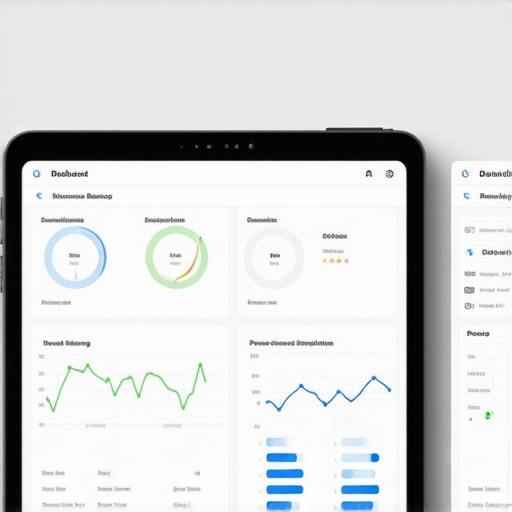 I remember a Tuesday in July when the humidity was 95%. Every AC unit in our office was screaming at full tilt. Normally, that would have been the end of our charging day. But because we had our ‘ceiling’ set in the software, the chargers automatically dialed back to a slow trickle while the AC was surging. Once the office cooled down and the compressors cycled off, the software immediately ramped the chargers back up. By morning, every delivery van was at 100%, and my main breaker didn’t even break a sweat.
Keep the Inspector Happy Without Rebuilding Your Walls
One of the biggest hurdles I faced was the local building inspector. They don’t care about your ‘smart software’ unless it meets specific standards. In many jurisdictions, you have to prove that your management system is ‘fail-safe’ or ‘listed’ for this specific use. It is critical to stay updated on code compliance essentials for EV charger installations in 2025 to ensure your setup isn’t just smart, but legal. For instance, you might wonder why your electrician recommends a 60-amp circuit for a 48-amp charger; it’s all about the 80% rule for continuous loads. If you try to skirt these rules, you might find yourself failing an inspection and being forced into upgrading your panel for better EV charging performance anyway, which defeats the whole purpose of using software to save money. You should always know how to verify code compliance for your EV charger installation before the final walk-through.
What Happens When the Cloud Goes Dark?
This is the question that kept me up at night. If your load management relies on the cloud and your Wi-Fi dies, does the whole building catch fire? The answer depends on your hardware. High-quality systems have a local fail-safe. If the chargers lose communication with the brain, they are programmed to default to a ‘safe’ minimum amperage—usually around 6 or 8 amps. This ensures that even if the internet goes down, you won’t trip the main feed when the building’s other loads spike. I once had a router die at 2 AM, and while the cars didn’t get the fast charge I expected, the building was still powered, and I didn’t have to explain a total blackout to my landlord the next morning. It’s these little technical safeguards that turn a risky DIY-style setup into a professional, commercial-grade infrastructure.Most guys think that if they just throw money at a bigger service, their problems disappear. It is a common trap to assume that a massive panel is a silver bullet for reliability. You can have a 600-amp service, but if your terminations are not perfect, you are still running a fire hazard. People obsess over the size of the pipe—the panel—but they ignore the quality of the joints, the lugs. I have seen brand-new systems fail because the installer relied on ‘feel’ rather than precision. In my experience, a tightly managed smaller service is often safer than a poorly executed massive one.
Why More Amps Won’t Fix a Poor Connection
Everyone says you need a massive upgrade, but I have found that panel upgrades for EV chargers are only as good as the physical connections inside the box. There is a nuance here that most beginners miss: thermal cycling. EV charging is a continuous load, meaning it runs at full throttle for hours. This causes wires to expand and contract significantly. If you are not careful, you will find why your main lugs might be loose after a year of charging, which leads to arcing and localized heat damage. I have opened panels where the insulation was literally melting off the wire while the breaker remained perfectly happy. That is a nightmare scenario for any business owner.
The Torque Trap That Can Burn Down a New Garage
Here is the ‘oops’ factor that almost cost me a client’s trust: the torque wrench. Most electricians think they have a calibrated arm, but for EV circuits, that is not enough. A study by the Electrical Safety Foundation International (ESFI) highlights that equipment failure and electrical distribution issues are leading causes of commercial fires, and much of this traces back to poor terminations. You must ensure the forgotten torque test that prevents panel fires is performed on every single terminal. This is why you will hear why your charger needs a specific torque setting to pass inspection from any inspector who actually knows their stuff. If your installer is not using a digital torque wrench, they are guessing with your livelihood. 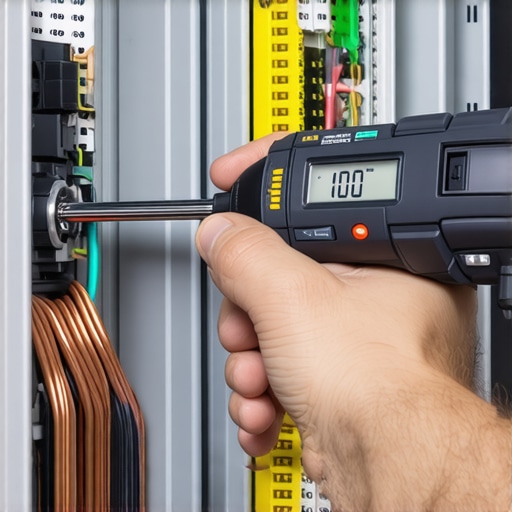
How do I know if my installer is actually following the 2025 code?
It is not just about the charger; it is about the entire path back to the utility. For example, ensuring code compliance when installing EV chargers now often involves verifying the grounding electrode system. Many people are shocked to find why your panel upgrade might require a new ground rod to meet modern safety standards. You should ask to see their load calculation and their permit sign-off. If you want to be certain, you need to know how to verify code compliance for your EV charger installation before you write that final check. Keeping up with code compliance essentials for EV charger installations in 2025 is the only way to protect your insurance policy from being voided if something goes wrong. Have you ever fallen into this trap where you thought ‘good enough’ was enough, only to have an inspector shut you down? Let me know in the comments.I’ve spent thousands on gadgets over the years, but the most important tool in my kit isn’t a screwdriver—it’s a thermal imaging camera. Every six months, I walk my facility and scan every lug, breaker, and contact point. Why? Because electrical resistance creates heat long before it creates a fire. If you see a bright purple glow where there should be cool blue, you’ve found a loose connection that’s about to fail. This simple check is the best form of EV charger troubleshooting because it prevents the outage before it happens. If you skip this, you’ll eventually be looking at why your ev plug contacts look burnt and what to do next. It’s much cheaper to tighten a lug than to replace a melted charging port. 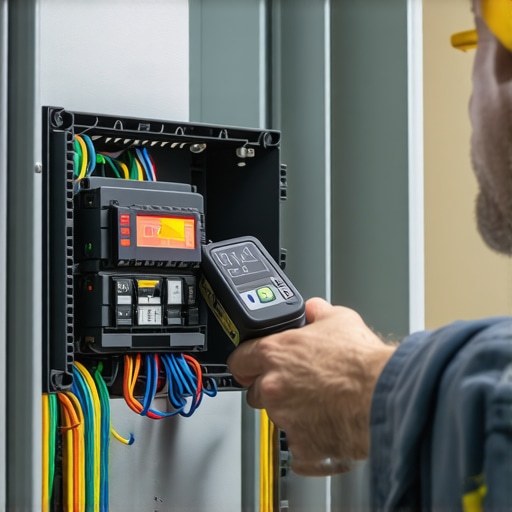
How do I keep my chargers running for the next decade?
Maintenance isn’t just about cleaning the dust off the casing; it’s about the software and the grounding. I’ve seen systems fail because of simple connectivity drops that could have been avoided. If your chargers aren’t talking to the network, they can’t balance the load, and your bill will skyrocket. You need to stay on top of troubleshooting ev charger connectivity problems to ensure your ‘digital foreman’ stays on the job. Additionally, every time you have a major storm or utility surge, you should re-verify your grounding. I once failed an annual safety audit because a ground rod had shifted due to soil erosion—something you’d only catch if you knew how to fix the grounding fail that ruins ev permits. It’s also worth following the National Fire Protection Association (NFPA) updates; specifically, the NFPA 70 Article 625, which recently clarified that all personnel protection systems must be regularly tested to ensure they actually trip during a fault.
The Future of Your Power Infrastructure Is Bidirectional
Looking ahead, we are moving toward a world where your fleet isn’t just a cost—it’s a giant battery for your building. Vehicle-to-Grid (V2G) technology is coming faster than most realize. If you are planning for the long haul, you should be looking into panel upgrade strategies to meet ev charging code requirements in 2025. This means installing infrastructure that can handle power flowing both ways. We are moving away from simple ‘dumping of energy’ into batteries and toward a sophisticated energy exchange. To get ahead of this, I recommend you start auditing your current capacity now. Grab a torque wrench and a thermal camera this weekend and do a full sweep of your main panel. You might be surprised—and a little alarmed—at what you find lurking behind that metal cover.
Hard-Won Truths from a Decade of Blown Fuses
Looking back at my years in the garage, I’ve realized that the biggest mistake most owners make is treating their electrical panel like a static box. It isn’t. It’s a dynamic environment where every connection matters. One of my biggest lightbulb moments was realizing that software is only half the battle. You can have the smartest load management in the world, but if your physical connections are weak, you are building on sand. I’ve learned that regular EV charger troubleshooting often reveals that the problem isn’t the software, but a simple loose lug. Always remember that code compliance is your best friend, not your enemy. I used to view inspectors as a hurdle, but after seeing a near-miss fire at a colleague’s shop, I realized that troubleshooting ev chargers common compliance pitfalls and fixes is just part of being a responsible pro. Precision is everything; a single degree of heat can be the difference between a successful overnight charge and a melted service entrance.
Tools I Carry So I Can Sleep at Night
I don’t go anywhere without my ‘holy trinity’ of electrical gear. First is a high-quality thermal camera, which is non-negotiable for spotting hotspots before they smoke. Second, I swear by a digital torque wrench; you need to know the specific torque wrench settings for a wall connector to ensure every terminal is cinched exactly to spec. This avoids the dreaded thermal expansion that loosens wires over time. I also recommend keeping a physical or digital copy of the latest NEC handbook. Staying on top of ensuring code compliance when installing EV chargers keeps you ahead of the curve and protects your business from liability. These aren’t just gadgets; they are the foundation of a reliable fleet operation. #IMAGE_PLACEHOLDER_E#
Stop Waiting and Secure Your Grid Today
The transition to electric is inevitable, but doing it the wrong way is expensive. You don’t have to live in fear of a tripped main breaker or a massive utility bill. By combining smart load management software with rigorous physical maintenance, you can scale your fleet with total confidence. Whether you are currently upgrading your panel for better EV charging performance or just starting to plan your layout, remember that a proactive approach is always cheaper than an emergency repair. Investing in a pro-level setup is also the real reason your home value increases with a pro EV setup—it’s about safety and future-proofing your most valuable assets. Go out there, check those lugs, and get your fleet ready for the future. Have you ever had a specific ‘mystery trip’ that took you forever to figure out? Let me know in the comments below!