The wind was howling so loud I could barely hear the ice cubes melting in my freezer. It was 2 AM, the grid was down, and I was standing in my garage staring at my EV with a mix of frustration and awe. I had enough energy stored in that floorboard to run my house for three days, yet I was fumbling for a flashlight. It felt like standing in a rainstorm with a bucket and not being able to take a drink. That was my lightbulb moment—except, ironically, none of my lightbulbs were working. I realized then that most of us are sitting on a goldmine of backup power without a clue how to tap into it safely. [IMAGE_PLACEHOLDER]
Stop Letting Your EV Sit Idle While the Power is Out
Today, we are going to bridge that gap. I am going to show you exactly how to turn your car into a house-sized battery bank without melting your electrical panel or violating local laws. I have seen people try some truly sketchy DIY hacks, and let me tell you, I have been there. In my early days, I almost made the mistake of thinking the danger of using an extension cord for level 1 charging was a risk worth taking for a quick fix during a blackout. Spoiler alert: it was not. Setting up a Vehicle-to-Home (V2H) system isn’t just about plugging things in; it’s about ensuring code compliance when installing EV chargers so your insurance company doesn’t have a heart attack if something goes wrong. We will look at the hardware you actually need and why your current setup might need panel upgrade strategies to meet EV charging code requirements in 2025. Have you ever been stuck in the dark while your car sat fully charged in the driveway? It is a helpless feeling, isn’t it?
Does Pumping Power Back into Your House Kill the Battery?
This is the biggest hurdle for most people. They worry that using the car to run the fridge will degrade the lithium-ion cells faster than a cross-country road trip. However, authoritative sources like the U.S. Department of Energy note that the discharge rates for home backup are typically much lower and slower than the stress of highway driving, making it surprisingly gentle on the hardware. You aren’t using up your car; you are just utilizing its capacity more intelligently. The real trick is how to verify code compliance for your ev charger installation to ensure the transfer switch is doing its job and not sending power back onto the grid where it could hurt a utility worker. We want to be a helpful neighbor, not a neighborhood hazard. Before you start hacking together a solution, you need to understand that the connection between your car and your house needs to be a two-way street that is paved with the right permits and hardware.
Get Your Home Ready for Two-Way Power
You cannot simply buy a double-ended male plug and hope for the best. That is a recipe for a house fire and a voided insurance policy. I remember my first deep dive into this; I mistakenly thought I could just back-feed through my heavy-duty dryer outlet. Thankfully, an electrician friend stopped me before I turned my breaker box into a literal toaster. To do this right, you need a bi-directional charger, which is significantly more complex than the standard box that came with your car. Most people do not realize what happens if you use a standard outlet for daily charging; it is simply not designed for the continuous, high-heat load of EV charging, let alone the reversal of that energy. 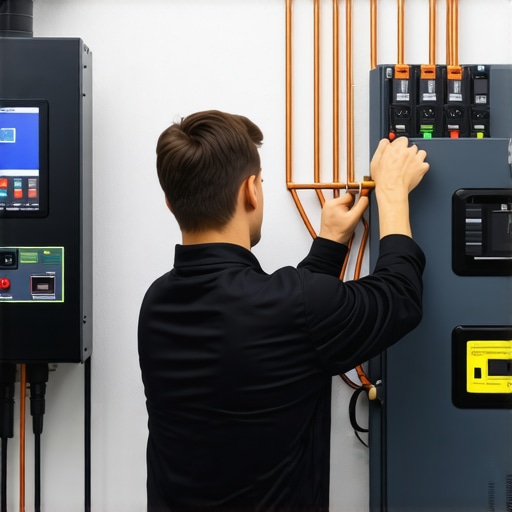
The Hardware You Cannot Skip
The heart of the system is the inverter. Your car stores DC power, but your house runs on AC. A bi-directional unit handles that conversion on the fly. I once worked with a neighbor who bought a cheap, gray-market inverter off a random site, and the first time he tried to pull power from his truck, the unit started emitting a high-pitched whine that sounded like a jet engine taking off. He was lucky he did not fry his car’s onboard computer. This is why you must look for UL-listed equipment and cross-reference your car’s specific V2H compatibility. If you run into issues during the handshake between the car and the charger, you will want some ev charger troubleshooting expert tips for common issues to help you identify if the problem is the software or the physical connection.
Why Your Old Panel Might Choke
Once you have the right charger, you have to look at your main service entrance. If your home was built before the mid-90s, you are likely facing 5 signs your old electrical panel is a charging bottleneck. I have seen enthusiasts spend five figures on a vehicle and a V2H charger only to discover their 100-amp service could not handle the home’s base load plus the car’s discharge rate. You really need to study up on panel upgrades for ev chargers what you need to know before you start mounting hardware. Pushing 40 or 50 amps back into a panel that is already struggling with a central AC and an electric range is asking for a main breaker failure.
The Transfer Switch is Non-Negotiable
This is the safety line that protects the guys working on the power lines outside. You need either an automatic transfer switch or a manual interlock. This ensures that when your car is powering your house, your house is physically disconnected from the grid. In my early days, I saw a ‘creative’ DIY setup where 4 signs your electrician used the wrong gauge wire became terrifyingly obvious because the insulation was starting to char under the back-feed load. Following code compliance essentials for ev charger installations in 2025 is the only way to sleep soundly. Always hire a pro to how to verify code compliance for your ev charger installation so you know the grounding and isolation are perfect.Most people believe that to successfully run a V2H (Vehicle-to-Home) setup, you’re forced into a massive, expensive service upgrade. I’m here to tell you that’s a myth that keeps people in the dark. While the “bigger is better” crowd will always push for a 200-amp or 400-amp panel, you can often bypass that massive expense by learning how to squeeze a level 2 charger onto a 60-amp service using smart load shedding. This is where the nuance lies: it isn’t about the raw size of the pipe, but how you manage the flow. However, even with the right management, I’ve seen seasoned DIYers fall into the “neutral wire trap.” This happens when you don’t realize the neutral wire trap that spikes your home utility bill by creating unbalanced loads that your meter misreads as consumption. 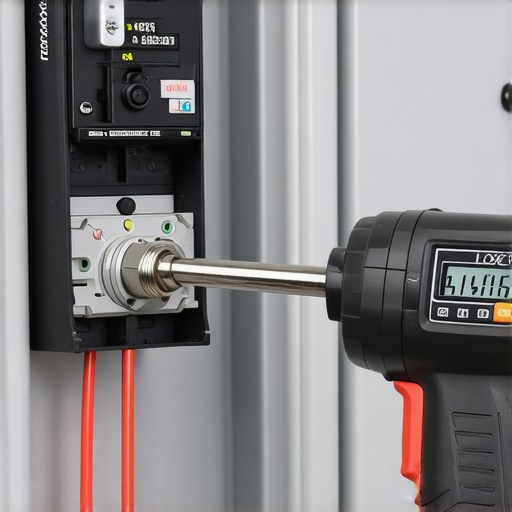
Why is your smart charger refusing to sync with the utility app?
It’s the question I get most often from people who have the hardware but can’t get the software to cooperate. More often than not, it isn’t a Wi-Fi signal issue; it’s a handshake protocol failure between the car’s BMS and the charger’s firmware. If you’re scratching your head, you should look into why your smart charger refuses to sync with the local utility app. These communication errors often hide deeper issues, like why your ev circuit needs a dedicated neutral in some jurisdictions to prevent data “noise” on the line. According to a study by the NFPA on electrical equipment safety, nearly 10% of residential electrical fires are caused by poor terminations or improper torque. This is the “Oops” factor that no one talks about. You can have the best charger in the world, but if you skip the forgotten torque test that prevents panel fires, you’re sitting on a ticking time bomb. Most people just “hand-tighten” until it feels snug, but EV loads are continuous and high-heat. This causes metal expansion and contraction that loosens those lugs over time. You need to know how to detect a loose neutral wire before your electronics fry. It’s these tiny, mechanical details—not the fancy apps—that determine if your house stays powered or ends up as a cautionary tale. Have you ever fallen into this trap or noticed your lights flickering when the car starts discharging? Let me know in the comments. To ensure you aren’t missing any red flags, always double-check the code compliance essentials for ev charger installations in 2025 before finalizing your setup.It is easy to get caught up in the high-tech excitement of bi-directional charging, but the longevity of your system really comes down to boring, old-school maintenance. If you have ever noticed a faint smell of ozone or burnt plastic near your breaker box, you are already behind the curve. This is why I carry a dedicated torque wrench in my EV survival kit. According to the National Electrical Code (NEC) Section 110.14(D), terminal connections must be tightened to the manufacturer’s specified torque using a calibrated tool—not just your best guess with a screwdriver. I personally use a digital torque adapter because the forgotten torque test that prevents panel fires is the difference between a safe home and a midnight emergency call. If you own a Tesla, you need to know the specific torque wrench settings for a wall connector to ensure those high-amp loads do not wiggle the wires loose over time.
Don’t Wait for the Smoke to Appear
Visual inspections are great, but they do not tell the whole story. I have started using a basic thermal camera once every six months to scan my panel while the car is pulling or pushing max power. Heat is the enemy. If you see a bright white spot on a single breaker, that is a sign of high resistance. It might explain why your ev plug contacts look burnt and what to do next. Catching these hot spots early prevents you from needing more drastic upgrading your panel for better ev charging performance later. If things do go sideways, having a solid handle on ev charger troubleshooting expert tips for common issues can save you a massive service call just for someone to flip a reset switch. #IMAGE_PLACE_HOLDER_D#
Take Control of Your Energy Independence
Where is this all heading? We are moving toward a reality where your home isn’t just a consumer of the grid, but a microgrid of its own. Once you have the V2H infrastructure in place, the next logical step is figuring out how to use solar panels to charge your ev for free. This creates a closed loop where the sun fuels your commute and your commute keeps your lights on during a storm. It is the ultimate redundancy. However, as you scale, you have to keep an eye on your service capacity. You might find that panel upgrades for ev chargers what you need to know becomes a conversation about adding a subpanel or a dedicated service entrance to keep everything code compliance essentials for ev charger installations in 2025.
How Do I Keep My V2H Setup Healthy?
The best thing you can do right now is a stress test during the day when you can see what you are doing. Simulate a power outage, switch to vehicle power, and monitor your panel for ten minutes. Use your hand (carefully!) to feel for excessive heat on the face of the breakers. If you want to be truly proactive, go grab a torque wrench this weekend and check your main lugs. It sounds like a small thing, but it is the single most effective way to prevent a catastrophic failure. If you are unsure about the technical side, do not hesitate to contact us for a professional evaluation. Don’t wait for the next storm to find out if your connections are loose—get in there and torque them down today.
What I Learned the Hard Way While Powering My House from My Truck
After a year of tinkering with bi-directional setups, I realized that efficiency isn’t just a number on a spec sheet; it’s a daily management habit. One major lightbulb moment for me was tracking “ghost loads”—those tiny drains from microwave clocks or standby TVs—that can silently sap miles from your EV battery overnight. I also discovered that 3 hidden costs of diy ev charger wiring usually come from small oversights, like not using the exact terminal lugs required by the manufacturer. Most importantly, if you find your permit delayed, it is often because of how to fix the grounding fail that ruins ev permits, so make sure your grounding rod depth is perfect before the inspector arrives.
#IMAGE_PLACEHOLDER_E#
The Essential Toolkit for Every V2H Pioneer
If you are serious about building a resilient home grid, you need tools that offer precision. I highly recommend investing in a digital torque adapter to guarantee your connections are perfect. I also suggest using a thermal imaging camera to spot high-resistance “hot spots” in your panel before they cause a failure. To help offset the costs of these professional tools, look into how to get your utility to pay for your panel upgrade; many homeowners qualify for rebates they never knew existed. Finally, remember that why your main service panel needs a surge protector for your ev is about protecting your vehicle’s sensitive computer just as much as your home’s electronics.
The Future of Energy is Parked in Your Driveway
The journey toward energy independence is incredibly rewarding. It transforms your vehicle from a simple transportation tool into a vital part of your home’s infrastructure. By following code compliance rules and prioritizing safe hardware, you are not just preparing for the next storm; you are leading the way into a smarter, more decentralized power future. Have you ever tried to run a high-wattage appliance during a blackout and had your car’s safety system trip the power? Let me know your experiences in the comments below.