I was standing in the middle of a silent warehouse at 4:45 AM, holding a lukewarm cup of coffee and staring at three delivery vans that hadn’t charged more than ten percent overnight. One of our ‘reliable’ Level 2 stations had decided to flake out, and because of the slow charging speeds, there was zero chance of recovery before the morning routes started. That was my breaking point. I realized that if I wanted to scale, I couldn’t keep playing the ‘hope it charges’ game. Relying on slow infrastructure is like trying to fill a swimming pool with a garden hose while the neighbors are already diving in. Today, I am going to show you why the transition to high-speed power is the only way to keep your operations from stalling out.
The Hard Truth About Why I Shifted to DC Fast Charging
When I first started managing a small fleet of five EVs, I thought I could save a few bucks by sticking with Level 2 chargers. I even made the rookie mistake of thinking I could squeeze a charger onto a 60-amp service without a second thought. Boy, was I wrong. We dealt with constant connectivity problems and chargers that would just quit mid-session because of thermal throttling. The transition to DC fast charging wasn’t just about speed; it was about reclaiming my sanity and ensuring my drivers weren’t sitting idle on the company clock. If you are tired of seeing your ‘refueling’ take eight hours when it could take thirty minutes, you are in the right place. Have you ever had a morning where a failed charge ruined your entire delivery schedule?
Does this actually make sense for a smaller operation?
I get the skepticism—I really do. The upfront costs for DC equipment are enough to make any CFO sweat. I remember looking at the initial quote and thinking there was no way we would see a return. However, once I factored in the ‘dwell time’ costs and the fact that we no longer needed to pay drivers to wait around for a charge, the math started to look very different. According to research from the Department of Energy, DC fast charging can provide significantly more range in a fraction of the time, making it essential for high-utilization environments. But it is not just about buying the biggest box you can find. I learned the hard way that you need to check code compliance for your installation before you even break ground. I once had a project delayed for three weeks because I ignored why my local inspector cared about conduit bending radius. Small details like that can sink your budget. We will dive into the specific panel upgrade strategies you will need to support this kind of power next.The core of a DC fast charging transition isn’t the charger; it’s the copper in your walls. You need to start by figuring out if your current service can even handle the draw. Most people think they can just add another breaker, but DC units pull power like a vacuum in a dollhouse. First, you have to learn how to tell if your panel has space for an ev circuit and if your transformer can handle the continuous duty cycle.
Stop Guessing and Calculate Your Real Power Capacity
I once tried to skimp on the site survey. We hooked up a single 30kW unit and the nearby office lights started flickering like a haunted house every time a van plugged in. We hadn’t looked at the real cost of upgrading to a 200-amp service properly and ended up paying double for an emergency electrical intervention. If you are running multiple vehicles, you must run a formal load calculation. If your panel is older, look for 5 signs your old electrical panel is a charging bottleneck before you buy the hardware.
Keep Your Load Under Control Without Buying a New Transformer
To avoid a nightmare scenario, you need panel upgrade strategies to meet ev charging code requirements in 2025. One trick I swear by is implementing load management software. It’s like a traffic cop for your electricity. It lets you learn how to load balance your fleet without tripping the main feed by staggering the juice. This prevents those massive demand charges on your utility bill that explain why your fleets charging costs are spiking at random. If you don’t manage the peak, the utility company will eat your profits for breakfast. 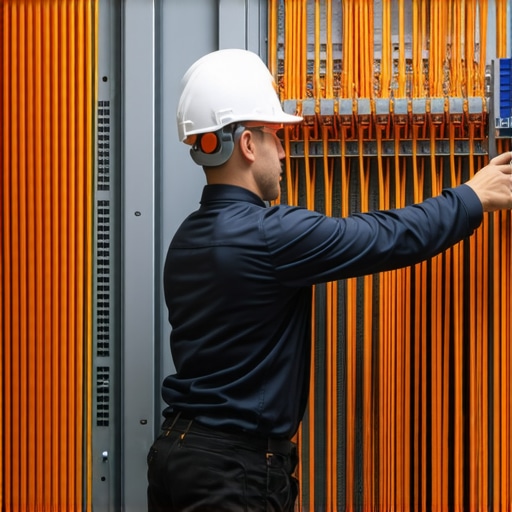
Pass Your Inspection Without Costly Redo Work
Finally, don’t ignore the paperwork. You have to be ensuring code compliance when installing ev chargers from day one. I’ve seen projects get shut down because an electrician used the specific breaker brands that hate constant ev loads. Those cheap alternatives might work for a toaster, but they’ll melt under the heat of a 480V DC charge.
Don’t Let Small Details Fail Your Final Walkthrough
Knowing how to pass your garage electrical inspection on the first try is about the technical details, like specific torque settings and conduit depth. I remember a project where we had to rip out fifty feet of trenching because we missed the exact conduit depth required for outdoor chargers by just three inches. Use a specific torque wrench to ensure every connection is seated. If a lug is loose, you’ll see 3 signs your main lug is loose before the whole thing shorts out. Efficiency isn’t just about the charging speed; it’s about building a system that doesn’t break when you turn your back.Everyone loves to brag about their ‘smart’ features, but let me be the bearer of bad news: no app can fix a thermal bottleneck. I’ve seen fleet managers spend thousands on software only to realize their hardware is failing because of connectivity problems caused by poor shielding or interference. The industry loves to push high-tech fixes, but the real secret to reliability is over-engineering the physical path. In my experience, a ‘dumb’ charger with a massive copper lead will outlive a ‘smart’ charger with thin wire every single time.
Smart Software Won’t Save Bad Hardware
The most common myth I hear is that you can just ‘software-limit’ a charger to fit a small panel. While technically true, you are essentially buying a Ferrari and driving it in a school zone forever. This is where troubleshooting common compliance pitfalls becomes a daily chore rather than a one-time setup. If you’re constantly hitting your load limit, you’re stressing the components. A study by the Idaho National Laboratory on EVSE reliability found that localized thermal issues—often at the connector or the breaker—account for a massive chunk of charging failures. If you aren’t ensuring code compliance when installing ev chargers with a focus on heat dissipation, you’re just waiting for a service call.
Is Your 50-Amp Circuit Actually Losing You Money?
Most people think that if the car is charging, everything is fine. But have you checked your efficiency? I once discovered a site where we were losing nearly 8% of our power just to heat in the walls because the contractor used the bare minimum wire size allowed by the NEC. This is the voltage drop secret that is ruining your morning charge and padding your utility bill for no reason. When you’re pushing high-amperage DC current, that resistance adds up. You should be looking at the wire gauge mistake that fails 40 percent of inspections to ensure you aren’t just heating up your conduit instead of your battery. 
Why does your charger throttle down after only an hour?
This is the ‘Oops’ factor that catches even seasoned pros. You think you’ve bought a 150kW unit, but thirty minutes in, it drops to 70kW. It’s usually not the grid; it’s thermal throttling. If your installation hasn’t accounted for airflow or if you’ve ignored how to verify code compliance for your ev charger installation regarding outdoor ambient temperatures, the hardware will protect itself by slowing down. I’ve seen this happen most often when people use specific breaker brands that hate constant ev loads. These breakers are designed for residential surges, not the relentless 8-hour draw of a commercial fleet.
Avoid the Compliance Trap Before Your Final Sign-Off
Don’t let a ‘pass’ on your inspection give you a false sense of security. An inspector looks for safety, not necessarily long-term performance. You need to be proactive with code compliance essentials for ev charger installations in 2025, which now place a much higher emphasis on communication protocols and sustained load calculations. If you find yourself constantly resetting units, check for nuisance tripping during high humidity or minor ground faults. These aren’t just ‘glitches’; they are signs that your system is on the edge of its operational envelope. Have you ever fallen into this trap where a ‘compliant’ system just wouldn’t stay online? Let me know in the comments.
Keep Your Fleet Online Without Constant Service Calls
I’ve learned that the most expensive charger isn’t the one with the highest invoice; it’s the one that stays ‘Out of Order’ for three days because a $50 contactor failed. Once you scale past a couple of units, you move from ‘installation mode’ into ‘asset management mode.’ You can’t just walk away and assume the hardware will survive the elements and the constant cycle of heavy-duty use. I’ve seen beautiful installs crumble in eighteen months because the manager ignored expert tips for common issues like cable strain and port debris. Maintenance isn’t a chore; it’s the insurance policy for your delivery schedule.
How do I maintain a high-power charging site over time?
The secret to longevity is a strict quarterly inspection schedule. Every three months, I physically open the cabinets and check for signs of carbon tracking or moisture ingress. You’d be surprised how many spiders think a 480V cabinet is a cozy home. I also perform what I call the ‘sniff test’—if you smell ozone or a faint fishy scent, you have an overheating component. This usually points back to common compliance pitfalls and fixes you might have missed during the initial rush. According to the NFPA 70B (Standard for Electrical Equipment Maintenance), periodic infrared inspections are now considered a best practice for systems under continuous high-current loads. If you aren’t looking at your breakers through a thermal lens, you are blind to the hotspots that cause midnight meltdowns. 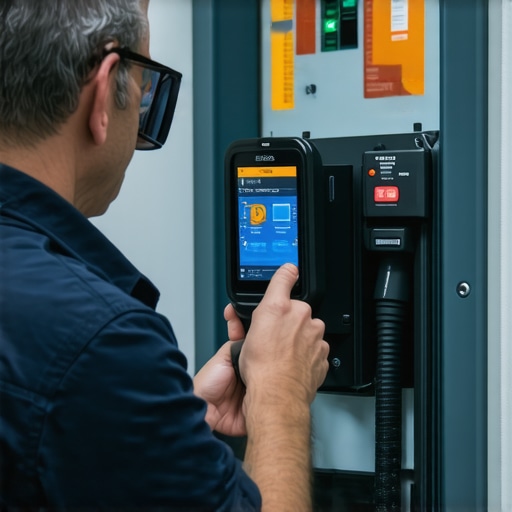
The Tools I Never Head to a Site Without
If you want to move beyond basic troubleshooting ev charger connectivity problems, you need a specialized kit. I never step onto a lot without a calibrated torque wrench and a FLIR thermal imager. The thermal camera is my ‘magic wand’—it lets me see a loose lug before it turns into a fire hazard. I once caught a terminal block that was 40 degrees hotter than the others just by scanning the panel while a van was charging. If I hadn’t, that whole unit would have been toast by morning. This is why I always preach about the forgotten torque test that prevents panel fires. It’s a ten-minute check that saves ten thousand dollars in hardware.
Preparing Your Infrastructure for the V2G Future
Looking ahead, the next big shift isn’t just about getting power into the cars; it’s about getting it back out. Vehicle-to-Grid (V2G) technology is coming faster than most think. If you are upgrading your panel for better ev charging performance today, make sure your switchgear is bi-directional ready. We are moving toward a world where your fleet is actually a giant mobile battery that can sell power back to the utility during peak hours. If you build your system with ‘dumb’ components now, you’ll be ripping them out again in five years. Don’t just build for today’s delivery routes; build for the 2030 energy market. My best advice? Go grab a torque wrench and verify the lugs on your main breaker tonight. It is the single most effective way to ensure your ‘high-speed’ transition doesn’t turn into a high-speed headache.
The Maintenance Lessons That Saved My Fleet From Total Meltdown
After years in the trenches, I’ve realized that the real secret to a successful high-speed transition isn’t found in a glossy brochure. One of the biggest lightbulb moments for me was realizing that most connectivity issues aren’t software bugs; they are physical failures caused by vibration and heat. I’ve learned that you must perform the forgotten torque test that prevents panel fires at least twice a year. If you skip this, you are basically playing a game of hot potato with your electrical service. Another hard lesson? Don’t assume your electrician’s math is infallible. You need to know how to read the load calculation your electrician sent you to ensure they aren’t cutting corners on the continuous load requirements for your DC units.
The Hardware and Intel I Trust to Keep the Power Flowing
When you are serious about avoiding downtime, you stop buying tools at the local hardware store and start investing in gear that sees what you can’t. My toolkit always includes a high-grade thermal imager—it’s the only way to catch a failing contactor before it smokes. I also live by the NFPA 70B standards for electrical maintenance; if you treat your charging hub like a critical data center, it will perform like one. For staying ahead of the curve, I constantly reference code compliance essentials for ev charger installations in 2025. This keeps me from getting blindsided by new regulations regarding bi-directional power and grid communication. If you’re feeling overwhelmed, don’t hesitate to reach out to a specialist who lives and breathes high-amperage systems.
Build the Power Infrastructure Your Future Self Will Thank You For
Scaling a fleet is a marathon, not a sprint. The frustration of a failed charge at 4:00 AM is real, but it is also entirely preventable with the right foundation. By prioritizing upgrading your panel for better ev charging performance now, you are building a resilient system that can adapt to whatever the next decade of EV tech throws your way. You have the knowledge now to move from ‘hoping’ to ‘knowing.’ Don’t be afraid to pull the trigger on those high-quality upgrades; your future delivery schedule depends on it. Have you ever been surprised by a hardware failure that your software didn’t catch? Let me know in the comments below!