I was staring at the PDF on my phone, squinting at a column of numbers that made my head spin. My electrician, a guy who knows his stuff but isn’t exactly a poet, had just sent over a “load calculation” for my new Level 2 charger installation. I felt like I was back in high school trig, but with way higher stakes. I just wanted to know if I could plug in my car without the house going dark, but here I was looking at things like “VA per square foot” and “80% continuous load.” It’s a gut-wrenching moment. You want to trust the expert, but you also don’t want to spend three grand on a panel upgrade if you don’t actually need one. I’ve been there, and I’ve made the mistake of nodding along when I should have been asking questions—a mistake that once led to a very expensive “pop” and a dark house. [image_placeholder_1]
Why That Messy Spreadsheet Actually Saves Your House
The truth is, that calculation is the only thing standing between your shiny new EV and a literal fire in your garage. When I first started messing with home charging, I didn’t realize that 5 signs your main breaker is overwhelmed by a new level 2 charger often start with a simple math error. A load calculation isn’t just a suggestion; it’s a legal requirement under the National Electrical Code (NEC) to ensure your home can handle the “thirst” of an electric vehicle. According to the National Fire Protection Association (NFPA), electrical failures are a leading cause of home fires, and overloading an old system is a top-tier risk. If you’ve ever wondered how to tell if your panel is actually a fire hazard, the load calculation is your first real piece of evidence.
Is my electrician just trying to inflate the bill?
It’s the question we all ask. I certainly did when I saw the quote for panel upgrades for ev chargers. But here’s the reality check: I once tried to bypass this step by convincing a “handyman” friend to just “slap a breaker in there.” I ended up with the noise your breaker makes before it fails ringing in my ears for weeks. A load calculation protects you. It breaks down your existing lights, your oven, your dryer, and that new 40-amp charger to see if the total exceeds your main service. If the numbers add up to 190 amps on a 200-amp service, you’re in the clear. If they hit 210, you’re looking at a panel upgrade strategy or a smart load-shedding device. Have you ever looked at a quote and felt like you were being taken for a ride? I want to hear about it—reach out if you’re staring at a load calculation right now that makes zero sense. I’m going to show you exactly which lines on that paper actually matter.
Check the Number on Your Main Breaker
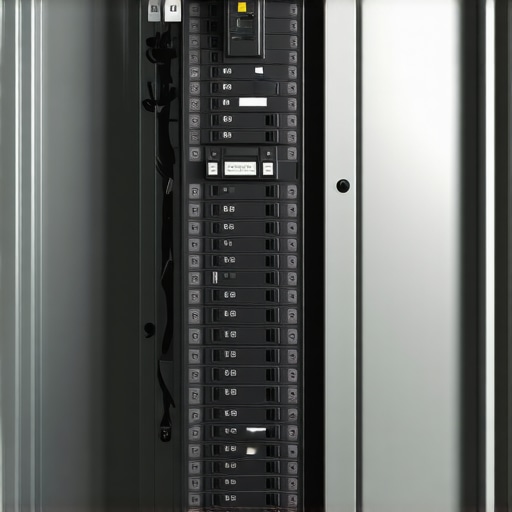
Before you get into the weeds, look at the giant switch at the top of your panel. That number—usually 100, 150, or 200—is your total electrical budget. Think of your home’s electricity like a fixed monthly income; every appliance is a bill. If you spend more than you earn, the main breaker shuts you down. I once helped a neighbor who was trying to squeeze a level 2 charger onto a 60-amp service without a load management system. The result? Every time they tried to toast a bagel while the car was charging, the whole house went pitch black. It was a messy but effective lesson in why we respect that main breaker limit.
Count the Square Footage for the Base Math
The National Electrical Code (NEC) uses a standard calculation of 3 volt-amps (VA) per square foot of living space for general lighting and outlets. It covers everything from your phone chargers to your bedside lamps. If you have a 2,000-square-foot home, that’s 6,000 VA right off the top. You must verify code compliance for your EV charger installation by ensuring this base load is the foundation of your document. This is non-negotiable and provides the baseline for the rest of your home’s capacity.
Identify the Fixed Heavy Hitters
This is where people get tripped up. You need to list the nameplate ratings for your electric range, your dryer, and your HVAC system. These aren’t guesses; they are hard numbers found on the stickers inside the door or on the back of the appliance. I learned the hard way that ignoring the actual draw of an old dryer can lead to 3 small mistakes that turn your garage panel into a fire hazard. If that sticker says 5,000 watts, you put 5,000 watts on the paper, regardless of how often you actually use the machine.
Why Continuous Loads Need Extra Breathing Room
An EV charger is a continuous load because it runs for more than three hours. Because of this, the code requires you to calculate the circuit at 125% of the charger’s rating. If you’re installing a 40-amp charger, your load calculation must account for 50 amps. This extra 25% is a safety buffer so your wires don’t overheat and degrade over time. It’s the same reason you don’t run your car’s engine at the redline for hours—it needs room to breathe. Proper sizing ensures you aren’t dealing with the voltage drop secret that is ruining your morning charge because the wires are struggling to keep up with the intense demand.
The Forgotten Torque Test for Lasting Safety
Even if your math is perfect, a loose connection will ruin your install. When I was finishing my own subpanel, I thought hand-tight was good enough for the lugs. A week later, I smelled ozone and hot plastic. I had skipped the forgotten torque test that prevents panel fires. Every load calculation should be followed by a physical inspection using a torque wrench. If you don’t use the specific torque wrench settings for a wall connector, you are just waiting for a hot spot to develop. You can also prove your electrical panel is code compliant for resale by keeping a record of these calculations and the specific torque specs used during the final installation phase.
But even with a perfect torque test, there’s a nuance most installers ignore—the Big Panel Upgrade Lie. Many electricians look at a 100-amp panel and immediately quote a $3,000 service upgrade. The contrarian truth is that you can often bypass this by understanding the secret to getting faster charging without a new panel. By using smart load-management devices, you can stay within your existing electrical budget by temporarily throttling the charger when the dryer or oven kicks in. According to the Electric Power Research Institute (EPRI), managed charging strategies can reduce the immediate need for service upgrades by nearly 60% without impacting the average driver’s morning range. If your pro hasn’t mentioned how to load balance your fleet without tripping the main feed, they might be selling you hardware instead of a solution. Have you ever fallen into this trap where you were pushed into an expensive upgrade you didn’t actually need? Let me know in the comments.
Why Residential Outlets Aren’t Enough for Daily Charging
One of the biggest ‘oops’ factors I see in modern installs is the over-reliance on NEMA 14-50 outlets. People think because it’s code compliant for an RV, it’s fine for a car. But cars pull maximum current for eight hours straight, every night. Standard residential-grade outlets often suffer from thermal fatigue, leading to 3 small mistakes that turn your garage panel into a fire hazard. If you look closely at high-end installs, you’ll see the critical difference between hardwired and plug-in chargers. Hardwiring isn’t just about faster speeds; it removes the high-resistance point of an outlet entirely, which is one of the best 6 ways to stop nuisance tripping during high-humidity charging. 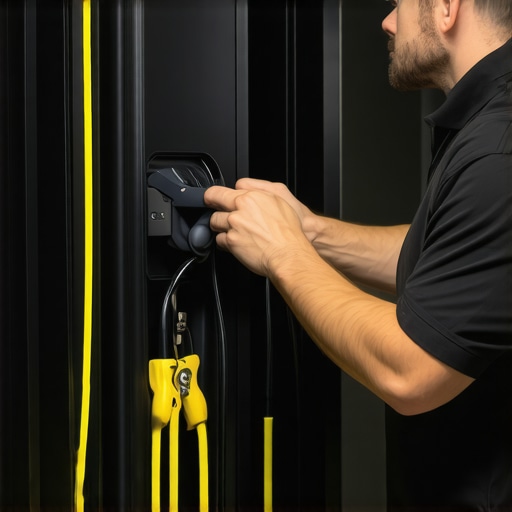
Is a 48-amp charger actually worth the extra electrical stress?
For most people, the jump from a 40-amp to a 48-amp charger is more about vanity than utility. To run 48 amps, you need a 60-amp breaker and much thicker wire, which significantly increases the risk of heat-related issues in your main panel. It often leads to the specific breaker brands that hate constant ev loads causing nuisance trips in the middle of the night. Unless you’re driving 200 miles every single day and have a very short charging window, the extra stress on your home’s infrastructure just isn’t worth the cost. You might also find that understanding why your wall connector needs a dedicated disconnect switch becomes a mandatory and expensive requirement at those higher amperages depending on your local inspector’s interpretation of the current code.
The Quiet Warning of Breaker Harmonics
Finally, keep an ear out for the humming. This isn’t just background noise; it’s a sign of a loose neutral or a breaker struggling with the frequency of the charger’s inverter. When troubleshooting ev chargers common compliance pitfalls and fixes, the auditory diagnostic is often more reliable than a standard voltmeter. If you ignore a buzzing panel, you’re on the fast track to hearing the noise your breaker makes before it fails. Always prioritize quality components over the lowest quote, because in the world of high-voltage home charging, ‘cheap’ usually translates to ‘charred.’If you want to keep your setup from becoming a cautionary tale, you need to think like an industrial maintenance tech. I am a huge advocate for thermal imaging. Last winter, I bought a basic thermal camera attachment for my phone, and it was a revelation. I could see the heat bloom around my breakers while my car was pulling 32 amps. A little warmth is normal, but a glowing red lug is a disaster waiting to happen. It is one of the best ways to engage in troubleshooting ev chargers common compliance pitfalls and fixes before the plastic starts to melt. If you aren’t inspecting your connections, you are just gambling with your home equity. 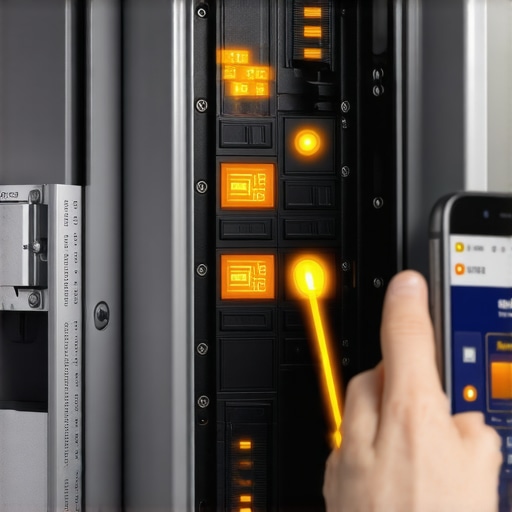
The One Tool Every EV Owner Should Secretly Own
Beyond the thermal camera, you need a high-quality torque wrench. I know I mentioned it before, but it bears repeating because loose connections are a primary cause of failure in high-amperage circuits. I follow the technical guidance found in Mike Holt’s Illustrated Guide to the National Electrical Code, which emphasizes that proper terminal torque is not just a suggestion—it is a critical safety requirement for continuous loads. If you have never checked your connections, learning the forgotten torque test that prevents panel fires should be your next weekend project. While you are at it, grab some electrical contact cleaner. You would be surprised how much grit and oxidation builds up in the handle over a year of daily use. Learning how to clean your charger ports without damaging them can save you from a frustrating “failed to charge” error on a rainy Monday morning.
How do I maintain my home charging station over time?
Maintenance isn’t just about the internal wires; it is about the physical environment. Check the cable for nicks and the holster for debris or spiders—I have actually seen nests prevent the latch from clicking into place. You should also perform a monthly visual check of the breaker panel. Look for any discoloration on the busbar or around the breaker casing. If you see even a hint of brown or black on the metal, you need to look into upgrading your panel for better ev charging performance immediately. It is much cheaper to replace a panel on your own schedule than during an emergency midnight outage.
Stop Future Proofing and Start Subpaneling Instead
I often see homeowners trying to cram everything into their main panel to save a few hundred dollars. Here is my hot take: if you have the physical space, just install a dedicated subpanel in the garage now. It makes the task of how to properly size a subpanel for your ev workshop a much simpler math problem when you eventually buy your second electric vehicle. It keeps the high-heat, high-stress loads out of your main house panel and gives you a localized shut-off point. It is the ultimate move for anyone planning to stay in their home for the long haul.
Where Home Charging is Heading in the Next Five Years
We are rapidly moving toward a world where your car is not just a sink for electricity, but a vital source. Vehicle-to-Home (V2H) technology is the next frontier. Soon, your load calculation won’t just be about how much your car takes, but how much it can give back to your house during a blackout. Learning how to use your ev as a backup home battery safely will soon be as common as programming a smart thermostat. I predict that within five years, bidirectional chargers will be the standard requirement for all new installations. If you are doing electrical work now, make sure your conduit is oversized—you will thank me when you are pulling heavier gauge wire for that 80-amp bidirectional unit in 2029. My challenge to you is simple: go open your panel (carefully!) and see if any of your breakers feel significantly warmer than the others while the car is charging. If they do, it is time to call a professional.
The Hard Lessons I Learned While Chasing Code Compliance
Looking back at my first few installs, the biggest realization wasn’t about the wire gauge—it was about how much heat matters. I used to think that as long as the lights stayed on, everything was fine. But after seeing a thermal bloom on a main lug, I realized that ensuring code compliance when installing EV chargers is actually a long-term commitment to heat management. I also learned that the label on the panel is rarely the full story; you have to look for 3 small mistakes that turn your garage panel into a fire hazard like mixed breaker brands or double-tapped neutrals. Most importantly, I stopped trusting my hand-strength for tightening lugs. If you haven’t performed the forgotten torque test that prevents panel fires, you’re essentially leaving your home’s safety to chance. It’s those invisible details that separate a DIY job from a professional-grade installation.
The Pro Tools I Keep in My Garage
If you want to move beyond guessing, you need the right gear. I never start a job without a calibrated 1/4-inch drive torque wrench. It’s the only way to meet the specific torque wrench settings for a wall connector and ensure the connection won’t vibrate loose over months of thermal expansion. I also highly recommend picking up a copy of Mike Holt’s Illustrated Guide to the NEC; it turns dense legal jargon into clear pictures that make it easy to verify code compliance for your EV charger installation. Finally, a thermal camera attachment for your phone is worth its weight in gold for spotting high-resistance connections before they ever smell like ozone.
Secure Your Home for the Next Decade
Installing a charger is the biggest change you’ll likely make to your home’s electrical load in twenty years. It can feel intimidating to look at a spreadsheet of numbers, but taking these steps now ensures your EV charger setup is a source of freedom rather than a source of stress. Don’t be afraid to pull that panel cover and look for signs of trouble—being proactive is how you prevent the most common disasters. Whether you are doing a full panel upgrade or just adding a new circuit, your attention to detail is your best insurance policy. Have you ever checked your panel and found a breaker that felt hot to the touch? Let me know in the comments below!