I’ll never forget the smell of ozone in my garage at 2 AM. It was sharp, metallic, and completely terrifying. Just moments before, I’d been standing there with a flashlight, trying to figure out why my brand-new EV was charging at a snail’s pace. Then I heard it—a faint, rhythmic sizzle, like bacon frying in another room. I ignored it for three days, thinking it was just ‘old house charm.’ That was my first big mistake, and it nearly cost me a whole new service entrance. My panel wasn’t just old; it was failing under the heavy load of a Level 2 charger. If your breaker is talking to you, it is not saying hello. It is giving you a final warning before something expensive, or dangerous, happens.
Your Panel Shouldn’t Sound Like a Bowl of Rice Krispies
When everything is working correctly, your electrical system should be virtually silent. Maybe you’ll hear a very faint hum if you’re standing right next to a high-powered transformer, but a standard residential breaker? Silence is golden. If you start hearing a distinct buzzing or a clicking sound that won’t stop, you’re likely looking at 5 signs your old electrical panel is a charging bottleneck. In my case, that sizzling sound was actually a loose connection vibrating at sixty cycles per second, creating microscopic arcs of electricity that were melting the plastic casing of the breaker itself. It’s a visceral realization when you pull a breaker and see the bus bar pitted and charred. Today, I want to help you identify these ‘death rattles’ before you’re forced into an emergency repair. Have you ever walked past your panel and sworn you heard it whispering or buzzing? Tell me about it in the comments below—I’ve probably heard that exact sound before.
Is that buzzing sound actually a house-fire-in-waiting?
It is easy to be skeptical when an electrician tells you a small noise requires a multi-thousand-dollar upgrade. You might think they are just upselling you. However, the physics don’t lie. According to the National Fire Protection Association (NFPA), electrical failures or malfunctions are a leading cause of home fires, accounting for roughly 13% of home structure fires annually. When a breaker hums loudly, it’s often because it’s struggling with specific breaker brands that hate constant EV loads or it simply cannot handle the continuous draw of a high-amperage circuit. Learning how to tell if your panel is actually a fire hazard starts with trusting your ears. We are going to dive into how to spot arc faults before they kill your charging session, so you can keep your car charging and your house standing.
Stop the sizzle with a proper torque wrench
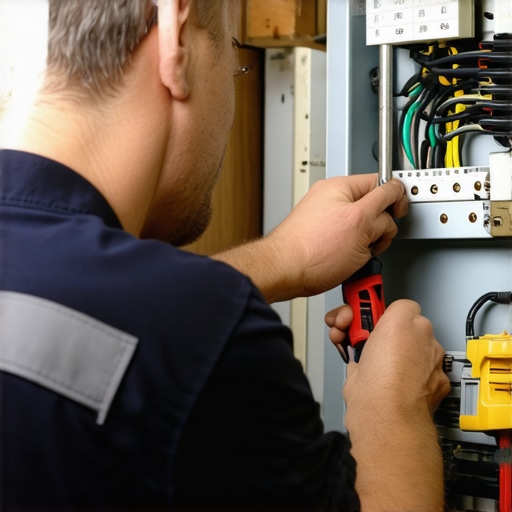
The first thing you need to do isn’t buying a new panel; it’s ensuring the one you have is actually put together correctly. I remember working on a neighbor’s setup where the lights flickered every time his Tesla started its bulk charge. He thought the grid was weak. I pulled the cover and found that the main lugs—the giant bolts holding the service wires—were so loose I could have turned them with my pinky. This is exactly why the forgotten torque test that prevents panel fires is the most critical step in any installation. If those connections aren’t tightened to the manufacturer’s inch-pound specifications, they create resistance. Resistance creates heat. Heat creates the buzzing you’re hearing. Before you panic, have a pro check those lugs; it is one of the most common 3 signs your main lug is loose and causing power flickers.
Don’t let thin wires choke your charge
Electricity is a lot like water flowing through a pipe. If you try to shove 40 amps through a wire meant for a bedroom lamp, things get hot and fast. I have seen DIYers use 8-gauge wire for a 50-amp circuit because it was cheaper, but 4 signs your electrician used the wrong gauge wire often start with a hot-to-the-touch conduit. You need to ensure you are using the specific conduit size needed for a 50-amp circuit to allow for heat dissipation. Using undersized conductors isn’t just a code violation; it is a performance killer. This is why thinner wire is costing you miles every night—the voltage drop means your car receives less power than the wall is pulling. If you are running a long line to the garage, you might even need to upsize the wire just to compensate for that distance.
How to verify if your setup meets 2025 standards
Code compliance isn’t just red tape; it is a blueprint for not burning your house down. When you are upgrading your panel for better ev charging performance, you have to look beyond the breakers. Many homeowners are surprised to find that ensuring code compliance when installing ev chargers often requires a completely new grounding system. Specifically, why your panel upgrade might require a new ground rod usually comes down to modern safety requirements that older homes simply do not meet. You should also learn how to verify code compliance for your ev charger installation by checking your local amendments. In some jurisdictions, if you are adding a significant load like a Level 2 charger, you might be forced into panel upgrade strategies to meet ev charging code requirements in 2025, which could include smart load management if your service is only 100 or 125 amps.
Managing multiple vehicles without blowing the main fuse
If you are lucky enough to have two EVs, do not assume you need a 400-amp service. You can learn how to share a single circuit between two evs safely using load-sharing chargers. This prevents 5 signs your main breaker is overwhelmed by a new level 2 charger from becoming a daily reality. I once set up a system for a client who had two Ford F-150 Lightnings. Instead of a massive service upgrade, we installed chargers that talk to each other, splitting the 50-amp feed. It is the smart way to schedule charging without overloading your service. Also, consider if why your garage needs a subpanel for that second ev makes more sense for your layout, especially if your main panel is on the opposite side of the house. It keeps the heavy wiring runs short and manageable.
Beyond the Minimum: Why Code Alone Might Fail You
Most homeowners assume that if an inspector signs off on the permit, the job is perfect. But here is the contrarian truth: the National Electrical Code is a safety standard, not a performance standard. It is the absolute floor. It ensures your house won’t catch fire tonight, but it doesn’t guarantee your panel won’t be toast in five years due to thermal stress. When upgrading your panel for better ev charging performance, you need to think about ‘thermal headroom.’ The Electrical Safety Foundation International (ESFI) highlights that continuous loads—anything running for more than three hours—put a unique strain on breakers that standard appliances like stoves simply don’t. A stove cycles on and off; an EV pulls max power for eight hours straight. If you are just barely meeting the code compliance essentials for ev charger installations in 2025, you are operating at the very edge of your equipment’s physical limits, which leads to ‘nuisance tripping’ as the breaker ages prematurely.
The Invisible Trap That Folds Your Electronics
The most dangerous ‘oops’ I see isn’t a missing permit; it’s a poorly terminated neutral wire in a multi-wire branch circuit. People often focus on the hot wires because that is where the ‘juice’ is, but the neutral wire trap that spikes your home utility bill is a silent killer of car motherboards. If that connection isn’t perfect, you get voltage instability—essentially, the electricity ‘bounces’ between legs. I’ve seen $50,000 EVs refuse to charge because the home’s neutral was floating just enough to confuse the car’s sensitive ground-fault detection. This is a prime example of why ev charger troubleshooting expert tips for common issues always start with the panel’s integrity. Have you ever fallen into the trap of blaming the charger for a glitch, only to find a loose wire in the wall? Let me know in the comments below.
Is your 200-amp service actually a hidden bottleneck?
Another nuance people get wrong is the difference between ‘available’ and ‘rated’ capacity. You might have a 200-amp panel, but if your house was built in the 90s with electric heating, a double oven, and a power-hungry hot tub, you might only have 20 amps of actual ‘free’ capacity during peak hours. Simply slapping a 50-amp breaker in there is one of the 3 small mistakes that turn your garage panel into a fire hazard. You must perform a formal load calculation—something many cut-rate installers skip to save time. If you don’t, you’re just waiting for the hottest day of the year to find out your main breaker is overwhelmed. Also, beware of bargain-bin components; knowing 3 ways to spot a fake ul listing on a cheap charger can save you from buying equipment that lacks the heat-shielding required for these marathon charging sessions. Before you buy any hardware, make sure you verify code compliance for your ev charger installation to ensure you’re not just passing an inspection, but building a system that lasts as long as the car.
Get a Thermal Camera Before Your Next Charge
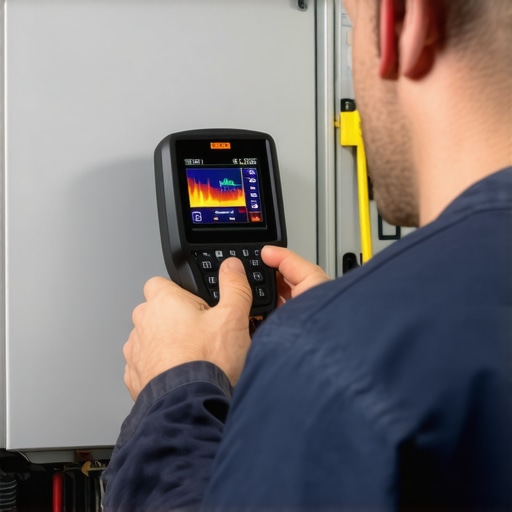
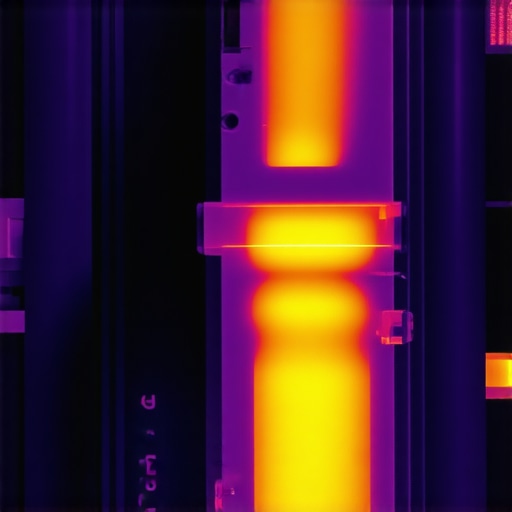
I stopped relying on my sense of smell after that 2 AM garage incident. Now, I use a FLIR thermal imager every six months to ‘look’ inside my panel while the car is pulling its full 48 amps. If I see a glowing purple spot on a breaker, I know a connection is loosening before it ever starts to sizzle. This is the ultimate level of ev charger troubleshooting expert tips for common issues. You don’t need a $2,000 rig; even a smartphone attachment can show you if your specific breaker brands that hate constant EV loads are running dangerously hot. The National Electrical Code, specifically section 110.14(D), now mandates that terminal torque be verified with a calibrated tool because hand-tightening is statistically unreliable. If your installer didn’t use a torque wrench to meet the specific torque wrench settings for a wall connector, the job isn’t technically finished.
How do I maintain my charging setup over time?
Maintenance is mostly about cleanliness and physical integrity. I make it a habit to clean your charger ports without damaging them using compressed air to blow out dust and debris that can cause high-resistance connections. In coastal areas, you really have to watch for salt spray, as the real lifespan of a level 2 charger in coastal salt air is significantly shorter without regular inspections for green corrosion. Also, don’t forget the cable itself; why your charging cable gets stiff in the winter and how to fix it often comes down to internal fatigue from being coiled too tightly. Loop it loosely like a garden hose to prevent the copper strands from snapping over time.
The Future is Two-Way Power
We are rapidly moving toward a world where your car isn’t just a drain on your house—it is the battery for it. I have been following the ISO 15118-20 standard closely, which paves the way for bidirectional charging. This means upgrading your panel for better ev charging performance today needs to account for the possibility of your car powering your fridge during a blackout tomorrow. Ensuring you how to verify code compliance for your ev charger installation now saves you from a total rewire when V2H hardware becomes the norm in 2030. If you want to stay ahead of the curve, my top tip is to buy a basic thermal camera today and scan your panel during a peak charge session—it is the only way to catch a fire before it starts.
Why I Stopped Trusting My Ears for Panel Safety
After years of tinkering with garage setups, the biggest lesson I learned is that ‘silence’ doesn’t always equal ‘safety.’ Heat is a silent predator in an electrical panel. You might not hear a buzz, but if your connections aren’t perfect, they are slowly degrading every time your car pulls power. I discovered that ev charger troubleshooting expert tips for common issues often boil down to one thing: thermal expansion. Over months of charging cycles, wires actually expand and contract, which can loosen even a well-installed lug. This is why I now treat my panel like a piece of high-performance machinery that needs a ‘tune-up’ once a year. If you are currently troubleshooting ev chargers common compliance pitfalls and fixes, start by looking for those tiny discolored spots on your breakers—they tell a story your ears might miss.
The Gear That Keeps My House From Melting
I don’t go into my panel without my ‘big three’ tools anymore. First is a calibrated torque wrench; you absolutely cannot ‘feel’ the difference between 30 and 45 inch-pounds, but your equipment can. Using it to hit the specific torque wrench settings for a wall connector is the only way to guarantee a fire-free connection. Second, a thermal camera—it’s the ultimate truth-teller for spotting 3 small mistakes that turn your garage panel into a fire hazard. Finally, keep a copy of the 2025 NEC handbook or a reliable guide to code compliance essentials for ev charger installations in 2025. I trust these because they remove the guesswork from an environment where ‘guessing’ leads to expensive repairs or worse.
Your Path to a Stress-Free Morning Commute
The peace of mind that comes from a professional-grade installation is worth every penny of the permit fee. When you move forward with upgrading your panel for better ev charging performance, you aren’t just adding a circuit; you are modernizing your home for the next generation of transportation. You’ve done the research and spotted the signs of a bottleneck—now it’s time to build a system that works as hard as your vehicle does. Have you ever checked the temperature of your breakers during a heavy charging session? Let me know what you found in the comments below.