I remember the smell first. It was that acrid, chemical scent of melting plastic wafting from my garage at 2 AM. I’d just “saved” a couple hundred bucks by picking up a no-name EV charger from a third-party seller, thinking a plug is just a plug, right? Wrong. That “bargain” nearly cost me my house. I was lucky I woke up to get a glass of water, or I might not be writing this today. It’s a common trap: you see a sleek device, it has thousands of glowing reviews, and there’s even a little “UL” logo on the back. But as I found out while staring at my scorched drywall, looking official and being official are two very different things. Today, I want to share how you can avoid the same dangerous trap I fell into and ensure your home stays safe and your car stays charged without the drama.
The Scary Truth About Counterfeit Safety Marks
[IMAGE_PLACEHOLDER]The reality is that anyone with a printer and a bit of adhesive can slap a silver sticker on a piece of plastic. When I first started getting into the EV world, I assumed that if it was sold on a major marketplace, it had to meet basic safety standards. I was dead wrong. According to the UL Research Institutes, counterfeit electrical products are a massive global issue, with many of them using forged marks to bypass customs. These aren’t just harmless clones; they are often built with substandard components that can’t handle the 32 or 40 amps of continuous draw an EV requires. I’ve seen the 3 hidden costs of cheap internet-bought chargers firsthand, and property damage is at the very top of that list.
Is a “UL Listed” label actually worth the extra money?
You might be skeptical. After all, isn’t electricity just electricity? I used to think the same thing. I figured that even if the charger was a bit “budget,” my home’s circuit breaker would catch any real problems. That was my first big mistake as a homeowner. A fake charger can have an internal failure—like a relay welding shut or a terminal block overheating—that doesn’t necessarily trip a breaker until a fire has already started. I learned this the hard way when I ignored the signs of how to spot a cheap knockoff charging cable before it melts. Have you ever plugged in a new device and noticed the handle felt unusually warm? Don’t ignore that feeling like I did! If you’re questioning your gear, it’s also worth checking how to tell if your panel is actually a fire hazard because a bad charger and an old panel are a recipe for disaster.
Don’t Just Look at the Sticker—Check the Database
The first real way to spot a fake is to look for a specific file number. A genuine UL mark isn’t just the letters; it usually includes a control number or a file number (often starting with an ‘E’). If your charger only has a generic “UL” in a circle with no other identifying text, you’re likely looking at a counterfeit. In my early days, I didn’t even know there was a way to verify code compliance by using an online database. Now, I never buy anything electrical without running the manufacturer’s name through the UL Product iQ tool. It takes thirty seconds and provides the peace of mind that a sticker never could. If the brand name on the box doesn’t match the name in the database, pack it up and send it back. It simply isn’t worth the risk to your car, your home, or your family.It’s not just about the sticker; it’s about the copper inside. When I was helping my neighbor install his first Level 2 unit, he bought a cable that looked like a garden hose but felt as light as a feather. I knew right then we had a problem. Real EV cables use heavy-gauge copper to handle continuous current without melting the insulation. You need to verify the specific wire gauge that prevents voltage drop over long runs because skinny wires are essentially space heaters in your walls.
Stop Ignoring the Heat Coming from Your Wall
Think of your electrical system like a plumbing network. If you try to push firehose-levels of water through a straw, the straw is going to burst. In the electrical world, that ‘burst’ is a fire. Most people focus on the charging unit itself, but the real danger often hides in the connection points. During that 2 AM scare I mentioned, the failure wasn’t the circuit breaker; it was a loose terminal screw that hadn’t been torqued correctly. I didn’t realize why your charger needs a specific torque setting to pass inspection until I saw the charred remains of my terminal block. Now, I always use a calibrated torque wrench. Even a fraction of an inch of ‘play’ creates resistance, and resistance creates heat.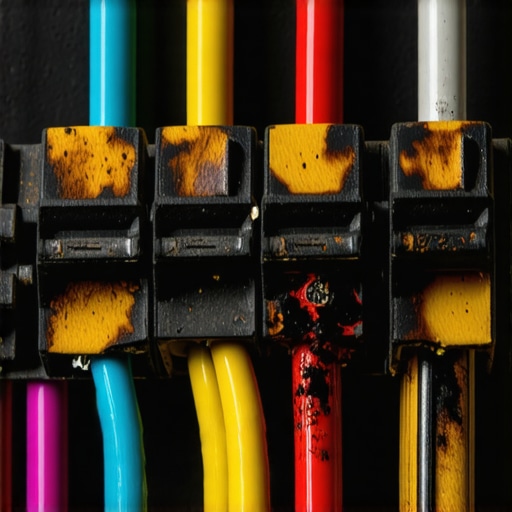
Run the Numbers Before You Flip the Breaker
Before you even buy a charger, you have to know if your house can actually feed it. I’ve seen homeowners try to squeeze a 48-amp charger onto an old 100-amp service that’s already running a dryer and an AC. That is a recipe for a blackout—or worse. You have to understand the hidden cost of skipping a panel load calculation. I once worked with a guy who ignored this step, and every time his wife started the microwave while the car was charging, the main house lights would flicker like a horror movie. It wasn’t ‘ghosts’; it was a service panel screaming for help.
The Three-Point Physical Inspection
If you already have a charger and you’re worried it might be a knockoff, perform these three checks immediately. First, check the flexibility of the cable in cold weather. Genuine high-quality cables use specific compounds to stay pliable, whereas cheap knockoffs turn into stiff, brittle plastic sticks. Second, look at the pins inside the J1772 or NACS handle. If you see any signs of discoloration or ‘rainbowing’ on the metal, stop using it. This is a sign of poor metallurgy. Third, check the weight. A safety-certified charger has heavy-duty internal contactors and heat sinks. If it feels like an empty plastic shell, it probably is. If you’re seeing these issues, you need to look into how to diagnose a faulty internal relay in your charging station before it welds itself shut and sends uncontrolled power to your car.
Why Hardwiring is Usually the Safer Bet
While plug-in models are convenient, they introduce another point of failure: the outlet. High-draw devices like EV chargers put massive stress on NEMA 14-50 receptacles. Many ‘consumer grade’ outlets aren’t designed for 8+ hours of continuous max load. That’s why I almost always recommend hardwiring. It eliminates the plug-and-socket connection entirely, removing one of the most common fire start points. If you’re on the fence, consider the real difference between hardwired and plug-in charging stations before you make a final decision. It’s a bit more work upfront, but sleeping soundly while your car charges is worth every extra minute of installation time.Most homeowners I talk to assume that ‘upgrading’ is synonymous with ‘more power,’ but that’s a trap that often leads to unnecessary $3,000 bills. Everyone says you absolutely need a 200-amp service to charge a modern electric vehicle, but in my experience, you can often skip the headache by using smart load management or simple scheduling. I’ve helped neighbors figure out how to add an ev charger without a 200 amp panel upgrade simply by prioritizing when the car draws power. If you’re not running your electric dryer, oven, and AC all at the same time at 3 AM, your existing 100-amp panel might have more headroom than you think. However, if you do decide to beef up the system, make sure you’re looking at panel upgrade strategies to meet ev charging code requirements in 2025 because the rules are getting stricter regarding how we calculate ‘available’ load. 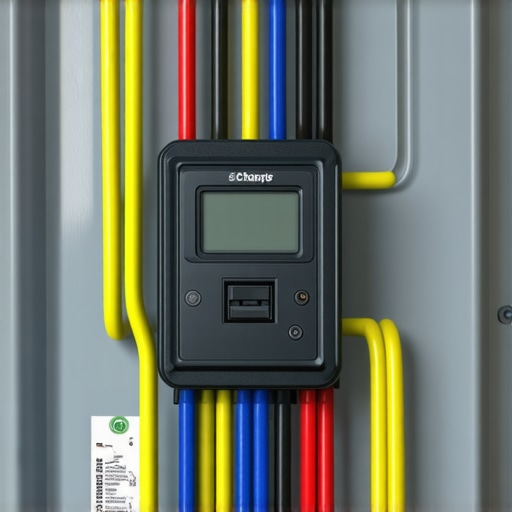
Why does my high-end breaker keep tripping for no reason?
This is the ultimate ‘oops’ factor for DIYers and even some pro electricians. You buy a top-of-the-line GFCI breaker, thinking you’re being extra safe, only to have it trip every third night. The nuance here is that many EV chargers already have internal GFCI protection. When you put a GFCI breaker on a circuit feeding a GFCI-protected charger, they often ‘talk’ to each other in a way that causes nuisance trips. I’ve seen homeowners pull their hair out over why the gfci in your panel keeps nuisance tripping your charger, and the fix is usually understanding local code interpretations of NEC Section 625.54. According to the National Fire Protection Association (NFPA 70), these requirements are meant to save lives, but implementing them requires knowing which components play nice together. You also need to be wary of the specific breaker brands that hate constant ev loads; some older brands simply aren’t built for the thermal stress of an 8-hour 40-amp continuous draw.
The Grounding Trick That Most People Miss
If your car is throwing a ‘Ground Fault’ or ‘Check Power Source’ error, don’t assume the charger is broken. It’s often a high-resistance ground issue. I’ve found that the grounding trick that fixes intermittent charging errors usually involves checking the bonding in your main service panel. If that connection isn’t rock solid, the car’s sensitive onboard computer will reject the charge to protect the battery. It’s a sophisticated safety dance that requires troubleshooting ev chargers common compliance pitfalls and fixes before you call for a warranty replacement. Have you ever fallen into this trap where a ‘safety’ feature actually stopped you from using your car? Let me know in the comments below, because sharing these frustrations helps the whole community stay on the road safely.I remember the smell first. It was that acrid, chemical scent of melting plastic wafting from my garage at 2 AM. I’d just “saved” a couple hundred bucks by picking up a no-name EV charger from a third-party seller, thinking a plug is just a plug, right? Wrong. That “bargain” nearly cost me my house. I was lucky I woke up to get a glass of water, or I might not be writing this today. It’s a common trap: you see a sleek device, it has thousands of glowing reviews, and there’s even a little “UL” logo on the back. But as I found out while staring at my scorched drywall, looking official and being official are two very different things. Today, I want to share how you can avoid the same dangerous trap I fell into and ensure your home stays safe and your car stays charged without the drama.
The Scary Truth About Counterfeit Safety Marks
[IMAGE_PLACEHOLDER]The reality is that anyone with a printer and a bit of adhesive can slap a silver sticker on a piece of plastic. When I first started getting into the EV world, I assumed that if it was sold on a major marketplace, it had to meet basic safety standards. I was dead wrong. According to the UL Research Institutes, counterfeit electrical products are a massive global issue, with many of them using forged marks to bypass customs. These aren’t just harmless clones; they are often built with substandard components that can’t handle the 32 or 40 amps of continuous draw an EV requires. I’ve seen the 3 hidden costs of cheap internet-bought chargers firsthand, and property damage is at the very top of that list.
Is a “UL Listed” label actually worth the extra money?
You might be skeptical. After all, isn’t electricity just electricity? I used to think the same thing. I figured that even if the charger was a bit “budget,” my home’s circuit breaker would catch any real problems. That was my first big mistake as a homeowner. A fake charger can have an internal failure—like a relay welding shut or a terminal block overheating—that doesn’t necessarily trip a breaker until a fire has already started. I learned this the hard way when I ignored the signs of how to spot a cheap knockoff charging cable before it melts. Have you ever plugged in a new device and noticed the handle felt unusually warm? Don’t ignore that feeling like I did! If you’re questioning your gear, it’s also worth checking how to tell if your panel is actually a fire hazard because a bad charger and an old panel are a recipe for disaster.
Don’t Just Look at the Sticker—Check the Database
The first real way to spot a fake is to look for a specific file number. A genuine UL mark isn’t just the letters; it usually includes a control number or a file number (often starting with an ‘E’). If your charger only has a generic “UL” in a circle with no other identifying text, you’re likely looking at a counterfeit. In my early days, I didn’t even know there was a way to verify code compliance by using an online database. Now, I never buy anything electrical without running the manufacturer’s name through the UL Product iQ tool. It takes thirty seconds and provides the peace of mind that a sticker never could. If the brand name on the box doesn’t match the name in the database, pack it up and send it back. It simply isn’t worth the risk to your car, your home, or your family.It’s not just about the sticker; it’s about the copper inside. When I was helping my neighbor install his first Level 2 unit, he bought a cable that looked like a garden hose but felt as light as a feather. I knew right then we had a problem. Real EV cables use heavy-gauge copper to handle continuous current without melting the insulation. You need to verify the specific wire gauge that prevents voltage drop over long runs because skinny wires are essentially space heaters in your walls.
Stop Ignoring the Heat Coming from Your Wall
Think of your electrical system like a plumbing network. If you try to push firehose-levels of water through a straw, the straw is going to burst. In the electrical world, that ‘burst’ is a fire. Most people focus on the charging unit itself, but the real danger often hides in the connection points. During that 2 AM scare I mentioned, the failure wasn’t the circuit breaker; it was a loose terminal screw that hadn’t been torqued correctly. I didn’t realize why your charger needs a specific torque setting to pass inspection until I saw the charred remains of my terminal block. Now, I always use a calibrated torque wrench. Even a fraction of an inch of ‘play’ creates resistance, and resistance creates heat.
Run the Numbers Before You Flip the Breaker
Before you even buy a charger, you have to know if your house can actually feed it. I’ve seen homeowners try to squeeze a 48-amp charger onto an old 100-amp service that’s already running a dryer and an AC. That is a recipe for a blackout—or worse. You have to understand the hidden cost of skipping a panel load calculation. I once worked with a guy who ignored this step, and every time his wife started the microwave while the car was charging, the main house lights would flicker like a horror movie. It wasn’t ‘ghosts’; it was a service panel screaming for help.
The Three-Point Physical Inspection
If you already have a charger and you’re worried it might be a knockoff, perform these three checks immediately. First, check the flexibility of the cable in cold weather. Genuine high-quality cables use specific compounds to stay pliable, whereas cheap knockoffs turn into stiff, brittle plastic sticks. Second, look at the pins inside the J1772 or NACS handle. If you see any signs of discoloration or ‘rainbowing’ on the metal, stop using it. This is a sign of poor metallurgy. Third, check the weight. A safety-certified charger has heavy-duty internal contactors and heat sinks. If it feels like an empty plastic shell, it probably is. If you’re seeing these issues, you need to look into how to diagnose a faulty internal relay in your charging station before it welds itself shut and sends uncontrolled power to your car.
Why Hardwiring is Usually the Safer Bet
While plug-in models are convenient, they introduce another point of failure: the outlet. High-draw devices like EV chargers put massive stress on NEMA 14-50 receptacles. Many ‘consumer grade’ outlets aren’t designed for 8+ hours of continuous max load. That’s why I almost always recommend hardwiring. It eliminates the plug-and-socket connection entirely, removing one of the most common fire start points. If you’re on the fence, consider the real difference between hardwired and plug-in charging stations before you make a final decision. It’s a bit more work upfront, but sleeping soundly while your car charges is worth every extra minute of installation time.Most homeowners I talk to assume that ‘upgrading’ is synonymous with ‘more power,’ but that’s a trap that often leads to unnecessary $3,000 bills. Everyone says you absolutely need a 200-amp service to charge a modern electric vehicle, but in my experience, you can often skip the headache by using smart load management or simple scheduling. I’ve helped neighbors figure out how to add an ev charger without a 200 amp panel upgrade simply by prioritizing when the car draws power. If you’re not running your electric dryer, oven, and AC all at the same time at 3 AM, your existing 100-amp panel might have more headroom than you think. However, if you do decide to beef up the system, make sure you’re looking at panel upgrade strategies to meet ev charging code requirements in 2025 because the rules are getting stricter regarding how we calculate ‘available’ load.
Why does my high-end breaker keep tripping for no reason?
This is the ultimate ‘oops’ factor for DIYers and even some pro electricians. You buy a top-of-the-line GFCI breaker, thinking you’re being extra safe, only to have it trip every third night. The nuance here is that many EV chargers already have internal GFCI protection. When you put a GFCI breaker on a circuit feeding a GFCI-protected charger, they often ‘talk’ to each other in a way that causes nuisance trips. I’ve seen homeowners pull their hair out over why the gfci in your panel keeps nuisance tripping your charger, and the fix is usually understanding local code interpretations of NEC Section 625.54. According to the National Fire Protection Association (NFPA 70), these requirements are meant to save lives, but implementing them requires knowing which components play nice together. You also need to be wary of the specific breaker brands that hate constant ev loads; some older brands simply aren’t built for the thermal stress of an 8-hour 40-amp continuous draw.
The Grounding Trick That Most People Miss
If your car is throwing a ‘Ground Fault’ or ‘Check Power Source’ error, don’t assume the charger is broken. It’s often a high-resistance ground issue. I’ve found that the grounding trick that fixes intermittent charging errors usually involves checking the bonding in your main service panel. If that connection isn’t rock solid, the car’s sensitive onboard computer will reject the charge to protect the battery. It’s a sophisticated safety dance that requires troubleshooting ev chargers common compliance pitfalls and fixes before you call for a warranty replacement. Have you ever fallen into this trap where a ‘safety’ feature actually stopped you from using your car? Let me know in the comments below, because sharing these frustrations helps the whole community stay on the road safely.
Why Your Main Lugs Need a Yearly Checkup
Maintaining your setup isn’t just about wiping the dust off. Every six months, I do a ‘thermal sweep’ with an entry-level infrared camera. You’d be shocked to see how a connection that feels cold can actually be a ‘hot spot’ internally. This is why why your main lugs might be loose after a year of charging is such a critical read. Copper and aluminum expand and contract with the intense heat generated by long 40-amp draws, which can literally wiggle screws loose over time. I keep a small kit of the essential spare parts to keep for your home charging unit in a drawer near the garage—mostly spare fuses, some high-quality electrical tape, and a set of hex bits for quick adjustments.
Get a Thermal Camera for Better Peace of Mind
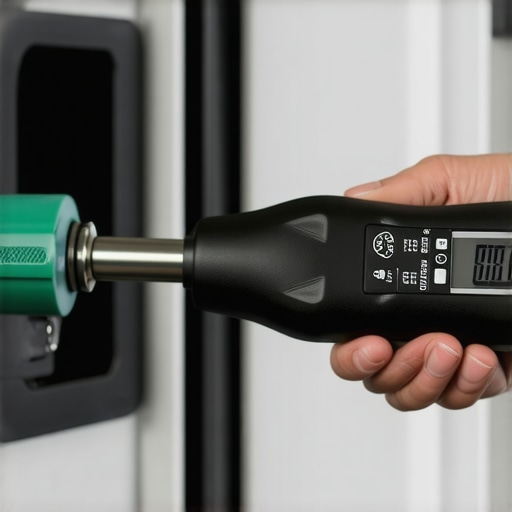 If you’re planning on a second EV, don’t just daisy-chain another unit onto an existing circuit. You need to think about why your garage needs a sub-panel for multiple chargers to keep things clean and code-compliant. According to technical documentation from the Society of Automotive Engineers (SAE J1772), charging connectors are specifically designed to handle thousands of mating cycles, but they aren’t indestructible against heat-induced deformation. Overloading a single branch circuit is the fastest way to void your car’s battery warranty and potentially your homeowner’s insurance policy.
How do I maintain my home charging station for the long haul?
Most of it comes down to checking your physical connections and keeping the hardware cool. Beyond the internal wiring, take a close look at your cable. If you live in a snowy climate, you know why your charging cable is stiff in the winter and what to do; keeping it coiled properly prevents internal copper strands from snapping. Also, consider upgrading your panel for better ev charging performance if you notice your lights dimming when the car kicks in. Regular check-ups prevent ev charger troubleshooting expert tips for common issues from becoming expensive midnight emergencies.
The Future of Charging and Your Car as a Home Battery
Looking forward, I expect Vehicle-to-Home (V2H) technology to become the industry standard within the next five years. Soon, your charger won’t just be a straw for your car; it’ll be a high-speed bridge that lets your car power your house during a blackout. To get ready for that future, start by mastering the basics of your current hardware safety. **My challenge for you:** Go out to your garage tomorrow and check the temperature of your charger’s handle after it’s been running for an hour. If it’s too hot to hold comfortably, it’s time to call a pro or check the specific torque wrench settings for a wall connector yourself.
The Most Expensive Safety Lessons I Learned the Hard Way
Reflecting on that 2 AM scare, I’ve realized a few things that no manual explicitly warns you about. First, the ‘it works for now’ mindset is your biggest enemy. Electrical failures in high-draw systems like these aren’t always immediate; they are cumulative. Over months, a slightly loose screw or a sub-par breaker will degrade until it hits a tipping point. I’ve seen how the specific breaker brands that are known to overheat with evs can pass a 10-minute test but fail at the 4-hour mark. Another hard truth? Your sense of smell is actually a valid diagnostic tool. If you ever smell ozone or fishy plastic, kill the breaker immediately—don’t wait for a flicker. Lastly, always remember that code compliance essentials for ev charger installations in 2025 exist for your protection, not just for the inspector’s clipboard.
The Tools That Saved My Garage From Another Scare
If you’re going to maintain your own setup, you need more than just a basic screwdriver. I trust the UL Product iQ database more than any retail listing; it is the ultimate source of truth for equipment certification. For my physical toolkit, I never perform a check-up without a calibrated torque wrench to ensure every connection meets the manufacturer’s spec. To avoid simple mistakes, I often revisit ev charger troubleshooting expert tips for common issues which helps me distinguish between a hardware failure and a simple software glitch. I also recommend checking your documentation against the permit error that stops home charger installs in their tracks to make sure your paperwork matches your physical reality. These resources have turned my garage from a hazard into a professional-grade charging hub.
Sleep Soundly While Your Battery Fills
[IMAGE_PLACEHOLDER]
At the end of the day, your home should be your sanctuary, not a source of anxiety. Taking the time to verify your equipment, calculate your loads, and perform regular thermal checks ensures that your transition to electric driving is seamless. If you find that your current system is hitting its limit, don’t be afraid to look into panel upgrades for ev chargers what you need to know to give your home the headroom it deserves. You’ve done the hard work of educating yourself—now you can plug in with total confidence. Your EV charger is a powerful tool; respect the current, and it will serve you for hundreds of thousands of miles.
Have you ever noticed your charger handle getting unusually warm after a long session, or have you spotted a ‘UL’ sticker that looked a bit suspicious? Let’s swap stories in the comments below!