The board president looked at me like I was asking to install a nuclear reactor in my assigned spot. I stood there, sweaty palms clutching a brochure, while three neighbors argued about whether my Model 3 would ‘drain the building’s lifeblood.’ It was humiliating. I had just spent fifty grand on a car I could not even fuel at home. That night, I realized that wanting an EV in a condo is not just about a plug; it is a legal and technical chess match. I made the classic rookie mistake of walking into that meeting without data, and I paid for it with six months of charging at a grocery store three miles away. Today, I am going to show you how to avoid my failure and walk the tightrope of condo bylaws and electrical codes. We are going to cover the exact steps to prove your installation is safe and why your building might actually have more power than the board thinks.
Stop Begging the Board and Start Talking Code
Most condo boards react with a ‘no’ because they are terrified of what they do not understand. When I first approached my association, I did not realize that the hidden costs of installing a charger in an older condo often stem from fear-based litigation rather than actual copper and wire. You have to change the conversation from ‘can I?’ to ‘here is how I will.’ This starts with understanding the secret to installing a charger in a multi-unit parking deck, which usually involves a professional load survey. In many states, like California under Civil Code Section 4745, ‘Right to Charge’ laws actually prevent HOAs from flat-out denying you, provided you meet safety standards. I learned the hard way that ensuring code compliance when installing ev chargers is your biggest shield. If you can show them a plan that respects the building’s infrastructure, their legal ground to say no vanishes. Have you ever been shot down by your condo board for even mentioning a charger? I would love to hear what their ‘reason’ was in the comments below.
Will My HOA Fees Skyrocket Because of My Charger?
This is the number one fear I hear from neighbors. They think your car is going to hike up the common area utility bill. The reality is that modern installations use sub-meters or smart chargers that track every kilowatt-hour used specifically by your vehicle. When I finally got my approval, I had to provide a why your ev permit application requires a load calculation worksheet to prove I was not going to trip the main breaker for the entire stack of units. According to the National Fire Protection Association (NFPA), properly installed EVSE equipment is designed with multiple layers of safety that standard outlets lack, making them a net-positive for building safety when done by the book. It is about showing the board that you are not just a car guy, but a responsible neighbor who respects the shared grid.Once I realized the board’s fear was rooted in the unknown, I stopped arguing and started documenting. The first real hurdle is the math. Think of your building’s electrical capacity like a finite pizza; every unit already has a few slices reserved for their AC, lights, and appliances. To get your slice, you need to prove there are leftovers in the box. This is where why your ev permit application requires a load calculation worksheet becomes your best friend. I remember sitting in my kitchen with a calculator, realizing my building technically had 100 amps of spare capacity, but the board was convinced we were on the verge of a blackout. Bringing a certified load calc to the next meeting didn’t just help my case—it made me the most prepared person in the room. 
The Math That Silences Skeptical Board Members
To win this game, you need a load survey. This is a formal document from an electrician that monitors the building’s peak usage over a set period. If you can show that even on the hottest day of the year, the main transformer has 20% headroom, the ‘grid strain’ argument dies instantly. When I did this, I used the secret to installing a charger in a multi-unit parking deck by proposing a staged rollout. By showing them the current capacity could handle at least five chargers before any major infrastructure was needed, I turned my solo mission into a future-proofing plan for the whole building.
Get More Power Without an Expensive Panel Upgrade
If the math shows your ‘pizza’ is already gone, don’t panic. You aren’t necessarily stuck with a $10,000 bill to rewire the whole garage. You can often look into how to add an ev charger without a 200 amp panel upgrade by using energy management systems. These devices act like traffic cops for your electricity; they pause your car’s charging if the building’s total demand gets too high. When I presented this ‘load shedding’ concept to my HOA, their eyes glazed over at first, but once they understood that the building’s main breaker was physically protected from tripping, the ‘no’ turned into a ‘yes.’ I eventually had to look into panel upgrades for ev chargers what you need to know because our building was built in the 70s and the bus bars were starting to show their age, but for most modern condos, smart tech is the cheaper escape hatch.
Don’t Let a Permit Error Kill Your Project
Ensuring the installation is actually legal is your final shield. I’ve seen neighbors try to sneak a charger in by tapping into a nearby common-area outlet—don’t do that. You need to know how to verify code compliance for your ev charger installation to protect your investment and your liability. If the fire marshal walks through and sees an unpermitted line, they will shut you down and fine the association, which is a one-way ticket to being the most hated person in the building. This is where code compliance essentials for ev charger installations in 2025 come into play, especially regarding dedicated circuits and the use of liquid-tight conduit in damp parking garages. I personally had to redo my conduit run because I used the wrong mounting clips, a minor error that the permit error that stops home charger installs in their tracks warned me about, but only after the inspector had already failed me. Get the permit, pass the inspection, and the board can never legally take your plug away.Everyone told me I needed a massive panel upgrade immediately, but that is the most common piece of expert advice that actually costs you thousands for no reason. In my experience, most drivers do not need to charge from 0 to 100% in four hours. By chasing the highest possible amperage, you are actually inviting thermal stress into your system. When you run a 48-amp load continuously, you are hitting the 80% rule for a 60-amp circuit, which generates significant heat. This is exactly why your electrician recommends a 60-amp circuit for a 48-amp charger; it is not about the raw power, it is about the safety buffer. If you skip this, you will find out the specific breaker brands that hate constant ev loads the hard way when they start humming or tripping under the pressure. 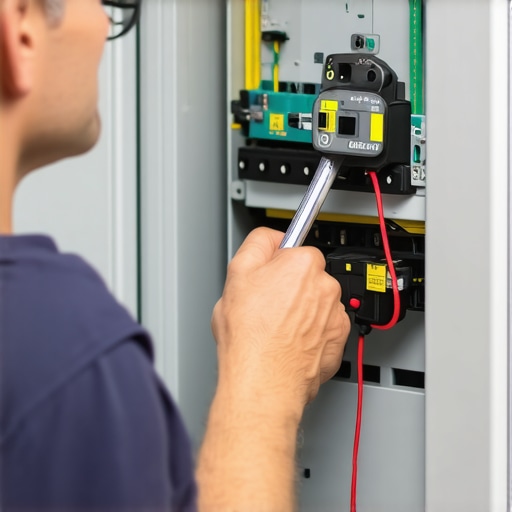
Why Does My Charger Trip Even When Nothing Else is On?
This is the advanced trap that drives people crazy. You have got the power, the wires are thick, and yet the breaker flips anyway. Usually, it is a nuisance trip caused by double-stacking protection. Many modern chargers have built-in GFCI, but local codes often require a GFCI breaker in the panel too. These two systems can interfere with each other and cause a shutdown. If you are stuck in this loop, check out these ev-charger-troubleshooting-expert-tips-for-common-issues. I have seen homeowners spend a fortune on upgrading-your-panel-for-better-ev-charging-performance only to realize the issue was a simple code-required conflict they did not know how to bypass legally. According to the Electrical Safety Foundation International (ESFI), thermal expansion from high-draw devices like EVSE is a leading cause of connection failure. This is why I always tell people to check their torque. If you do not use a calibrated torque wrench, why your charger needs a specific torque setting to pass inspection will become painfully clear when your local inspector pulls out his tool and finds your lugs are a quarter-turn off. Even worse, over time, that heat cycle causes metal to expand and contract, which is why your main lugs might be loose after a year of charging. Have you ever fallen into this trap? Let me know in the comments.After that first year of charging, I realized that ‘set it and forget it’ is a dangerous myth for condo dwellers. I used to think the job was done once the permit was signed, but high-amperage loads change the game. Every six months, I perform a ‘health check’ on my setup. The most critical part of my routine is checking for signs of heat. According to the NFPA 70B Standard for Electrical Equipment Maintenance, infrared thermography is one of the most effective ways to identify loose connections before they fail. I personally use a compact thermal imaging camera to scan my breaker every few months while the car is pulling its full load. If I see a glowing hot spot at the terminal, I know I need to grab my torque wrench because why your main lugs might be loose after a year of charging isn’t just a theory—it is a physical reality of thermal cycling.
How do I maintain my charger for the long haul?
Maintenance isn’t just about the wires; it is about the hardware too. I always keep a small kit of the essential spare parts to keep for your home charging unit, including a spare holster and a high-quality contact cleaner. If you are charging in a shared garage, dust and salt can build up inside the handle, leading to resistance and heat. I have seen chargers fail simply because the owner didn’t realize why your ev plug contacts look burnt and what to do next until it was too late. Beyond the hardware, keep an eye on your software. I recently spent three hours frustrated by a ‘failed to start’ error, only to find out that troubleshooting ev charger connectivity problems often boils down to a simple firmware mismatch between the car’s internal timer and the wallbox. 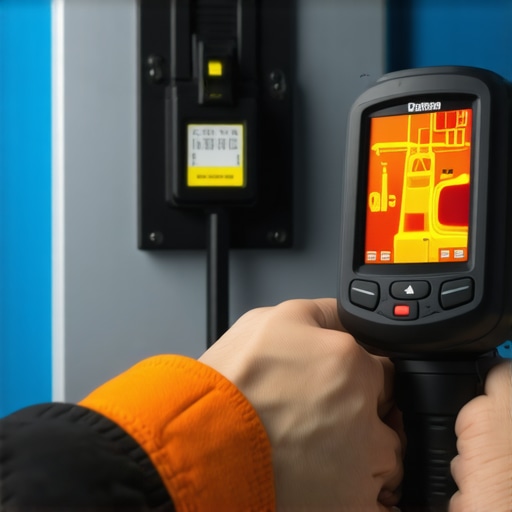
Smart Scaling and the Future of Condo Power
If you are looking to add a second car or help a neighbor get on board, do not assume you need to rip out the walls again. The future is dynamic load management. We are moving toward a world where buildings won’t just ‘allow’ chargers; they will orchestrate them. This is where panel upgrade strategies to meet ev charging code requirements in 2025 are shifting toward software-controlled ‘circuit sharing’ rather than just bigger copper pipes. I am currently helping my board look into how to share a single circuit between two evs safely using a smart splitter. It allows two cars to charge on one 60-amp line, intelligently shifting power as needed. If you are still struggling with a ‘no’ from your board or a mystery trip, I highly recommend you check your torque settings tonight—it is the one 10-minute task that could save your entire investment. If things still feel shaky, contact us to get a professional eyes on your panel before the summer heat hits.
Hard Truths About Maintaining a High-Draw Circuit
After three years of charging in a shared garage, I’ve realized that the ‘hidden’ part of EV ownership isn’t the battery—it’s the infrastructure behind it. One thing no one tells you is that EV charging is likely the largest continuous load your electrical panel will ever face. Unlike an oven or a dryer that cycles on and off, a charger pulls max current for hours. This constant heat causes metal to expand and contract, which is precisely why your main lugs might be loose after a year of charging. I make it a habit to check my connections every season. Another lightbulb moment for me was realizing that why the gfci in your panel keeps nuisance tripping your charger is often a simple case of ‘too much protection’—where the charger and the breaker are essentially arguing over who gets to guard the circuit. Understanding these quirks transformed me from a frustrated owner into a confident operator.
The Gear That Earned My Trust
You don’t need a massive industrial workshop, but a few specific tools will save you from a middle-of-the-night charging failure. I swear by a calibrated torque wrench; guessing the tightness of a 60-amp breaker is a recipe for a melted terminal. You can see why your charger needs a specific torque setting to pass inspection when you look at the manufacturer’s specs—they aren’t suggestions. I also keep a kit of the essential spare parts to keep for your home charging unit, including a spare holster to keep the pins dry and a basic thermal camera. Being able to see a ‘hot spot’ before it becomes a ‘burnt spot’ is the ultimate peace of mind for anyone living in a multi-unit building.
Claim Your Future on the Grid
Starting the conversation with your condo board is the hardest part, but once you have the data and the right equipment, you aren’t just ‘the person with the electric car’—you are the neighbor helping the building modernize. Whether you are performing a upgrading your panel for better ev charging performance or just installing a simple smart-balanced circuit, you are adding tangible value to your property. Achieving long-term code compliance ensures that your right to charge is protected legally and technically for years to come. Don’t let the technical jargon intimidate you; take it one wire at a time. If you ever feel like you are in over your head, contact us and we can help you navigate the tricky waters of HOA approvals and load calculations. Have you ever had a neighbor or board member ask a ‘crazy’ question about your charger’s safety? Let me know how you handled it in the comments!