I remember standing in my garage three years ago, staring at a thick orange extension cord and feeling a wave of genuine defeat. My brand-new EV was sitting in the driveway with only twelve miles of range left, and I was trying to figure out if I could reach a 120V outlet without blowing a fuse. I had just received a $1,500 quote for a proper Level 2 installation, and honestly, it felt like a punch in the gut. I almost gave up and accepted the ‘trickle charge’ life. That was until I discovered that my local utility provider wasn’t just willing to help—they were practically begging to pay for a huge chunk of my setup.
Your Utility Company Actually Wants You to Charge at Home
The idea that a massive power company wants to give you a ‘free’ charger sounds like a late-night infomercial scam, doesn’t it? But there is a very practical, almost desperate reason for it. Utilities are terrified of the ‘5:00 PM Surge.’ Imagine every house on your block coming home from work, turning on the AC, starting the dishwasher, and then plugging in an EV that pulls as much power as a small house. The grid would melt. To prevent this, they offer massive rebates for ‘smart’ chargers that they can communicate with. I learned this the hard way after realizing the rebate paperwork mistake that costs homeowners $500 usually involves buying a charger that doesn’t have the right communication chip. By incentivizing you to buy a specific model, they gain the ability to nudge your charging session to 2:00 AM when the grid is ‘sleepy.’ It’s a win-win that most people completely overlook. I’ll show you exactly how to find these programs, but first, I have to ask: have you actually looked at the ‘Programs’ tab on your utility’s website lately, or do you just pay the bill and hope for the best? Many of my neighbors were shocked to find they could even learn how to get the utility company to pay for your service upgrade if their old 100-amp panel couldn’t handle the new load.
Is This Just a Marketing Gimmick to Raise My Rates?
It’s a fair question. Why give away the hardware unless there is a catch? I used to be convinced that ‘managed charging’ was just a fancy term for ‘we are going to turn off your power whenever we want.’ However, data from the U.S. Department of Energy proves that home charging is the most cost-effective way to fuel a vehicle, and these utility programs are designed to keep it that way by avoiding costly grid failures. The reality is that if you don’t take the rebate, you’re likely still going to deal with the higher costs of peak-time charging anyway. If you stick with the ‘slow and steady’ method, you might want to read about what happens if you use a standard outlet for daily charging; it’s not just slow, it’s remarkably inefficient compared to the smart units the utility wants to buy for you. In some cases, the power company might even explain why your utility might require a separate meter for your car, which allows them to give you a dirt-cheap ‘EV rate’ that is separate from your standard lights-and-fridge bill. It’s about more than just a free box on the wall; it’s about long-term savings that I almost missed out on because I was too stubborn to ask for help.
Check Your Panel Capacity Before You Buy the Hardware
Think of your home’s electrical panel like a dinner table. If you only have six chairs and you invite a seventh guest—the EV charger—someone is going to end up sitting on the floor, or in this case, your main breaker will trip. Most older homes come with a 100-amp service, which was plenty back when we just had a fridge and a few lightbulbs. But a Level 2 charger can pull 40 to 50 amps on its own. Before you even look at chargers, you need to determine if you have the physical space and the electrical ‘headroom.’ If you find you are maxed out, don’t panic. There are ways how to squeeze a level 2 charger onto a 60 amp service using load management devices that throttle the car when the dryer is running. I initially thought I was stuck until I looked into panel upgrades for ev chargers what you need to know, which helped me realize my bus bar could actually handle a twin-breaker setup I hadn’t considered. 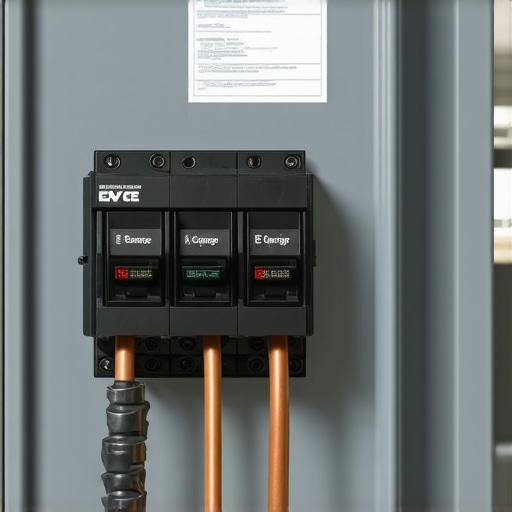
How to Pick a Charger That Qualifies for Cash
The biggest mistake I see is people buying the ‘Amazon Special’—a no-name charger that costs $200 and has no Wi-Fi. Those chargers are ‘dumb.’ They can’t talk to the utility company, which means they won’t qualify for a single cent in rebates. To get the money, you usually need a UL-listed, networked station. The utility company wants to see that you have the smart way to schedule charging without overloading your service built into the hardware. I once helped a neighbor install a sleek-looking unit he found online, only for him to realize why your smart charger refuses to sync with the local utility app: it lacked the OpenADR protocol his power company required. He saved $100 on the charger but lost a $600 rebate. Check your utility’s ‘Approved Product List’ first. It’s the golden rule.
The Code Compliance Steps You Can’t Skip
When I finally got my rebate-approved charger, I almost botched the install by ignoring the torque settings. Most people think ‘hand tight’ is enough for electrical lugs. It isn’t. High-amperage loads like EV charging cause wires to heat up and expand, then cool down and contract. If those lugs aren’t tightened to the exact inch-pound specification, they will wiggle loose over time. This is why the forgotten torque test that prevents panel fires is the first thing a real inspector looks for. Speaking of inspectors, do not skip the permit. I know it’s a hassle, but many utility companies require a signed-off permit before they mail the rebate check.
Small Details That Stop a Fire Before It Starts
I learned the hard way that not all breakers are created equal. I once tried to save $40 by using a generic breaker I found in a bargain bin. Within a week, it started to warp. I didn’t realize there are the specific breaker brands that hate constant EV loads until I smelled burning plastic in my garage. Beyond the breaker, you must focus on ensuring code compliance when installing ev chargers, specifically regarding the GFCI protection requirements which vary depending on whether you are hardwiring the unit or using a plug. Hardwiring is almost always better because it removes a point of failure—the outlet—and often allows for faster charging speeds.I’ve seen a hundred ‘experts’ on YouTube claim that a 200-amp service upgrade is the mandatory entry fee for EV ownership. It’s simply not true. While upgrading your panel for better EV charging performance is a solid long-term investment, many homeowners are being upsold on hardware they do not actually need. The contrarian truth? Load-shedding devices or smart circuit breakers can manage your home’s demand so effectively that a 100-amp panel can often handle an EV without ever breaking a sweat. If your electrician hasn’t mentioned an Energy Management System (EMS), they are likely looking at your wallet rather than your actual load calculations. Let’s dig deeper into the technical nuances that most ‘pro’ guides gloss over.
Why Does My Car Charge Slower at 6:00 AM Than at Midnight?
This is a classic frustration for advanced users. You wake up expecting a full battery, but you’re short by 10 percent. Most people blame the car’s software, but the culprit is often the voltage drop secret that’s ruining your morning charge. If your wire run is long and the installer used the bare minimum gauge, the heat generated over an eight-hour session increases resistance. According to the National Electrical Code (NEC) Section 625, an EV charger is a ‘continuous load,’ meaning it draws full power for long durations. This constant thermal stress causes voltage sag, where the car detects a drop and throttles the speed to stay safe. 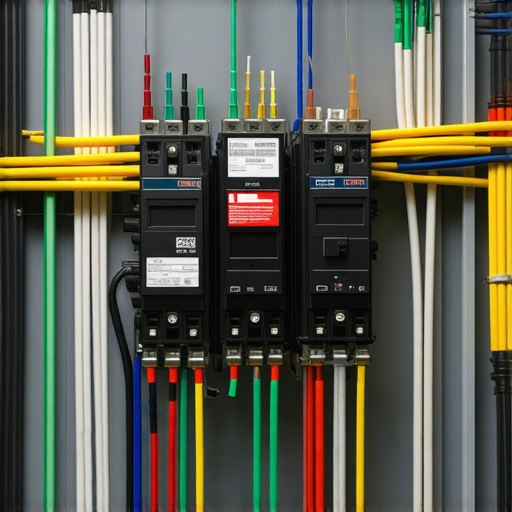
The Grounding Error That Fails Every Inspection
I’ve sat through enough inspections to know that the number one reason DIYers and even some pros fail is the grounding bond. If you have an intermittent ‘Check Charger’ light, do not immediately assume the unit is broken. Often, it is how to fix the grounding fail that ruins EV permits—specifically, not having a clean path to the main grounding electrode. A floating neutral or a loose ground screw can create enough electrical noise to confuse the sensitive motherboards inside a smart charger. This leads to a rabbit hole of EV charger troubleshooting expert tips for common issues that usually ends with simply tightening a single terminal. Not all hardware is built for the 100 percent duty cycle of an EV either. I learned that using a mismatched breaker brand can lead to nuisance trips that are nearly impossible to diagnose without a thermal camera. If you find your setup failing only on hot afternoons, check the specific breaker brand that keeps tripping during fast charging. Some manufacturers use internal components that expand too quickly under the sustained heat of a 48-amp draw. Have you ever fallen into this trap where you spent hours debugging software only to find a loose wire or a thermal mismatch? Let me know in the comments.
Stop Your Hardware from Aging Before Its Time
I’ve seen dozens of people spend thousands on a setup only to let it degrade because they treated it like a toaster rather than a high-performance electrical appliance. The reality is that your charger sits out in the elements, or at least in a dusty garage, pulling massive current for hours. One of the most overlooked tasks is simply looking inside the handle. Dust and debris in the pins can lead to high-resistance connections that generate heat. I personally use a can of compressed air and a specialized contact cleaner every six months. If you want to avoid a service call, knowing how to clean your charger ports without damaging them is the difference between a ten-year lifespan and a two-year failure. I also make it a habit to check the cable for ‘memory’ kinks. If you leave your cable tangled in a heap on the floor, the internal copper strands can eventually fracture, leading to the hidden power drain of cheap charging cables or even catastrophic failure.
What can I do to keep my charger running like day one?
Maintenance isn’t just about cleaning; it’s about monitoring. I use a simple infrared thermometer—nothing fancy, just a $20 unit—to check the temperature of my breaker while the car is charging at full tilt. If that breaker is hitting over 140°F, I know I’ve got a problem. This proactive approach helps you find 3 signs your main lug is loose and causing power flickers before they turn into a localized fire. According to technical documentation from the Electric Power Research Institute (EPRI), thermal stress is the leading cause of premature failure in residential charging equipment. If you notice your speeds are dipping, don’t ignore it. It could be the voltage drop secret that’s ruining your morning charge, which is often a sign that your wiring is struggling with the heat.
The Essential Toolbox for the DIY Charger Owner
If you’re going to manage your own setup, you need more than just a screwdriver. My ‘EV Go-Bag’ includes a digital multimeter and a specific torque wrench. I can’t stress this enough: you must follow the specific torque wrench settings for a wall connector or whatever brand you own. Over-tightening is just as dangerous as under-tightening because it strips the threads and creates a loose, arcing connection later. If you ever experience a ‘ghost’ error, the first thing I recommend is checking the Wi-Fi signal at the unit. I’ve helped friends who were convinced their hardware was dead, only to find why your smart charger lost its wi-fi connection again was due to a new metal shelf blocking the signal. A quick reset often solves it, and knowing the quick reset trick for non-responsive charging ports can save you a $150 electrician visit.
Your Car is About to Power Your Whole House
Looking ahead, we are moving toward Vehicle-to-Home (V2H) technology. Your EV isn’t just a sink for power anymore; it’s becoming a giant battery for your house. This means your panel needs to be even more robust. If you’re already pushing your limits, you should be looking into panel upgrade strategies to meet ev charging code requirements in 2025. The trend is moving toward bi-directional chargers that require specialized disconnects and heavy-duty grounding. I recommend everyone starting their journey today to over-size their conduit now. If you’re running wire, go one size larger than you think you need. It’s a $50 difference today that saves you $2,000 in labor five years from now when you want to add a second car and need to know how to share a single circuit between two evs safely. Take ten minutes this weekend to check your breaker temperatures while charging—it is the single best way to ‘see’ a problem before it starts.
Hard Lessons from Three Years of High-Voltage Living
I’ve spent a lot of time in my garage, and if there is one thing I have learned, it’s that heat is the ultimate snitch. It will tell you exactly where you cut corners. I used to think breakers just ‘stayed on,’ but watching a cheap unit warp under load taught me to respect the specific breaker brands that hate constant EV loads. Another lightbulb moment? Documentation is your shield. I kept every permit and receipt, which eventually made it incredibly easy to prove your electrical panel is code compliant for resale when my neighbor asked about the work. Finally, remember that a ‘smart’ charger is just a paperweight if it can’t talk to the grid; solving troubleshooting ev charger connectivity problems early on is the only way to ensure your utility rebates actually keep flowing.
My Personal High-Voltage Survival Kit
You don’t need a van full of tools, but you do need the right ones to keep your system healthy. First, a digital infrared thermometer is non-negotiable. It is the only way to ‘see’ if your main lugs are loosening before they start to smell like burning plastic. Second, I never touch a terminal without my specialized torque wrench. You simply cannot eyeball safety, and I always refer back to the specific torque wrench settings for a wall connector to keep things within spec. Lastly, a simple can of electronic contact cleaner is my best friend. Keeping those J1772 or NACS pins shiny prevents the micro-arcing and resistance that causes why thinner wire is costing you miles every night.
#IMAGE_PLACEHOLDER_E#
Take Control of Your Home Energy Grid
Starting this journey can feel like learning a second language, but the payoff is worth every bit of the effort. Investing in a panel upgrade for better EV charging performance isn’t just about fueling your car; it’s about making your home resilient for the next decade of energy shifts. You don’t need to be a master electrician to get this right—you just need to be diligent about how to verify code compliance for your ev charger installation and stay proactive with your maintenance. Your future self (and your car’s battery) will thank you. Have you ever opened your electrical panel and felt completely overwhelmed, or did you find a surprise rebate that saved your project? Let me know in the comments below!